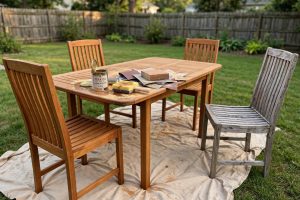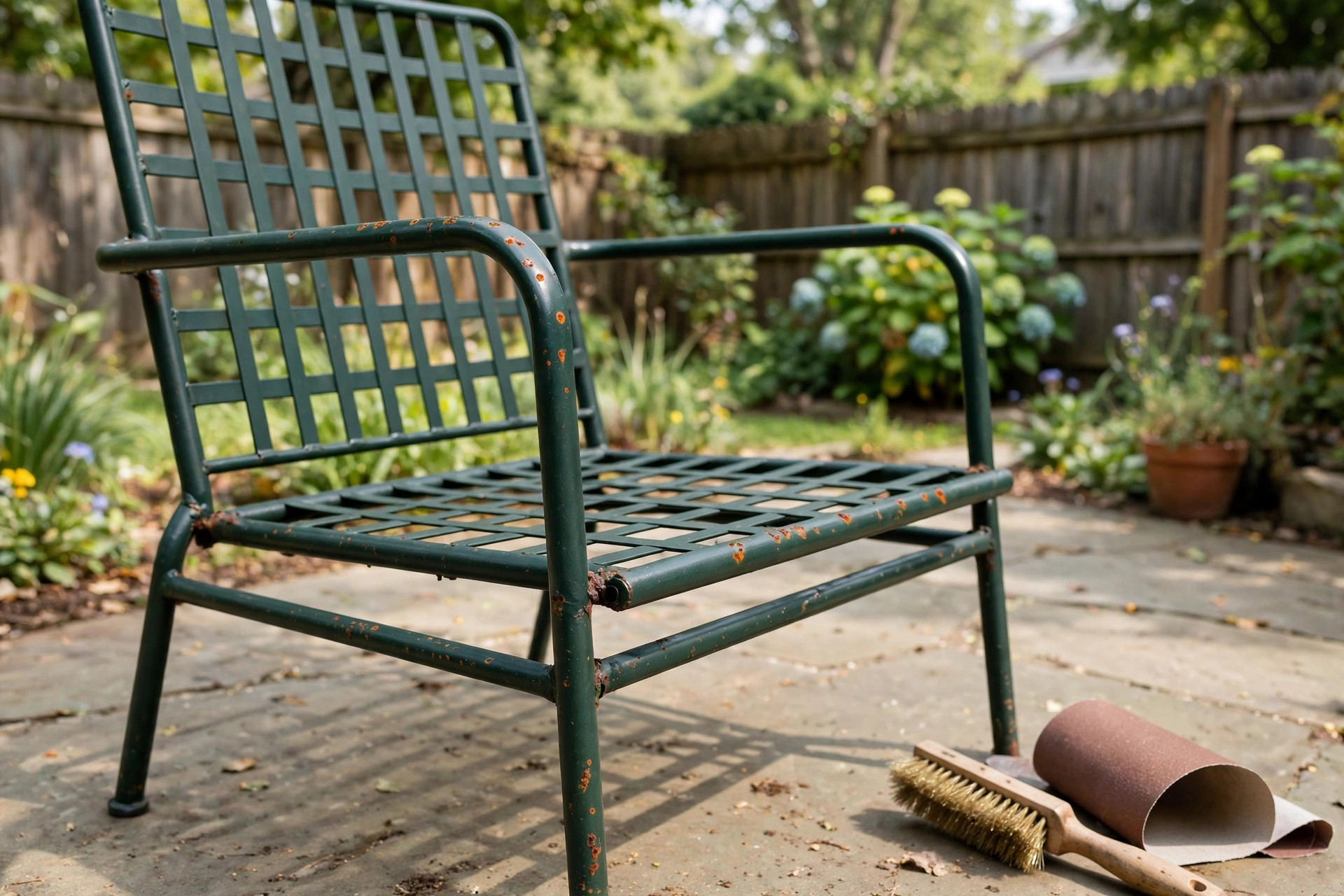

Rain and sun leave their mark on every yard. Metal chairs, tables, and benches sit outside through storms and hot days. After a season or two, small orange spots begin to show. Those spots are rust, and they will grow if they are left alone. Learning how to remove rust from patio furniture is one of the best skills a homeowner can have. It costs little. It takes an afternoon. And it can add years to the life of a good set.
This guide walks through every step in plain words. It covers what you need, how to clean the metal, how to fix deep damage, and how to keep the rust from coming back. Whether you own a cheap bistro set or a costly wrought iron table, the same basic methods apply.
Why Rust Appears on Patio Furniture
Rust forms when iron or steel meets water and air. Most patio furniture is made of steel, iron, or aluminum. Steel and iron rust. Aluminum does not rust the same way, though it can show white stains called oxidation.
Almost every metal chair or table comes with a coat of paint or powder coating from the factory. That coat is a shield. It keeps water off the metal. When the coat chips from use, from moving the chair, or from hail, water reaches the bare metal. The first rust spot appears. Then it spreads under the paint, and flakes grow.
Salt air near the coast makes rust move faster. So does a lawn sprinkler that sprays the patio each morning. Even dew can feed rust over time. The lesson is simple. Rust is normal, but it is not something to ignore. A small spot takes ten minutes to fix. A whole rusted frame can take a weekend.
What You Will Need: How to Remove Rust From Patio Furniture
Gather your tools before you start. Most of these items are already in a home tool box or cost only a few dollars at a hardware store.
– Stiff wire brush or steel wool pads – Medium sandpaper (80 to 120 grit) and fine sandpaper (220 grit) – A bucket, mild dish soap, and water – Clean rags or old towels – White vinegar or a store-bought rust remover – Painter’s tape and old newspaper or drop cloths – Rust-inhibiting metal primer – Outdoor spray paint made for metal – Work gloves and safety glasses
For heavy rust, a drill with a wire wheel attachment saves time. For light spots, sandpaper alone is enough. You do not need a grinder for most home jobs. Keep the tools simple and the work stays safe.
How to Remove Rust from Patio Furniture, Step by Step
Work on a dry day if you can. Shade is best, because direct sun can dry paint too fast. Move the piece onto a drop cloth so you do not stain the patio.
Step 1: Clean the Piece
Wash the furniture with soapy water and a rag. Dirt and grease hide rust and keep paint from sticking. Rinse with clean water and let the metal dry in the air. A clean surface shows you every rust spot clearly.
Step 2: Scrub Off Loose Rust
Use the wire brush or steel wool on each rust spot. Rub with steady pressure until the loose flakes come off. For corners and curves, a small wire brush works well. This step is the heart of learning how to remove rust from patio furniture. You want to reach solid metal. If the rust is light, the brush may do the whole job.
For stubborn patches, soak a rag in white vinegar and press it against the spot for 30 minutes. Vinegar is a mild acid. It eats rust without hurting the sound metal underneath. Wipe the area clean and dry it well.
Step 3: Sand the Surface
Sand the rusted area with medium sandpaper. Feather the edges so the paint line fades into the good paint. Then switch to fine sandpaper and smooth the whole spot. The goal is a flat, even surface. Run your hand over it. If you feel bumps, sand more.
Wipe the dust away with a damp rag, then dry the metal. Dust left under paint will make the new coat rough.
Step 4: Prime Bare Metal
Tape off any fabric, plastic parts, or cushions with painter’s tape. Cover nearby areas with newspaper. Then spray or brush a rust-inhibiting primer on every bare metal spot. Primer is the most important coat. It bonds to the metal and blocks moisture.
Apply thin coats. Two thin coats beat one thick coat. Let the first coat dry as the can directs, usually an hour, then add the second. Do not skip this step. Paint alone will not stop rust from returning.
Step 5: Paint the Finish Coat
Use outdoor spray paint made for metal. Hold the can about ten inches from the surface. Move in slow, even strokes. It is better to use three light coats than one heavy one. Heavy coats drip and peel later.
Let each coat dry fully before the next. Once the last coat dries, remove the tape and newspaper. Let the piece cure for a full day before you use it or leave it in the rain. A good paint job, over a good primer, can last three to five years.
Light Rust, Heavy Rust, and When to Give Up
Not all rust is the same. Light surface rust shows as small orange dots on the paint. This is the easiest to fix. A brush and sandpaper handle it in minutes.
Medium rust has pitted the metal. You see flakes and rough spots. The steps above will still work, but you must be sure to sand down to solid metal. If any flake is left, rust will return under the new paint.
Heavy rust means the metal is thin or has holes. Press the spot with a screwdriver. If the metal gives way or crumbles, the piece is failing. You can patch small holes with metal filler or a patch kit, but a chair with a rusted-through leg is not safe to sit on. Know when to say goodbye. Your safety matters more than a chair.
A useful middle path exists for pieces that look worn but are still strong. After you remove the rust, you can repaint the whole frame in a new color. Many homeowners do this each spring. It costs less than a new set and gives the patio a fresh look. For advice on the wider care routine, read about metal patio furniture rust prevention tips.
How to Choose a Rust Remover
Store shelves hold many products that promise to melt rust away. They fall into three groups.
Chemical rust removers use acids such as phosphoric acid. They work fast and well on pitted metal. They are strong, so you must wear gloves and glasses and work where the air moves. Keep them off skin and away from pets.
Rust converter products turn rust into a black coating that you can paint over. They are handy for spots you cannot fully sand, such as deep corners. The converted surface takes primer and paint just like bare metal.
Natural options include white vinegar, lemon juice, and baking soda paste. They work more slowly, but they cost little and are gentle. For light rust on garden furniture, they are often all you need.
Whatever you choose, test it on a hidden spot first. Check that it does not stain the finish you plan to keep.
Cost and Price
Fixing rust yourself is cheap. A wire brush costs about five dollars. Sandpaper packs cost a few dollars. A can of rust-inhibiting primer runs about eight to ten dollars, and a can of outdoor spray paint about the same. White vinegar costs two dollars.
A full kit for a small patio set, chairs and table, will run between twenty and forty dollars. That assumes you already own gloves, rags, and tape. Compare that with a new four-piece metal patio set, which often costs two hundred to six hundred dollars. The repair pays for itself many times over.
Hiring a refinishing shop is the other option. Professional sandblasting and powder coating can cost one hundred to three hundred dollars per piece. The finish lasts longer than home spray paint, often five to ten years. It may be worth it for a fine wrought iron set you plan to keep for decades. For most ordinary sets, the home method is enough.
Care and Upkeep Through the Seasons
Removing rust is only half the job. Keeping it away is the other half. A few habits make a large difference.
Store cushions off the metal when it rains. Wet fabric pressed against a frame holds water against the paint and feeds rust. If you want to know more about fabric care, see how to clean outdoor furniture cushions.
Wipe down metal frames each month during the season. A quick wash removes pollen and grime that trap moisture. Touch up small paint chips right away with a dab of primer and paint. A chip left through winter becomes a rust spot by spring.
In cold months, store furniture in a garage or shed if you can. If it must stay outside, use covers. Good weatherproof patio furniture covers heavy duty block rain and snow, but choose covers that let air move. A cover that traps damp air can cause more rust than no cover at all. Tilt chairs so water runs off. Never let water pool in the seat of a metal chair all winter.
Safety Notes
This is easy work, but it has real risks. Wear safety glasses when brushing and sanding. Rust dust and paint flakes can hurt your eyes. Wear gloves when using wire brushes, vinegar soaks, and any chemical product.
Work outside or in an open garage. Spray paint fumes build up fast in a closed room. Keep children and pets away from the work area until paint is dry. Read the label on every chemical you use. Some rust removers stain concrete and can harm plants, so keep them off the lawn and garden beds.
Dispose of rusty rags and empty cans the right way. Many towns take paint cans at a hazardous waste drop-off. Do not pour liquid rust remover down a storm drain.
Frequently Asked Questions
Can I remove rust without sanding?
Yes, for light rust. Soak the spot with white vinegar, scrub with steel wool, and wipe clean. Chemical rust removers also dissolve rust without sanding. But sanding gives the best result. It leaves a smooth surface that paint can grip. For anything deeper than surface dots, sanding is worth the time.
How long does it take to remove rust from patio furniture?
A single chair with light rust takes about thirty to forty-five minutes, plus paint drying time. A table and four chairs may take a full afternoon. Drying time between coats adds hours, but that time is passive. You can do other things while the paint dries.
Will rust come back after I paint?
It can, but good work slows it greatly. Rust returns when moisture reaches bare metal. A full primer coat plus outdoor paint blocks that path. Touch up chips as they appear, and store the set dry in winter. With care, a repaint can hold for three to five years.
What is the best paint for outdoor metal furniture?
Use paint made for outdoor metal. Rust-inhibiting spray enamel is a common choice. Brands sold at home centers carry lines marked for metal and outdoor use. Always pair the paint with a matching rust-inhibiting primer. Check product reviews at Consumer Reports before you buy.
Can I use a pressure washer to remove rust?
A pressure washer can strip loose flakes and dirt, but it does not remove rust fully. It also drives water into seams and can damage paint you want to keep. Use low pressure for cleaning, then do the real rust removal by hand with a brush and sandpaper.
Is it cheaper to fix rusted furniture or buy new?
Fixing it is almost always cheaper. A home repair costs twenty to forty dollars in supplies. A new set costs hundreds. Repair makes sense when the frame is still strong. If legs are thin with rust or a chair wobbles, replace it. Safety comes first.
A Short Final Word
Rust looks like the end of a good chair, but most of the time it is only a warning. A brush, sandpaper, primer, and paint can bring the piece back to life in an afternoon. The work is simple, the cost is low, and the reward is a patio that looks cared for all summer long. For style ideas once your set looks new again, browse outdoor collections at IKEA and Wayfair, and check product safety guidance at the U.S. EPA before using strong chemicals.
References
Consumer Reports. (n.d.). Product ratings and reviews. https://www.consumerreports.org IKEA. (n.d.). Outdoor furniture. https://www.ikea.com U.S. Environmental Protection Agency. (n.d.). Safer choice and chemical safety. https://www.epa.gov Wayfair. (n.d.). Patio and outdoor furniture. https://www.wayfair.com
Was this guide helpful?

About Lisa Anderson
The My Garden US editorial team writes practical, in-depth home and garden guides for American homeowners — tested advice, no fluff.
You May Also Like
How to Repair Wicker Patio Furniture
July 8, 2026 0 views
The Best Hammock Chair with Stand Indoors: A Practical Buyer Guide
April 7, 2026 0 views
Outdoor Dining Chairs Stackable Set of Six: A Plain Guide
June 11, 2026 0 views