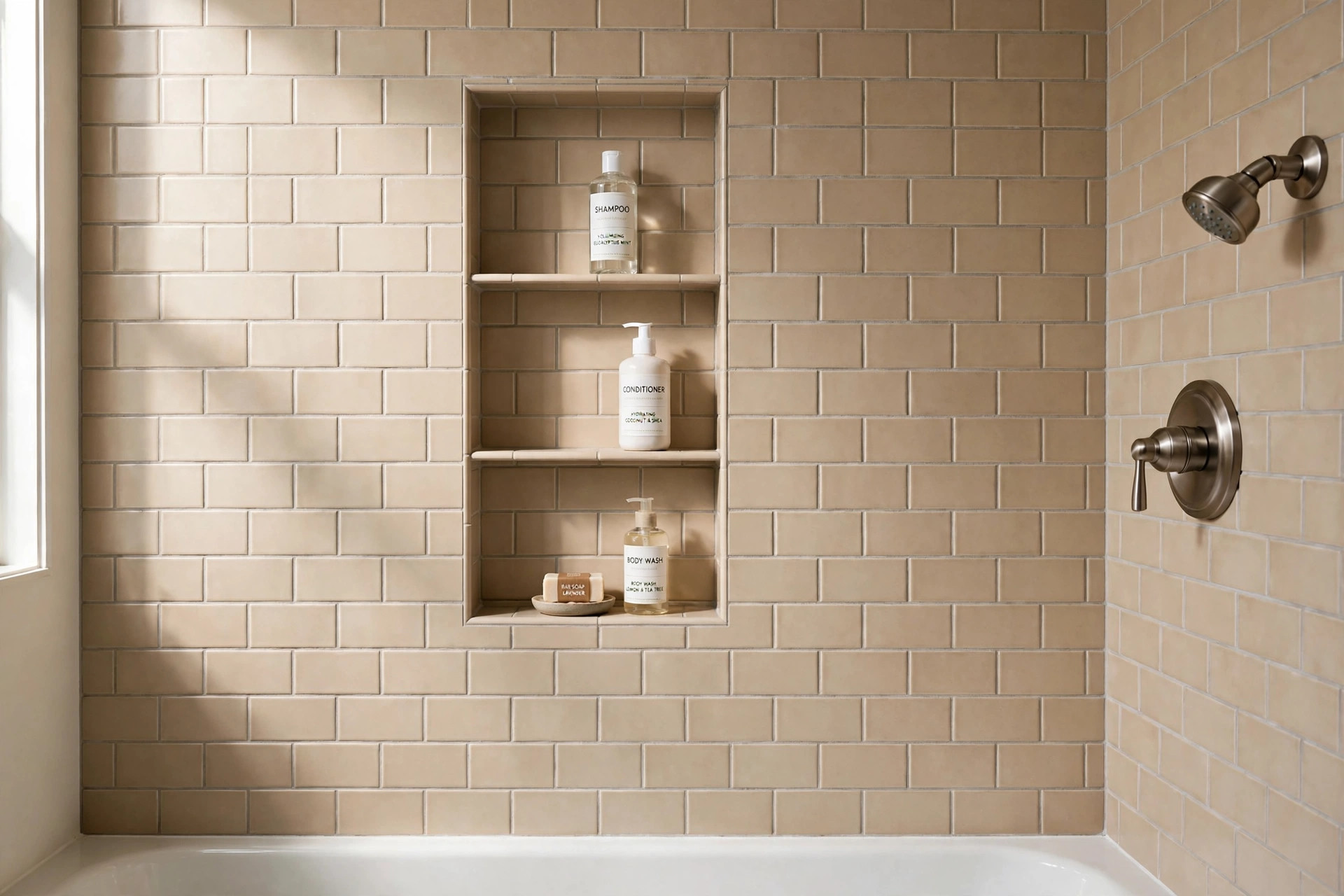

A shower niche is a recessed shelf cut into the wall of a shower. A shower niche insert is the pre-formed box or ready-to-tile unit that fits inside that recess. It gives the shelf a finished look and keeps water out of the wall. This shower niche inserts buying guide USA walks you through the main types, sizes, materials, costs, and install choices. If you plan a bathroom remodel in 2026, this guide will help you pick the right niche the first time.
Why a Shower Niche Matters
Most showers need a place for soap, shampoo, and razors. The old answer was a corner shelf held by suction cups or a wire caddy that hangs from the shower head. These work, but they rust, slip, and collect grime. A niche built into the wall does the same job in a cleaner way. It sits flush with the tile. Nothing hangs in your way when you step in. Nothing falls to the shower floor at midnight.
A good niche also helps the whole shower look better. A row of bottles on the floor of the tub makes even a new bathroom look messy. A niche hides the clutter inside the wall. When you sell a home, buyers notice small details like this. Real estate agents often point out clean shower storage as a sign of a quality remodel.
The insert is the key part. You can build a niche from scratch with tile and backer board, but that takes skill. A pre-made insert drops into the opening and gives you smooth finished surfaces. Some inserts are made to be tiled over. Others come with a ready finish, such as stainless steel or solid surface. Both kinds seal the cavity behind the wall so water cannot reach the studs.
How a Shower Niche Insert Works: Shower Niche Inserts Buying Guide Usa
Think of the insert as a box without a front. It has five finished sides: top, bottom, back, left, and right. You cut an opening in the shower wall between two studs. You slide the insert into the opening. You secure it with screws or adhesive, following the maker’s directions. Then you tile up to the edges, or the insert face shows as its own finished frame.
The insert slopes slightly forward at the base. This slope matters. Water from the shower spray must drain out of the niche and not pool inside it. Good inserts have a built-in pitch of about two degrees toward the shower. Cheap units may sit flat, which leads to standing water and mold. Check the slope spec before you buy.
Behind the insert, the wall cavity must be sealed. Ready-to-tile inserts have a waterproof membrane built into their surface. Metal and solid-surface units are waterproof by nature. Either way, the rough opening should be treated like any shower wall: covered with a proper waterproofing method so no moisture gets into the framing.
Types of Shower Niche Inserts
Three main types dominate the American market. Each suits a different kind of project.
Ready-to-Tile Inserts
These are the most common choice for tile showers. The insert is made of a waterproof foam board or a coated composite. You set tile directly on its inner surfaces with thinset, the same way you set tile on the wall. From the front, the niche looks like a tiled shadow box. It blends with the rest of the shower.
Ready-to-tile units come in single, double, and triple shelf sizes. Single units hold a few bottles. Double units give separate zones for each person in the home. The faces arrive with a textured coating that bonds well with mortar. They weigh very little, so one person can handle the install.
Stainless Steel and Metal Inserts
Metal inserts arrive with a finished face. You do not tile them. Common finishes include brushed nickel, matte black, and polished chrome. They suit modern showers and they pair well with metal shower grab bars and frameless glass.
Stainless steel resists rust and cleans with a damp cloth. The drawback is price. A metal insert can cost three to five times more than a foam unit. Sizes also tend to be standard, so odd framing may need shims or a custom order.
Solid Surface and Cultured Marble Inserts
These inserts are cut from solid surfacing material, the same stock used for many vanity tops. They have no grout lines inside the niche, which makes them easy to wipe clean. Colors are usually white, bone, or gray. They fit well in showers where the homeowner wants a simple, bright look.
Solid surface is heavy compared with foam. The installer must make sure the opening supports the weight. It cannot be reshaped on site with a utility knife the way foam can. Measure twice before you cut the wall.
What to Look for When You Choose
Start with size. Standard stud spacing in American homes is 16 inches on center. That leaves a clear space of about 14 and a quarter inches between studs. Many inserts are sized to fit exactly in that bay. Wider niches need the studs to be re-framed, which adds labor cost. If you want a wide horizontal niche, plan the framing before the walls go up.
Next, check depth. Most inserts are three to four inches deep. A standard shampoo bottle is about three inches wide at the base. A four-inch deep niche holds it with room to spare. Deeper units exist, but they may stick past the back of a standard two-by-four wall. For an exterior wall with plumbing, depth can be a real limit.
Waterproofing comes next. A ready-to-tile insert should carry a written waterproof claim from the maker. The claim should name the standard it meets. Do not take a salesman’s word for it. Ask for the install sheet and read it. The sheet will tell you how to seal the seams where the insert meets the wall board.
Think about placement too. The niche should sit at a height you can reach without stretching. For most adults, the center of the niche works well between 48 and 60 inches from the shower floor. Keep it away from the direct path of the rain shower head if you can. Constant spray drives water into the niche and wears down grout faster.
Finally, match the finish to the rest of the bath. A brushed nickel insert pairs with brushed nickel faucets and hardware. If your shower uses large-format bathroom wall tiles, a ready-to-tile insert lets the tile run straight through the niche for a calm, unbroken look.
Cost and Price in the USA
Prices in 2026 vary by type and size. A single ready-to-tile foam insert in standard size usually runs from 40 to 90 dollars at a home center. Double and triple units run from 80 to 180 dollars. These are the most budget friendly option.
Metal inserts start higher. A standard stainless steel unit often costs between 150 and 400 dollars. Large or custom sizes can pass 500 dollars. Solid surface inserts fall in the middle, often from 120 to 300 dollars depending on size and color.
Labor adds more. If the niche goes in during a full shower remodel, the plumber and tile setter may add 150 to 400 dollars for framing, setting, and tiling the niche. A retrofit into an existing tiled wall costs more because the old tile must be cut and patched. That job can run 400 to 800 dollars with labor, and not every contractor will take it on.
Do not forget the small parts. Waterproofing membrane, thinset, and matching edge trim for the tile can add 30 to 60 dollars to the job. These are small sums, but they matter to the final look.
Care and Upkeep
A niche insert needs the same care as the rest of the shower. Wipe the inner surfaces weekly with a soft cloth and a mild cleaner. Avoid harsh acids and abrasive pads, which scratch metal and dull solid surface. Rinse the shelf after each shower so soap does not build up in the corners.
Check the grout or caulk lines around the insert once or twice a year. If a line cracks, water can slip behind the tile. Re-caulk the joint between the insert and the wall tile when it shows wear. A tube of silicone made for baths costs a few dollars and takes ten minutes to apply.
Mold loves damp, still corners. Leave the shower door or curtain partly open after use so air can move. A working bath fan helps a great deal. If your fan is old and weak, this may be a good time to upgrade it.
Safety Notes
A niche changes the wall, so a few safety points deserve attention.
First, never cut a stud without a plan. In a load-bearing wall, studs carry weight from above. If you need a wider niche than the space between two studs, have a carpenter add proper headers and re-frame the bay. A pre-made insert cannot hold up a house.
Second, watch out for wires and pipes. Shower walls often hide water lines, vent pipes, and electrical runs. Use a stud finder that also senses current before you cut. If you are unsure what lies behind the tile, stop and call a professional.
Third, keep the niche clear of sharp edges. Tile edges at the niche opening should be finished with trim or bullnose pieces. Raw cut tile can be sharp enough to cut skin when you reach for a bottle in a steamy shower.
Fourth, check local code. Some towns require tempered glass or specific backer board in wet areas. A quick call to the local building office takes five minutes and can save a failed inspection.
For general product safety information, the Consumer Product Safety Commission publishes guidance that applies to home fixtures. Large project how-to advice is available from This Old House, The Spruce, and Bob Vila. Design ideas for the whole bath can be found at HGTV. Major fixture makers such as Kohler, Moen, Delta Faucet, and American Standard list niche-friendly product lines on their sites. Home centers like The Home Depot and Lowe’s stock inserts in many sizes.
Frequently Asked Questions
Can I add a shower niche insert to an existing tiled shower? Yes, but it is harder than adding one during new construction. The tile setter must cut through the finished wall, frame the opening, set the insert, and patch the tile. Expect higher labor cost and some visible patch lines unless the tile is still available for a clean blend.
What size shower niche insert should I buy? Measure the space between your studs first. For most homes with 16-inch stud spacing, a 12-by-12 or 12-by-24 inch insert fits without re-framing. Pick depth of at least three and a half inches so standard bottles sit flat.
Do shower niche inserts leak? A properly set insert should not leak. Leaks happen when the seams between the insert and the wall board are not sealed, or when the base has no slope to drain. Follow the maker’s waterproofing sheet exactly and slope the base toward the shower.
Tile-in or metal insert: which is better? Neither wins for every home. Tile-in units blend with the shower and cost less. Metal units clean faster and suit modern baths but cost more. Pick based on your shower style and your budget.
How high should a shower niche be? Place the center of the niche where you can reach it with a slight bend of the elbow, usually 48 to 60 inches off the shower floor. In a tub-shower combo, you may want it a bit lower so it is easy to reach while standing in the tub.
Can a niche hold heavy bottles? Yes. A set insert spreads weight across the wall framing. Foam units handle normal bath products with ease. Metal and solid surface units handle even more. Do not hang from the niche or stand on it.
Final Word
A shower niche insert is a small part of a bathroom, but it does daily work. It keeps bottles off the floor, protects the wall from water, and lifts the look of the whole shower. Pick the right size for your studs, seal it well, slope the base, and match it to your fixtures. Do that, and the niche will serve you quietly for decades.
References
American Standard. (n.d.). Bathroom and kitchen products. https://www.americanstandard.com Bob Vila. (n.d.). Home improvement advice. https://www.bobvila.com Delta Faucet. (n.d.). Kitchen and bathroom faucets. https://www.deltafaucet.com HGTV. (n.d.). Home and garden ideas. https://www.hgtv.com Kohler. (n.d.). Bathroom and kitchen fixtures. https://www.kohler.com Lowe’s. (n.d.). Home improvement products. https://www.lowes.com Moen. (n.d.). Faucets and plumbing fixtures. https://www.moen.com The Home Depot. (n.d.). Home improvement products. https://www.homedepot.com The Spruce. (n.d.). Home and garden advice. https://www.thespruce.com This Old House. (n.d.). Home renovation guidance. https://www.thisoldhouse.com U.S. Consumer Product Safety Commission. (n.d.). Product safety information. https://www.cpsc.gov
Was this guide helpful?

About Robert Taylor
The My Garden US editorial team writes practical, in-depth home and garden guides for American homeowners — tested advice, no fluff.
You May Also Like

Freestanding Soaking Tubs for Sale USA: A Plain Guide to Choosing One
February 18, 2026 0 views
Shower Grab Bars USA Online Deals: How to Buy the Right Safety Bars
April 20, 2026 0 views
Mirrored Medicine Cabinets USA Online Deals: How to Shop Smart and Save
July 2, 2026 0 views