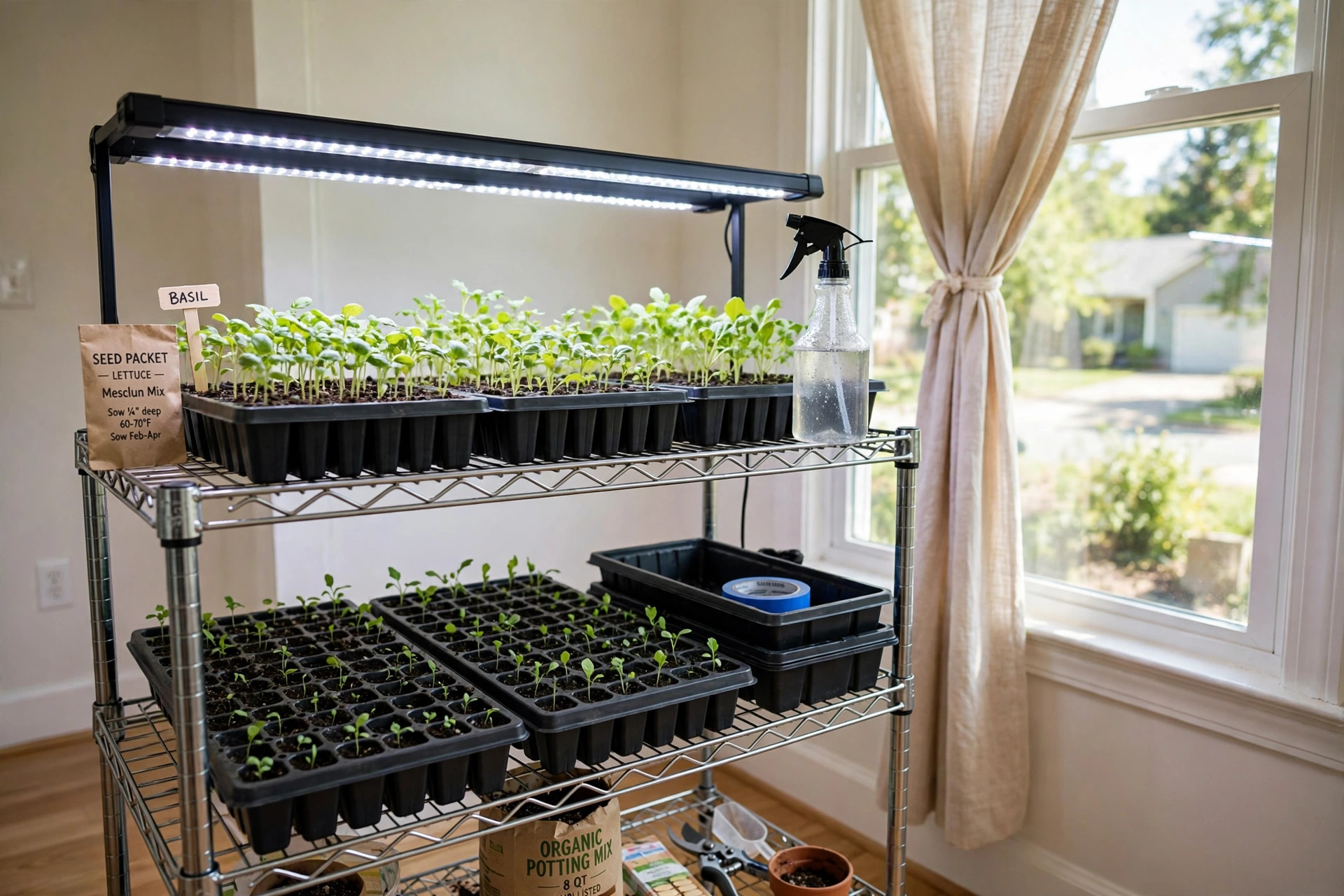

Many gardeners ask about indoor grow lights and where to buy them in the USA. The question is a good one. Plants need light to live. Sunlight is best, but windows are not always enough. Short winter days can starve a plant. A dark apartment can stop seeds from sprouting. A grow light can solve this problem. It gives plants the light they lack. This guide will help you find the right light at a fair price. It will also show you the best places to buy indoor grow lights in the USA.
Why Indoor Grow Lights Matter
Plants make food from light. This process is called photosynthesis. Without enough light, plants grow tall and weak. Their stems stretch. Their leaves turn pale. Seeds may not sprout at all. A grow light gives plants the rays they need. It acts like a small sun.
Indoor gardeners use grow lights for many reasons. Some start seeds early in the spring. Others keep herbs alive in the winter. Many grow houseplants in rooms with few windows. Office workers use small lights on desks. Retired folks use them for African violets and orchids. A good grow light turns any dark corner into a garden.
The right light also saves money. A weak plant dies. A dead plant is wasted money. A strong plant grows and gives fruit, herbs, or flowers. The light pays for itself over time. It uses little power if you pick an efficient type.
Types of Indoor Grow Lights: Indoor Grow Lights Where to Buy Usa
There are three main kinds of grow lights. Each one has strengths and weaknesses. Your choice depends on your plants, your space, and your budget.
LED Grow Lights
LED lights are the most popular kind today. They use light emitting diodes. They run cool. They last for many years. They use far less power than old bulbs. Most LED grow lights give full spectrum light. This means they give the red and blue rays plants love.
LED grow lights come in many shapes. Some are long bars. Some are round panels. Some screw into a normal lamp socket. Small clip-on models work well for one or two pots. Large panels cover a full shelf of trays. Prices range from about 20 dollars to over 200 dollars. For most home gardeners, a simple LED bar is enough.
Fluorescent Grow Lights
Fluorescent lights have been used for decades. They are cheap and easy to find. T5 tubes are thin and bright. They work well for seed starting. They also suit leafy greens like lettuce. They do not get very hot. You can hang them close to the plants.
The weakness of fluorescent tubes is their life span. They wear out faster than LEDs. They also use more power for the same light. Still, they are a fine choice for a beginner. Many gardeners start with a simple two-tube shop fixture.
High Intensity Discharge Lights
High intensity discharge lights are often called HID lights. They include metal halide and high pressure sodium bulbs. They are very bright. Greenhouses and serious growers use them. They can light a large area from one bulb.
HID lights are not for most homes. They get very hot. They need a special ballast. They use a lot of power. They can burn plants if hung too close. For a home gardener, LED or fluorescent lights are safer and cheaper.
How to Choose the Right Grow Light
Picking a grow light is not hard. You need to think about five points.
First, think about your plants. Leafy greens and herbs need less light. Tomatoes, peppers, and fruiting plants need more. Seedlings need soft light at first. Read the plant label or seed packet. It will tell you the light need.
Second, think about the size of your space. A small shelf needs a small light. A large table needs a long bar or a panel. Measure the area in feet. Then buy a light that covers it. One light per two feet of shelf is a common rule.
Third, look at the spectrum. Plants use blue light for leaves. They use red light for flowers and fruit. Full spectrum lights give both. This is the best choice for most people. It looks like normal white light. Your room will not glow purple.
Fourth, check the power and brightness. Labels use terms like watts, lumens, and PPFD. Do not worry too much. For herbs and greens, 20 to 40 watts of LED per square foot is enough. For fruiting plants, aim higher. A good product page will state the coverage area in plain words.
Fifth, check the timer and controls. Plants need rest. Most plants need 12 to 16 hours of light per day. A built-in timer makes this easy. Some lights let you dim the output. This is handy for young seedlings. If the light has no timer, buy a cheap plug-in timer.
Where to Buy Indoor Grow Lights in the USA
The good news is that indoor grow lights are easy to find in the USA. You can buy them online or in stores. Prices are fair. Stock is good all year. Here are the main places to look.
Large Home Improvement Stores
Home Depot carries a wide range of grow lights in most stores. You can see the lights in person. You can ask staff for help. The website lists many more models than the shelves hold. You can order online and pick up in the store.
Lowe’s is another strong choice. It stocks LED grow bulbs, bar lights, and full kits. The store brand prices are often low. Seasonal sales in spring bring good deals. Both of these stores let you return a product with ease if it does not fit your need.
Lighting Specialists
If you want more choice, try a lighting specialist. Lumens sells a wide range of home lighting, including grow lights from known brands. The site has clear guides and reviews. Lamps Plus also carries grow lights and plant lights. Its staff can answer questions by phone or chat.
Philips is one of the most trusted names in lighting. Philips makes LED grow bulbs that screw into normal fixtures. You can buy them through major retailers or direct from the brand site. Big brands often give better warranties.
Online Marketplaces
Online stores offer the largest selection. Prices are often lower than in shops. Read the reviews before you buy. Look for lights with many positive ratings. Check the return policy. Make sure the seller ships from within the USA. This avoids long waits and customs trouble.
Garden Centers and Nurseries
Local garden centers sell grow lights in the spring. The staff are often gardeners themselves. They can give real advice. They may know which light works for your local plants. Prices can be higher than online, but the help is worth it.
For related lighting deals and buying advice, see our guide to indoor grow lights deals near me. If you are lighting other parts of the home, you may also like our notes on dining room chandeliers reviews buying guide usa and motion flood lights deals near me.
Cost and Price
Grow lights fit almost any budget. A small LED bulb costs about 15 to 30 dollars. It can light one or two pots. A two-foot LED bar costs about 30 to 60 dollars. It can light a shelf of seedlings. A large panel for a four-foot table can cost 80 to 200 dollars.
Do not forget the running cost. This is the power bill. LED lights are cheap to run. A 40-watt LED running 16 hours a day costs only a few dollars per month. You can check the real numbers on the ENERGY STAR site, which rates efficient lighting. The U.S. Department of Energy also gives tips on saving power with home lighting.
Watch for sales. Spring is the best season for deals. Stores clear stock in late summer. Holiday sales in November often include lighting. Sign up for store emails to hear about price drops. Buying a kit with a stand can be cheaper than buying parts one by one.
Care, Upkeep, and Safe Use
Grow lights need little care. Dust the light now and then. A soft cloth is enough. Check the cord for wear each season. Replace the light when it dims. LED lights can last 25,000 hours or more. Fluorescent tubes need new tubes every year or two.
Hang the light at the right height. Too close can burn leaves. Too far gives weak light. Most LED lights work best 12 to 24 inches above the plants. Raise the light as the plants grow. Chains or ropes make this easy.
Use a timer. Plants need a dark period. Do not run the light all day and night. Twelve to sixteen hours is enough for most plants. A timer also saves power. It keeps the routine steady when you are away.
Safety First
Grow lights use power and heat. Treat them with care. Buy lights with a UL or ETL mark. This means they passed safety tests. Never use a damaged cord. Keep the light away from water. Do not spray plants while the light is on.
Give the light air. Do not cover it with cloth or paper. Keep paper and dry leaves away from hot bulbs. This is less of a risk with cool LEDs, but it is still a good habit. The Spruce has helpful guides on safe indoor plant care. For general home safety rules, see the Consumer Product Safety Commission notes on electrical products.
Turn the light off when you leave for a long trip, unless plants need it. A timer with a backup plan is safer. If a bulb flickers or smells hot, unplug it at once. Do not try to fix it yourself.
Frequently Asked Questions
How many hours a day should a grow light run? Most plants need 12 to 16 hours of light per day. Seedlings often need 16 hours. Flowering plants may need 12. Give them 8 hours of dark rest. A timer makes this simple.
Can any LED bulb work as a grow light? A normal LED bulb gives some help, but it is not ideal. Grow lights give the right spectrum for plants. They are brighter in the red and blue bands. A cheap grow bulb is better than a normal bulb for plants.
Do grow lights raise the power bill a lot? No, not with modern LEDs. A 40-watt LED costs only a few dollars a month to run for 16 hours a day. Fluorescent and HID lights cost more. Check the watt rating on the box to estimate the cost.
How far should the light hang above the plants? Most LED grow lights work best 12 to 24 inches above the tops of the plants. Small lights can hang closer. Strong panels need more space. Watch the leaves. If they turn white or brown at the edges, raise the light.
Can grow lights harm my eyes? Very bright lights can hurt the eyes. Do not stare into a grow light. Full spectrum white lights are gentler than old purple models. Place the light so it does not shine straight into the room where you sit.
Where is the cheapest place to buy indoor grow lights in the USA? Prices change often, but large home stores and online sellers tend to be cheapest. Store brands at home improvement chains give good value. Spring sales bring the lowest prices of the year.
Final Word
Indoor grow lights open the door to year round gardening. You do not need a big budget or a big space. A simple LED bar on a shelf can start seeds, grow herbs, and keep houseplants happy. Buy from a trusted store. Pick a light that fits your plants and your space. Use a timer. Keep safety in mind. Your plants will thank you with strong green growth.
References
ENERGY STAR. (n.d.). Energy efficient products. https://www.energystar.gov Lamps Plus. (n.d.). Lighting and home decor. https://www.lampsplus.com Lowe’s. (n.d.). Home improvement products. https://www.lowes.com Lumens. (n.d.). Lighting and ceiling fans. https://www.lumens.com Philips. (n.d.). Lighting products. https://www.philips.com The Home Depot. (n.d.). Home improvement products. https://www.homedepot.com The Spruce. (n.d.). Home and garden advice. https://www.thespruce.com U.S. Consumer Product Safety Commission. (n.d.). Product safety information. https://www.cpsc.gov U.S. Department of Energy. (n.d.). Energy efficiency and renewable energy. https://www.energy.gov
Was this guide helpful?

About David Wilson
The My Garden US editorial team writes practical, in-depth home and garden guides for American homeowners — tested advice, no fluff.
You May Also Like

Motion Flood Lights for Florida Homes USA: A Plain Guide
May 28, 2026 0 views
Garage Shop Lights for Florida Homes: A Plain Buyer’s Guide
June 21, 2026 0 views
Kitchen Island Pendants: A Plain Guide for Texas Homes
August 26, 2026 0 views