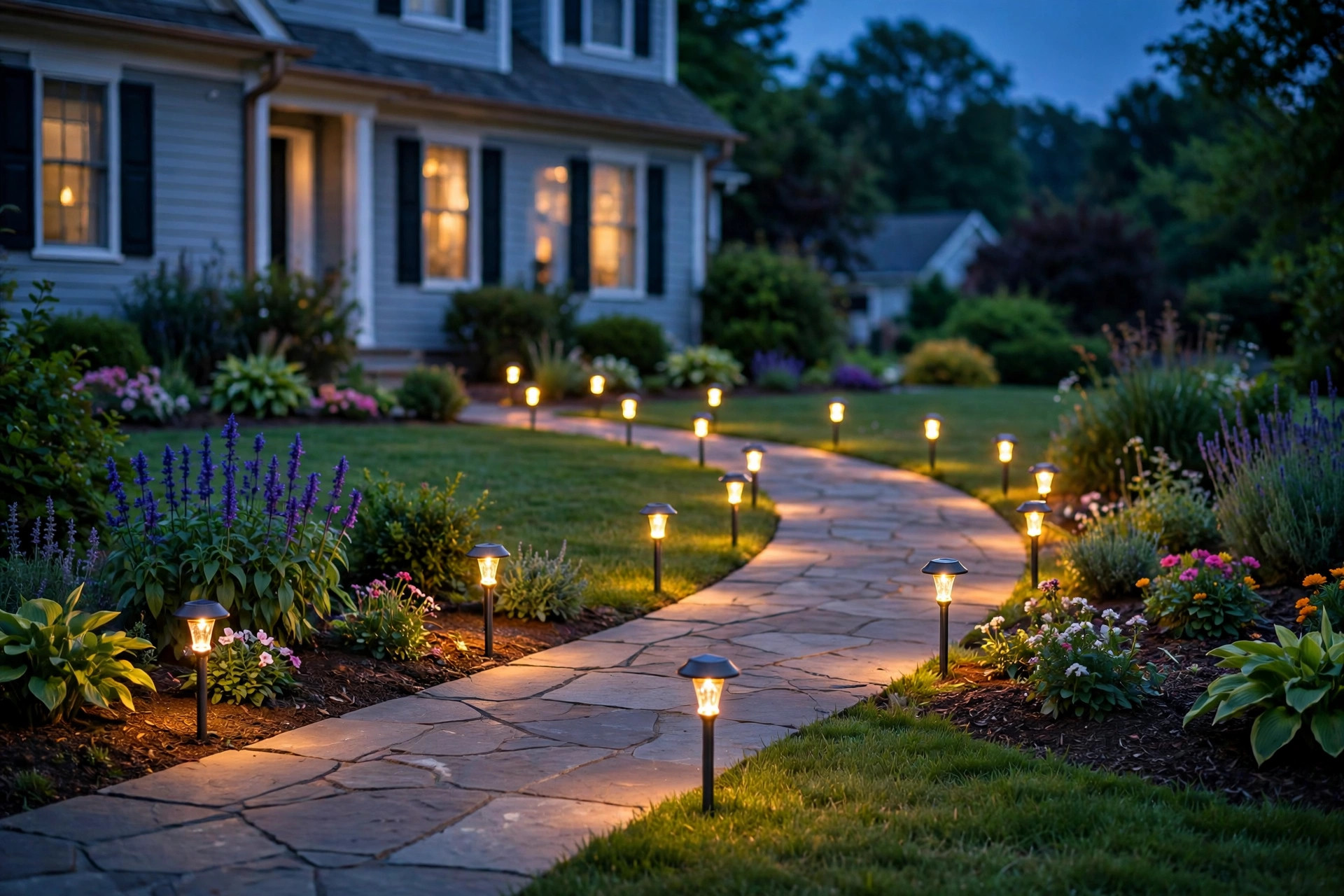
Night falls on a suburban street in Ohio. The front steps are dark. The walkway to the door is hard to see. A homeowner makes one change. She places six small lights along the path. The next night the walkway glows. The steps are clear. The house looks cared for. She found her solar path lights USA online deals with a few minutes of searching. No wires were run. No electrician was called. The lights charged in the sun and switched on at dusk by themselves. This guide explains how solar path lights work. It shows what to look for before you buy. It compares prices across the United States. It points to places where online deals are real. A path light is a small thing. But it changes how a home feels at night. It also makes a home safer for guests and delivery drivers. Read on to learn how to shop with care and spend with sense.
Why Solar Path Lights Matter
A dark walkway is a quiet risk. Guests miss a step. A delivery driver trips on an uneven stone. The mailbox is hard to find after sunset. Solar path lights solve these problems at low cost. Each light carries its own small solar panel. The panel charges a battery during the day. At dusk a sensor switches the lamp on. The light runs for hours on the stored charge. There is no wire to bury. There is no trench to dig. There is no rise in the electric bill.
Curb appeal is another reason. Real estate agents have said for years that lighting shapes first views. A lit walkway makes a home look cared for from the street. It gives the yard shape after dark. For a small sum, the outside of a house looks finished. Solar lights also work during power cuts. The grid can fail, but a charged path light still shines. A line of small lights can guide a family along the path when the porch lamp is dead.
There is an energy case too. The U.S. Department of Energy has long urged homes to cut wasted power. A solar path light uses no grid power at all. It draws on the sun and gives back soft light at night. One light saves little. Twenty lights along a long drive save more. Over a year, the savings add up. For a full picture of what to check before you spend, see our solar path lights buying guide.
How to Choose: What to Look For: Solar Path Lights Usa Online Deals
Shopping for path lights is simple when you know the five points that count. Brightness, battery, panel, build, and light color decide whether a light serves you well for years or fades in a single season. Big online stores such as Home Depot and Lowe’s list these facts on each product page. Read the list before you buy.
Brightness and Lumens
Lumens measure how much light a lamp gives. Most solar path lights give 5 to 50 lumens each. Ten lumens is a soft glow, enough to mark the edge of a path. Thirty lumens lights the ground well enough to walk by. Fifty lumens or more will wash a wide area. More is not always better. Very bright lights can glare and spoil the look of a garden. For a normal walkway, 10 to 25 lumens per light is a sound range. Check the product page for the lumen figure. Sellers who hide it may be selling a weak lamp.
Battery and Run Time
The battery stores the day’s charge. Most path lights use one rechargeable AA or AAA cell. Better models use larger cells that hold more charge. Run time tells you how long the light stays on after dark. Look for six to ten hours of run time on a full charge. In northern states, winter days are short. A light that runs eight hours in July may run four in January. Some brands name the battery type, such as Ni-MH or lithium. Lithium cells last longer in the cold. A few models let you swap the battery when it wears out.
Solar Panel Quality
The panel is the engine. Cheap panels charge slowly and fade in a year. Good panels keep working for many seasons. Monocrystalline panels are the most efficient common type. They charge well even on cloudy days. Polycrystalline panels cost less and still do the job in sunny states. The size of the panel matters too. A larger panel gathers more light. Wipe the panel clean now and then. Dust and pollen cut charging power in a real way.
Build and Weather Rating
Path lights live outside in rain, snow, and heat. Plastic bodies are light and cheap. They crack in hard frost. Metal bodies, often stainless steel or cast aluminum, stand up better. Glass lenses stay clear longer than cheap plastic lenses, which turn yellow in the sun. Look for a weather rating on the page. An IP44 rating means the light resists rain from any side. IP65 means it resists dust and strong water jets. Either is fine for a garden. In coastal states, salt air eats cheap metal. Stainless steel or coated aluminum lasts longer there.
Light Color and Style
Light color is measured in kelvin. Warm white, near 2700K, feels like candle glow and suits brick and wood. Cool white, near 5000K to 6500K, feels like daylight and suits modern homes. Some lights offer color changing modes for holidays. Pick a style that fits the house. A lantern top suits a cottage. A slim stake suits a modern lawn. A bollard post suits a wide drive. Keep the style the same along one path.
Types and Options on the Market
Five common types cover most American yards. Stake lights are the classic form. A pointed stake pushes into the soil, and a small head holds the lamp. They are cheap and easy to move. Sets of eight or twelve sell well online. Bollard lights are short posts, often one to two feet tall. They give more light and suit long drives and wide walks. Lantern style lights hang from a shepherd’s hook or sit on a low post. They give a vintage look that suits older homes.
In-ground disk lights sit flush with the soil or the edge of a driveway. A mower can pass over them. They mark edges more than they light paths. Smart solar lights are the newest type. They link to a phone app. You can set timers, change colors, and group lights by zone. They cost more, but they give real control. Brands such as Philips now sell smart outdoor lines with wide app support. If you want stronger accent light for trees and walls, read our landscape spot lights buying guide.
Cost and Price: What Deals Look Like
Prices for solar path lights in the United States fall into clear bands. Single budget lights sell for 3 to 8 dollars each. Mid-range sets of six to ten sell for 25 to 60 dollars. That works out to 4 to 10 dollars per light, with better batteries and glass lenses. Premium sets from known brands sell for 60 to 150 dollars for six to eight lights. Smart sets with apps can pass 150 dollars. The per-light price is the fair way to compare sets of different sizes. Divide the set price by the number of lights.
Online deals are real, but they follow a pattern. Large sellers like Amazon and Wayfair run lightning sales and coupon codes through the spring and summer. Warehouse clubs such as Costco sell big multi-packs at low per-light prices in the warm months. Specialty shops like Lamps Plus and Lumens discount last season’s styles in the fall. Watch for the big sale weekends. Memorial Day, the Fourth of July, and Labor Day bring strong markdowns on outdoor goods. Black Friday brings the deepest cuts of the year, though stock runs out fast.
Bulk packs are the simplest deal. A twelve-pack at 48 dollars beats two six-packs at 30 dollars each. Read the return policy before you order. A good seller takes returns for 30 days or more. Watch out for fake markdowns. Some listings show a high list price that the item never sold at. If one store is far cheaper than all the rest, check the reviews with care. Sites like Consumer Reports and The Spruce publish tested picks that help you judge fair value.
Care and Upkeep Through the Seasons
Solar path lights ask for little, but a small routine keeps them bright. Clean the solar panel every month or two. Use a damp cloth and mild soap. Rinse and dry the panel. In dusty states and near pine trees, clean more often. Trim plants that shade the panel. A light in full shade will not charge. Move lights with the seasons if you can. A spot that is sunny in June may sit in the shadow of the house in December.
Check the batteries once a year. Most rechargeable cells last one to three years. When run time drops to two or three hours, the battery is worn. If the light lets you swap cells, buy the same type and size. Put them in with the right polarity. In very cold states, some owners bring the lights inside for the coldest weeks. If you leave them out, clear snow off the panels so charging can start again. Tighten stakes in spring when frost heave loosens the soil. A leaning light looks bad and lights the wrong spot.
Safety Notes Worth Knowing
Solar path lights are safe by design. They run on low voltage. There is no shock risk from a buried cable because there is no cable. Still, a few points deserve care. Do not place lights where a mower or trimmer will strike them. A broken stake is a sharp hazard. Keep lights a foot or more back from the path edge so walkers do not kick them. Stagger lights on both sides of a wide path. This gives even light and avoids a runway look.
Think of your neighbors. Very bright lights aimed at a bedroom window are a poor choice. Aim heads down at the path. Choose warm white near homes and streets. It causes less glare for drivers. Path lights are markers, not security lights. They will not scare off an intruder the way a bright floodlight will. For stronger light at the door, see our sensor porch lights buying guide. If a light uses a lithium battery, do not puncture or burn it. Recycle worn batteries at a local drop point, not in the trash.
Frequently Asked Questions
How long do solar path lights last? A well-made light lasts three to five years. The plastic or metal body often outlives the battery. The rechargeable cell is the weak part. It usually needs replacement after one to three years. Lights with replaceable batteries last the longest. Cheap sets with sealed batteries may fade after a single season. Buy from a brand that names its battery type.
Do solar path lights work in winter? They work, but with less power. Short days and low sun cut the charge. Snow on the panel stops charging until it is cleared. Lithium batteries handle cold better than older nickel types. In northern states, expect four to six hours of light on a winter night instead of eight to ten. Place panels where they catch the low southern sun. Clear snow after each storm.
Can I leave solar path lights out in the rain? Yes, if they carry a real weather rating. Look for IP44 or higher on the product page. That rating means the light resists rain from any direction. Standing water is still a risk. Do not set lights in a low spot where water pools after storms. In hurricane and flood zones, bring the lights inside before a major storm.
How many lights do I need for a walkway? A common rule is one light every six to eight feet. A thirty-foot walk needs four to five lights. Place them on alternating sides for even cover. Long drives need more, spaced eight to ten feet apart. Start with fewer than you think. You can add more later. Too many lights look cluttered and waste money.
Are expensive solar path lights worth it? Often they are. Costly lights tend to have larger panels, glass lenses, metal bodies, and better batteries. They shine brighter and last more seasons. A sixty-dollar set that lasts four years costs less per year than a twenty-dollar set that dies in one. That said, cheap lights suit a rental home or a short-term need. Match the price to how long you plan to stay.
Where can I learn about efficient home lighting? ENERGY STAR publishes clear guidance on efficient lighting for homes. It explains labels, ratings, and real savings. The program is run with the federal government and is free to read. It is a sound place to check claims made in product listings.
A Final Word
Solar path lights are a small buy with a clear payoff. A lit path is safer, kinder to guests, and nicer to come home to. Shop with the five points in mind: brightness, battery, panel, build, and color. Compare per-light prices across stores. Buy in the sale season when you can. Clean the panels, mind the batteries, and the lights will serve for years. The deals are out there. A little care in choosing turns a low price into a lasting one.
References
Amazon. (n.d.). Online shopping. https://www.amazon.com Consumer Reports. (n.d.). Product reviews and ratings. https://www.consumerreports.org Costco. (n.d.). Wholesale retailer. https://www.costco.com ENERGY STAR. (n.d.). Energy efficient products. https://www.energystar.gov Lamps Plus. (n.d.). Lighting and home decor. https://www.lampsplus.com Lowe’s. (n.d.). Home improvement products. https://www.lowes.com Lumens. (n.d.). Lighting and ceiling fans. https://www.lumens.com Philips. (n.d.). Lighting products. https://www.philips.com The Home Depot. (n.d.). Home improvement products. https://www.homedepot.com The Spruce. (n.d.). Home and garden advice. https://www.thespruce.com U.S. Department of Energy. (n.d.). Energy efficiency and renewable energy. https://www.energy.gov Wayfair. (n.d.). Furniture and home goods. https://www.wayfair.com
Was this guide helpful?

About Michael Thompson
The My Garden US editorial team writes practical, in-depth home and garden guides for American homeowners — tested advice, no fluff.