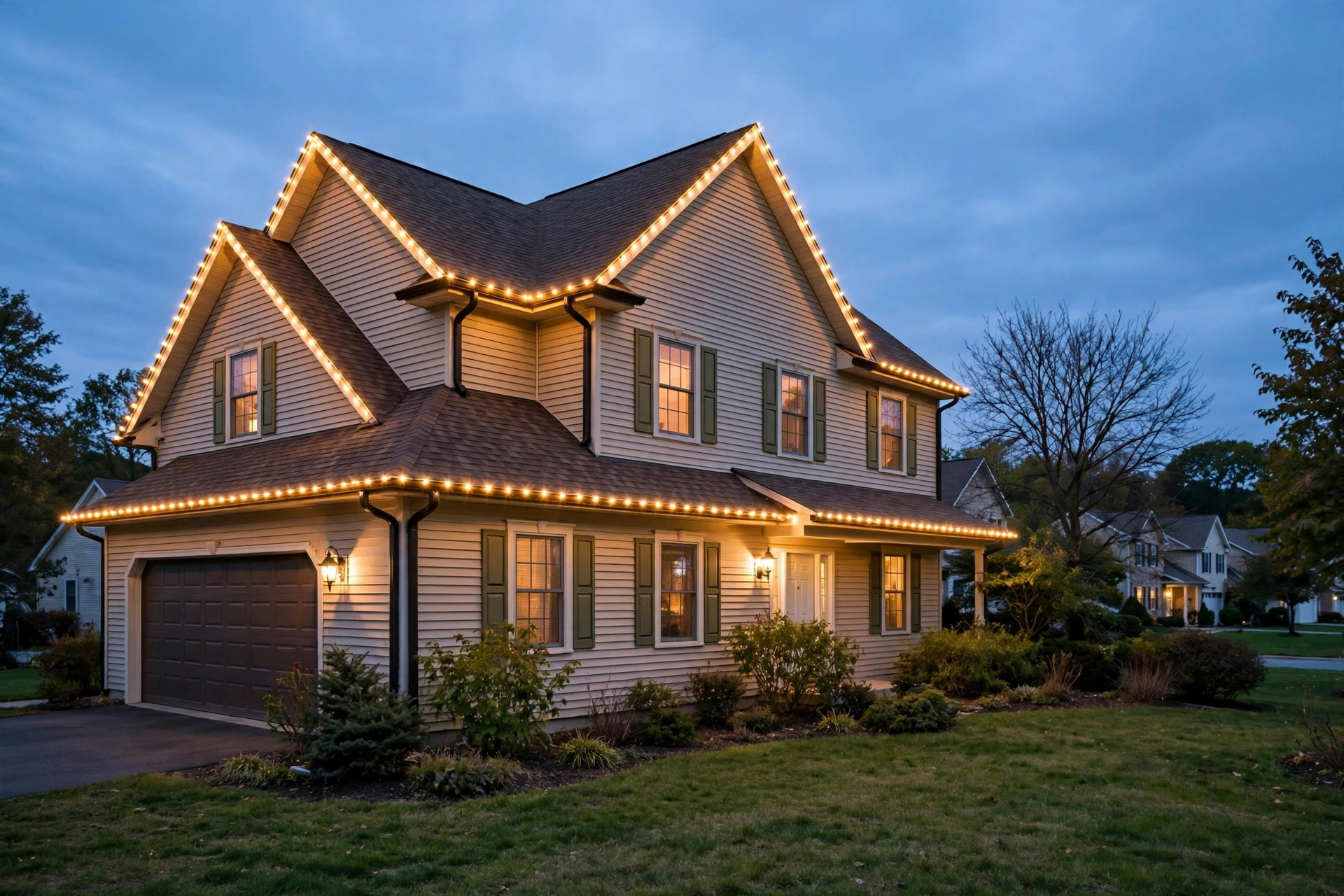

December changes the look of a street. One home glows along its roofline, and the rest of the block seems to follow. Outdoor christmas lights for house roofline usa shoppers buy more of than almost any other holiday item. The reason is simple. A clean line of light across the edge of a roof makes a house look finished. It frames the home. It can be seen from far down the street.
This guide explains how to choose, hang, and care for roofline lights. It covers the main types of bulbs. It covers clips, ladders, timers, and safety. It also gives fair price ranges in the United States. You do not need special skill to do this job. You need a ladder, the right clips, and a dry weekend. Read each part before you buy. A little planning saves money and keeps the work safe.
Why the Roofline Matters
The roofline is the edge of the roof where the wall meets the sky. Light placed there draws the outline of the house. It works on small cottages and on large two story homes. It works with shingles, metal roofs, and flat facades.
Roofline lights have one more benefit. They stay out of the way. They do not block the walkway. Children and dogs cannot trip on them. They hang high, so they face little wear from wind at ground level.
Many towns hold holiday contests for the best decorated home. A neat roofline almost always wins votes. Judges look for straight lines and even spacing. A messy string thrown across the gutter never wins. The plan below shows how to get the clean look.
Types of Roofline Christmas Lights: Outdoor Christmas Lights for House Roofline Usa
Stores sell several kinds of outdoor string lights. Each has a clear use. Pick one kind for the whole roofline. Mixing types looks uneven.
C9 and C7 Bulbs
C9 bulbs are the large classic Christmas bulbs. They are about three inches tall. They give the bright bold look seen on main streets. C7 bulbs are smaller, about two inches tall. They suit smaller homes and short rooflines.
Both types use a string, called a cord, with empty sockets. You buy the bulbs and the cord apart. This is a good plan. If one bulb fails, you change that bulb only. Cords come in lengths of 25, 50, and 100 feet. Most rooflines need 100 to 150 feet.
Mini Lights and Fairy Lights
Mini lights are the small twinkling strings most people know. They cost less. They are light in weight. They work well along short eaves and over garage doors. They do not give the bold outline that C9 bulbs give. For a long roofline, they can look thin from the street.
Icicle and Net Styles
Icicle lights hang down in short drops from a horizontal wire. They look like ice along the gutter. They suit homes with long straight eaves. Net lights drape over bushes, not rooflines. Many buyers confuse the two. Buy net lights for shrubs and icicle lights for the gutter line.
What to Look for When You Buy
A little study at the store prevents waste. Check the box for four things: bulb type, outdoor rating, color, and power.
LED or Incandescent
LED bulbs are the wise choice for most homes. They use far less power than old glass bulbs. A 100 foot LED string may draw under 10 watts. An old string of the same length may draw 400 watts. LED bulbs also stay cool. They last many seasons. Their price has fallen to a fair level.
Old incandescent bulbs give a warm glow that some people love. They burn hot. They break more often. They raise the electric bill. For a roofline that stays lit for weeks, LED is the better buy. Programs such as ENERGY STAR explain why LED holiday lights save power. The U.S. Department of Energy also notes the long life of LED bulbs.
Color and Brightness
Warm white is the most common choice in the USA. It looks like candle light. Cool white looks crisp and modern. Multicolor strings give the old festive look. Red, green, and blue single color strings suit team colors or themes.
Check the color on the box with care. Boxes say “warm white” or “pure white.” These are not the same. Buy one extra string of the same batch. Bulbs from two batches may not match.
Outdoor Rating and Wire
The box must say “for outdoor use.” Indoor strings fail in rain. The plug should have a ground prong for larger strings. Green wire hides against most gutters. White wire suits white trim. Pick the wire color that matches your trim.
Count the strings you can join end to end. The box lists the safe number. Never join more than the maker allows. Overloading melts wire and trips breakers. Large home stores such as The Home Depot and Lowe’s list join limits on their product pages.
Timers and Smart Controls
A timer saves power and effort. A simple plug in timer turns the lights on at dusk and off at midnight. Smart plugs do the same from a phone. They cost a few dollars more. They let you set scenes and schedules. For a roofline, a basic dusk to dawn timer is enough.
How to Hang Lights on the Roofline
Plan the job on paper first. Measure the roofline with a tape. Add ten percent for corners and drops. Lay the strings on the lawn in the order they will hang. Test them before you climb.
Clips and Hooks
Never use nails or staples. They pierce the wire and cause shorts. They also damage shingles and gutters. Use plastic clips made for holiday lights. Three kinds cover most homes.
Gutter clips hook over the front lip of a gutter. Shingle clips slide under a shingle tab. Magnetic clips stick to metal roofs and metal trim. Buy one bag more than you think you need. Clips break. Spacing of one clip per foot keeps the line straight.
Start at the outlet. Work toward the far end. Hang the cord, then step back to the street. Look at the line. Fix sags before you move on. Keep plugs off the ground and out of puddles. A cord reel or short extension cord helps at corners.
Ladder Safety
Most roofline injuries come from ladders, not from lights. Set the ladder on firm level ground. Extend it three feet above the gutter. Keep your body centered between the rails. Never stand on the top two rungs.
Do the work in daylight. Dry weather only. Ask another person to hold the ladder. Keep the ladder clear of power lines. If the service line to your house crosses the roofline, call a professional. No light display is worth a shock.
Cost and Price in the USA
Roofline lighting is a modest holiday expense. Prices below are fair ranges in American stores for the 2025 and 2026 seasons.
A 100 foot LED C9 string with 100 bulbs costs about 40 to 80 dollars. A 100 foot cord with empty sockets costs about 20 to 40 dollars. C9 LED replacement bulbs cost about 1 to 2 dollars each in packs. Plastic clips cost about 8 to 15 dollars per hundred.
A basic plug in timer costs 10 to 20 dollars. A smart outdoor plug costs 15 to 30 dollars. A good extension ladder, if you need one, costs 150 to 300 dollars. Many homes spend 100 to 250 dollars total for the first year. Later years cost almost nothing.
Craft and decor stores such as Michaels carry clips, timers, and string lights each season. Decor magazines like Country Living publish yearly roundups of roofline ideas. Design sites such as HGTV show how pros lay out large displays.
Care and Upkeep
Good care makes lights last five to ten years. Take them down within a few weeks after the holiday. Winter sun and ice wear the wire.
Wind the strings loosely around a reel or a piece of cardboard. Do not ball them in a heap. A tangled string breaks bulbs. Store boxes in a dry place. Garages are fine if the box is sealed. Damp basements rust sockets.
Each fall, test every string on the ground. Replace dead bulbs with the same type and wattage. Check for cracked wire and loose plugs. Throw away any string with bare copper showing. A failed string is not worth a fire.
Safety
Holiday lights cause fires every year in the United States. The U.S. Consumer Product Safety Commission asks buyers to check every product for damage before use. Follow these rules without exception.
Use only lights marked for outdoor use. Plug them into a GFCI outlet. A GFCI outlet cuts power when it senses a fault. Most outdoor outlets in modern homes are GFCI. If yours is not, buy a portable GFCI adapter.
Keep connections dry. Hang plugs so water runs away from them. Do not run cords under doors or windows. The cord can pinch and overheat. Turn lights off when you sleep and when you leave the house. A timer does this job for you.
Keep lights away from dry leaves and pine needles in the gutter. Clean the gutter before you hang lights. Do not hang lights near a fireplace vent or a hot exhaust pipe. Review sites such as Good Housekeeping and how to guides from The Spruce repeat these same safety steps each year.
Frequently Asked Questions
How many feet of lights do I need for my roofline?
Measure each straight run of the roofline. Add the runs together. Add ten percent for corners, peaks, and drops to the outlet. Most single story homes need 100 to 150 feet. Two story homes often need 200 to 300 feet.
Can I leave LED roofline lights up all year?
You can, but the wire and clips age faster in sun and rain. Most makers rate the lights for seasonal use. Take them down after the holiday to get more years from them.
Do LED Christmas lights raise the electric bill much?
Very little. A 100 foot LED string uses about the same power as a night light. Running it six hours a night for a month costs well under one dollar in most states.
What is the best color for a roofline in the USA?
Warm white is the most popular. It suits brick, stone, and wood alike. Cool white suits modern homes with gray or white trim. Multicolor suits homes with a playful style. Pick one color for a clean look.
How do I keep the light line straight?
Use one clip per foot. Pull the cord snug but not tight. Step back to the street and check your work each ten feet. Fix sags at once. A straight line is what makes a roofline look professional.
Should I hire a pro to hang my roofline lights?
Hire a pro if your roof is steep, high, or near power lines. Pros charge about 200 to 600 dollars for a standard home. They bring their own ladders and clips. For a low single story roof, most owners can do the job in an afternoon.
A Final Word
Outdoor christmas lights for house roofline usa displays need not be grand to be good. A single straight line of warm white light, hung with care, beats a tangled mass of many colors. Buy LED. Use clips, not nails. Work in daylight with a helper. Take the lights down after the season.
Roofline lights pair well with other simple touches. A fall welcome sign for the front porch style of seasonal porch decor carries the theme to the door in autumn. Many families who plan ahead also match their St. Patrick’s Day garland for the mantel to their outdoor look in spring. And a spooky entryway welcome sets the tone before the Christmas season begins. Plan each season once, and the whole year looks cared for.
References
Country Living. (n.d.). Country home and lifestyle. https://www.countryliving.com ENERGY STAR. (n.d.). Energy efficient products. https://www.energystar.gov Good Housekeeping. (n.d.). Product reviews and home advice. https://www.goodhousekeeping.com HGTV. (n.d.). Home and garden ideas. https://www.hgtv.com Lowe’s. (n.d.). Home improvement products. https://www.lowes.com Michaels. (n.d.). Arts and crafts supplies. https://www.michaels.com The Home Depot. (n.d.). Home improvement products. https://www.homedepot.com The Spruce. (n.d.). Home and garden advice. https://www.thespruce.com U.S. Consumer Product Safety Commission. (n.d.). Product safety information. https://www.cpsc.gov U.S. Department of Energy. (n.d.). Energy efficiency and renewable energy. https://www.energy.gov
Was this guide helpful?

About Michael Thompson
The My Garden US editorial team writes practical, in-depth home and garden guides for American homeowners — tested advice, no fluff.
You May Also Like

The Best Thanksgiving Dish Towels for Kitchen Decor
May 4, 2026 0 views
Best Halloween Pathway Lights for Trick or Treaters
August 13, 2026 0 views
The Best Fall Wreath with Lights for Evening Glow
March 19, 2026 0 views