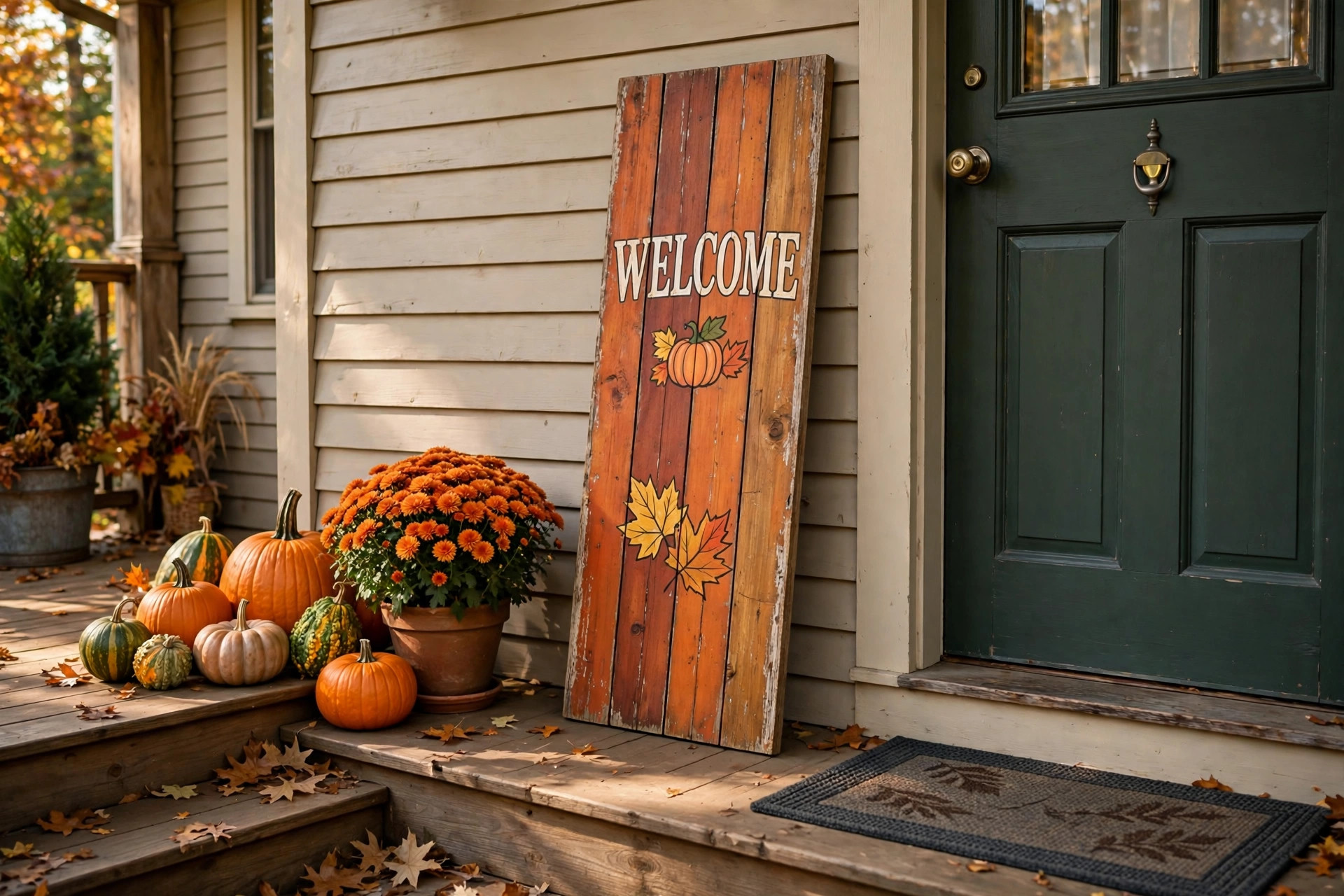

Autumn has a way of changing how a home feels from the street. When the days grow shorter and the leaves turn, a simple fall welcome sign for front porch decoration made of real wood can set a warm tone before guests even reach the door. Wooden porch signs have become a fixture of harvest season in the United States. They are sturdy, they suit the rustic look that fall demands, and they carry a handmade quality that printed plastic decorations cannot match.
This guide explains what a wooden fall welcome sign is, why it matters, how to choose one, what it costs, and how to keep it in good shape through rain, sun, and wind. Whether you buy one from a craft store or make one by hand, the advice here will help you get the best result for your porch.
Why a Wooden Fall Welcome Sign Matters
The front porch is the first room your guests see, even if it has no roof over it in the formal sense. In autumn, porches take on extra duty. They must carry the spirit of the season while standing up to damp weather and early frost. A fall welcome sign for front porch use in wood answers both needs at once.
Wood fits autumn in a way that other materials do not. It echoes firewood stacks, fences, barn doors, and harvest crates. A wooden sign looks at home next to mums, pumpkins, and corn stalks because all of them come from the same natural palette. The grain of the wood, the painted letters, and the rough edges tell a story of craft that guests notice without being told.
There is also a practical side. Wooden signs are heavier than foam or cardboard cutouts, so they do not blow away in the first October gust. A board of pine or cedar leaned against a wall or hung by the door will stay put through most of what the season brings. That sturdiness is a large part of why shoppers keep choosing wood over lighter options year after year.
Finally, a welcome sign does quiet social work. It tells neighbors and visitors that the house is cared for and that guests are expected. In a season built around harvest gatherings and family meals, that small signal matters more than most people think.
What to Look For When You Shop: Fall Welcome Sign for Front Porch Wood
Not all wooden signs are made the same way. Knowing what separates a good one from a poor one will save you money and trouble.
Type of Wood
Most porch signs are made from pine, cedar, or plywood. Pine is common and affordable, but it can warp if it stays damp. Cedar resists rot and insects better, which makes it a smart pick if your porch is open to the rain. Plywood boards are cheap and light, though the edges can peel after a wet season. If you want a sign that lasts for many autumns, cedar or a sealed hardwood is the safest bet.
Size and Shape
Tall, narrow boards are the most popular form. Many stand five or six feet high and lean against the wall beside the door. Smaller square or round signs hang on the door itself or on a post. Measure your porch before you buy. A sign that towers over a small stoop looks out of place, while a tiny sign gets lost on a wide farmhouse porch.
Lettering and Paint
Look at how the words are applied. Painted letters last longer than vinyl stickers, which can lift at the edges after rain. Hand-painted signs cost more but wear better and look richer. Check that the paint has a sealer over it, especially on the side that faces the weather. You can add your own coat of outdoor polyurethane if the sign arrives unsealed.
Finish and Sealer
A wooden fall welcome sign for front porch display should have some protection against water. Ask the seller whether the board is sealed on all sides, including the back and the bottom edge. The bottom edge is where water creeps in first. Signs sold by reputable craft suppliers such as those found through Michaels often note the finish in the product description, which helps you compare.
Types and Options
Shoppers will find several common styles of wooden fall welcome signs. Each suits a different porch and a different taste.
Vertical Porch Leaners
The classic choice is the tall vertical board, sometimes six feet high, with the word “Welcome” running down the length and a small pumpkin or leaf design at the top or bottom. These lean against the wall next to the front door. They pair well with a fall wreath for front door farmhouse style display, since the wreath fills the door while the sign fills the wall beside it.
Hanging Wooden Signs
Smaller boards with rope or wire hangers can be fixed to the door, a post, or a bracket. They are easy to swap when the season changes. A hanging sign works best on porches where floor space is tight.
Round and Shaped Signs
Round signs with a painted pumpkin, sunflower, or turkey are a softer look. Some are cut into the shape of a pumpkin or a leaf. These catch the eye from the street and work well on doors that already carry a lot of decor.
Reversible and Multi-Season Signs
Some boards carry a fall design on one side and a winter or Christmas scene on the other. These cost a bit more but give you two seasons of use. If you decorate heavily for Christmas as well, a reversible sign is worth a look. Home improvement retailers such as The Home Depot and Lowe’s often stock seasonal options alongside year-round porch goods.
Personalized and DIY Signs
Craft stores sell blank wooden boards, stencils, and outdoor paint so you can make your own. A do-it-yourself sign lets you match your house colors exactly and add your family name. Step-by-step project ideas appear on home craft sites like The Spruce and HGTV, which is handy if this is your first wood project.
Cost and Price
Prices for wooden fall welcome signs cover a wide range, and the table below gives a fair picture of what to expect in the United States.
| Type | Typical Price Range | |—|—| | Small hanging wood sign | $10 to $25 | | Round or shaped door sign | $15 to $40 | | Tall vertical porch leaner | $30 to $80 | | Personalized or hand-painted | $50 to $120 | | DIY blank board plus paint | $15 to $40 |
Mass-produced signs from large retailers sit at the low end. Wayfair lists many options with customer reviews that help you judge quality before you buy. Handmade signs from craft sellers cost more because the painter’s time is built into the price. A handmade board usually has cleaner edges and a thicker sealer coat, which can make it the cheaper choice over several years.
If you build your own, most of the cost is the board and the outdoor paint. Stencils for lettering are reusable, so the first sign is the most expensive one. A second board the next year costs little more than the wood itself. Craft supply sources such as JOANN carry the boards, paints, and sealers you need in one trip.
Watch out for prices that seem too low. A ten-dollar tall sign is almost certainly thin plywood with vinyl letters and no sealer. It may look fine on the shelf but fade or warp within weeks outdoors. Spending a little more for sealed wood usually pays for itself.
How to Style Your Porch Around the Sign
A sign works best as part of a small scene, not as a lone object. The goal is a porch that feels arranged but not crowded.
Start with the door. A wreath or a swag of fall leaves on the door balances the sign on the wall beside it. Underfoot, a layered doormat adds color and texture; see our guide to the best fall door mat for entryway harvest welcome for pairing ideas. On the steps or beside the sign, place pumpkins, gourds, or pots of mums at varied heights. A tall planter with ornamental grass can echo the height of a vertical sign.
Keep the color story simple. Burnt orange, deep red, gold, and brown are the natural colors of the season and they all sit well on wood. A sign painted in cream letters on a stained board fits almost any porch. Avoid mixing in too many bright colors, which can fight with the calm of the wood grain.
For fuller porch schemes, browse seasonal decorating ideas at Country Living, which covers harvest looks in depth each year. You can also fold the sign into a broader fall porch decor for harvest season usa plan that carries you from September through Thanksgiving.
Care and Upkeep
Wood lasts outdoors when it is treated with respect. A little care each season keeps a wooden sign looking good for years.
Bring the sign under cover during heavy storms if you can. Porch leaners are easy to move, and an hour out of a downpour adds months of life to the paint. At the end of the season, clean the board with a damp cloth and let it dry fully before storage.
Store the sign upright in a dry place, such as a garage or shed, where it will not take on ground moisture. Do not lean it against a damp concrete wall. If the sealer looks thin in the spring, add a fresh coat of outdoor polyurethane before the next fall. This takes twenty minutes and makes a large difference.
Check the bottom edge each year. That edge soaks up water from wet steps. If it looks soft or dark, sand it lightly and reseal it. Home repair guides at Bob Vila explain the sanding and sealing steps for outdoor wood in plain terms.
Safety
Wooden porch signs are generally safe, but a few cautions are worth noting.
Tall leaners can tip in strong wind. Set the board so its base sits flat and its top rests firmly against the wall. On windy porches, a small bracket or a sandbag behind the base keeps it upright. Keep signs clear of walkways so no one trips over a board that has slipped.
If your sign hangs from the door, make sure the hanger is fixed to solid wood, not just to a wreath hook meant for lighter loads. A falling board can crack a step or startle a visitor.
Outdoor paints and sealers should be fully dry before the sign goes up, and they should be rated for exterior use. For general guidance on household product safety, the U.S. Consumer Product Safety Commission publishes advice on safe home decoration practices.
Frequently Asked Questions
How long does a wooden fall welcome sign last?
A sealed hardwood or cedar sign kept under a porch roof can last five years or more. Unsealed pine left fully exposed to rain may fade or warp within a single season. The finish matters more than the wood.
Can I leave my sign out all winter?
You can, but it will wear faster. Freeze and thaw cycles are hard on paint. If you want the sign to last, store it inside after Thanksgiving and bring it out again next September.
What paint should I use if I make my own?
Use acrylic paint rated for outdoor use, followed by an exterior polyurethane or spar urethane sealer. Two thin coats of sealer protect better than one thick coat.
How do I stop my tall sign from blowing over?
Lean it at a slight angle against a wall, not straight up. Place a heavy planter or a sandbag at the base on the side away from the wall. On very windy porches, a discreet L-bracket screwed into the wall trim holds the top in place.
Are wooden signs safe around pets?
Yes, once the paint and sealer are fully cured. Keep curing signs out of reach until they are dry to the touch and free of fumes, which usually takes a day or two outdoors.
Where is the best place to put the sign?
Beside the front door, leaning against the wall, is the classic spot. It should face the street or the walkway so visitors read it on approach. On a corner porch, the side nearest the steps works best.
A Final Word
A fall welcome sign for front porch decorating in wood is a small purchase that does large work. It marks the season, steadies the look of the whole porch, and tells every visitor that they are expected. Choose sealed wood, size it to your porch, style it with the plants and pumpkins you already love, and give it a dry place to rest in winter. Done well, one board will greet your guests through many autumns to come.
References
Bob Vila. (n.d.). Home improvement advice. https://www.bobvila.com Country Living. (n.d.). Country home and lifestyle. https://www.countryliving.com HGTV. (n.d.). Home and garden ideas. https://www.hgtv.com JOANN. (n.d.). Fabric and craft supplies. https://www.joann.com Lowe’s. (n.d.). Home improvement products. https://www.lowes.com Michaels. (n.d.). Arts and crafts supplies. https://www.michaels.com The Home Depot. (n.d.). Home improvement products. https://www.homedepot.com The Spruce. (n.d.). Home and garden advice. https://www.thespruce.com U.S. Consumer Product Safety Commission. (n.d.). Product safety information. https://www.cpsc.gov Wayfair. (n.d.). Furniture and home goods. https://www.wayfair.com
Was this guide helpful?

About Robert Taylor
The My Garden US editorial team writes practical, in-depth home and garden guides for American homeowners — tested advice, no fluff.
You May Also Like

Halloween Wreath for Front Door Spooky Style: A Complete Guide
April 16, 2026 0 views
Best Thanksgiving Turkey Decorations for Table
January 27, 2026 0 views
Halloween Skeleton Decorations Life Size for Yard: A Plain Guide
July 27, 2026 0 views