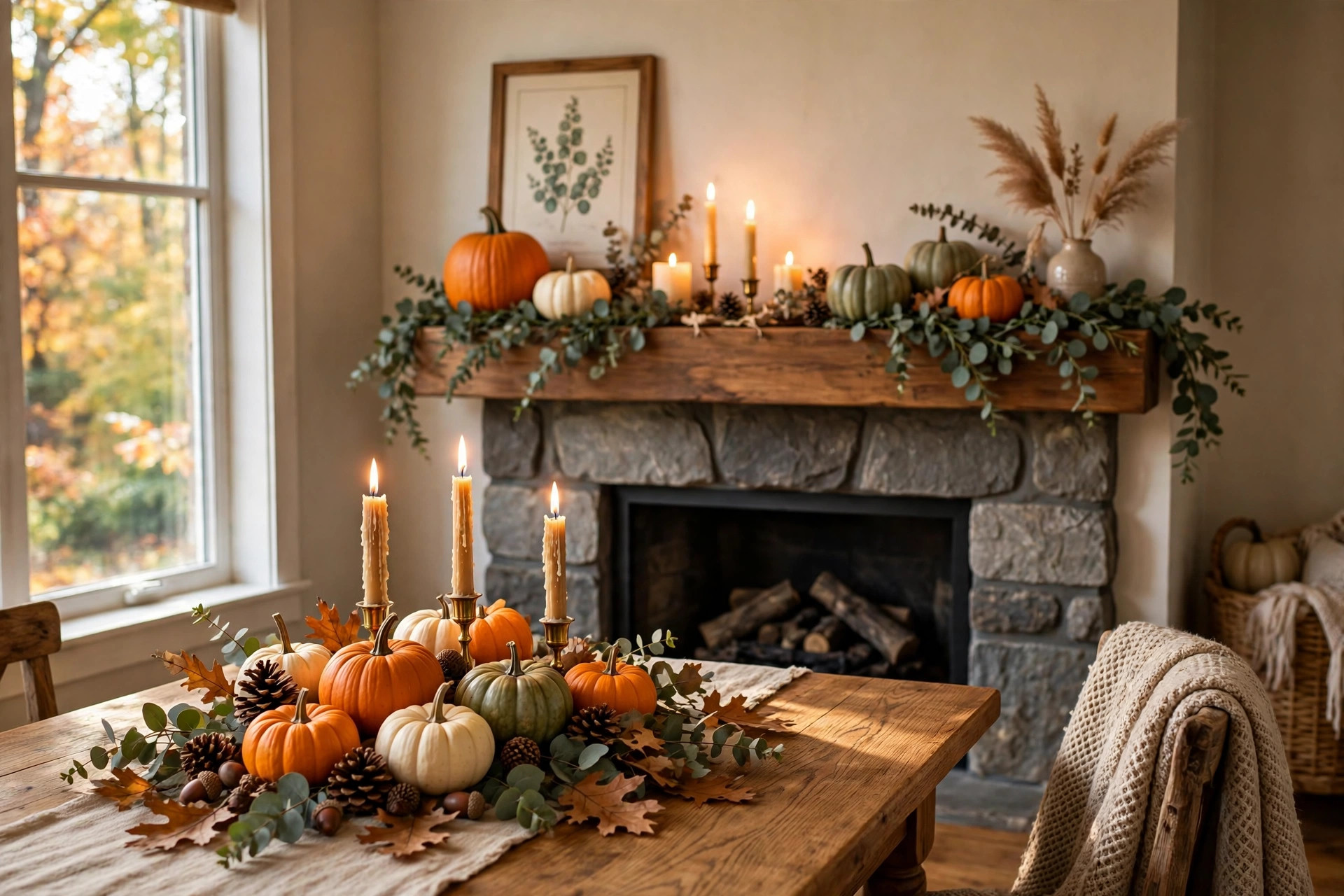

Every autumn, homes across America take on a warm new look. Leaves turn gold and red. The air grows cool. And many families bring that feeling inside with pumpkins.
Fall pumpkin decor for mantel and table displays is one of the easiest ways to dress a home for the season. It costs little. It takes little time. And it makes a room feel calm and welcoming. Whether you like a simple country style or a neat modern look, pumpkins fit in well.
This guide will show you why pumpkin decor works so well, what to look for, the main types, what it costs, how to care for it, and how to keep it safe. You will also find answers to common questions at the end.
Why Fall Pumpkin Decor Works So Well
The mantel is often the heart of a living room. Eyes go there first. A table, whether in the dining room or the hall, is the next stop. When you place pumpkins on both, the whole room feels tied together.
Pumpkins have a shape and color that say autumn at once. No one needs to guess the season. Orange, cream, and deep green pumpkins bring the colors of harvest fields right into the home. They pair well with wood, stone, and brick. They also look fine next to candles, books, and framed photos.
There is a second reason. Pumpkin decor is kind to your budget. A few good pumpkins can change a room for less than the cost of dinner out. Many pieces can be used again next year. Nothing about this project needs special tools or skills.
Finally, fall pumpkin decor for mantel and table displays suits many tastes. A farmhouse home can use white pumpkins with dried corn. A modern home can use matte black pumpkins in a straight row. The same idea bends to fit your style.
What to Look For When Choosing Pumpkins: Fall Pumpkin Decor for Mantel and Table
Before you buy, think about size, color, and material. These three points shape the whole display.
Size and Shape
Small pumpkins, about the size of an apple, work well on tables. They sit near plates or between candles without crowding the space. Medium pumpkins, about the size of a melon, suit the mantel. They have enough weight to anchor the shelf. Large pumpkins look best in groups of two or three on a wide table or hearth.
Mix shapes for a natural look. Tall pumpkins next to round ones keep the eye moving. Real pumpkins grow in odd shapes, and copies that mimic this look more real.
Color
Classic orange is the most popular choice. It glows against dark wood and pale walls alike. White pumpkins, often called ghost pumpkins, give a soft, calm feel. Green and blue-gray pumpkins add a quiet, modern note.
Pick one main color and one or two accents. Three or four colors are enough. More than that can look busy. A safe mix is orange, cream, and a deep green. It works with almost any room.
Material
You can buy real pumpkins or false ones. Real pumpkins look and smell like the season. False pumpkins, made of foam, resin, or cloth, last for years. Many homes use a mix. Real pumpkins go on the table where guests can touch them. False pumpkins sit on the mantel where they stay for weeks.
Check foam pumpkins for dents before you buy. Squeeze cloth pumpkins to feel for even stuffing. For real pumpkins, pick ones with firm skin and a strong stem. Soft spots mean the pumpkin will fade fast.
Good planning ideas for the whole house often start with the living room. If you enjoy seasonal decorating, browse craft ideas at Michaels for fresh autumn project guides.
Types of Fall Pumpkin Decor
Pumpkin decor comes in many forms. Here are the most common types for mantels and tables.
Classic Whole Pumpkins
These are simple pumpkins placed as they are. Real or false, they are the base of most displays. Place them in odd numbers, such as three or five. Odd groups look more natural than even ones.
Painted and Glazed Pumpkins
Painted pumpkins come in gold, copper, white, and even navy. Metallic paint catches lamplight and adds shine. A few painted pumpkins among plain ones make a display feel dressed up. You can also paint plain foam pumpkins yourself with craft paint.
Stacked Pumpkin Towers
Small pumpkins stacked on top of each other form a tower. Three stacked pumpkins make a fine centerpiece for a table. Towers work best with flat-bottomed pumpkins so they do not tip. Some towers come ready-made on a stand.
Pumpkin Garland and Picks
Small pumpkins on wire picks can be tucked into garlands, wreaths, and plant stands. They fill gaps and add color at low cost. Picks also work in flower pots by the front door, much like a fall wreath for front door farmhouse style ties a porch together.
Lighted Pumpkins
Pumpkins with built-in lights glow from inside. They give a soft warm light on dark evenings. Battery lights last for weeks. Lighted pumpkins look best in dim rooms where the glow shows.
Mini Pumpkin Scatter
Very small pumpkins, sometimes called sugar pumpkins, scatter across a table runner. They fill space between dishes and candles. A bowl of mini pumpkins is one of the simplest centerpieces you can make.
How to Arrange a Mantel Display
A mantel is a long narrow shelf. The best displays use layers.
Start with a garland or a long piece of cloth as the base. Eucalyptus garlands, wheat stems, or a simple burlap runner all work. Lay it along the mantel and let the ends fall over the sides.
Next, place your largest pumpkins. Put one tall pumpkin or stack near the center, or place two medium pumpkins off-center for a modern look. Then add medium and small pumpkins around them. Work from large to small.
Add height with candlesticks or lanterns between the pumpkins. Taper candles in warm white give a calm glow. Finally, tuck in small touches: pinecones, dried leaves, or small gourds. Step back and look. Move pieces until the display feels even but not stiff.
Keep the mantel safe. If you have a working fireplace, keep all decor at least a foot away from the firebox. False pumpkins can melt. Real ones can dry out near heat. The U.S. Consumer Product Safety Commission offers clear guidance on keeping home decor away from heat sources.
How to Arrange a Table Display
Table decor must leave room for plates and glasses. Keep the centerpiece low so guests can see each other across the table.
A good rule is to keep the centerpiece below eye level when people sit. A low bowl of pumpkins, a short tower, or a row of small pumpkins down a runner all work. Leave at least a foot of clear space on each side for dishes.
Use a table runner or a wooden board as the base. This marks the display zone and protects the table. Place three to five pumpkins in a group. Add candles of different heights around them. Small bowls of nuts or dried corn fill the gaps.
For the dining room, match the table decor to the meal. A harvest dinner calls for deep colors and plenty of candles. Many families plan their whole best thanksgiving table decor for dining room around the same pumpkin base, then add plates and linens for the feast.
Cost and Price
Fall pumpkin decor fits most budgets. Here is what to expect in the United States.
Real pumpkins cost little. Small pie pumpkins sell for one to three dollars each at grocery stores and farm stands. Medium carving pumpkins cost four to eight dollars. Large pumpkins can run ten to twenty dollars.
False pumpkins cost more at first but last for years. Small foam pumpkins sell for three to six dollars each. Medium resin pumpkins cost eight to fifteen dollars. Large craft-store pumpkins can cost twenty to forty dollars, though sales in late September cut prices in half.
Painted and lighted pumpkins cost the most. A medium lighted pumpkin may cost fifteen to twenty-five dollars. Hand-painted sets from craft shops run higher.
A full mantel display usually costs twenty to sixty dollars with a mix of real and false pieces. A table centerpiece costs fifteen to forty dollars. If you reuse false pumpkins each year, the yearly cost drops to almost nothing. Many shoppers compare seasonal prices at Home Depot and Lowe’s before the autumn rush.
Care and Upkeep
Real pumpkins need some care to last. Wipe them with a damp cloth when you bring them home. Keep them out of direct sun, which speeds decay. A cool room helps them last longer. Most indoor real pumpkins stay fresh for two to four weeks.
Check real pumpkins every few days. If one softens or smells, remove it before it harms the others. Do not place real pumpkins on fine wood without a mat. Moisture can mark the finish.
False pumpkins need little care. Dust them with a dry cloth. Store them in a box with tissue paper so paint does not chip. Keep them away from damp basements, where foam can grow mold. Label the box so you find it next year.
Candles near pumpkins need care too. Trim wicks to a quarter inch before lighting. Never leave candles burning in an empty room. Battery candles are a safe choice near foam pumpkins.
Simple cleaning routines keep the whole house in shape through the season. Home care tips from The Spruce cover autumn upkeep room by room.
Safety Tips
Pumpkin decor is safe when you follow a few rules.
Keep real pumpkins away from pets that chew. Pumpkin flesh is not toxic to dogs and cats in small amounts, but large pieces can upset stomachs. Painted pumpkins may carry paint that pets should not eat. Pet health guidance from the ASPCA is worth a look if your animals are curious.
Keep all decor clear of heat vents, radiators, and fireplaces. Foam and dried plants catch fire fast. Use battery candles near anything that can burn.
Wash your hands after handling real pumpkins, especially before meals. Pumpkin rinds can carry soil and germs.
If small children visit, place small pumpkins out of reach. Mini pumpkins can be a choking risk for toddlers. Large, soft cloth pumpkins are safer for homes with young children.
Frequently Asked Questions
How long do real pumpkins last indoors?
Most real pumpkins last two to four weeks indoors. Cool rooms help. Warm rooms near heating vents shorten their life. Check them often and remove any that soften.
Can I mix real and false pumpkins in one display?
Yes. Many people do this. Use false pumpkins for height on the mantel and real pumpkins on the table where guests see them up close. The mix looks natural and saves money.
What colors go best with orange pumpkins?
Cream, deep green, brown, and gold all pair well with orange. White pumpkins next to orange ones soften the look. Dark wood and black metal frames make orange pop.
How many pumpkins should I use on a mantel?
Five to nine pumpkins suit most mantels. Use odd numbers in mixed sizes. A standard six-foot mantel holds about seven pumpkins with room for candles and garland.
When should I put up fall pumpkin decor?
Early to mid-September is a good time in most of the United States. The decor then carries through Halloween and Thanksgiving. Many families refresh the display in November with deeper colors for the holiday table, often alongside a best thanksgiving centerpiece for dining table for the feast itself.
Where can I find more seasonal decorating ideas?
Home and garden magazines are full of autumn ideas each year. Browsing seasonal galleries at HGTV and Country Living can spark new plans. For craft supplies, JOANN stocks paints, foam pumpkins, and garlands. Furniture and decor retailers like Wayfair and Pottery Barn show full room scenes that are easy to copy at home.
A Short Final Word
Fall pumpkin decor for mantel and table displays is a small project with a large payoff. A few pumpkins, some candles, and a bit of care turn plain shelves and tables into warm autumn scenes. Start simple. Use what you have. Add a few new pieces each year.
The best displays are not the most costly ones. They are the ones that make you pause, smile, and feel at home. That is what autumn decorating is for.
References
ASPCA. (n.d.). Pet care and animal welfare resources. https://www.aspca.org Country Living. (n.d.). Country home and lifestyle. https://www.countryliving.com HGTV. (n.d.). Home and garden ideas. https://www.hgtv.com JOANN. (n.d.). Fabric and craft supplies. https://www.joann.com Lowe’s. (n.d.). Home improvement products. https://www.lowes.com Michaels. (n.d.). Arts and crafts supplies. https://www.michaels.com Pottery Barn. (n.d.). Furniture and home decor. https://www.potterybarn.com The Home Depot. (n.d.). Home improvement products. https://www.homedepot.com The Spruce. (n.d.). Home and garden advice. https://www.thespruce.com U.S. Consumer Product Safety Commission. (n.d.). Product safety information. https://www.cpsc.gov Wayfair. (n.d.). Furniture and home goods. https://www.wayfair.com
Was this guide helpful?

About Jennifer Lee
The My Garden US editorial team writes practical, in-depth home and garden guides for American homeowners — tested advice, no fluff.
You May Also Like

Christmas Village Display Platform for Collection USA: A Complete Buyer’s Guide
August 21, 2026 0 views
Fall Acorn Decor for Table and Mantel in American Homes
April 17, 2026 0 views
Fall Tiered Tray Decor for Kitchen Counter: A Simple Guide
September 25, 2026 0 views