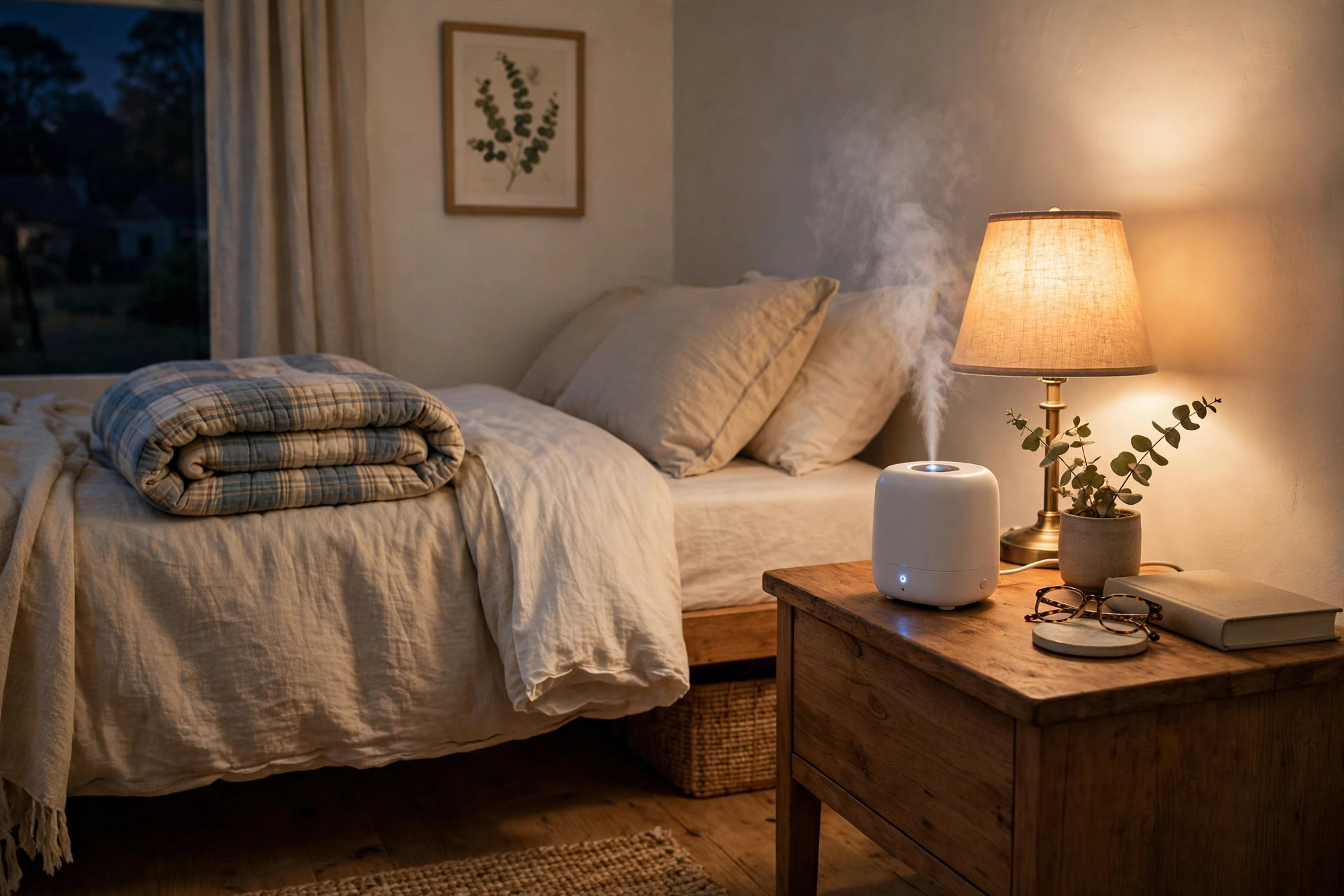

Many American bedrooms grow too dry in winter. Furnaces and heat pumps warm the air, but they pull the moisture out of it. Dry air can scratch your throat. It can dry your skin. It can wake you in the night with a cough. This guide will help you find the best portable humidifier for bedroom use in the USA. It explains what these machines do, how to pick one, and how to keep it clean. The advice here is plain and practical. It is meant for ordinary homes and ordinary budgets.
Why Bedroom Air Gets Too Dry
Relative humidity is a simple idea. It measures how much water the air holds compared with how much it could hold. Most doctors suggest indoor humidity between 30 and 50 percent. In winter, heated indoor air often falls below 25 percent. That is drier than a desert. Wood furniture shrinks. Houseplants wilt. People wake with dry mouths and nosebleeds.
A humidifier adds water vapor back into the air. A portable model does this for one room, usually a bedroom. It is small enough to sit on a dresser or a nightstand. It plugs into a wall outlet. You fill it with tap water. It runs through the night while you sleep. For many families, it is the simplest fix for dry winter air.
What to Look for in a Portable Humidifier: Best Portable Humidifier for Bedroom Usa
Tank Size and Run Time
Tank size sets how long the machine can run before you must refill it. A one-gallon tank can often run for a full night. A half-gallon tank may need a refill before morning. If you do not want to wake up to fill it, pick a larger tank. A big tank also means less daily work.
Mist Type
Portable humidifiers make either cool mist or warm mist. Cool mist models are the most common for bedrooms. They use less power. Warm mist models boil water, so they use more power. We compare these two types in more depth below. A quick note: a guide on the cool mist vs warm mist humidifier comparison can help if you are stuck between the two.
Noise Level
You will sleep next to this machine. Noise matters. Most makers list a decibel rating. Look for a rating under 30 decibels. That is about as loud as a soft whisper. Ultrasonic models tend to be the quietest. Check reviews from real buyers before you decide.
Filter Needs
Some models use a wick filter. The filter soaks up water and adds it to the air. Filters must be replaced every one to three months. Filterless models cost less to run but need more cleaning. Neither choice is wrong. Just know the upkeep before you buy.
Types of Portable Humidifiers
Evaporative Cool Mist
These are the most common bedroom humidifiers in the United States. A fan blows air through a wet wick filter. Water evaporates into the air. These units are simple and safe. They cannot over-humidify a room easily, because the air only takes what it can hold. The wick filter must be replaced from time to time. Cost usually runs from 40 to 120 dollars. Home comfort guides from Carrier describe how added humidity eases the load on heating systems in winter.
Ultrasonic Cool Mist
Ultrasonic models use high-frequency sound to turn water into a fine mist. They are very quiet. Many are small and light. They cost about 30 to 80 dollars. The fine mist can leave a white dust on furniture if your tap water is hard. Using distilled water fixes this. These models are popular in apartments and small bedrooms across the country.
Warm Mist
Warm mist models heat water to boiling and release steam. The steam kills many germs in the water. These units are good for very cold rooms, since the mist is warm. But they use more electricity. The hot parts can burn a child or a pet. Keep them out of reach. Cost usually runs from 50 to 100 dollars. Product testers at The Spruce have long covered warm mist models for cold-climate homes.
Combination and Top-Fill Models
Newer models let you switch between cool and warm mist. Top-fill models open at the top, so you can pour water in without lifting the tank. These cost more, often 80 to 150 dollars. The extra ease of use is worth it for many buyers. Shoppers comparing major home brands at LawnStarter style buying guides often start with ease of cleaning as the top test.
Cost and Price
A good portable humidifier for a bedroom costs between 30 and 150 dollars in the United States. Budget models under 50 dollars work fine for small rooms. Mid-range models from 60 to 100 dollars offer larger tanks and quieter fans. Premium models above 100 dollars add timers, humidity sensors, and remote controls.
Running costs are small. A cool mist model uses about as much power as a light bulb. At average power rates, it costs only a few cents per night. Warm mist models cost more to run, since they heat water. Filters, when needed, cost 10 to 20 dollars each and last one to three months. Distilled water, if you choose to use it, adds a few dollars per week. Advice on efficient home equipment from Energy Star can help you compare power use across models.
If you want moisture for the whole house instead of one room, the price picture changes. Whole-house units tie into the furnace. A related article on the best whole house humidifier reviews 2026 usa covers those larger systems and their costs.
Care and Upkeep
Clean your humidifier often. Dirty water tanks can grow mold and germs. The mist can then carry those germs into the air. Rinse the tank every day. Do a deep clean once a week with white vinegar. Let all parts dry before you put the unit back together.
Change filters on schedule. A dirty filter works poorly and can smell bad. Keep the area around the unit dry. Wipe up any water that spills. In spring, when the air grows moist again, empty the tank and store the unit in a dry place. Guides from Family Handyman walk through the weekly vinegar-cleaning routine step by step.
Hard water leaves scale inside the tank. If your home has hard water, distilled water is worth the cost. It keeps the machine clean longer and stops white dust on your furniture. This is a small detail that makes a big difference in daily use.
Watch for signs that the unit needs more attention. A musty smell means mold may be growing in the tank or filter. A drop in mist output often means the filter is clogged. Replace parts when you see these signs. Do not wait for the problem to grow worse. A few minutes of care each week keeps the machine working for years.
When the heating season ends, clean the unit fully and let it dry. Store it with the tank lid off so air can move inside. Put the manual and any spare filters in a bag with the unit. This saves time next winter, when dry air returns.
Safety
Never let humidity climb too high. A cheap humidity gauge costs about 10 dollars. Keep the bedroom between 30 and 50 percent. Above 60 percent, mold can grow on walls and window frames. Dust mites also thrive in damp air. Turn the unit off or lower the setting if you see fog on the windows.
Warm mist units boil water. The steam and the hot housing can burn skin. Place them where children and pets cannot touch them. Cool mist units are safer for homes with small children.
Unplug the unit when you clean it. Do not add medicines or oils to the water unless the maker says it is safe. Some models have a tray for scents. Others can be damaged by additives. Safety advice for home equipment from Briggs & Stratton reminds owners to read the manual before adding anything to a machine. Large equipment makers such as John Deere make the same point in their owner guides: follow the manual first.
Placement and Room Size
Most portable humidifiers serve rooms up to 300 square feet. That covers a standard American bedroom. Place the unit at least two feet off the floor. A nightstand or dresser is ideal. Keep it away from the bed, so the mist does not wet your pillows. Leave some space around it for air to flow.
For larger master bedrooms, pick a model rated for 500 square feet. Two small units can also work well. One near the bed and one across the room gives even moisture. Notes on home airflow from Lennox explain why even moisture matters more than raw output.
Portable vs Whole-House Humidifiers
A portable unit serves one room. It is cheap and needs no installer. You can move it where you need it. A whole-house unit serves the full home through the ducts. It costs far more and needs a professional to install it. If your whole house feels dry, and not just the bedroom, the whole-house route may pay off. A comparison of bypass vs fan powered humidifier comparison explains the two main whole-house designs. Federal home-energy resources at the U.S. Department of Energy discuss when whole-house humidity control makes sense.
Frequently Asked Questions
How much water should a bedroom humidifier hold?
One gallon is a good target. A one-gallon tank usually runs through the night on a low or medium setting. Smaller half-gallon tanks are fine for small rooms but may run dry before morning. Larger tanks need less refilling but take more space on the dresser.
Can a humidifier help with snoring?
It can help when dry air is the cause. Dry throats and noses swell and narrow the airway. Moist air soothes the tissues. It will not fix snoring caused by other problems, such as sleep apnea. Talk to a doctor if snoring is loud or constant.
Is distilled water required?
It is not required, but it is better. Tap water is fine in most units. Hard tap water leaves mineral dust and scale. Distilled water avoids both problems. If you see white dust on nearby furniture, switch to distilled water. It costs about one dollar per gallon at the store.
How often should I clean a portable humidifier?
Rinse the tank daily. Do a full vinegar clean weekly. Change the filter when the maker says to, usually every one to three months. A clean unit runs well and keeps the air safe. A dirty unit can spread germs. This one habit matters more than any feature on the box.
Do humidifiers raise the heating bill?
Cool mist models barely change the power bill. They use about as much power as a small bulb. Warm mist models cost more, since they boil water. Either way, moist air feels warmer than dry air at the same temperature. Many families find they can lower the thermostat a degree or two. Lawn and garden equipment maker Pennington and outdoor tool maker Echo both publish home-care guides that note the same comfort trick.
A Short Final Word
The best portable humidifier for bedroom use in the USA is the one that fits your room, your budget, and your habits. Pick a quiet cool mist model with a tank that lasts the night. Clean it every week. Keep the humidity between 30 and 50 percent. Do those three things and you will sleep better through the dry months. Simple machines, used well, give simple comfort.
References
Briggs & Stratton. (n.d.). Engines and outdoor power equipment. https://www.briggsandstratton.com Carrier. (n.d.). Heating and cooling systems. https://www.carrier.com Deere & Company. (n.d.). Lawn and garden equipment. https://www.deere.com ECHO. (n.d.). Outdoor power equipment. https://www.echo-usa.com ENERGY STAR. (n.d.). Energy efficient products. https://www.energystar.gov Family Handyman. (n.d.). DIY home repair and maintenance. https://www.familyhandyman.com LawnStarter. (n.d.). Lawn care services and guides. https://www.lawnstarter.com Lennox. (n.d.). Heating and cooling systems. https://www.lennox.com Pennington. (n.d.). Lawn and garden products. https://www.pennington.com The Spruce. (n.d.). Home and garden advice. https://www.thespruce.com U.S. Department of Energy. (n.d.). Energy efficiency and renewable energy. https://www.energy.gov
Was this guide helpful?

About Sarah Mitchell
The My Garden US editorial team writes practical, in-depth home and garden guides for American homeowners — tested advice, no fluff.
You May Also Like

Ridge Vent vs Turbine Vent Comparison USA: Which Roof Vent Fits Your Home
August 21, 2026 0 views
U Shaped Window AC Reviews 2026 USA: A Plain Buyer Guide
June 6, 2026 0 views
Best Crawl Space Dehumidifier 2026 USA: A Plain Guide for Homeowners
July 29, 2026 0 views