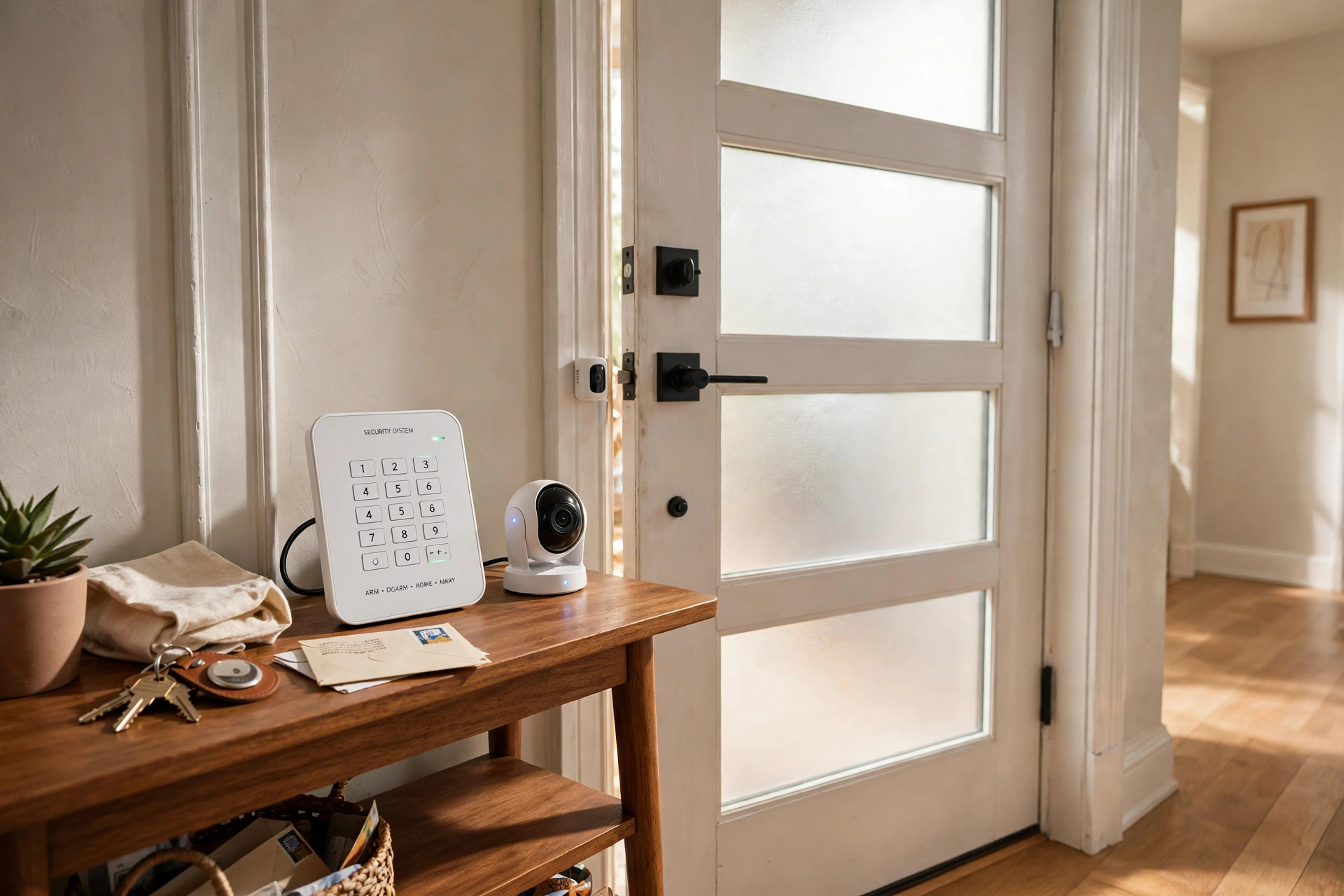

Every year more American homes turn to kits that can be set up without a technician. The market for diy home security system reviews 2026 usa is wider than it has ever been. Dozens of brands now sell boxes that hold cameras, sensors, keypads and smart locks. The buyer opens the box, follows an app, and sticks sensors to doors and windows. No drilling. No service visit. No long contract.
This guide explains what to look for, how the main systems compare, what they cost, and how to keep them running well. It is written for the homeowner who wants facts first and sales talk last.
Why DIY Security Matters Now
Home break-ins are still a real risk in many cities and suburbs. Police say most burglars avoid homes that look guarded. A visible camera or a door sensor can be enough to send a thief to the next street. A do-it-yourself system gives that visible guard without the monthly bill of a wired alarm company.
There is another reason. Renters, students and young families move often. A wired system belongs to the landlord. A wireless kit belongs to the buyer and can move with them. That is why guides such as the best security system for renters 2026 usa have grown so popular. The same freedom helps owners of small houses who want one system they can set up themselves.
DIY kits also fit modern life. They send alerts to a phone. They work with video doorbells and smart speakers. They let owners check on pets, kids or a garage while away at work. Reviews at CNET and PCMag now test these kits the way they once tested printers and routers: for setup time, app quality and everyday reliability.
Buyers also like the control. A DIY owner can arm the system from bed, add a sensor for a new shed, or share access with a dog sitter through the app. There is no call to a company, no wait for a truck. This control is one reason reviews of diy home security system reviews 2026 usa models keep rising each season. The market listens, and the kits keep getting simpler.
What to Look for in a DIY Home Security System: Diy Home Security System Reviews 2026 Usa
Ease of Installation
A true DIY system should be ready in under an hour. Sensors should mount with adhesive strips. Cameras should join the home Wi-Fi through an app. The box should list exactly what is inside. Look at the best video intercom system for home usa guides too, since doorbells are often part of the same kit. If a product page talks about a pro installer, it is not really DIY.
Core Equipment
Most starter kits include a base station or hub, two or three door and window sensors, one motion sensor and a keypad. That is the heart of a wireless home alarm system. Better kits add indoor cameras, outdoor cameras and a video doorbell. A smart lock can join the same app so the door locks itself at night.
Monitoring Options
There are two paths. Self-monitoring means alerts go to the phone and the owner decides what to do. This path costs nothing after the kit. Professional monitoring means a call center answers alarm events day and night and can call police. This costs a monthly fee, often with no contract. The Consumer Reports buying guides rate monitoring plans for response speed and fine print.
Cameras and Video Quality
Look for 1080p video at a minimum. Many 2026 kits offer 2K or better. Night vision matters more than most buyers think. A dark front porch is where a camera proves itself. Two-way audio lets the owner speak to a visitor from anywhere. Local storage plus cloud storage gives a backup if the Wi-Fi fails.
Smart Home Fit
Most kits now talk to voice assistants and smart locks. Check that the system works with the devices already in the house. The Google smart home line at Google Store shows how cameras, doorbells and locks can share one app. Mixed brands can still work, but one app is simpler than three.
Types of DIY Home Security Systems
All-in-One Starter Kits
These are the most common. A hub, a few sensors and a keypad ship in one box. The buyer adds cameras later. Brands such as Ring and SimpliSafe built their names on this model. They suit flats, small houses and first-time buyers.
Camera-First Systems
Some buyers care most about video. They start with two or three cameras and a doorbell, then add a few sensors. This works well for people who want to see packages and visitors. Test sites like The Verge often review these camera kits for video quality and privacy controls.
Professionally Monitored DIY Kits
These kits install like any DIY product but pair with a paid monitoring plan. ADT now sells self-installed kits with optional pro monitoring. The owner can start on a self-monitored plan and upgrade later. This is a good middle path for people who want backup at night but do not want a technician visit.
No-Contract Home Security Options
A growing group of buyers wants no monthly bill at all. No contract home security system choices rely on self-monitoring and local storage. They cost more up front but nothing after. They suit buyers who watch their own alerts and live near family or neighbors who can check on the home.
Cost and Price Breakdown
A basic starter kit costs roughly $150 to $300. This usually covers a hub, a few sensors and a keypad. Adding two cameras raises the price to about $300 to $500. A full house with outdoor cameras, a doorbell and a smart lock can reach $600 to $900.
Monthly plans add to the total. Professional monitoring runs about $10 to $35 a month for most DIY brands. Cloud video storage often costs extra, about $5 to $15 a month, though some brands give free short clips. Self-monitoring costs nothing. Retailers like Best Buy often bundle kits with free months of monitoring, so watch for sales before buying.
Think about the total over two years. A $250 kit with no monthly fee costs $250. A $150 kit with a $25 monthly plan costs $750 over two years. The cheap kit is not always the cheap choice. Write the numbers down before deciding.
Also budget for the small extras. Extra sensors often cost $20 to $40 each. An outdoor camera can cost $80 to $200. A smart lock that joins the system may add $150 or more. Batteries and range extenders add a little each year. A written list of the full kit keeps the final bill honest and avoids surprise trips to the store.
How the Leading 2026 DIY Systems Compare
Reviews this year cluster around a few strong names. Ring remains the value leader. Its kits are simple to install and its cameras are priced low. SimpliSafe earns praise for clean hardware and easy monitoring upgrades. Google Nest fits homes that already use Google devices. ADT Self Setup suits buyers who want the option of pro monitoring from a classic brand.
Independent reviewers measure the same things: setup time, sensor range, false alarm rate, night video and app speed. The federal CPSC site is worth checking for any safety recalls on cameras or smart locks before buying. A five-star review means little if the product was recalled.
Buyers should also read about products outside security. A home with an EV charger for home on the driveway has extra power needs. Smart panels, chargers and security kits all share the home network. Plan the network first so cameras do not slow down when the car charges.
Care and Upkeep
DIY systems need little care, but they need some. Change or charge batteries twice a year. Wipe camera lenses so night vision stays clear. Test every sensor once a month through the app. Most apps have a test mode that sends a silent alert to the phone.
Keep the app and the camera firmware current. Updates fix bugs and close security holes. A system that ran fine last year can still need a patch. Turn on automatic updates if the app offers them.
Check the Wi-Fi signal at each camera. A camera at the far end of the garage may drop frames if the router is too far away. A small range extender can fix this for a low price. Test the connection on a busy evening when the whole family is online.
Safety Notes
A security system is a tool, not a guard. Sensors and cameras reduce risk. They do not remove it. Keep doors locked even when the system is armed. Do not share app logins with strangers. Use a strong, unique password for the security account.
Place cameras with privacy in mind. Point them at doors and yards, not at a neighbor’s windows. Tell guests and cleaners that cameras are running. Some states have rules about recording audio, so check local law if a camera records sound.
Test the alarm so the whole household knows the sound. Make sure children and older family members can use the keypad. Write the disarm code where a trusted adult can find it in an emergency. A system nobody can operate is decoration.
Frequently Asked Questions
Do DIY home security systems work without Wi-Fi?
Most need Wi-Fi for alerts and video. Some hubs have cellular backup that keeps basic alerts alive during an outage. Ask the maker if the base kit includes this or if it needs a plan.
Is self-monitoring enough?
It is enough for many owners. Alerts reach the phone in seconds. The owner can look at live video and call police if needed. Professional monitoring is better for people who sleep through phone buzzes or travel often.
How long does installation take?
A starter kit usually takes 30 to 60 minutes. Cameras add time for mounting and aiming. A full house with many sensors can take an afternoon. No tools beyond a ladder are needed.
Can renters use DIY systems?
Yes. Wireless sensors use adhesive and leave no holes. This is exactly why the best security system for renters 2026 usa market exists. Take the kit along when the lease ends.
Do these systems need a contract?
Many do not. Self-monitored kits work with no contract and no monthly fee. Professional monitoring plans are usually month to month. Always read the plan terms before paying.
Will a DIY system lower home insurance?
Some insurers give a small discount for a monitored alarm. Ask the insurer what proof they need. A certificate from a monitored plan usually qualifies.
A Final Word
The diy home security system reviews 2026 usa landscape is kind to careful buyers. Kits are simpler, cameras are sharper and prices are fair. The best system is the one that fits the home, the budget and the habits of the people who live there. Start small, test everything, and grow the system as needs change. A few hundred dollars and one free afternoon can buy years of calmer nights.
References
ADT. (n.d.). Home security and automation. https://www.adt.com Best Buy. (n.d.). Consumer electronics retailer. https://www.bestbuy.com CNET. (n.d.). Technology news and reviews. https://www.cnet.com Consumer Reports. (n.d.). Product reviews and ratings. https://www.consumerreports.org Google Store. (n.d.). Smart home devices. https://store.google.com PCMag. (n.d.). Technology product reviews. https://www.pcmag.com Ring. (n.d.). Smart home security devices. https://www.ring.com SimpliSafe. (n.d.). Home security systems. https://www.simplisafe.com The Verge. (n.d.). Technology news and reviews. https://www.theverge.com U.S. Consumer Product Safety Commission. (n.d.). Product safety information. https://www.cpsc.gov
Was this guide helpful?

About James Carter
The My Garden US editorial team writes practical, in-depth home and garden guides for American homeowners — tested advice, no fluff.
You May Also Like
Best Fake Security Camera Reviews 2026 USA: A Plain Guide
July 23, 2026 0 views
myQ vs Tailwind: A Plain Comparison of Two Smart Garage Openers for American Homes
February 21, 2026 0 views
Thread vs Zigbee Smart Home Comparison USA
April 25, 2026 0 views