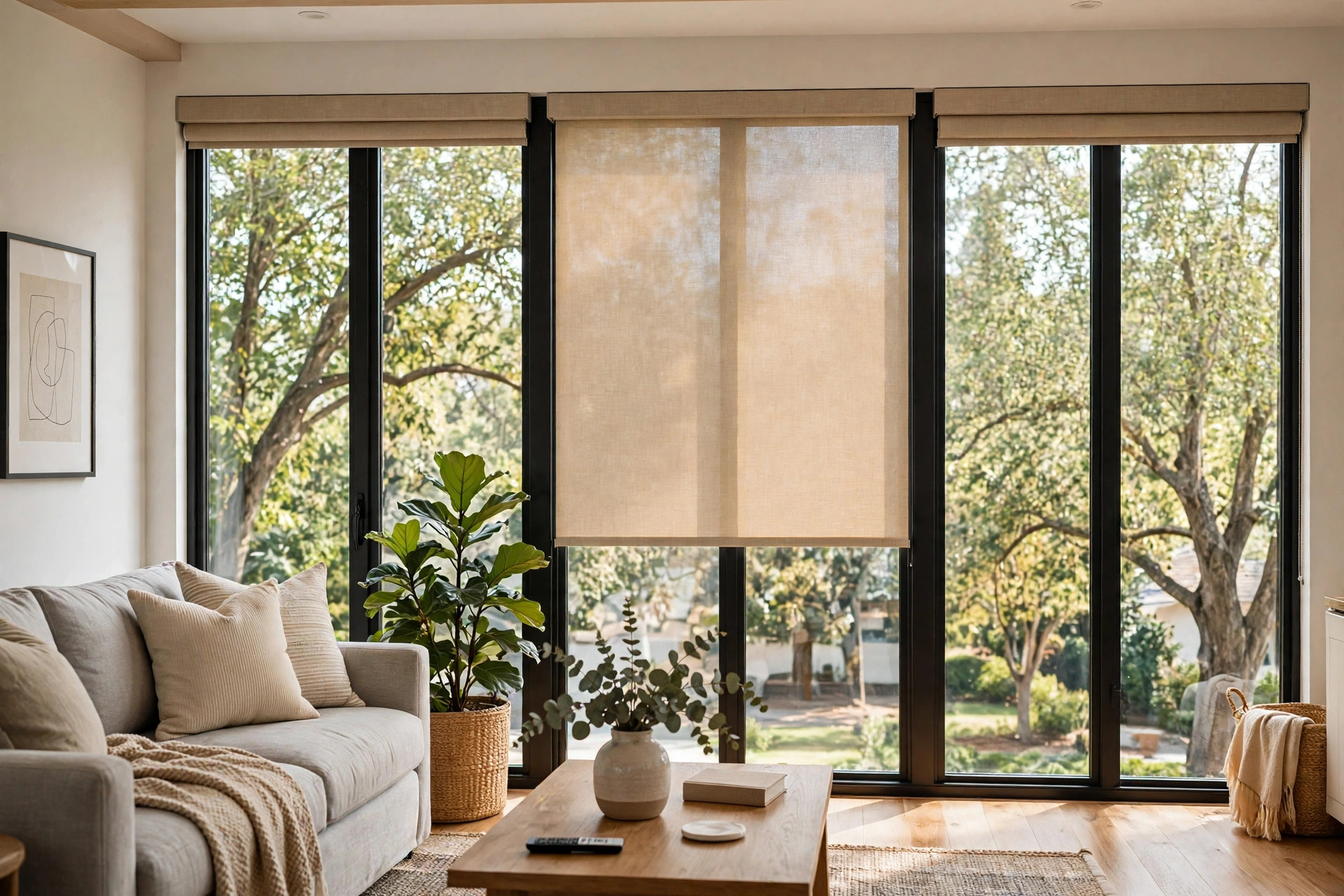

Large windows are the pride of many American homes. They let in daylight and open up the view. They also bring heat in summer, glare on the television, and high energy bills. When a window is six feet wide or taller than a man, an ordinary shade is hard to lift by hand. That is where the best motorized shades for large windows usa buyers seek come in. A small motor inside the shade does the work. You press a button, and the shade rises or falls on its own. This guide explains what to look for, the main types, the costs, and the safety rules. It is written for the American homeowner in plain terms.
Why Large Windows Need Motorized Shades
A large window is a heavy job for a shade. The fabric is wide. The roller tube is long. Hand chains are slow and stiff on wide shades. Cords hang in loops that can tangle. On tall windows, the cord may hang out of reach, or you may need a stool to pull it. Neither is a good answer.
Motorized shades solve this with one press. A battery or wired motor turns the tube and moves the shade. For a living room wall of glass, this is a real change. You can close four shades at once from your chair. You can set them to rise with the morning sun and fall at noon. That kind of control is why more buyers are looking for smart shades for big windows when they plan a remodel.
There is also the energy question. The sun that pours through large panes heats the room. An air conditioner then works harder. A shade that closes itself at the hottest hour can trim that load. Light-filtering fabric cuts glare while keeping the view. Blackout fabric darkens a media room or bedroom. You get the benefit of big glass without the worst of the heat.
Finally, there is the simple matter of looks. A cord-free shade is clean. The hem hangs level across a wide span. There are no cords to swing or tangle. If you want motorized roller shades for wide windows that look neat from the street, the cordless design is part of the point.
How to Choose: What to Look For: Best Motorized Shades for Large Windows Usa
Shopping for wide motorized shades is easier when you know the key points. Measure first, then think about power, control, fabric, and fit.
Size and Weight
Measure each window in three places: width at the top, middle, and bottom. Use the smallest width for an inside mount. Large windows are rarely perfect rectangles, so the triple check matters. Check the depth of the window frame too. A motorized roller needs more depth than a plain shade, usually about three inches for an inside mount.
Ask about weight limits. A shade that is eight feet wide in a heavy fabric is a load for the motor. Good makers list the largest size each motor can carry. If your window is past that limit, you may need two shades side by side, or a stronger motor. Remote control window shades for large windows should move smoothly from top to bottom without sag in the middle.
Power Source
Three power choices exist: battery, plug-in, and hardwired.
Battery packs are the most common. A rechargeable tube or wand hides in the shade housing. It runs for months on one charge for most homes. When the shade moves slowly or stops, recharge it with a cable. Battery power is best for windows with no outlet nearby.
Plug-in shades use a small adapter to a nearby outlet. They never need charging. A cord runs from the shade to the wall, so plan where it will show.
Hardwired shades tie into the home’s wiring. An electrician runs low-voltage wire during a remodel. There are no batteries and no visible cords. This is the cleanest choice, but it costs more and suits new work or a full renovation.
Control Options
At a minimum, you want a remote control. Many remotes can run one shade or a group of shades at once. That is the heart of comfort with battery powered motorized shades for big glass walls.
Next comes app control. Most brands now offer a phone app. You can set schedules, such as shades down at two in the afternoon in July. You can open shades from another room.
Voice control is the third layer. Shades can join a smart home platform like Google’s smart home line, so you can raise them with a spoken command. Reviews from CNET often compare how well different brands join these platforms. Check that your chosen shade works with the platform you already use, or plan to add a small bridge device.
Fabric and Light
Fabric decides what the shade does. Sheer fabric softens light but shows the view. Light-filtering fabric gives privacy in the day and a warm glow. Room-darkening fabric cuts most light. Blackout fabric, often with side channels on very wide windows, blocks nearly all of it.
For large windows facing west, many buyers pick a solar screen fabric. It cuts heat and glare while you can still see out. Independent lab testing from Consumer Reports has long compared how window coverings affect room comfort, and solar fabrics tend to rate well for glare control.
Color matters on wide spans. Light colors reflect heat. Dark colors absorb it but look rich from outside. Some fabrics have a light face to the street and a dark face to the room. That two-tone trick is common on large shades.
Types and Options
Motorized shades come in several styles. Each fits a different need.
Roller shades. The most popular type for large windows. A single sheet of fabric rolls up onto a tube. They are simple, trim, and fit modern rooms. Motorized roller shades for wide windows handle very large widths, sometimes ten feet or more with the right motor.
Cellular shades. Made of honeycomb cells that trap air. They add a layer of insulation to the window. On big windows in cold climates, this helps in winter. They stack up small when open, so the view stays wide. Motors for cellular shades are common in battery form.
Roman shades. Fabric folds into soft pleats as it rises. They suit traditional rooms. For very large windows, the pleats can be heavy, so check the motor rating with care.
Solar shades. A mesh fabric that filters sun. Often used in offices and in homes with a view to keep. They run well in motorized form because the fabric is light.
Sheer horizontal shades. Vanes of fabric float between two sheer layers. Tilt them for light control or raise the whole shade. They are elegant on tall windows but cost more.
Exterior shades. Mounted outside the glass. They stop heat before it enters. These need weather-rated motors and are common on patios and sun porches.
If you also want drapes, look at smart curtain hardware for sliding doors. Our guide to smart curtain rod reviews for sliding doors covers motorized rods that pair well with wide glass.
Cost and Price
Prices vary widely, so it helps to think in ranges. A single battery-powered motorized roller shade for a standard window often runs from about 200 to 500 dollars, plus measuring and installation if you hire it out. For large windows, add size. A shade eight feet wide in a good fabric may run 500 to 1,200 dollars or more per window.
Custom work raises the price. Exact-fit widths, premium fabrics, and top-down features all add cost. Hardwired power adds an electrician’s fee. Professional measuring and installation for a whole house can add several hundred dollars, though many battery shades are made for do-it-yourself mounting.
Smart features add their own cost. A bridge device that links shades to a home platform may run 100 to 300 dollars. It serves the whole house, so the per-window cost falls as you add shades.
When you compare quotes, ask what is included. Does the price cover the motor, the fabric, the remote, and the mount? Is measuring free? What is the warranty on the motor? Good makers often give five years or more on the motor and the electronics. Technology press like The Verge covers the smart home market and often notes that warranty terms are a fair sign of motor quality.
Care and Upkeep
Motorized shades need little care, but wide ones deserve a routine. Dust the fabric every month or two with a soft cloth or the brush tool of a vacuum. On large shades, dust shows more, so a quick pass keeps them fresh. For spots, use a damp cloth and mild soap, then blot dry. Do not soak the fabric, and keep water away from the motor and battery.
Recharge batteries before they run flat. Most apps show a battery level. A shade that moves slower than usual is asking for a charge. Mark the calendar twice a year if you do not check the app.
Check the mounts once a year. Large shades are heavy, and screws can work loose over time. Tighten brackets and make sure the shade sits level. A shade that rolls unevenly may be out of level or may have fabric binding at one end. Fix that early, before the motor strains.
Keep the remote where you can find it. Many households lose the small remote in a couch. A wall-mounted holder by the door is a cheap fix. If the shade ever stops answering, change the remote battery first, then check the shade’s own battery. Nine times out of ten, that is the whole answer.
Safety
Safety deserves its own section, because motorized shades remove a known hazard. Old corded blinds have caused harm to small children and pets. The U.S. Consumer Product Safety Commission has warned for years about cord loops on window coverings. Motorized shades have no pull cords and no bead chains. For homes with toddlers, that alone is a strong reason to choose them.
Still, a few rules apply. Keep the shade’s small parts out of reach of children. Mount the shade firmly so a climbing child cannot pull it down. For very tall windows, schedule shades to close when the sun is strongest rather than leaving the choice to small hands.
Electrical safety is simple but real. Use only the charger that came with the shade. Do not splice or extend motor wires yourself. For hardwired shades, hire a licensed electrician. Do not run a plug-in cord under a rug or through a door hinge, where it can wear.
Smart home safety counts too. If shades join a home network, use a strong password on the app and on the home router. Home security firms like ADT and SimpliSafe, and device makers like Ring, all stress basic network hygiene for connected homes. Keep the shade’s app updated. Updates often fix bugs in scheduling and security.
Frequently Asked Questions
Do motorized shades work on very large windows? Yes, with the right motor. Most battery motors handle shades up to about eight feet wide. Wider or heavier shades need a stronger motor or two shades mounted side by side. Always check the maker’s size chart for the exact fabric you choose.
How long do the batteries last? For a shade used once or twice a day, a charge often lasts six to twelve months. Large shades use more power per move, so expect the shorter end of that range. Recharging takes a few hours with the supplied cable.
Can I control them with my voice? Most current models can. They connect through a bridge or directly to platforms such as Google’s smart home line. Say the command and the shade moves. Check compatibility before you buy, since not every shade works with every platform.
Are motorized shades hard to install? Battery shades are among the easiest window coverings to install. You mount two or three brackets, snap the shade in, and pair the remote. An inside mount on a large window may take thirty to forty-five minutes. Hardwired shades need an electrician and suit a remodel.
What is the difference between shades and smart blinds? The terms overlap. Shades are usually one piece of fabric. Blinds have slats that tilt. Both come in motorized versions. Our best smart blinds reviews 2026 usa roundup compares slatted models, while this guide covers fabric shades. The lutron vs ikea smart blinds comparison usa article looks at two popular smart blind lines head to head.
Do they really save energy? They can help. A shade that closes during peak sun hours cuts heat gain through large glass. In winter, cellular shades add insulation. The savings depend on your climate, the window direction, and the fabric. No shade pays for itself overnight, but scheduled shading is a real tool for comfort.
A Final Word
The best motorized shades for large windows usa homeowners can buy are the ones that fit the window, the power source, and the way you live. Measure with care. Choose battery power for easy retrofit, plug-in for steady use near an outlet, and hardwired for a clean remodel. Pick fabric for the job: solar screen for glare, light-filtering for daily privacy, blackout for sleep. Then enjoy the simple pleasure of pressing one button and watching a whole wall of glass go quiet. Large windows should be a joy, not a chore. A motor makes them so.
See PCMag for more detail.
References
ADT. (n.d.). Home security and automation. https://www.adt.com CNET. (n.d.). Technology news and reviews. https://www.cnet.com Consumer Reports. (n.d.). Product reviews and ratings. https://www.consumerreports.org PCMag. (n.d.). Technology product reviews. https://www.pcmag.com Ring. (n.d.). Smart home security devices. https://www.ring.com SimpliSafe. (n.d.). Home security systems. https://www.simplisafe.com The Verge. (n.d.). Technology news and reviews. https://www.theverge.com U.S. Consumer Product Safety Commission. (n.d.). Product safety information. https://www.cpsc.gov
Was this guide helpful?

About Jennifer Lee
The My Garden US editorial team writes practical, in-depth home and garden guides for American homeowners — tested advice, no fluff.
You May Also Like

Best Automatic Pool Cleaner Reviews 2026 USA
August 4, 2026 0 views
Apartment Security System No Drilling Reviews: A Complete Guide for Renters
July 25, 2026 0 views
Best Smart Oil Tank Gauge Reviews USA: A Homeowner Guide
January 12, 2026 0 views