
Introduction
This guide collects the best smoker for jerky making reviews in one place. Many home cooks want to dry their own beef jerky. A good smoker makes the job simple. A poor smoker makes the job hard. The right unit holds a low, steady heat and moves air across thin strips of meat. That steady heat and moving air turn raw strips into safe, tasty jerky.
Jerky is not like ribs or brisket. The strips are thin and do not forgive heat swings. A burst of heat dries the outside while the inside stays soft. A long drop lets the meat sit too long in the danger zone. That is why a review of smokers for jerky must look at different traits than a review of smokers for barbecue.
This article walks through each point in plain words. It explains why the smoker matters, what traits to look for, and which types of smokers work best for drying meat at home. It also covers cost, care, and safety. By the end, you will know which smoker fits your needs and your budget.
Why the Right Smoker Matters for Jerky: Best Smoker for Jerky Making Reviews
Jerky making is a drying job, not a roasting job. The goal is to remove water from thin strips of meat. Heat speeds the drying. Smoke adds flavor. Air flow carries the water away. All three must work together for many hours.
A smoker built for jerky keeps heat between 140 and 170 degrees for a full batch. That low range is the heart of jerky making. Many smokers sold for barbecue shine at 225 to 275 degrees. That range is fine for pork shoulder. It is too hot for jerky. If the heat runs high, the outside of each strip dries into a shell while the inside stays moist. That shell is called case hardening. It traps water inside the strip. The jerky looks done but spoils fast.
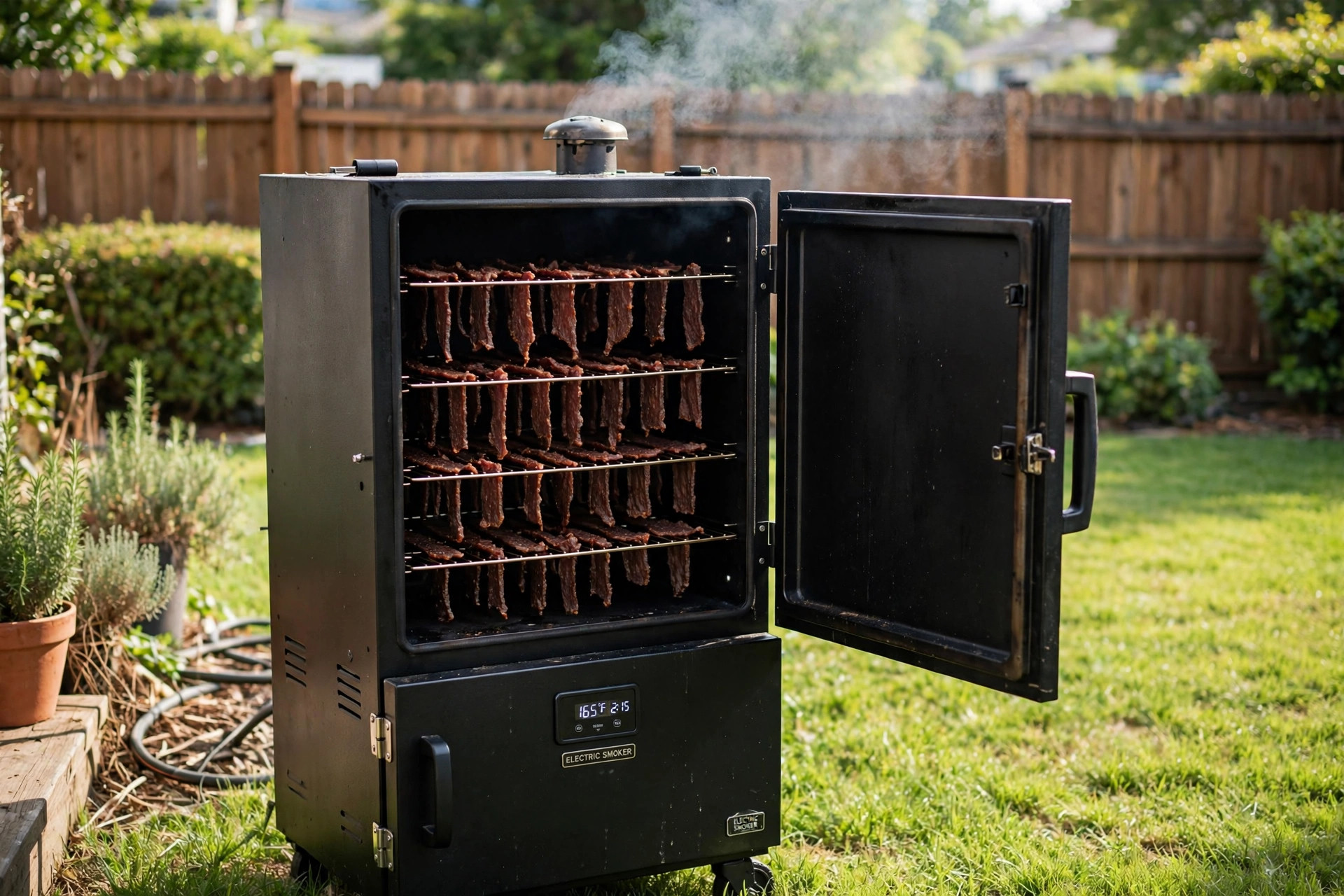
A good jerky smoker also gives you room for many thin strips at once. Racks must sit far enough apart that air can move between them. Crowded racks block the air. The strips in the middle stay soft while the edge strips turn hard. A tall cabinet smoker with four or five racks does this job well.
Finally, the right smoker saves you time and worry. A unit with steady controls lets you load the racks and check the batch now and then. A unit with wild swings in heat makes you watch the thermometer all day. Reviews that test heat control tell you which is which.
What to Look for When You Choose a Smoker
Low and Steady Temperature Control
Temperature control is the first trait to study in any review. Look for a smoker that can hold 140 to 170 degrees for six to ten hours. Electric smokers and pellet smokers do this best. They use dials or digital panels. You set the number and the unit holds it.
Charcoal and wood smokers can work for jerky but ask more skill. You tend the fire and watch the vents. If you enjoy tending a fire, a charcoal unit will serve you well. If you want to set the heat and step away, pick electric or pellet.
A built-in thermometer helps but should not be your only tool. Many factory gauges sit near the top of the box and read high. A separate probe clipped near the meat gives a true reading. Many reviewers test both and report the gap.
Size and Rack Space
Think about how much jerky you plan to make. A family that dries five pounds of beef at a time needs a tall cabinet with four or five racks. A hunter who dries twenty pounds of venison after each trip needs even more room. Small tabletop smokers suit single batches of two or three pounds.
Check how far apart the racks sit. Two inches between racks is a good start. That gap lets air flow across each strip. Some smokers let you remove racks to fit thicker items. That is a nice extra for a best smoker for beginners under 300 buyer who wants one unit for many jobs.
Weight matters too. A heavy steel cabinet holds heat well but is hard to move. A lighter unit moves with ease but may lose heat in a cold wind. Pick the balance that fits your yard and your back.
Airflow and Venting
Air flow is the quiet hero of jerky making. Heat alone will not dry meat fast enough. Moving air pulls water from the surface of each strip. Look for adjustable vents at the top and the bottom of the smoker. Open vents let moist air leave the box. Closed vents hold heat but trap damp air.
Some electric smokers have a small fan that moves air past the racks. This helps each strip dry at the same rate. The best designs let you fine tune the draft without losing your heat setting.
Types of Smokers for Jerky
Electric Smokers
Electric smokers are the top pick in most best smoker for jerky making reviews. They are simple to run. You plug them in, set the dial, and add wood chips for smoke. The heating element holds a low heat for hours. Many models keep 140 degrees without a fuss.
The trade is smoke flavor. Electric units make a light smoke compared with wood or charcoal. Thin strips pick up flavor fast, so that light touch often works well and avoids bitterness. A chip tray that you refill every hour or two gives steady flavor.
Electric smokers also keep the cost of fuel low. They draw modest power. A ten hour batch adds only a small amount to your electric bill. Guides at Consumer Reports test how well units hold set temperatures, and electric models score well on that measure.
Pellet Smokers
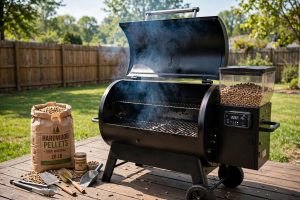
Pellet smokers burn small wood pellets and feed them with an auger. A digital controller sets the heat and the fire pot follows. Many pellet units can run as low as 150 degrees. That makes them strong picks for jerky.
The bonus of a pellet smoker is its range. You can dry jerky on Monday and grill chicken on Friday. The same unit serves many meals. The trade is size and price. Pellet grills run larger and cost more than a simple electric cabinet. They also need a power outlet and a supply of pellets.
Pellet makers like Traeger publish low temperature specs for their grills. Look for reviews that test those numbers with racks full of thin meat, not just a thermometer in an empty box.
Charcoal and Offset Smokers
Charcoal smokers give deep, classic smoke flavor. Many pit masters swear by them. For jerky they ask more work. You must keep a small, clean fire for many hours. Thick white smoke will make jerky taste harsh. Thin blue smoke is the goal.
Offset smokers place the fire in a side box and pull heat and smoke through the main chamber. This design works for jerky if you keep the fire small. Budget offset units often leak heat and smoke at the doors, so pick one that seals well for a better chance at low, steady heat.
Charcoal smokers suit cooks who enjoy the craft. They are not the set-and-forget pick. But the flavor they give is hard to beat.
Kettle and Kamado Style Cookers
Round kettle grills and egg shaped kamado cookers can smoke jerky with care. Bank the coals to one side and place the meat on the cool side. A water pan helps steady the heat.
These cookers suit small batches. A kettle may hold only one or two racks. If you already own one, like the kettles sold at Weber, you can test jerky making before you buy a dedicated smoker.
Cost and Price
Smokers for jerky come in every price range. A small electric cabinet may cost less than a week of groceries. A large pellet grill may cost as much as a used car. Here is what each tier tends to give you.
Entry level units, often under two hundred dollars, suit first time jerky makers. They hold heat well enough for small batches. The steel may be thin and the seals may leak a little smoke. For a few batches a year, that is fine.
Mid range units, from two hundred to five hundred dollars, give better control and more rack space. Digital panels, sturdier steel, and tighter doors show up in this range.
High end units, over five hundred dollars, suit heavy users. They hold exact heat, seal tight, and last for years. Large pellet grills and thick steel cabinets live here. Buy this tier if you dry large amounts of meat each season or want one cooker for many jobs.
Fuel adds to the long term cost. Pellets and wood chips cost more than charcoal by the bag. Electricity costs the least per batch. Factor in ten hour runs when you compare. A cheap smoker that burns pricey fuel may cost more over a year than a dearer unit that sips fuel.
Care and Upkeep
A smoker that is easy to clean gets used more often. Jerky leaves sticky drippings on racks and walls. Pick a unit with racks that lift out and fit in a sink. Many cooks soak racks in hot soapy water after each batch. A soft brush takes off the stuck bits.
Grease management matters. Old grease can turn rancid or catch fire, so empty the drip pan after each batch. Line the pan with foil for easy cleanup.
Check the seals and gaskets each season. Heat and smoke wear them out. A door that no longer seals lets heat escape. Replacement gaskets cost little and restore control. Tighten loose latches and hinges too.
Cover the smoker when it sits outside. Rain rusts steel and ruins electric parts. A fitted cover costs far less than a new unit. Store pellets and wood chips in dry bins. Damp fuel burns poorly and makes thick, bitter smoke. Care guides at The Spruce Eats walk through seasonal cleaning steps for common smoker types.
Safety
Jerky safety starts with the meat. Use fresh, cold meat from a trusted shop. Keep it cold until it goes into the smoker. Wash your hands, your knife, and your cutting board before and after you handle raw meat. These simple steps stop the spread of germs.
Heat the strips to a safe point. Food safety experts advise heating meat to 160 degrees inside before or during drying. One common method is to heat the strips in a 275 degree oven for ten minutes, then move them to the smoker to dry at low heat. This step kills germs while the smoker gives flavor and finish. Safety notes at Amazing Ribs explain the science behind this step in plain words.
Smoke itself is not a preservative at the levels a backyard smoker makes. Do not count on smoke to keep meat safe. Heat and dryness do the real work. Dry each strip until it bends and cracks but does not snap. Soft spots mean water is left inside.
Store finished jerky with care. Home dried jerky keeps best in the fridge for a few weeks or in the freezer for months. Seal it in airtight bags, press out the air, and label each bag with the date. If a batch smells off or feels slimy, throw it away.
Frequently Asked Questions
What is the best smoker type for a first batch of jerky?
An electric cabinet smoker is the easiest start. It holds low heat with little fuss. You set the dial and tend the chips. This lets you learn the drying process without fighting the fire.
How long does it take to smoke jerky?
Most batches take four to ten hours. Thin strips dry faster than thick ones, and a batch at 160 degrees dries faster than one at 140. Start checking at four hours. Pull a strip and bend it. If it cracks but does not snap, it is done.
Can I use a pellet grill to make jerky?
Yes. Many pellet grills hold 150 to 170 degrees. That range suits jerky well. Load the racks, set the low heat, and add a smoke tube if you want more flavor. Try a few pellet smoker recipes for beginners to learn how your grill behaves at low heat.
Do I need to cure the meat before smoking?
A cure with salt is wise. Salt draws water from the meat and slows germs while the strips dry. Many cooks use a simple salt based cure or a store bought jerky mix. Follow the cure directions on the package. Let the strips rest in the fridge overnight before they go into the smoker.
Why did my jerky turn out tough?
Tough jerky often comes from heat that ran too high or a batch that dried too long. High heat hardens the outside. Overdrying turns strips into leather. Slice the meat a bit thicker next time and pull the batch a touch sooner.
Is homemade jerky cheaper than store bought jerky?
Often yes, if you buy meat on sale. Store bought jerky carries a high price per pound. Home dried jerky costs you the meat plus fuel and time. The savings grow with each batch.
A Final Word
The best smoker for jerky making reviews all point to the same core traits. Low steady heat. Good air flow. Enough rack space. Easy controls. Match those traits to your budget and your habits, and you will make fine jerky at home.
Start simple if you are new. An electric cabinet or a small pellet unit will teach you the craft. Grow into a larger or more hands on smoker when your batches grow. Read a few reviews, compare the specs, and pick the unit that fits your yard.
For more background, see Char-Broil, Napoleon, and Big Green Egg.
References
AmazingRibs.com. (n.d.). Barbecue and grilling science. https://www.amazingribs.com Big Green Egg. (n.d.). Kamado grills and outdoor cooking. https://www.biggreenegg.com Char-Broil. (n.d.). Gas and charcoal grills. https://www.charbroil.com Consumer Reports. (n.d.). Product reviews and ratings. https://www.consumerreports.org Napoleon. (n.d.). Fireplaces, grills, and heating products. https://www.napoleon.com The Spruce Eats. (n.d.). Recipes and cooking guides. https://www.thespruceeats.com Traeger. (n.d.). Wood pellet grills. https://www.traeger.com Weber. (n.d.). Grills and outdoor cooking. https://www.weber.com
Was this guide helpful?

About Robert Taylor
The My Garden US editorial team writes practical, in-depth home and garden guides for American homeowners — tested advice, no fluff.
You May Also Like
How to Grill Steak on Gas Grill: A Plain Guide to Juicy Steaks
January 9, 2026 0 views
Gas Grill Flare Up Causes and Fixes: A Complete Guide
March 28, 2026 0 views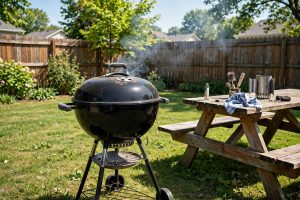
Best BBQ for Fathers Day Gift: How to Choose the Right One
May 15, 2026 0 views