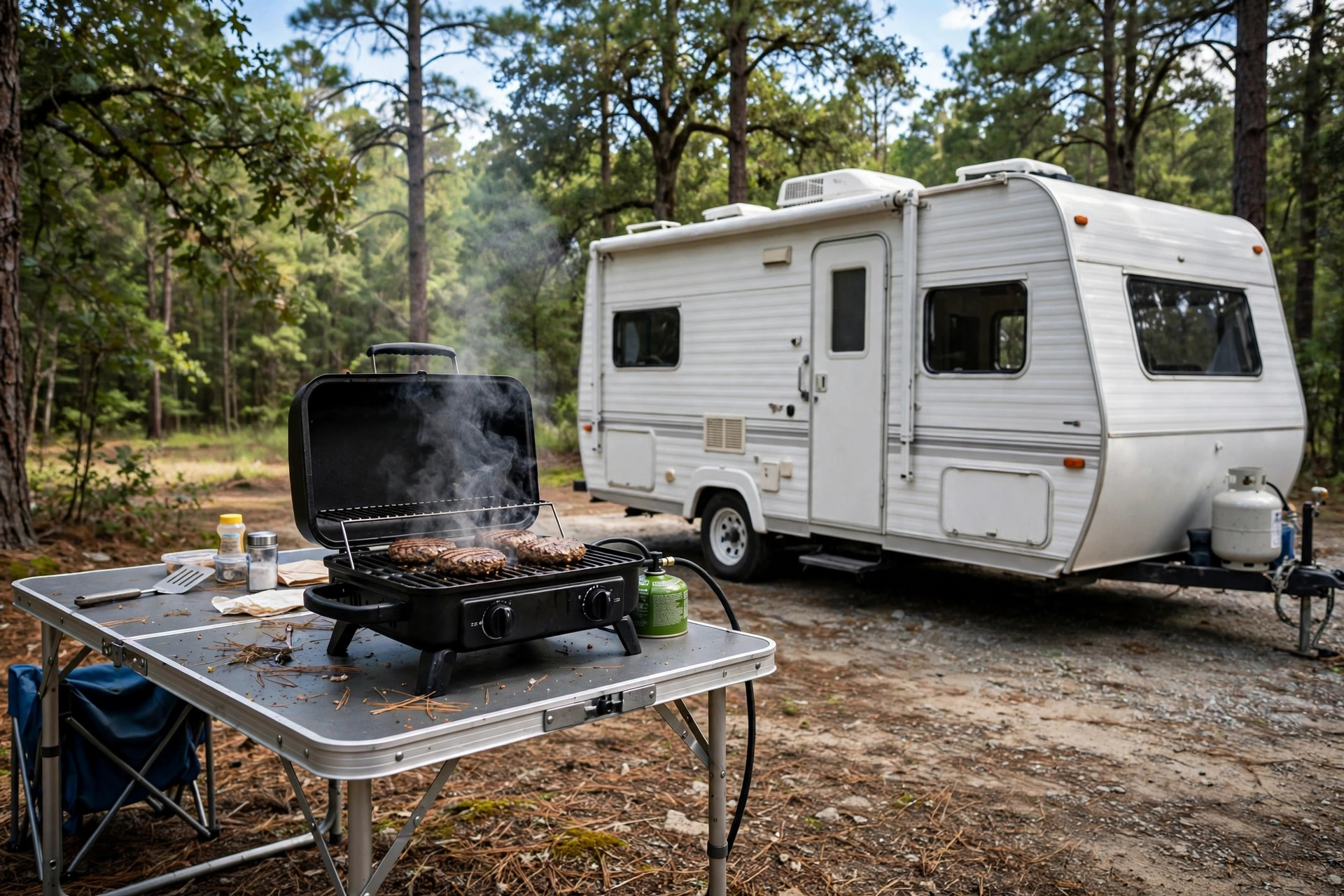

The search for the best grill for rv camping reviews begins long before the first trip of the season. It starts in the driveway, with a tape measure and an honest look at the storage bay of the rig. A grill that cooks a fine steak at home may be the wrong grill on the road. Campers need a unit that is small, light, sturdy, and quick to clean. This guide reads the reviews the way a traveler would: with an eye on weight, fuel, heat, and the long miles between campgrounds.
Why the Right Grill Matters on the Road
Home cooking follows rules the road does not allow. A full-size grill weighs more than two hundred pounds. It eats up storage space that the water hose, leveling blocks, and folding chairs already claim. Most travel trailers and motorhomes set a strict limit on cargo weight. Every pound of grill is a pound that cannot go to water, gear, or food.
A campsite grill faces wind, rain, and uneven ground. It must light the first time. It must hold a steady heat while a door hangs open behind it. The cook cannot walk back to the garage for a spare tool. For these reasons, the best grill for rv camping reviews almost always praise portability first and searing power second. A grill that stays home is worth nothing on the road.
There is also the question of campground rules. Many parks forbid ground fires. Some limit open-flame cooking to gas grills with lids. A portable gas grill with a closed lid clears most rules. Charcoal units face tighter limits in dry country. The wise camper reads the park rules before buying, not after. A quick look at a grill maker’s site, such as Weber, shows how many models now ship with locking lids built for travel.
What to Look for in an RV Camping Grill: Best Grill for Rv Camping Reviews
Reviews of road grills repeat the same four tests. Size and weight come first. Then fuel type. Then heat output. Then cleanup. A buyer who grades each grill on these four points will find a good match without much pain.
Size and Weight
The grill must fit the storage bay. Measure the bay opening before shopping. Many bays clear only eighteen inches of height. A tabletop grill should weigh under twenty-five pounds. Heavier units still work, but they punish the cook who must lift them in and out every night.
Fold-flat legs help. A grill that stands flat slides under a bunk or into an outside hatch. Check the carry handle too. A handle that locks the lid shut in transit keeps grease off the bedding. Many reviews on Consumer Reports note how a poor handle turns a good grill into a bad travel partner.
Fuel Type
Propane rules the road. Small green bottles fit anywhere. A five-pound refillable tank costs more at first but saves money across a season. Many rigs carry a quick-connect fitting that ties a grill straight to the onboard tank. That setup removes the bottle chore entirely.
Charcoal gives a flavor gas cannot copy. It also brings ash, soot, and a long cool-down time. Some campers carry a small charcoal kettle for weekend stays and a gas unit for long hauls. Charcoal fans can compare notes at AmazingRibs.com, where road cooks trade ash-control tricks.
Heat Output and Cooking Space
Heat is rated in British thermal units, or BTUs. Ten thousand to twelve thousand BTUs suits a tabletop grill. More heat does not always mean better cooking. A thin lid leaks heat in wind. A heavy lid holds it. Cooking space matters more: one hundred eighty to two hundred fifty square inches feeds two to four people. Large families should look past three hundred.
Even heat beats peak heat. Hot spots burn the burgers while the edges stay raw. Reviews that praise a grill often mention how it held three hundred fifty degrees across the grate. That steadiness comes from a good burner and a tight lid, not from raw BTU numbers.
Easy Cleanup
Grease follows a grill on the road. A removable drip pan saves the cook from a long scrub. Porcelain-coated grates wipe clean with a brush. Cast iron grates hold heat well but demand oil and care. The camp cook who hates cleanup should favor porcelain and a pan that slides out. Learning how to clean gas grill burners properly before the first trip keeps the flame even all season.
Types of Grills Campers Choose
Three kinds of grill show up again and again in the best grill for rv camping reviews. Each has a place. The right one depends on how the camper travels.
Tabletop Gas Grills
Tabletop gas grills lead the reviews by a wide margin. They light with a push button. They heat in ten minutes. They burn clean. Most models run on small bottles or hook to a big tank with an adapter hose. The compact shape fits a picnic table or the tailgate of the tow vehicle.
Brands with long road histories include Char-Broil and Napoleon. Both sell tabletop lines with locking lids. A shopper can compare current models at Home Depot, which stocks the popular sizes and the adapter hoses that tie a grill to a rig’s tank.
Portable Charcoal Grills
Charcoal lovers need not give up flavor on the road. Small kettle grills and hinged-box models pack flat and weigh little. They take longer to start. They take longer to cool. The reward is the deep smoke taste that gas cannot fake.
Ash control is the main chore. A grill with a sealed ash catcher keeps gray dust out of the bay. Some campers line the kettle with a foil pan for a fast wipe-down. The best portable grill for camping reviews give more detail on the top charcoal picks for travelers.
Pellet and Kamado Options
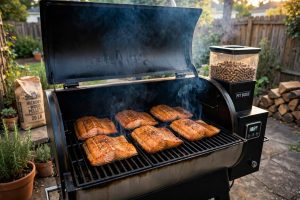
Pellet grills burn wood pellets and smoke like a pro pit. Traeger built its name on this style. Tabletop pellet units exist now, though they need a power outlet or a battery pack. Kamado cookers from makers like Big Green Egg hold heat for hours on a small load of charcoal. Both are heavy for their size. They suit campers who stay put for a week rather than move every night.
Cost and Price
Road grills cost less than home grills. A solid tabletop gas grill sells for eighty to two hundred dollars. Better lids, sturdier grates, and nicer carts push the price to three hundred. A basic charcoal kettle for the road costs thirty to eighty dollars.
Fuel adds up. Small green propane bottles cost about five dollars each and last about two hours of cooking. A five-pound refillable tank pays for itself in one long season. Charcoal costs less per bag, but a road cook burns through a bag fast at the old pace.
Accessories deserve a line in the budget. A fitted cover costs twenty to forty dollars. A long-handled brush, a good pair of tongs, and a sturdy table add fifty more. The wise buyer prices these extras before choosing a grill, not after.
Care and Upkeep
A road grill works hard. It bounces down highways. It cooks in dust. It cools in rain. A little care after each meal keeps it alive for years.
Brush the grates while they are still hot. Empty the drip pan at every stop. Wipe the outside with a damp cloth. Oil cast iron grates after they cool. Check the gas hose for cracks before each trip. Spiders love to nest in burner tubes over the winter, so run a pipe cleaner through the tubes in the spring.
Between seasons, store the grill dry. A grill cover helps but does not replace a roof. Keep the unit off the damp floor of the bay on a rubber mat. Read up on how to winterize gas grill for storage when the last trip of the fall comes home. The Spruce Eats also posts good step-by-step cleaning guides for each grill type.
Safety at the Campsite
Grills and RVs mix well only with care. Never use a grill inside the rig or under an awning. Carbon monoxide has no smell. Set the grill at least ten feet from the rig, the tent, and the neighbor’s slide-out.
Let charcoal cool fully before packing it away. A warm kettle can smolder for hours. Drown ash with water and bag it. Keep a fire extinguisher near the door of the rig, not buried in the bay. Keep children and dogs back from the hot zone while the food cooks.
Check the campground rules on arrival. Fire bans change with the weather. In dry months, even gas grills may face limits. A short walk to the camp host’s office beats a fine. Makers like Broil King print clear safety pages for each model, and they are worth a read.
Frequently Asked Questions
What size grill fits best in an RV?
Most campers do well with a tabletop grill under twenty-five pounds and under three hundred square inches of cooking space. It should fit the storage bay with room to spare. Measure the bay door first. A grill that slides in flat will travel quiet and arrive clean.
Can I hook my grill to the RV’s propane tank?
Yes, in most cases. Many rigs have a quick-connect fitting low on the outside wall. An adapter hose runs from that fitting to the grill. The hose must match the grill’s regulator. A dealer or a good hardware store can confirm the fit. This setup saves the cost and weight of bottles.
Is a gas or charcoal grill better for camping?
Gas wins for ease. It lights fast, heats fast, and cools fast. Charcoal wins for flavor. Many seasoned campers carry a small gas grill for weeknight stops and a charcoal kettle for long stays. The right answer depends on how much time the cook wants to spend on fire duty.
How long does a small propane bottle last on a camp grill?
A one-pound bottle gives about one and a half to two hours of medium cooking. Long sessions, like a low-and-slow roast, drain it faster. Carry a spare bottle on every trip. A refillable five-pound tank lasts a full week of normal camp cooking.
Do campgrounds allow portable grills?
Most do, with rules. Gas grills with lids are welcome almost everywhere. Charcoal faces limits during fire season. Some parks ban open flames on wooden decks or near buildings. Always read the posted rules at check-in. When in doubt, ask the camp host.
How do I keep my grill from rusting on the road?
Dry it before storage. Oil cast iron grates. Keep it under a fitted cover. Store it off the damp bay floor. Wipe it down after rain. A grill that dries after each use will outlast one that sits wet. A thin coat of cooking oil on bare metal parts adds cheap insurance.
A Final Word
The best grill for rv camping reviews agree on one point: the right grill is the one that fits the rig, the budget, and the cook’s patience. Gas leads for speed. Charcoal leads for flavor. Size and weight decide more fights than brand names do. Measure the bay, read the park rules, and pick the grill that will see use three nights a week. The road rewards the cook who keeps it simple. A small grill, a full tank, and a clean grate will carry a camper through a whole season of good meals under open sky.
References
AmazingRibs.com. (n.d.). Barbecue and grilling science. https://www.amazingribs.com Big Green Egg. (n.d.). Kamado grills and outdoor cooking. https://www.biggreenegg.com Broil King. (n.d.). Gas and charcoal grills. https://www.broilkingbbq.com Char-Broil. (n.d.). Gas and charcoal grills. https://www.charbroil.com Consumer Reports. (n.d.). Product reviews and ratings. https://www.consumerreports.org Napoleon. (n.d.). Fireplaces, grills, and heating products. https://www.napoleon.com The Home Depot. (n.d.). Home improvement products. https://www.homedepot.com The Spruce Eats. (n.d.). Recipes and cooking guides. https://www.thespruceeats.com Traeger. (n.d.). Wood pellet grills. https://www.traeger.com Weber. (n.d.). Grills and outdoor cooking. https://www.weber.com
Was this guide helpful?

About Michael Thompson
The My Garden US editorial team writes practical, in-depth home and garden guides for American homeowners — tested advice, no fluff.
You May Also Like
Best Outdoor Mini Fridge for Patio: How to Choose One That Lasts
June 26, 2026 0 views
Best Infrared Grill for Steaks Reviews: How to Find Your Perfect Sear
May 7, 2026 0 views
How to Use Wood Chips on Gas Grill: A Complete Guide
August 14, 2026 0 views