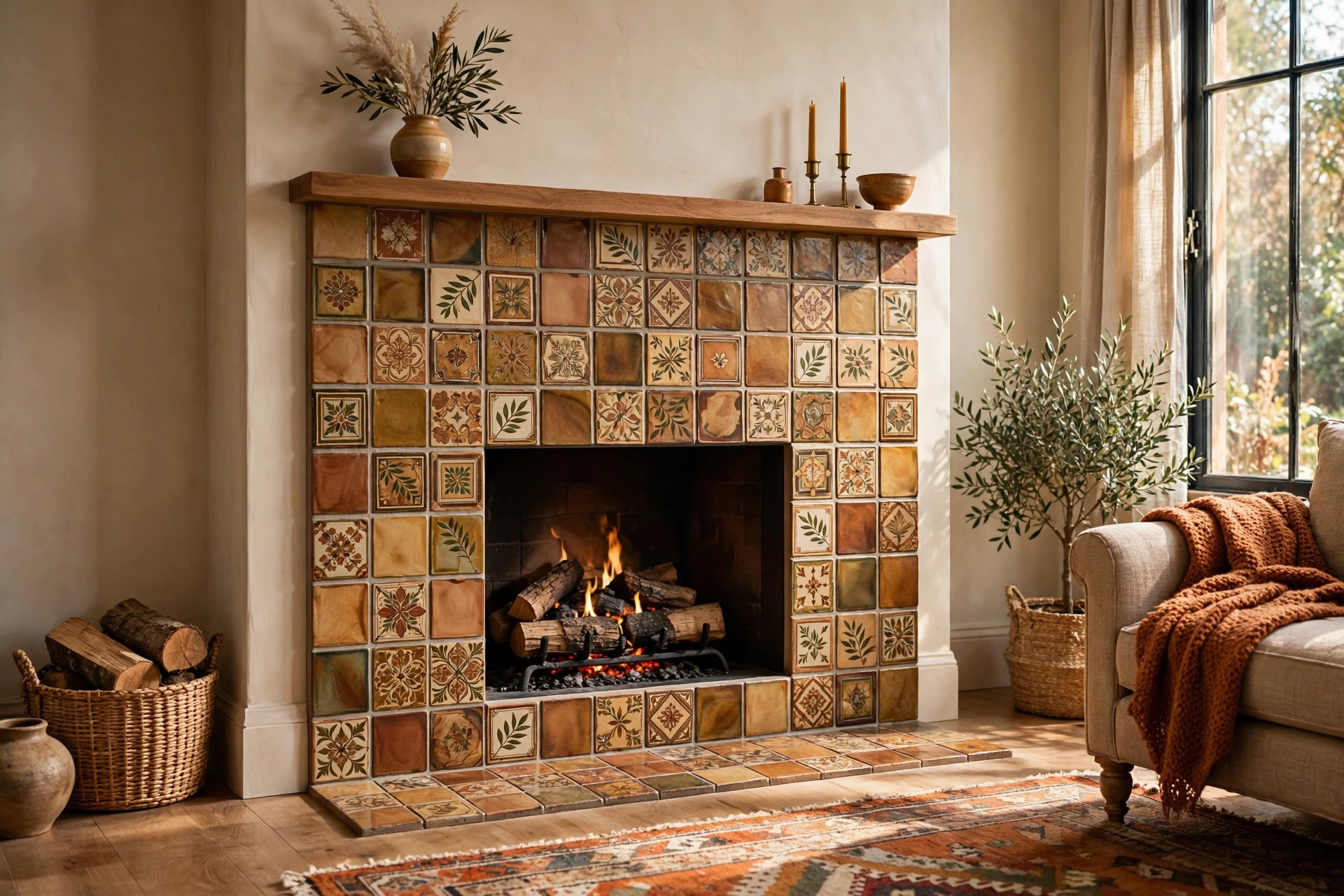

A hearth is often the center of a living room. The tile around it shapes the whole room. This tile fireplace surrounds reviews and buying guide walks through the choices you face: the kinds of tile, what each kind costs, how the work gets done, and how to keep the finish safe and sound for years. Whether you are updating an old hearth or building a new one, a little planning at the start saves trouble later.
Why a Tile Surround Matters
The surround is the band of material around the firebox opening. It does more than look good. It protects the wall and the mantel from heat. It gives the eye a place to rest. A plain opening can feel unfinished. A well set tile surround can make even a simple builder grade fireplace feel like a custom piece.
Tile is a common choice for this job. It resists heat. It comes in hundreds of colors and patterns. It cleans with a damp cloth. And it costs less than cut stone or marble in most cases. That mix of price, looks, and hard work is why tile surrounds show up in so many American homes.
What to Look For When You Choose Tile: Tile Fireplace Surrounds Reviews and Buying Guide
Not all tile suits a fireplace. Start with the basics before you fall in love with a pattern.
Heat rating. Tile near a firebox must handle heat. Most ceramic, porcelain, and stone tiles do fine at normal fireplace temperatures. Glass tile also works when it is set with the right thinset. Ask the seller for a written heat rating if you are unsure.
Size and layout. Large tiles show fewer grout lines. Small tiles give more grip to a pattern. A common plan is to frame the opening with a simple field tile and add a feature row of patterned tile as a border. Draw the layout on paper first. Mark where each cut will fall.
Color and light. The hearth gets evening light and firelight. Colors that look calm in the store can turn muddy in a dim room. Take a sample home. Hold it next to the firebox in lamplight. Live with it a day before you order.
Finish. Glazed tile wipes clean of soot. Matte tile hides dust but can stain. Around a working wood fireplace, glaze is the easier choice.
Types and Options
Ceramic and Porcelain Tile
Ceramic tile is the workhorse. It is cheap, easy to cut, and comes in every style from plain white subway tile to bold Mexican talavera. Porcelain is denser and tougher. It resists chips better than plain ceramic, which matters around a hearth that gets bumped by logs and tools.
Handmade and Hand Painted Tile
Handmade tiles, such as artisan ceramic and cement encaustic tile, give a one of a kind look. No two pieces match exactly. That small variation is the charm. The trade is price and care. Handmade tile costs more per square foot, and some kinds need sealing. If you want a folk art or Mediterranean look, this is the way.
Stone Tile
Slate, travertine, and limestone tiles give a natural, heavy feel. They suit rustic and lodge style rooms. Stone tile is thicker and harder to cut than ceramic. It usually needs a sealer so soot and smoke do not stain it. For tips on working with masonry and stone around a hearth, the project guides at This Old House are a good place to start.
Glass Tile
Glass tile catches firelight and throws it back into the room. It works best as an accent band rather than the full surround, both for cost and for looks. Use a white polymer modified thinset behind glass tile so the color reads true.
Tile vs. Other Surrounds
Stone slabs and cast mantel systems have their place, but tile wins on flexibility. You can tile any shape. You can change one row later. You can mix cheap field tile with a small run of showpiece tile to keep the budget down. If your hearth is small, you might also weigh top rated stone fireplace surrounds for small apartments before you decide, since some stone kits ship ready to set.
Reviews: What Homeowners Say They Like
Reading owner reviews before you buy is smart. The same points come up again and again in tile surround reviews:
– Do the pattern test first. Buyers who lay tiles out dry on the floor before setting them report far fewer regrets. – Order extra. Most reviewers wish they had ordered 10 to 15 percent more tile than the area measured. Cuts waste tile, and dye lots change. – Mind the grout. Dark grout hides soot; light grout shows it. Epoxy grout resists stains better than plain sanded grout, and several buyers call it worth the extra cost. – Seal where needed. Owners of natural stone and encaustic tile stress that sealing is not optional.
When you shop, compare tile through big home retailers as well as specialty sellers. Browsing fireplace tile at Lowe’s and the tile selection at The Home Depot gives you a quick sense of prices and styles before you visit a local tile shop. If you are comparing makers of the fireplace itself, Napoleon and Heatilator both publish clear specs for clearances and approved surround materials, which helps you match tile to the unit you own.
Cost and Price
Prices for tile fireplace surrounds spread wide. Here is a plain picture of what to expect in 2026.
Tile material. Basic ceramic field tile runs about 3 to 8 dollars per square foot. Porcelain runs 5 to 15 dollars. Handmade and hand painted tile runs 15 to 40 dollars and up. Glass tile runs 10 to 30 dollars. Stone tile runs 8 to 20 dollars.
Backer and setting materials. A surround needs cement backer board, thinset mortar, grout, and maybe a sealer. Budget 2 to 5 dollars per square foot of surround for these supplies.
Labor. A tile setter may charge 300 to 900 dollars for a typical surround, depending on the region and the tile. Handmade tile and tight patterns cost more because they take longer to set straight.
Total. A plain ceramic surround done by a hired setter often lands between 800 and 1,800 dollars. A handmade tile surround can reach 2,500 to 4,500 dollars. Do it yourself and you cut the labor out, but you need a wet saw and some patience.
Shoppers in the South who want prices delivered often buy tile fireplace surrounds online in Texas through retailers that ship statewide. Online prices track store prices closely, so the real saving is in time and selection, not always in dollars.
Installation Basics
Many handy homeowners tile their own surround. The job is not hard, but it is fussy. Here is the usual order of work.
1. Check clearances. Combustible material, including wood trim, must sit a set distance from the firebox. Your fireplace manual states the number. Keep that number. 2. Prepare the surface. Old tile comes off with a cold chisel. New work gets cement backer board screwed to the wall. The board gives thinset something to grip. 3. Dry lay the tile. Set every tile on the floor in the pattern first. Check the cuts at the edges. Make your changes now, not in mortar. 4. Set from the center out. Spread thinset in small areas. Start at the center of each row and work to the edges so the pattern stays even. 5. Grout and clean. Wait for the thinset to cure, usually a full day. Grout the joints. Wash the haze off the tile before it hardens. 6. Seal if needed. Natural stone, cement tile, and some handmade tiles get a sealer after the grout cures.
For step by step photo guides, the tutorials at Family Handyman cover backer board, thinset, and grout in plain language. Pair the surround with fireplace glass doors reviews and buying guide choices at the same time, since doors and tile meet at the opening and should look planned together.
Care and Upkeep
Tile surrounds ask little, but a little care keeps them looking new.
– Dust the surround weekly. Soot builds up even when the fireplace sits idle. – Wipe glazed tile with warm water and a drop of dish soap. Rinse and dry. – Never use abrasive powder on glazed tile. It scratches the shine. – Re-seal stone and cement tile every two to three years, or when water stops beading on the surface. – Check grout lines once a year. Cracked grout lets heat and moisture reach the backer board. Patch it early. – Vacuum the mantel shelf when you dust the room. Fine ash settles there first and dulls wood and tile alike.
Safety
A tile surround sits inches from live fire. Treat the job with respect.
– Follow the clearance numbers in the fireplace manual. Tile is not a license to move wood closer. – Use heat rated thinset and grout near the opening. Plain mastic can soften with heat. – Keep a working smoke detector and carbon monoxide detector in the room. – Burn only dry, seasoned wood in a wood fireplace. Wet wood makes creosote and heavy smoke. – The burning guidance from the EPA explains safe wood burning in plain terms and is worth a read before the first fire of the season.
Frequently Asked Questions
Can I tile over an existing brick fireplace? Yes, in most cases. The brick must be sound and clean. A coat of thinset or a backer board gives the new tile a flat bed. Very rough or painted brick may need more prep. If the brick is crumbling, fix the masonry first.
What is the best tile for a wood burning fireplace? Porcelain and glazed ceramic are the safest all round picks. They handle heat, resist soot stains, and cut clean. Stone tile works too but needs sealing. Glass tile is fine as an accent.
How much tile do I need for a standard surround? A typical surround covers 15 to 30 square feet. Measure height times width of each side, add them, and buy 10 to 15 percent extra for cuts and waste.
Can tile go right up to the firebox opening? Yes, tile is non combustible and can touch the firebox edge. But trim, wood mantels, and the mantel shelf must respect clearance rules. Check your manual for exact numbers.
Is epoxy grout worth it around a fireplace? Most owners say yes. Epoxy grout resists soot stains far better than cement grout. It is harder to work with, so plan more time or hire the grouting out.
Where can I find more style ideas? Browse the fireplace and hearth design ideas at The Spruce for photos of real tile surrounds in different styles, from farmhouse to modern.
A Short Final Word
A tile fireplace surround is a small project with a big payoff. Pick tile that handles heat. Draw your layout before you mix mortar. Order extra tile. Follow clearance rules. Do those four things and the hearth will serve your home for decades, looking better each winter. For more help planning the whole hearth, read our other buying guides and compare materials side by side before you commit.
References
Family Handyman. (n.d.). DIY home repair and maintenance. https://www.familyhandyman.com Heatilator. (n.d.). Fireplaces and fireplace products. https://www.heatilator.com Lowe’s. (n.d.). Home improvement products. https://www.lowes.com Napoleon. (n.d.). Fireplaces, grills, and heating products. https://www.napoleon.com The Home Depot. (n.d.). Home improvement products. https://www.homedepot.com The Spruce. (n.d.). Home and garden advice. https://www.thespruce.com This Old House. (n.d.). Home renovation guidance. https://www.thisoldhouse.com U.S. Environmental Protection Agency. (n.d.). Protecting human health and the environment. https://www.epa.gov
Was this guide helpful?

About Lisa Anderson
The My Garden US editorial team writes practical, in-depth home and garden guides for American homeowners — tested advice, no fluff.
You May Also Like
The Best Gas Log Sets for Midwest Homes: A Simple Buying Guide
June 23, 2026 0 views
Propane Patio Heaters Reviews and Buying Guide
January 19, 2026 0 views
Best Direct Vent Gas Fireplaces for American Homes: A Complete Buyer’s Guide
September 29, 2026 0 views