
When a homeowner types best geothermal installers near me reviews into a search bar, the question behind the words is simple. Who can be trusted to drill into the yard and change the way the house heats and cools? A geothermal system, also called a ground-source heat pump, moves heat between the home and the earth. The loop field lasts for decades. The machine itself may run for twenty years or more. But the whole job stands or falls on the skill of the installer. A good crew gives you quiet comfort and low bills. A bad crew gives you years of trouble. That is why reading local reviews, and knowing how to read them well, matters so much.
Why the Installer Matters More Than the Brand
Many buyers spend weeks comparing heat pump brands. The names Carrier, Trane, and Lennox all appear in reviews and ads. These are fine machines. But dealers and engineers say the same thing again and again. The quality of the installation decides the result far more than the label on the box.
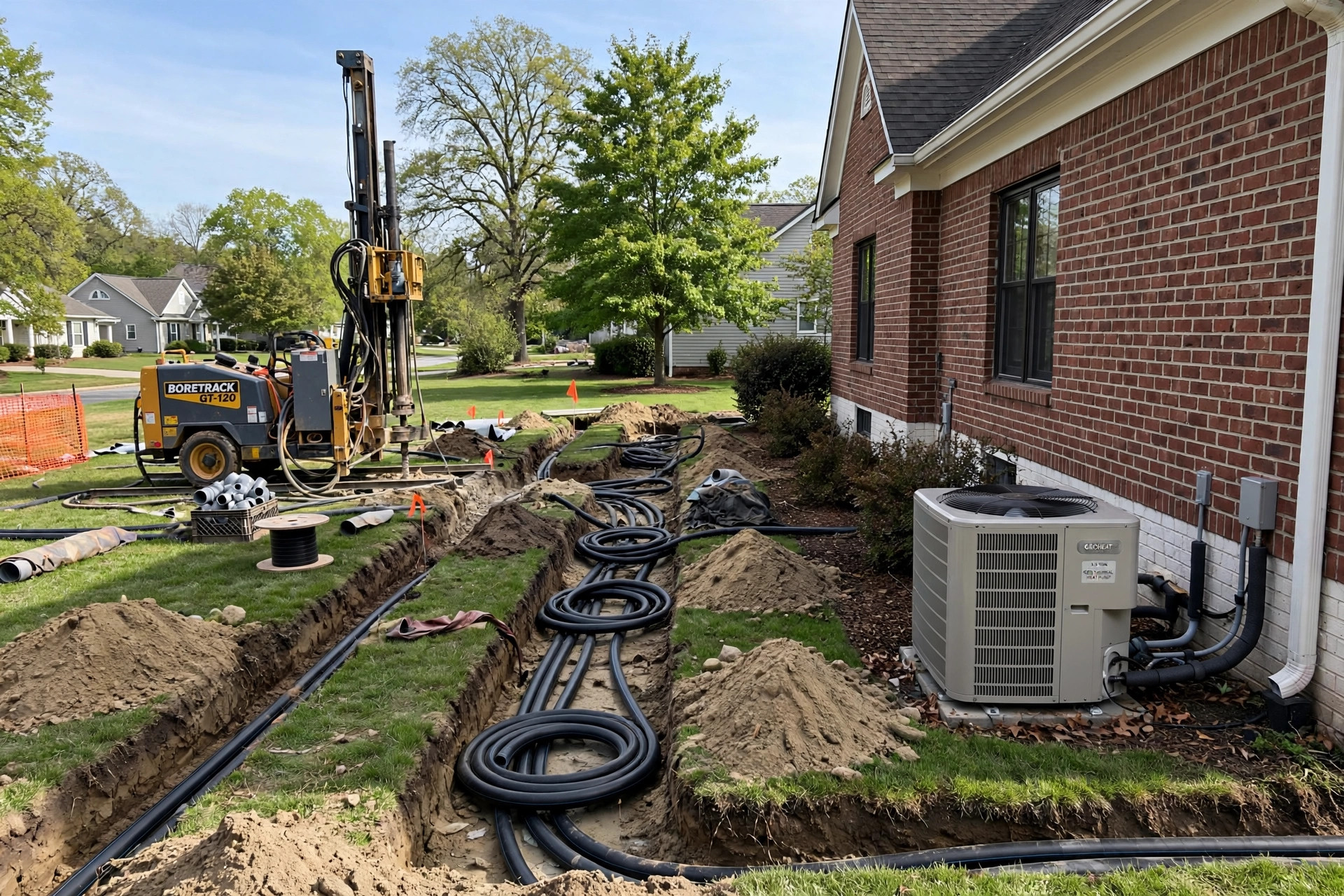
Geothermal work is not like swapping in a new furnace. It starts with a yard study. The crew must test the soil and check the water. They must size the loop field to the house. A loop that is too small will freeze the ground around it. A loop that is too large wastes money. Then comes the drilling or trenching, the pipe fusion, the pressure test, and the indoor hookup. Each step needs care. A single bad pipe joint underground can leak for years before anyone finds it.
Reviews of the best geothermal installers near me often point to this. Homeowners praise crews who measured twice and drilled once. They complain about crews who rushed the loop, guessed at the size, or left the yard a mess. The brand of the heat pump barely comes up in these stories. The hands that did the work come up in every one.
What to Look for in Local Reviews: Best Geothermal Installers near Me Reviews
Reviews are free. They are also uneven. A careful reader can pull real value out of them. Here is how to read best geothermal installers near me reviews the way a contractor would.
First, look for detail. A review that says “great job” tells you little. A review that says the crew drilled two 300-foot vertical bores, fused the loops in front of the homeowner, held 150 psi on the pressure test for two hours, and cleaned the yard each night tells you a great deal. Long, specific reviews carry more weight than short ones.
Second, check the dates. A company that earned five stars in 2020 may have new owners or new crews today. Look for reviews from the last two years. A steady stream of recent good reviews means the company still does good work now.
Third, read the bad reviews with care. Every busy company has some. The question is what they are about. Complaints about a late crew or a long phone wait are common in the trades. Complaints about leaks, failed loops, or a system that never heated the house are serious. Watch how the owner answers. A company that responds with an offer to fix the problem shows pride. A company that blames the customer shows its true face.
Fourth, notice whether reviewers mention the same names. The best geothermal installers near me reviews often name the lead driller or the project manager. When the same person draws praise across many reviews, that person is likely the real asset of the firm.
Fifth, look beyond one site. Check the search engine reviews, the business bureau page, and the company Facebook page. A firm that looks perfect on one site and rough on others may be gaming one platform. A firm that looks solid everywhere is the safer bet.
How to Choose From a Short List
Start with three to five local firms that do geothermal work every week. Geothermal is a specialty. A company that installs two systems a year is not the same as one that installs two a month. Ask each firm how many ground-source systems it put in last year. The number tells you where the skill lives.
Ask for three references from the last twelve months. Call them. Ask what the yard looked like after the drilling. Ask what the electric bill did in the first winter. Ask whether the company answered the phone when something went wrong. Reviews tell you what strangers thought. References tell you what neighbors got.
Check the license and insurance. Geothermal drilling is heavy work with big rigs. The driller should carry proper liability coverage. The HVAC crew should hold the state mechanical license. A good firm shows these papers without being asked.
Types of Geothermal Systems an Installer May Offer
A homeowner who reads best geothermal installers near me reviews will meet four main loop types. The right one depends on the yard, the soil, and the budget.
Closed Vertical Loops
The crew drills one or more deep holes, usually 150 to 400 feet. Pipes run down and back up in each hole. This design fits small lots. It costs more because drilling rigs are dear, but it disturbs the least ground. Many city and suburban jobs use vertical loops.
Closed Horizontal Loops
Pipes lie in trenches five to six feet deep across a wide area. This needs a large yard but costs less than drilling. It works well on rural land where space is open and digging is easy.
Pond or Lake Loops
If the home sits near a pond, coils of pipe can rest on the pond floor. Water moves heat well, so this can be the cheapest and most efficient choice. It needs a pond of good size and depth, plus local permits.
Open Loop Systems
Well water passes through the heat pump and is sent back to the ground. This can be very efficient where water is clean and plenty. It needs good water quality and local approval. Not every area allows it.
A serious installer walks the property before recommending a type. Be wary of any firm that names a price over the phone without seeing the land. The ground decides the design, not the sales script.
Cost and Price: What Reviews Reveal About Money
Geothermal costs more up front than a furnace and air conditioner. For a typical American home, a full system often runs from the high teens to the mid thirty thousands of dollars before tax credits. Vertical loops cost the most. Horizontal loops cost less. The federal tax credit for geothermal, claimed on the tax return, has long been the biggest reason the numbers work. State rebates and utility deals can help too. Check the current federal rules before you count on any credit.
Reviews of the best geothermal installers near me often discuss price in plain terms. Look for reviewers who say what they paid and what the quote included. A good quote breaks out the drilling, the loop, the heat pump, the ductwork changes, and the electrical work. A vague one-line price is a warning sign.
Get at least three written quotes. They should land in the same broad range. A quote far below the others usually means the loop is too small or the work is too thin. Geothermal is not a place to chase the lowest bid. The cheapest loop often becomes the most expensive system.
Ask about the payback. In many homes, the lower heating and cooling bills pay back the extra cost in seven to twelve years. The number moves with local energy prices and the size of the house. A good installer runs the math for your home and shows the work. A bad one waves a hand and says “trust me.”
Care and Upkeep After the Crew Leaves
One of the pleasures of geothermal is how little care it asks. The loop field has no moving parts and needs no service. The indoor heat pump needs the same basic care as any forced-air system.
Change or clean the air filter on schedule. A dirty filter makes the blower work hard and cuts comfort. Many homeowners upgrade to high-efficiency MERV 13 air filters when the new system goes in, since cleaner air also protects the coil. A clogged filter is the most common cause of a service call that the homeowner could have avoided.
Keep the air flow clear. Do not block supply vents with furniture. Keep return grilles free of dust and pet hair. A clean path for air keeps rooms even and bills low.
Book a yearly check. A technician should look at the refrigerant charge, test the controls, check the pumps, and confirm the loop pressure. This visit takes an hour and costs little. It catches small problems before they grow.
Watch the yard. The ground over the loop field should settle flat within a season. If a spot sinks or stays wet, call the installer. Reviews sometimes mention crews who came back to regrade a trench line without a fuss. That is the kind of after-sale care worth paying for.
Safety Notes for the Drilling and the Machine
Geothermal is among the safest heating choices. There is no flame, no fuel oil, no chimney. Still, the installation has risks that belong to the crew, and a few that belong to the homeowner.
Call the utility locator service before any digging. Every state has one. The crew must mark buried power, gas, and phone lines. This is the law in most places and plain sense everywhere.
Keep children and pets away from the work area during drilling. The rig is heavy, the site is muddy, and pipe coils can spring. A careful company fences or tapes off the zone.
On the machine side, the heat pump runs on electricity and sealed refrigerant. Only a licensed technician should open the cabinet. The loop fluid is usually water mixed with food-safe antifreeze. Ask the installer what fluid they use and where the safety sheet is kept. Good firms answer at once.
If the home uses an open loop, the water discharge must follow local rules. A proper installer gets the permit and sets the discharge point where it harms nothing.
Frequently Asked Questions
How do I find the best geothermal installers near me?
Start with a search for best geothermal installers near me reviews, then check the drillers and HVAC firms behind the stars. Look for firms that install ground-source systems every month, hold proper licenses, and show recent detailed reviews. Get three quotes and three references before you choose.
How long does a geothermal installation take?
Most homes take three to five days of on-site work. Drilling may take one or two days. Trenching can take longer if the weather turns. The indoor hookup usually takes another day or two. A careful crew may spread the job over a week to let the ground settle between steps.
How long does a geothermal loop last?
The underground loop is often warranted for fifty years and may last longer. There are loops from the 1970s still running. The indoor heat pump usually lasts twenty to twenty-five years, about the same as a good furnace.
Will geothermal work in a cold climate?
Yes. The ground below the frost line stays near fifty degrees all year in much of the country. The heat pump draws on that steady warmth even when the air is far below zero. Cold-climate homes are some of the happiest geothermal customers, since their heating bills fall the most. Homeowners who also heat a backyard pool often research the best pool heaters for cold climates as a companion upgrade.
Do I need new ductwork for geothermal?
Not always. If the home has sound ducts from a forced-air system, the heat pump can often use them. The installer should test the ducts for leaks and size. Leaky ducts waste the savings the loop was built to earn. Some older homes need duct repairs, a new run or two, or an inline duct booster fan on a long branch that starves a far room.
What is the biggest red flag in installer reviews?
Repeated stories about systems that never heated or cooled the house right. One bad review may be a hard customer. Five reviews with the same complaint about comfort or loop failure point to a real pattern. Walk away from a firm with that pattern, no matter how low the price.
A Short Final Word
The search for the best geothermal installers near me reviews ends the same way it should begin: with homework. Read the reviews. Call the references. Compare three honest quotes. Choose the crew with the steadiest record, not the smoothest sales talk. The ground under your home holds steady heat all year. Put it in the hands of people who know what they are doing, and it will serve your family for decades.
For more background, see Goodman, Rheem, and ENERGY STAR. See This Old House for more detail.
References
Carrier. (n.d.). Heating and cooling systems. https://www.carrier.com ENERGY STAR. (n.d.). Energy efficient products. https://www.energystar.gov Goodman. (n.d.). Heating and cooling equipment. https://www.goodmanmfg.com Lennox. (n.d.). Heating and cooling systems. https://www.lennox.com Rheem. (n.d.). Heating, cooling, and water heating. https://www.rheem.com This Old House. (n.d.). Home renovation guidance. https://www.thisoldhouse.com Trane. (n.d.). Heating and air conditioning. https://www.trane.com U.S. Department of Energy. (n.d.). Energy efficiency and renewable energy. https://www.energy.gov
Was this guide helpful?

About Emily Rodriguez
The My Garden US editorial team writes practical, in-depth home and garden guides for American homeowners — tested advice, no fluff.
You May Also Like
Bypass vs Fan Powered Humidifier Comparison: A Practical Guide
February 28, 2026 0 views
Gas Fireplace Insert Installation Cost USA: A Homeowner Guide
March 8, 2026 0 views
Pool Heat Pump Reviews for Inground Pools: A Buyer’s Guide
March 20, 2026 0 views