
A Warm Hearth Should Be a Safe Hearth
This energy efficient fireplace safety gates buying guide starts with a plain fact. A fireplace is the warm heart of many American homes. It is also a source of real danger. The glass front of a gas fireplace can reach several hundred degrees. A wood fire throws sparks. Stone and metal around the hearth stay hot long after the flames die down.
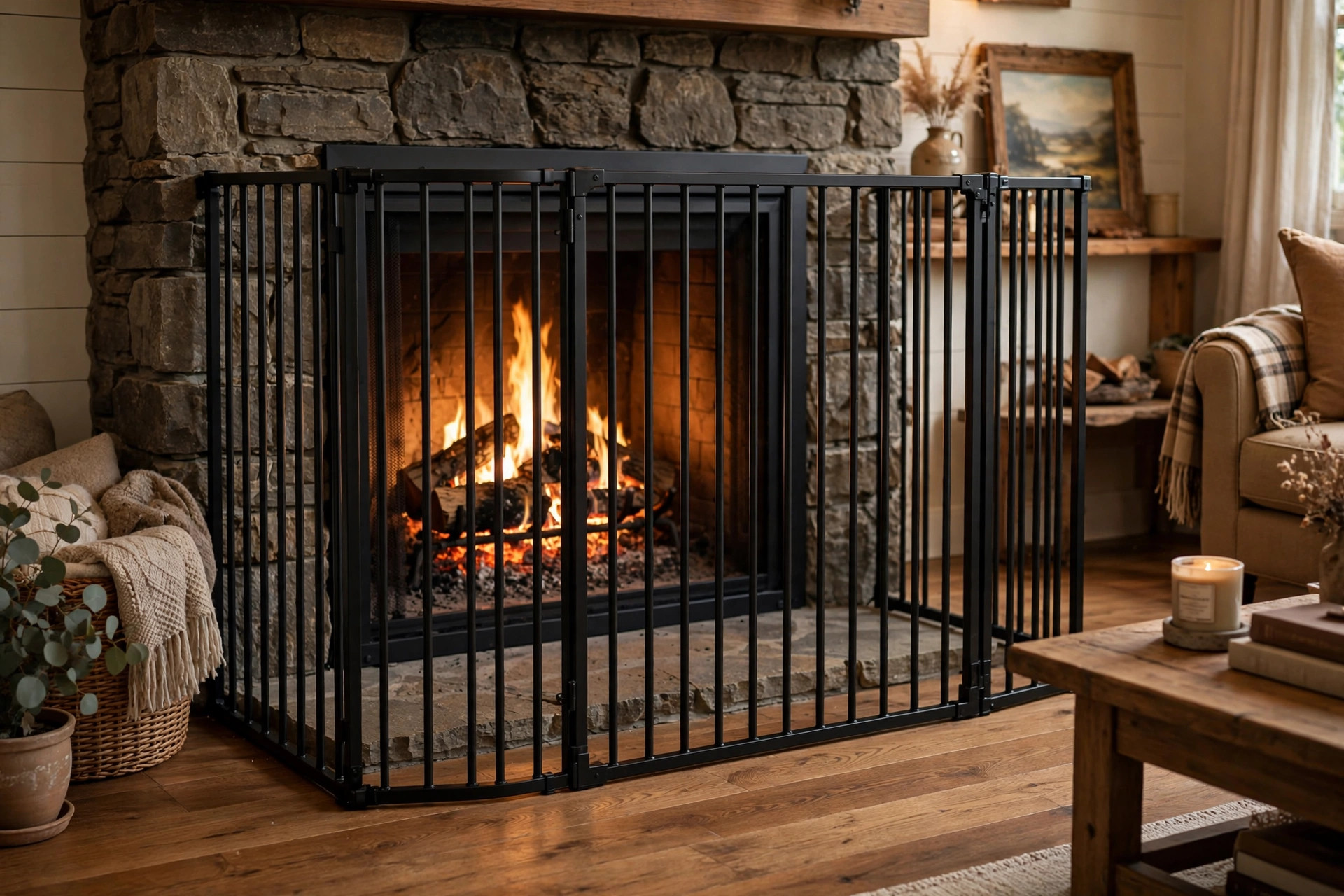
A safety gate solves this problem. It puts a strong barrier between little hands, curious pets, and the hot surfaces of the hearth. It also helps with energy efficiency. A gate that fits well keeps children back from the firebox. That means the glass doors can do their job. They hold heat in the room instead of letting it drift up the flue. The result is a warmer room and a lower heating bill.
Why a Safety Gate Matters Around a Fireplace: Energy Efficient Fireplace Safety Gates Buying Guide
Every year, emergency rooms treat burns from fireplace glass and hearths. Toddlers are the most at risk. They are drawn to the dancing light. They reach out before a parent can stop them. A gate gives parents a margin of time. It slows a child down. It turns a sudden accident into a near miss.
Pets face the same risk. Dogs lie close to the fire for warmth. Cats jump onto warm mantels. A gate with small bar spacing keeps them both back. It also keeps tails and fur away from sparks when wood pops.
There is another reason to buy one. Many homeowners now pair a fireplace glass doors review with a gate. The doors trap heat. The gate guards the doors. Together they cut the heat that a fireplace loses up the chimney. Less lost heat means the furnace runs less. That is real money saved across a winter.
What “Energy Efficient” Means for a Safety Gate
A gate itself does not make heat. It saves heat by doing its job well. Here is how.
First, a snug gate lets you use tight-fitting glass doors with confidence. Doors with a gasket seal cut room air loss up the flue. Some homeowners worry that closed doors make the glass too tempting for a child to touch. With a gate in place, that worry fades. You get the efficiency gain without the safety cost.
Second, a well-placed gate keeps the zone in front of the firebox clear. Blankets, toys, and drying clothes stay out of the hot zone. Nothing blocks the warm air from moving into the room. The fireplace heats the living space the way it was built to do.
Third, some gates include heat-reflective mesh panels. These panels bounce radiant heat back into the room. They also keep small fingers from reaching through wide bar gaps. The U.S. Environmental Protection Agency offers general guidance on efficient wood heating, which pairs well with the safety advice in this guide.
Fourth, a gate makes steady habits easier. When the barrier is always in place, the family learns to keep the firebox zone clear. Warm air flows freely. The thermostat reads the true room temperature. The heating system cycles less. Small habits, repeated daily, shape the monthly bill.
How to Choose the Right Safety Gate
Buying a gate is a simple task if you measure first and shop second. Take your time with each step below.
Measure the Hearth
Take a tape measure to the fireplace. Measure the full width of the hearth, from one side of the surround to the other. Add at least twelve inches on each side. Children lean and stretch. The gate should stand well clear of the hottest surfaces.
Next, measure the depth you can give up. Freestanding gates need floor space in front of the hearth. In a small room, a slim five-panel gate may fit better than a wide seven-panel model. Write both numbers down before you shop.
Choose Strong Materials
Steel is the best choice for most homes. It does not warp in heat. It takes a firm grip. Look for powder-coated steel. The coating resists rust and stays cooler to the touch than bare metal.
Avoid light plastic gates near a working fireplace. Plastic can soften or melt near strong heat. Wood gates look fine, but they can dry out and crack over time. For a gas or wood fireplace that runs often, metal wins.
Check the Latch
The gate door should open with one hand. Parents often carry a child or a basket of wood. The latch should still defeat a toddler. Look for a latch that needs two motions, such as lift and pull. Test reviews at retailers like Lowe’s often note whether a latch is truly child-resistant.
Wall Mount or Freestanding
Wall-mounted gates screw into studs or masonry. They are the strongest option. They do not tip. They are best for busy households with toddlers.
Freestanding gates use wide feet and weight to stay upright. They are easier to move. You can fold them flat in summer. They suit renters and homes with occasional fireplace use. Make sure the model you pick has a lock that keeps the panels from folding inward when bumped.
Types of Fireplace Safety Gates
Shoppers will meet four main styles. Each has its place.
Five-panel folding gates. These are the most common. Five steel panels hinge together. They wrap around the hearth in an arc. Most include a walk-through door with a safety latch. They fit hearths from three to eight feet wide.
Wall-mounted barrier gates. These screw to the wall or the fireplace surround. They are fixed in place. They work well in homes where the fireplace runs every day. A guide to fireplace mantels and surrounds can help you judge what mounting surface you have.
Hearth guards with heat-resistant mesh. These pair a steel frame with a fine mesh panel. The mesh blocks sparks and keeps fingers out. Some mesh designs reflect heat back into the room, which adds a small efficiency gain.
Childproof fireplace screens. These are lighter than full gates. A childproof fireplace screen built for safety sits right at the firebox opening. It is a good second layer behind a full gate. For larger setups, shoppers also compare high efficiency childproof fireplace screens for American homes to find models rated for daily use.
Cost and Price Range
Prices run in a wide band. A simple three-panel folding gate costs between forty and eighty dollars. These suit small electric fireplaces and occasional use.
Mid-range gates run from eighty to one hundred and eighty dollars. They offer thicker steel, better latches, and wider coverage. Most families land in this range. A large five-panel steel gate from a home center such as The Home Depot often sits near one hundred and twenty dollars.
Premium models cost one hundred and eighty to three hundred and fifty dollars. They add features like auto-close doors, dual locks, and heat-reflective mesh. Custom-length gates for very wide stone fireplaces can cost more. Compare prices across a few sources, including manufacturer sites like Napoleon and Heatilator, before you buy.
Installation adds little. Freestanding gates need no tools. Wall-mounted gates may need a drill and masonry bits. A handyman can mount one in under an hour if you prefer not to drill into brick yourself.
Care and Upkeep
A safety gate needs little care. Wipe the bars with a damp cloth each month. Dust and ash build up near a working fireplace. A quick wipe keeps the latch moving freely.
Check the hinges twice a year. Tighten any loose screws. Oil the latch with a drop of light machine oil if it sticks. Look at the feet of freestanding models. Rubber pads wear down on hard floors. Replace them before the gate starts to slide.
In summer, fold the gate and store it in a dry spot. A garage corner or a closet works fine. Cover it with a sheet to keep dust off. Come fall, inspect it before the first fire. A five-minute check each season keeps the gate safe for years. Practical upkeep tips for hearth products appear regularly in Family Handyman project guides.
Safety Tips That Matter Most
A gate is one layer of safety. It works best with good habits around it.
Keep the latch locked every time the fire is lit. An open gate door is no gate at all. Teach older children that the gate is a boundary, not a toy. Do not let them hang on it or swing the door.
Keep a clear zone of three feet in front of the hearth. Move toys, blankets, and pet beds out of this zone before you light a fire. Sparks can travel farther than most people expect.
Never leave a fire burning with small children alone in the room. A gate buys time. It does not replace watchful eyes. Turn off a gas fireplace at the wall switch when you leave the house.
Pair the gate with a working smoke detector and a carbon monoxide alarm on every floor. The Spruce publishes clear checklists for home fire safety that go well with these steps.
Frequently Asked Questions
How far should a safety gate stand from the fireplace? Twelve to twenty-four inches is a good rule. Measure from the hottest surface, usually the glass or the firebox opening. More distance is always safer. Make sure the gate feet sit flat and steady at that distance.
Can I use a safety gate with a gas fireplace? Yes. Gas fireplaces need gates more than most types. The sealed glass front stays hot for an hour or more after the fire goes out. A gate stops children from pressing hands against that glass during the cool-down period.
Will a gate reduce my heating bills? Indirectly, yes. A gate lets you run tight glass doors with less worry. Those doors cut the warm room air that escapes up the chimney. Over a full heating season, the savings add up. It will not match the gain from a full fireplace insert, but every bit helps.
Are freestanding gates safe for toddlers? They can be. Choose a heavy steel model with a locking hinge system. Place it so a child cannot push it over by leaning. For very active toddlers, a wall-mounted gate is the safer pick.
What bar spacing is safe? Look for gaps of two and one-quarter inches or less. This follows the same rule used for stair gates. Smaller gaps stop heads and small hands from getting stuck between bars.
Do I need a gate if I have glass doors already? Yes. Glass doors cut heat loss, but the glass itself gets very hot. A door handle can also tempt a curious child. The gate guards the doors. The two work as a team, not as substitutes.
A Final Word
A fireplace should bring a family together, not put them at risk. The right safety gate does both jobs at once. It guards the people you love. It lets your fireplace heat the room the way it should. Measure your hearth, pick strong steel, and lock that latch every time. Your winter evenings will be warmer and far less worrying.
References
Family Handyman. (n.d.). DIY home repair and maintenance. https://www.familyhandyman.com Heatilator. (n.d.). Fireplaces and fireplace products. https://www.heatilator.com Lowe’s. (n.d.). Home improvement products. https://www.lowes.com Napoleon. (n.d.). Fireplaces, grills, and heating products. https://www.napoleon.com The Home Depot. (n.d.). Home improvement products. https://www.homedepot.com The Spruce. (n.d.). Home and garden advice. https://www.thespruce.com This Old House. (n.d.). Home renovation guidance. https://www.thisoldhouse.com U.S. Environmental Protection Agency. (n.d.). Protecting human health and the environment. https://www.epa.gov
Was this guide helpful?

About David Wilson
The My Garden US editorial team writes practical, in-depth home and garden guides for American homeowners — tested advice, no fluff.
You May Also Like
High Efficiency Fireplace Remote Controls with Free Shipping: A Full Buying Guide
July 19, 2026 0 views
Freestanding Electric Stoves Reviews and Buying Guide
January 22, 2026 0 views
Fireplace Installation Services Cost Guide USA
January 23, 2026 0 views