
Why California Apartment Dwellers Search for Fireplace Blowers
A fireplace can warm the heart of an apartment, yet much of its heat never reaches the room. Hot air rises straight up the flue. The best fireplace blowers and fans for california apartments solve this problem by pushing that wasted warmth out into the living space. A small fan set beneath or behind the firebox moves warm air forward instead of letting it drift away. The result is a room that feels warmer with the same fire and the same fuel.
Apartments in California bring their own limits. Many rentals have wood-burning fireplaces that see only a few weeks of real use each winter. Some cities restrict wood burning on certain days to protect air quality. Lease agreements often forbid changes to the structure of the unit. A blower or fan must fit these rules. It should install without tools or with only simple tools. It should make no noise that bothers neighbors through thin walls. It should work in a fireplace that may be small, shallow, or rarely used. These are the realities that shape any honest buying guide for the best fireplace blowers and fans for california apartments.
This guide explains what fireplace blowers and fans do, how to pick one for a small rental home, and what to expect in price and care. It also covers the safety rules that matter most in apartments, where walls are shared and landlords have the final word.
How Fireplace Blowers and Fans Work: Best Fireplace Blowers and Fans for California Apartments
The Basic Idea
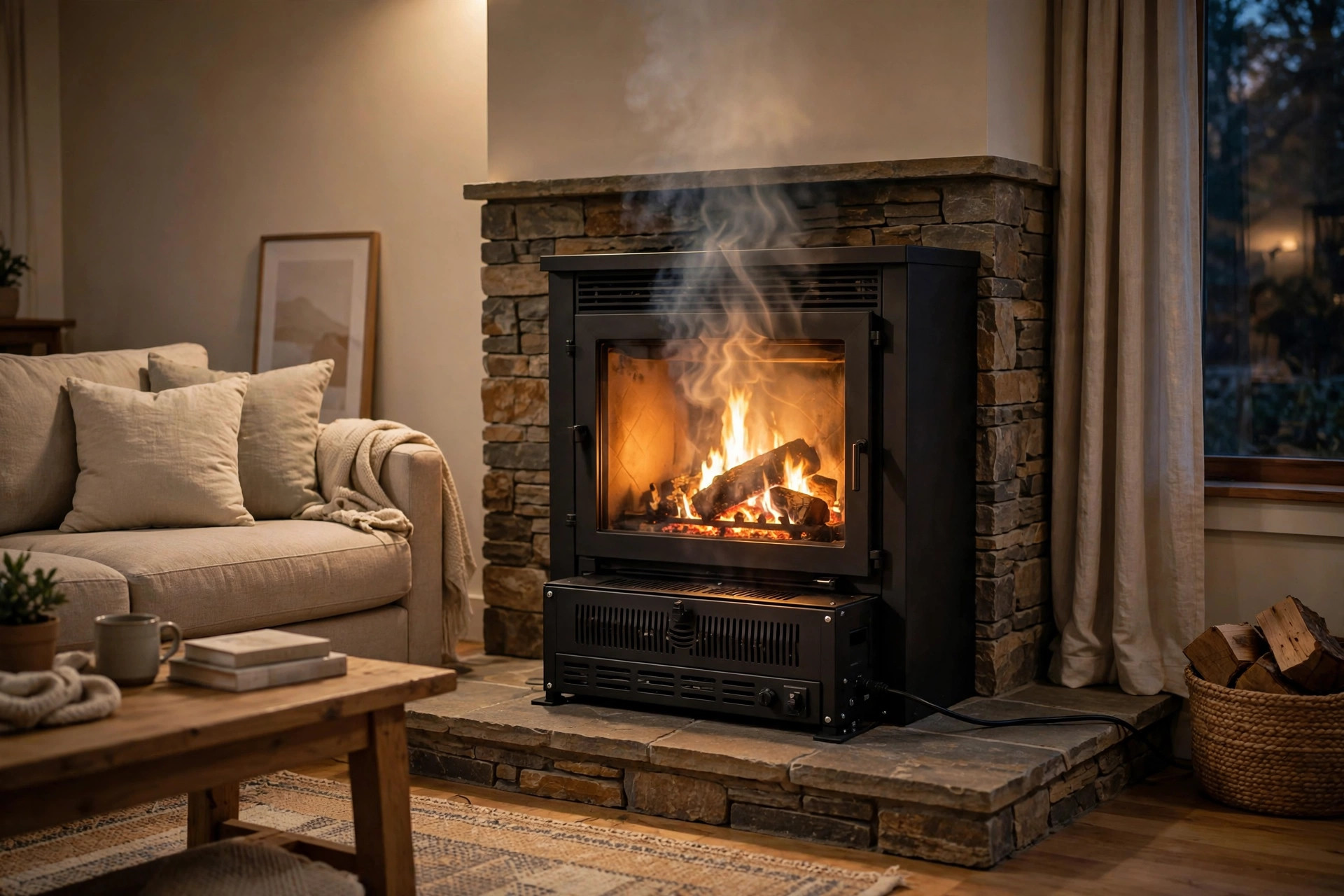
A fireplace blower is an electric fan that sits at the base or the back of a fireplace. It pulls cool room air in through intake vents. The air passes around the hot metal of the firebox. It leaves through front vents as warm air. A heat-activated fan works in a similar way but needs no cord. It uses a small motor driven by the heat of the stove surface itself.
Both kinds serve one purpose. They move heat. Without a fan, warm air rises by itself in a slow column. Much of it goes up the chimney. With a fan, the heat spreads across the room and reaches corners that would otherwise stay cold.
Blowers Versus Stove-Top Fans
Insert blowers are the most common choice for apartment fireplaces. They are built to fit specific insert models or come as universal kits that fit many fireboxes. Most plug into a standard wall outlet. Many include a thermostat that turns the fan on when the firebox gets hot and off when it cools.
Stove-top fans sit on top of a freestanding stove or on the mantel shelf above a fireplace. They start spinning when the surface beneath them grows hot. They need no power and no cord, which suits apartments with no outlet near the hearth. They move less air than a powered blower, but they are silent and simple.
For renters, the no-cord option has real charm. There is nothing to plug in and nothing to uninstall at the end of the lease.
What to Look for When Choosing
Size and Fit
Measure the firebox before buying anything. Note the width, depth, and height of the opening and the space at the base where a blower would sit. A unit that is too large will not slide into place. One that is too small will leave gaps and move less air. Universal kits list the range of firebox sizes they fit. Check that range against your own numbers.
Apartment fireplaces are often smaller than the units found in houses. Many were built for looks more than heat. A compact blower made for small inserts often works best in these tight spaces.
Noise Level
Noise matters more in an apartment than anywhere else. Walls are shared. Bedrooms may sit only a few feet from the living room. Look for blowers rated under 55 decibels on low speed. Many good models run near 50 decibels, about the level of a quiet conversation. Heat-activated stove-top fans make no electric noise at all, only a soft hum of moving blades.
If you can, read buyer reviews that mention noise in plain words. A fan that sounds fine in a store display may seem loud in a small apartment at night.
Airflow and Heat Output
Blower power is measured in CFM, or cubic feet per minute. This number tells how much air the fan can move. A small apartment living room of 200 to 400 square feet needs about 100 to 150 CFM. Larger open plans may want 200 CFM or more. More is not always better. A fan that is too strong can blow cool air across the room before the fire has time to heat it, which feels like a draft.
Power Source
Plug-in blowers need an outlet within cord reach of the fireplace. Many older California apartments have an outlet near the hearth, but not all do. Running an extension cord across the room is unsafe near a hot fireplace. Battery fans exist but drain fast and suit only light use. Heat-activated fans solve the power question entirely. They cost more up front but never add to the electric bill.
Thermostat and Speed Control
A thermostat switch saves worry. It turns the blower on only when the firebox reaches a set temperature. When the fire dies down, the fan stops by itself. Variable speed control lets you set a low hum for the evening and a stronger push on cold mornings. Models without these features cost less but demand more attention.
Types and Options
Universal Firebox Blowers
These kits fit many brands of fireplace inserts. They include the fan, a housing, and mounting hardware. Prices run from about 60 to 150 dollars. They are the most popular choice for apartment renters because they install in minutes and remove just as fast when the lease ends.
Model-Specific Blowers
Some insert makers sell blowers made for one model. These fit perfectly and run quieter than universal kits. They cost more, often 100 to 250 dollars. They make sense when you own the unit or plan to stay in the apartment for years.
Heat-Activated Stove-Top Fans
These sit on a hot surface and spin without power. They suit freestanding stoves and some fireplace mantels. Prices range from 25 to 80 dollars. They move modest air but ask nothing in return. Many renters buy one as a first step before deciding whether a full blower is worth it.
Thermoelectric and Eco Fans
A few fans use thermoelectric modules to turn heat directly into blade motion. They are a subset of stove-top fans with slightly better output. Expect to pay 40 to 100 dollars. Like all heat-driven fans, they work best on stoves with a flat, very hot top.
Cost and Price
Most apartment renters can solve the problem for under 150 dollars. A basic universal blower kit costs 60 to 100 dollars. A quieter kit with speed control costs 100 to 150 dollars. A heat-activated fan costs 25 to 80 dollars and adds nothing to the power bill.
Electric blowers draw little power, often 20 to 60 watts, about the same as a light bulb. Running one all evening costs only a few cents. The real saving comes from fuel. A fire that heats the room better means fewer logs burned or less gas used. Over one winter, the blower can pay for itself in saved fuel.
Installation costs stay near zero for renters. These are plug-in or set-in-place devices. No electrician is needed. If your fireplace has a built-in insert with hardwired fans, leave that work to the landlord or a licensed technician.
Care and Upkeep
A fireplace blower needs little care, but a small routine keeps it running for years. Dust is the main enemy. Once a month during the heating season, unplug the unit and wipe the blades and housing with a dry cloth. Vacuum the intake vents. Dust on the blades cuts airflow and adds noise.
Check the power cord for wear each season. Heat and age can crack insulation. Replace a damaged cord at once or stop using the fan. Oil the motor bearings once a year if the manual calls for it. Most modern small motors are sealed and need no oil.
Store a stove-top fan away from the heat in summer. Wipe it clean and keep it in its box. A plug-in blower can stay in the firebox all year as long as the fireplace is clean and dry.
Safety in Apartments
Safety rules carry extra weight where walls and ceilings are shared. Follow them without exception.
First, get written permission from your landlord before installing anything inside the fireplace. A blower is a small change, but many leases require approval for any fixture work. Keep the approval in writing.
Second, never block air vents or the flue. A blower must not push air in a way that forces smoke or gas into the room. If you smell smoke or gas, turn the fan off, leave the room, and call for help.
Third, keep cords away from heat. The cord should run along the hearth to the outlet without touching the firebox or the glass doors. Never run a cord under a rug near the fireplace.
Fourth, respect burn-day rules. Some parts of California limit wood burning on days when air quality is poor. A blower does not make wood smoke legal on a no-burn day. Check local rules before lighting a fire. Gas inserts face fewer limits but still need yearly inspection.
Fifth, keep a working smoke detector and carbon monoxide detector in the room. Test them each month. This is good practice in any home and a legal duty in most California rentals.
For renters weighing related upgrades, guides to direct vent gas fireplaces for California apartments and electric fireplace mantels for American homes explain cleaner alternatives that pair well with a small fan. Those who heat patios or balconies instead may prefer the options in our infrared outdoor heaters buying guide.
Where to Learn More
Manufacturer sites show exact fit charts for their blower kits. Napoleon publishes blower options for its insert line at Napoleon, and Heatilator lists fan kits for its factory-built fireplaces at Heatilator. For general buying advice, the project guides at Www.thisoldhouse.com and the how-to library at Www.familyhandyman.com both cover fireplace upgrades in plain terms. The reviews team at Www.thespruce.com compares quiet fan models side by side. Shoppers can check stock and prices at Www.homedepot.com and Www.lowes.com. For wood-smoke rules and burn-day limits in California, the official guidance at Www.epa.gov explains how wood heating affects local air quality. Energy-saving tips for home heating appear at U.S. Department of Energy.
Frequently Asked Questions
Can I install a fireplace blower in a rental apartment?
In most cases, yes. Plug-in blower kits and stove-top fans install without tools or with a simple screwdriver. They leave no marks when removed. Still, ask your landlord for written permission first. Some leases limit any work inside the fireplace.
Will a blower work with a gas fireplace?
Yes. Blowers work with wood, gas, and pellet fireplaces alike. They move the warm air that gathers around the firebox no matter what fuel makes it. Make sure the blower is rated for the heat level of your unit.
How much warmer will my room feel?
A good blower can raise the felt warmth of a room by several degrees without burning more fuel. It will not turn a small decorative fireplace into a furnace. Expect steadier, more even heat rather than a dramatic jump.
Are fireplace blowers loud?
The best quiet models run near 50 decibels on low speed. That is easy to talk over. Cheap models can reach 65 decibels, which sounds like a loud fan. Heat-activated stove-top fans make almost no noise.
Do stove-top fans really work without electricity?
Yes. They use the heat of the stove surface to drive a small motor. They start spinning once the surface reaches about 150 degrees Fahrenheit. They move less air than a powered blower but cost nothing to run.
What if there is no outlet near my fireplace?
Choose a heat-activated stove-top fan, which needs no power. Or ask your landlord about adding an outlet near the hearth. Never run an extension cord across the room to reach a distant outlet, and never place a cord where it can touch hot surfaces.
A Short Final Word
The best fireplace blowers and fans for california apartments are small, quiet, and easy to remove at the end of a lease. Measure the firebox, mind the noise rating, and get the landlord’s approval in writing. A modest fan can turn a pretty but weak fireplace into a real source of evening warmth. For a renter facing a mild California winter, that small change is often all the upgrade the season needs.
References
Family Handyman. (n.d.). DIY home repair and maintenance. https://www.familyhandyman.com Heatilator. (n.d.). Fireplaces and fireplace products. https://www.heatilator.com Lowe’s. (n.d.). Home improvement products. https://www.lowes.com Napoleon. (n.d.). Fireplaces, grills, and heating products. https://www.napoleon.com The Home Depot. (n.d.). Home improvement products. https://www.homedepot.com The Spruce. (n.d.). Home and garden advice. https://www.thespruce.com This Old House. (n.d.). Home renovation guidance. https://www.thisoldhouse.com U.S. Department of Energy. (n.d.). Energy efficiency and renewable energy. https://www.energy.gov U.S. Environmental Protection Agency. (n.d.). Protecting human health and the environment. https://www.epa.gov Www. (n.d.). Home and garden information. https://www
Was this guide helpful?

About Sarah Mitchell
The My Garden US editorial team writes practical, in-depth home and garden guides for American homeowners — tested advice, no fluff.
You May Also Like
Top Rated Childproof Fireplace Screens for Sale
March 17, 2026 0 views
High Efficiency Fireplace Safety Gates for Sale: A Plain Buyer’s Guide
August 1, 2026 0 views
Buy Ethanol Wall Fireplaces Online in Arizona: A Plain Guide
August 30, 2026 0 views