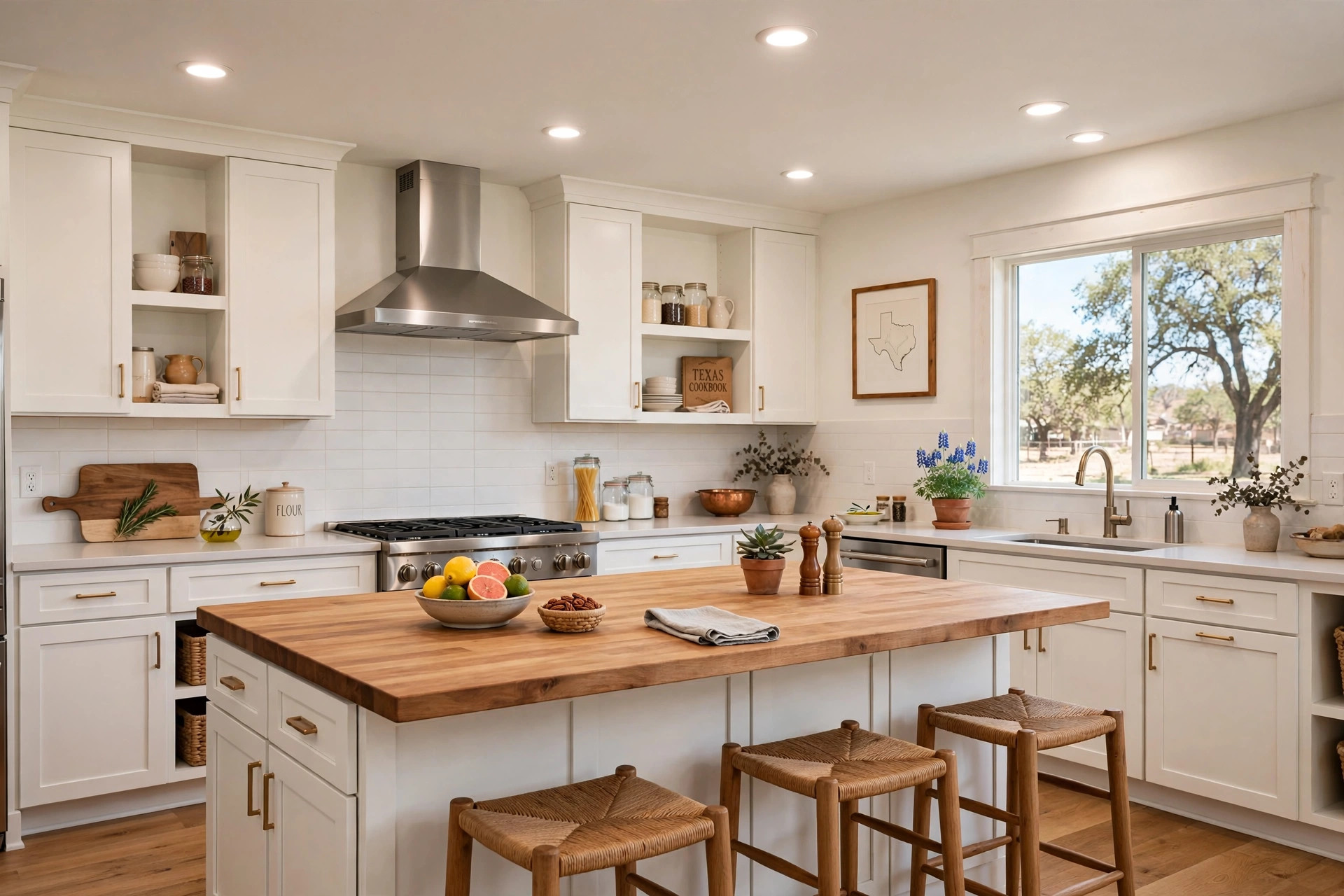

Many Texas families want bright rooms without big hanging lamps. Led recessed lights texas homes usa shoppers often pick these lights because they sit flat in the ceiling. They send light straight down. They stay cool. They save power. This guide explains what they are, how to pick them, and what they cost in Texas homes.
Why Recessed Lights Matter in Texas Homes
Texas homes face long summers and high electric bills. Old bulbs make heat and use much power. LED recessed lights fix both problems at once. They use about one sixth the power of old bulbs. They give off almost no heat. A home with thirty recessed cans can cut its lighting bill by half or more.
Recessed lights also fit Texas home styles. Many Texas houses have high ceilings, open living rooms, and large kitchens. Hanging lamps can look wrong in these rooms. Recessed lights disappear into the ceiling. The room looks clean and open. They work well in kitchens, hallways, living rooms, and porches.
Another gain is safety. LED lights stay cool to the touch. They do not break as easy as glass bulbs. They last for years. Most good LED recessed lights run for 35,000 to 50,000 hours. That is more than twenty years of normal home use.
The ENERGY STAR program lists tested LED lights that meet strict rules for power use and life. Buying an ENERGY STAR rated light gives you a tested product. The U.S. Department of Energy also gives free tips on how lighting cuts home energy use.
Layered light is another reason Texas designers like recessed cans. One type of light cannot do every job. Recessed cans give base light that fills the room. Table lamps and wall sconces add task and accent light on top. This layering makes a room feel rich and lived in. It also lets you light only the zones you use. On a quiet night, dim the cans in half the room and leave the rest off. You save power and set a calm mood.
Beam Spread and Spacing
Beam spread tells how wide the light cone is. A narrow beam, about 25 to 40 degrees, throws a bright pool on the floor. It suits high ceilings and spot jobs. A wide beam, about 60 degrees or more, spreads light soft and even. It suits low ceilings and general light. Many LED retrofit kits list the beam angle on the box. Match narrow beams to tall rooms and wide beams to small rooms. Good spacing matters just as much as the beam. Place cans too far apart and you get dark gaps. Place them too close and you waste money. A tape measure and a simple sketch of the ceiling save trouble later.
How to Choose the Right LED Recessed Lights: Led Recessed Lights Texas Homes Usa
Choice starts with the room. A kitchen needs bright, even light. A bedroom needs soft, warm light. A hallway needs light that guides the eye. Match the light to the job.
Size of the Can
Recessed lights come in set sizes. The common sizes are 4 inch, 5 inch, and 6 inch. The size is the width of the opening in the ceiling. Four inch lights suit small rooms and spots over counters. Six inch lights suit large rooms and high ceilings. If you are not sure, 6 inch is the safe pick for most Texas living rooms.
Brightness and Color
Brightness is measured in lumens. A 6 inch recessed light with 650 to 1,100 lumens works for most rooms. Kitchens and work areas need the high end. Bedrooms and halls can use the low end.
Color is measured in Kelvin. Warm white is 2700K to 3000K. It feels cozy and soft. Cool white is 4000K to 5000K. It feels bright and clean. Most Texas homes use 3000K for living areas and 4000K for kitchens, baths, and garages. Some lights let you pick the color with a small switch on the side. That feature helps if you change your mind later.
Dimming and Controls
Many buyers want dimmers. Dimming lets you set the mood. Make sure the LED light is marked “dimmable.” Not all are. Also check that the dimmer switch fits LED lights. Old dimmer switches can make LEDs flicker or buzz. Leviton and other switch makers list which dimmers work with LED lights.
IC Rating for Insulated Ceilings
Texas attics get very hot. Many Texas ceilings have thick insulation above them. If your light sits under insulation, you need an IC rated housing. IC means “insulation contact.” It is safe to touch insulation. Non-IC lights need open space around them. Using the wrong type is a fire risk. Check your attic before you buy. Lithonia Lighting makes both IC and non-IC recessed housings for homes.
Types and Options for Texas Buyers
Not all recessed lights are the same. The main split is between the housing and the trim. The housing is the metal can that hides in the ceiling. The trim is the ring and lens you see from below. Many modern kits join both in one piece. These are called retrofit kits. They fit into old cans and turn them into LED lights in minutes.
New Construction vs Remodel Kits
New construction housings attach to ceiling joists before the drywall goes up. They suit new builds and big remodels. Remodel kits use clips that grip the drywall from below. They suit homes that are already built. Most Texas buyers of older homes use remodel kits. For full steps, see our led recessed lights installation guide usa — it walks through the process room by room.
Trim Styles
Trim styles change how the light looks. Baffle trims have ridges that cut glare. Reflector trims bounce light down in a tight beam. Gimbal trims tilt so you can aim the light at art or a wall. Shower trims are sealed against water for baths. Pick the trim that fits the room.
Smart and Tunable Lights
Smart recessed lights connect to phones and voice helpers. You can change brightness and color from the couch. Some brands, like Philips, make smart downlights that tune from warm to cool white. They cost more. They suit buyers who like control.
Outdoor and Wet Rated Lights
Texas porches and patios need lights that can face rain. Look for lights rated “wet location.” These have sealed lenses. They cost a bit more than indoor lights. For porches you may also want wall lights with motion sensors. Our motion flood lights buying guide usa covers bright outdoor security lights for Texas yards.
Cost and Price
LED recessed lights cost more at the store than old bulbs. But they cost less over time. Here are rough price bands in the United States.
A basic retrofit LED kit costs about 8 to 20 dollars per light. Mid range kits with selectable color and dimming cost about 20 to 40 dollars. High end smart lights cost about 40 to 80 dollars.
New construction housings cost about 15 to 40 dollars each, plus the trim and LED module. If you hire an electrician, labor adds about 100 to 200 dollars per light for new installs. Retrofit jobs cost less because the cans are already there.
Power savings pay back the cost. A 12 watt LED replaces a 65 watt old bulb. Run it five hours a day and you save about 90 kilowatt hours a year per light. At Texas power rates, thirty lights can save 300 to 500 dollars a year. Big stores like The Home Depot and Lowes stock wide ranges of LED recessed kits at each price level. Specialty shops like Lumens and Lamps Plus carry design led trims and smart models.
Care and Upkeep
LED recessed lights need little care. They have no bulbs to change. Still, a few habits keep them bright.
Dust the trim once or twice a year. Dust cuts light output. Use a soft cloth. Do not use water on indoor trims. Check the lens for cracks. A cracked lens lets bugs and dust into the light. Replace damaged trims fast.
Keep attic insulation from piling onto non-IC housings. Check the attic once a year. Make sure vents near the lights are clear. If a light flickers, check the dimmer first. Swap in an LED rated dimmer before you blame the light.
LED drivers can fail before the LED chip wears out. If a light dies early, it is often the driver. Good brands offer five year or longer warranties. Keep your receipt. Cree Lighting is known for long life LED parts and strong warranties.
Write down the date you install each room of lights. This helps you track the warranty. It also tells you which room is next when you plan more work. If one light in a row looks dimmer than the rest, swap its position with a neighbor. If the dim spot moves with the light, the light is bad. If it stays, the dimmer or wire is bad. This simple test saves a service call.
Safety Tips
Electric work can kill. If you are not trained, hire a licensed electrician. Always turn off the breaker before you touch a light. Test with a voltage tester. Do not trust the wall switch alone.
Use IC rated housings under insulation. Keep insulation at least three inches from non-IC housings. Do not cover lights with boxes or bags. Heat needs a way out.
Wet areas need wet rated lights. Bathrooms, showers, and porches count as wet areas. Check the label on the box. It will say dry, damp, or wet. Match the rating to the room.
Texas heat adds risk in attics. Work in the attic early in the day. Drink water. Tell someone you are up there. Attics can top 140 degrees in a Texas summer.
FAQ
How many recessed lights does a room need?
A common rule is one 6 inch light for every 25 to 40 square feet. A 200 square foot living room needs five to eight lights. Space them evenly. Keep them about four to six feet apart. Kitchens need more lights over counters and the island.
Can I put LED recessed lights in an old can?
Yes. Retrofit LED kits fit most old 5 inch and 6 inch cans. They screw into the old bulb socket and clip into the can. The job takes about ten minutes per light. No new wiring is needed in most cases.
Do recessed lights work with vaulted ceilings?
Yes, but pick the right trim. Sloped ceiling trims angle the light straight down. Gimbal trims also work. For very high ceilings, use brighter lights with narrow beams so the light reaches the floor.
Are LED recessed lights good for Texas heat?
Yes. LEDs handle heat better than old bulbs. They make less heat, which helps your air conditioner. In hot attics, pick lights rated for high ambient heat. IC rated housings add a safety margin.
Should I pick 3000K or 4000K?
Pick 3000K for living rooms, bedrooms, and dining rooms. It feels warm and calm. Pick 4000K for kitchens, baths, laundry rooms, and garages. It feels bright and clear. Selectable color lights let you try both.
Do I need a special dimmer for LED recessed lights?
Yes, in most cases. Old dimmers were made for high watt bulbs. They can make LEDs flicker, buzz, or die early. Buy a dimmer marked for LED use. Check the light maker’s list of tested dimmers before you buy.
Final Word
LED recessed lights are a smart pick for Texas homes. They save power. They stay cool. They last for years. They fit the open rooms that Texas buyers love. Start with the right size and color for each room. Check the IC rating before you buy. If wiring scares you, hire a pro. For rooms where hanging lamps fit better, such as over a kitchen island, our kitchen track lighting buying guide usa compares other bright options. And for general home lighting ideas, The Spruce has room by room guides worth a read.
References
Cree Lighting. (n.d.). LED lighting solutions. https://www.creelighting.com ENERGY STAR. (n.d.). Energy efficient products. https://www.energystar.gov Lamps Plus. (n.d.). Lighting and home decor. https://www.lampsplus.com Leviton. (n.d.). Electrical wiring devices and controls. https://www.leviton.com Lithonia Lighting. (n.d.). Residential and commercial lighting. https://www.lithonia.com Lowe’s. (n.d.). Home improvement products. https://www.lowes.com Lumens. (n.d.). Lighting and ceiling fans. https://www.lumens.com Philips. (n.d.). Lighting products. https://www.philips.com The Home Depot. (n.d.). Home improvement products. https://www.homedepot.com The Spruce. (n.d.). Home and garden advice. https://www.thespruce.com U.S. Department of Energy. (n.d.). Energy efficiency and renewable energy. https://www.energy.gov
Was this guide helpful?

About James Carter
The My Garden US editorial team writes practical, in-depth home and garden guides for American homeowners — tested advice, no fluff.
You May Also Like
Landscape Spot Lights Reviews Buying Guide USA
April 22, 2026 0 views
Landscape Spot Lights USA Online Deals: A Plain Guide for Homeowners
February 25, 2026 0 views
Patio String Lights for Florida Homes: A Practical Guide
April 23, 2026 0 views