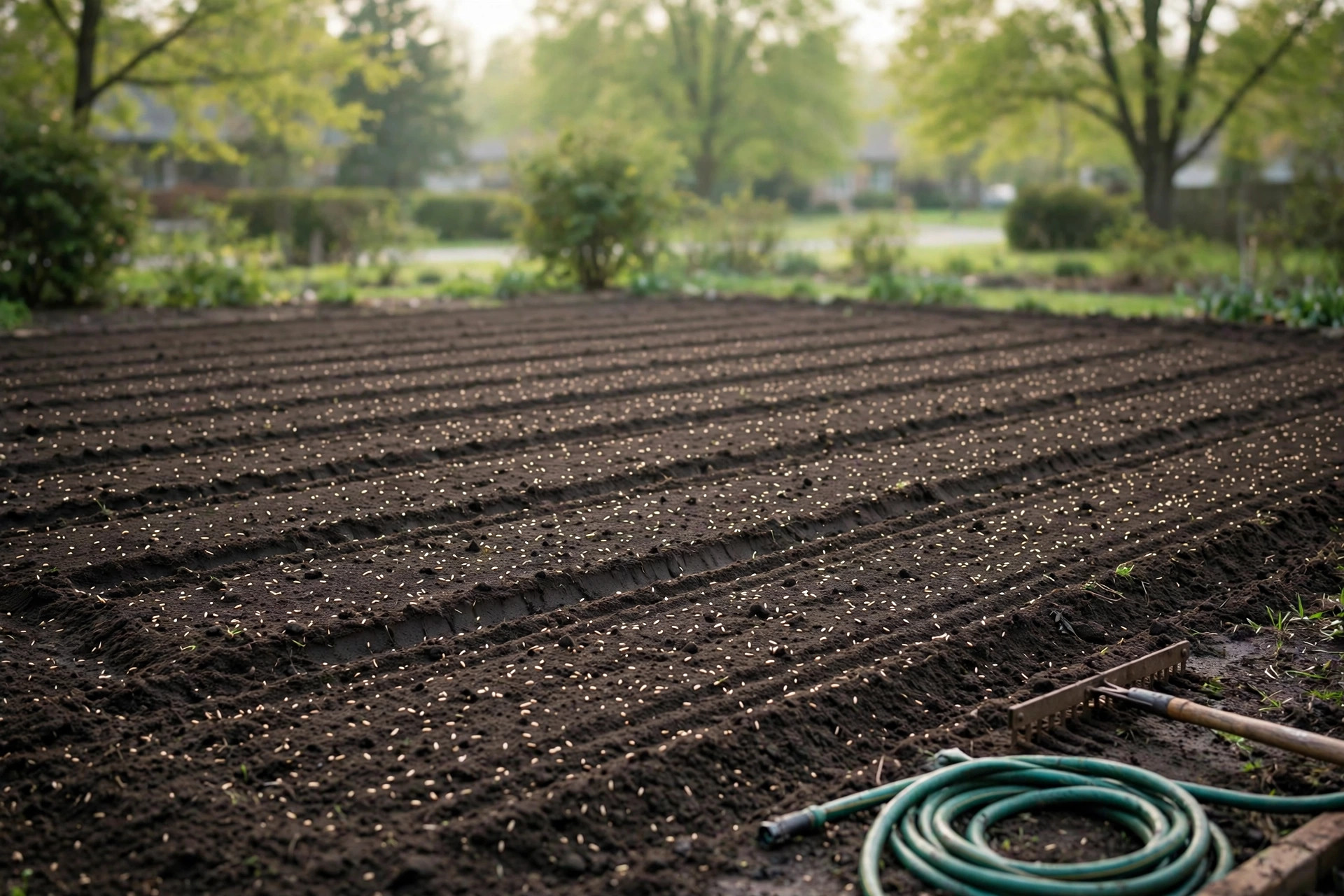

Spring is the season when thin lawns call out for help. If your yard looks bare after winter, you may wonder how to plant grass seed in spring and get good results. The work is simple. It takes a few basic tools, the right seed, and steady care for a few weeks. This guide walks you through the job in plain order. You will learn when to start, how to prepare the soil, how to spread the seed, and how to keep the new grass alive. Whether you are seeding a whole yard or fixing a few bare spots, the steps stay the same. Let us begin with why spring is a fine time to plant.
Why Spring Seeding Works
Spring gives grass seed what it needs most. The soil warms up. The rain falls often. The days grow longer. Seed sprouts best in moist soil that stays between 50 and 65 degrees for cool-season grasses. Spring air often keeps the soil in that range. Rain also means less hand watering in the early days.
There is another benefit. Weeds grow slower in early spring than in summer. Young grass gets a head start before crabgrass and other warm-weather weeds fill in. The lawn also has a full growing season ahead. Roots grow deep through spring and summer. By fall, the new grass is strong.
Spring seeding is not perfect. Late frosts can hurt young shoots. Heavy spring rain can wash seed away. But with good timing and care, spring ranks among the best times to plant a lawn.
When to Start in Spring: How to Plant Grass Seed in Spring
Timing matters more than any other step. Plant too early and the soil is cold. Seed sits and rots. Plant too late and summer heat dries out the young grass.
Start when soil temperatures reach 50 degrees and stay there. A simple soil thermometer, pushed two inches into the ground, tells you the truth. Take the reading in the morning for a few days in a row. Air temperature can fool you. The soil is what counts.
In the North, most gardeners seed from late March to early May. In the South, warm-season grasses go in from April to June. Your local county extension office can give dates for your area. If you live in the Northeast, read our guide on the best time to plant grass seed in the Northeast for dates by state.
Watch the weather. Aim for a calm, dry day for sowing. Heavy rain in the forecast means you should wait. New seed floats away in a downpour.
What You Need Before You Begin
Gather your tools before you start. The job goes faster when everything is at hand. You will need:
– Grass seed suited to your region and your yard – A spreader or your hands for small areas – A garden rake and a stiff leaf rake – A garden hose with a gentle sprinkler – Starter fertilizer made for new lawns – A lawn roller or a flat piece of plywood to press the seed down – Topsoil or compost for thin spots
Buy a little more seed than the bag says you need. Ten percent extra covers mistakes. Check the date on the seed bag. Fresh seed sprouts better than old seed. Look for a test date within the last year.
How to Choose the Right Grass Seed
The seed you buy decides the lawn you get. Match the grass to your climate first. Then think about sun, shade, and foot traffic.
Cool-Season Grasses
In the North and Midwest, cool-season grasses do best. Kentucky bluegrass, perennial ryegrass, and tall fescue are the common choices. They grow fast in spring and fall. They rest in summer heat. Tall fescue handles drought and wear better than most. Ryegrass sprouts fast and is good for quick cover.
Warm-Season Grasses
In the South, warm-season grasses rule. Bermuda grass, zoysia, and buffalo grass grow in summer heat. They go brown in winter. They are planted later in spring than cool-season types. Buffalo grass needs little water once it is set. Bermuda grows fast but needs full sun.
Read the Seed Label
Every seed bag carries a label. It tells you the grass types, the percent of weed seed, and the germination rate. Buy seed with zero percent weed seed if you can. Check the germination rate. Anything above 85 percent is good. Independent reviews at Consumer Reports can help you compare brands before you buy.
Step by Step: How to Plant Grass Seed in Spring
Here is the full process in order. Follow it once and the method will feel easy.
1. Clear the area. Mow the old grass short. Rake up dead grass, leaves, and sticks. Pull weeds by hand or treat them two weeks before seeding. The seed needs bare soil to touch.
2. Loosen the top soil. Use a garden rake to scratch the top half inch of soil. On hard ground, a core aerator helps. It pulls small plugs of soil out. This lets water and air reach the roots. Rake the plugs flat when you are done.
3. Test and fix the soil. A soil test kit from a garden center shows pH and nutrients. Grass likes a pH between 6.0 and 7.0. If the soil is too acid, add lime as the test directs. If it is poor, spread a thin layer of compost.
4. Spread starter fertilizer. Starter fertilizer is rich in phosphorus. It helps young roots grow. Apply it with a spreader at the rate on the bag. More is not better. Too much burns the seed.
5. Sow the seed. Set your spreader to half the rate on the bag. Walk the yard in one direction. Then walk again at a right angle with the rest of the seed. This cross pattern gives even cover. For small spots, sow by hand. Aim for seed to land about one inch apart.
6. Rake lightly. Drag a leaf rake over the area. You want the seed just under the soil, about one eighth of an inch deep. Seed left on top dries out. Seed buried deep never sprouts.
7. Press and water. Roll the area with a lawn roller, or step on the plywood to press the seed into the soil. Good seed-to-soil contact is key. Then water gently with a fine spray. The soil should be damp, not soaked.
How to Seed Bare Patches
You may not need to seed the whole lawn. Many spring jobs are just patches where the grass died. The steps are the same but smaller. Rake the dead patch down to bare soil. Spread a half inch of topsoil. Sow seed a little thicker than on open lawn. Press it down. Water often.
If patches return each year, find the cause. Poor drainage, deep shade, or heavy foot traffic may be the real problem. Our guide on how to reseed patchy lawn areas walks through common causes and fixes.
Types of Grass Seed for Spring Lawns
Mixes often beat single grasses. A blend of two or three types gives a tougher lawn. If one type struggles, the others fill in. Common spring mixes include bluegrass with ryegrass, or fescue with ryegrass.
Shade mixes suit yards under trees. They hold fine fescue types that live in low light. Sun mixes suit open yards. They hold heat-loving types.
For busy yards, pick wear-tolerant seed. Tall fescue and perennial ryegrass recover fast from kids and pets. See our picks for the best lawn seed for high-traffic areas if your lawn takes a beating.
Avoid cheap filler seed. Some low-price bags hold annual ryegrass. It sprouts fast but dies in a year. You want perennial types that come back each spring.
Cost and Price of Spring Seeding
Seeding is one of the cheapest ways to fix a lawn. A 10-pound bag of good seed costs about 30 to 60 dollars. That covers around 2,000 square feet at new-lawn rates. Overseeding a thin lawn uses half as much.
Starter fertilizer runs 15 to 30 dollars a bag. A soil test kit costs about 15 dollars. A simple broadcast spreader costs 40 to 80 dollars, but you will use it for years. Rent a core aerator for about 75 dollars a day if you do not want to buy one.
For a typical suburban yard, the full job costs 100 to 250 dollars. That is far less than sod, which runs five to ten times more per square foot. Seed takes longer, but the savings are real.
Care and Upkeep After Planting
New grass is fragile. The first month decides the outcome. Follow these rules.
Water lightly and often. Keep the top inch of soil damp until the seed sprouts. In spring this may mean watering twice a day. Use a gentle spray so the seed does not wash away. Once the grass is two inches tall, water less often but deeper. One inch of water per week is the goal. Guides from Toro offer clear watering tips for new lawns.
Do not mow too soon. Wait until the new grass is about three inches tall. Set the mower high for the first cut. Never cut more than one third of the blade. Sharp blades matter. Dull blades tear young grass. The mower guides from John Deere show how to keep blades sharp.
Feed on schedule. The starter fertilizer lasts about six weeks. After that, apply a balanced lawn fertilizer. Follow the bag rate. Water it in after spreading.
Keep traffic off. Stay off the new grass for at least a month. Mark the area with stakes and string if needed. One game of catch can undo weeks of growth.
Safety in the Yard
Spring seeding uses products that need care. Read every label before you spread anything. Keep fertilizer and seed bags closed and stored up high, out of reach of children and pets. Wash your hands after handling fertilizer.
Do not let pets walk on the seeded area until the fertilizer is watered in and the grass is up. Some lawn products are not safe for dogs. Check the label for pet warnings.
Wear gloves when you handle lime or fertilizer. Wear eye protection when you rake or spread on a windy day. Dust from some products can sting the eyes. If a spill happens on a hard path, sweep it up. Do not wash it into the storm drain.
Frequently Asked Questions
How long does grass seed take to sprout in spring? Ryegrass sprouts in five to ten days. Tall fescue takes seven to fourteen days. Kentucky bluegrass is slow, often two to four weeks. Cold soil slows every type. Warm, damp soil speeds them up.
Can I plant grass seed in early spring? Yes, but watch the soil temperature. Seed planted in cold soil may rot before it sprouts. Wait until the soil holds 50 degrees or more. A late frost after sowing can hurt, so check the forecast.
Should I put straw over new grass seed? A light layer of clean straw helps hold moisture. It also hides seed from birds. Keep it thin. You should still see soil through it. Remove thick clumps once the grass is up.
Can I walk on newly seeded grass? Stay off it for three to four weeks. Light foot traffic is fine after the first mowing. Heavy traffic should wait until the lawn is thick, usually eight weeks.
What if my spring seeding fails? Do not give up. Early fall is another good seeding window. It is often the best one. Note what went wrong: dry soil, heavy rain, or wrong seed. Fix the cause and try again in fall.
Is spring or fall better for planting grass seed? Fall wins for cool-season grasses in most regions. The soil is warm, weeds are weak, and rain is steady. But spring works well too, and it lets you fix winter damage fast. Do the job in spring if the lawn needs help now.
A Final Word
Planting grass seed in spring is honest work with a clear reward. Prepare the soil well. Choose seed that fits your region. Water with care. Keep feet off the young grass. In a few weeks, green shoots will rise where bare soil sat. By summer, you will have a lawn worth walking on. Start on a calm spring day, and the season will do much of the work for you.
References
Toro. (n.d.). Lawn care and watering products. https://www.toro.com
Deere & Company. (n.d.). Lawn mowers and equipment. https://www.deere.com
Consumer Reports. (n.d.). Lawn and garden product reviews. https://www.consumerreports.org
Was this guide helpful?

About Robert Taylor
The My Garden US editorial team writes practical, in-depth home and garden guides for American homeowners — tested advice, no fluff.
You May Also Like

How to Get Rid of Moles in Yard: A Plain Guide for Homeowners
September 15, 2026 0 views
How to Find Affordable Lawn Care Plans Near Me
March 11, 2026 0 views
Lawnmower Battery Replacement Near Me: A Complete Guide for Homeowners
June 26, 2026 0 views