A good yard does not stay tidy on its own. Branches fall after storms. Small trees lean where they should not. Piles of brush grow at the edge of the lot. For many years, the only way to cut through all of it was a gas saw. Today, things have changed. The best battery chainsaw for yard work now offers clean power, simple care, and enough strength for most jobs around the home.
Battery chainsaws were once toys next to gas models. That time has passed. Motors are better. Batteries last longer. A modern battery saw can cut limbs, trim small trees, and break down firewood. It starts with the push of a button. It needs no fuel mixing. It is quieter than gas. For the average homeowner, that mix of ease and strength is hard to beat.
This guide walks through what matters when you shop. It covers power, bar length, batteries, and price. It looks at the types of saws you can buy. It explains care and safety. It closes with answers to common questions. By the end, you will know what the best battery chainsaw for yard work looks like for your yard and your budget.
Why a Battery Chainsaw Makes Sense for Yard Work
Yard work is not logging. Most jobs around a home are small. A fallen limb. A bushy tree that blocks a path. A stack of boards from an old fence. You need a tool that is ready fast, easy to carry, and strong enough for the task. That is where battery saws shine.
A gas chainsaw needs fuel, oil, and regular tune-ups. It is loud. It smells. It can be hard to start on a cold morning. A battery saw needs none of that. You slide in the battery, press a button, and cut. When the job ends, you take the battery out and set the saw on a shelf. There is no fuel to go bad over winter.
Noise matters too. Many towns and suburbs have rules about loud tools. A battery saw runs much quieter than a gas one. You can work in the morning without waking the street. Your ears will thank you as well.
Weight is another gain. Most battery saws weigh less than gas models of the same bar size. That helps when you cut limbs overhead or carry the saw across a large lot. Older users and anyone with less arm strength will feel the difference by the end of the day.
The limits are real but easy to grasp. A battery saw will not run all day like a gas saw. The battery drains, and you must stop to charge or swap it. Very large trees are beyond what most battery models can do well. But for yard work — limbs, small trees, brush, firewood — a strong battery saw is enough.
What to Look for in the Best Battery Chainsaw for Yard Work
Shopping for a chainsaw is easier when you know the key terms. These are the points that matter most.
Voltage and Power
Voltage is the simplest clue to power. Most yard saws run on 18, 20, 40, 56, 60, or 80 volts. Higher voltage usually means more power and longer run time. An 18-volt saw is fine for light pruning. A 40-volt or 60-volt saw handles real cutting. An 80-volt saw comes close to gas strength.
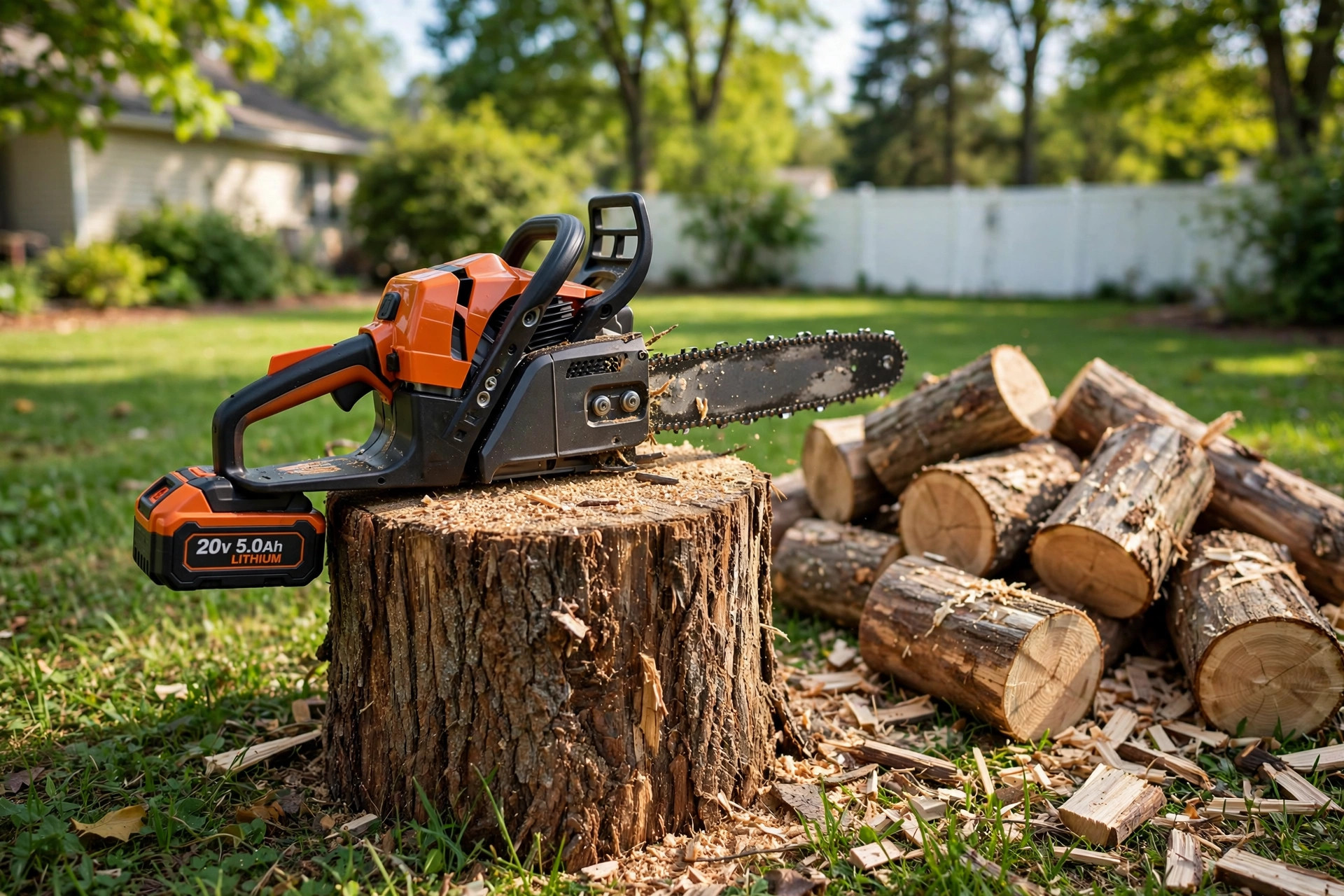
Look at the battery size as well. It is measured in amp hours, written as Ah. A 5.0 Ah battery lasts much longer than a 2.0 Ah one on the same saw. Many brands sell kits with one battery. Buying a second battery is smart if your jobs take more than half an hour.
Bar Length
The bar is the metal guide that the chain runs around. Its length tells you how thick a log you can cut in one pass. Common sizes for yard work are 10, 12, 14, 16, and 18 inches.
A 10-inch bar is good for pruning and small limbs. A 12- or 14-inch bar covers most yard tasks. A 16- or 18-inch bar suits cutting small trees and thick logs. As a rule, the bar should be at least two inches longer than the thickest wood you plan to cut. If you only trim limbs now and then, a shorter bar is lighter and easier to handle.
Chain Speed and Cutting Strength
Chain speed is measured in feet per second or meters per second. Faster chain speed means faster cuts. Brushless motors give better speed and last longer than older brushed motors. When you compare saws, choose brushless if the price is close.
Also check the chain type. Narrow-kerf chains cut with less effort and save battery life. They are common on battery saws and work well for yard jobs.
Battery Platform
This point is easy to miss. Most brands build a line of tools that share one battery. If you already own a battery string trimmer or blower from a brand, a chainsaw from the same line will use the same batteries. The top rated string trimmer for thick weeds from your shed may already share a battery with the saw you want. Staying in one battery family saves money and keeps charging simple.
Comfort and Safety Features
A good saw should feel right in your hands. Look for soft grips and balanced weight. A tool-free chain tensioner lets you tighten the chain without a wrench. An automatic oiler keeps the chain slick as you cut. A clear oil window shows when to refill.
Safety features matter just as much. A chain brake stops the chain fast in a kickback. A hand guard shields your front hand. Low-kickback chains lower the risk of the bar jumping. Never buy a saw that lacks a working chain brake.
Types of Battery Chainsaws for the Yard
Battery saws come in a few shapes. Each suits a different kind of work.
Compact pruning saws. These are small, often with 6- to 8-inch bars. Some are shaped like a handle you hold with one hand. They are made for light pruning and cutting small branches. They are very light and easy to store. They are not made for thick wood.
Standard battery chainsaws. These look like classic chainsaws and come with 12- to 18-inch bars. They are the best pick for most yard work. They cut limbs, small trees, and firewood. This is the type most buyers should look at first.
Pole saws. These mount a small saw head on a long pole. They let you cut high branches while you stand on the ground. Many use the same battery as the brand’s other tools. They are a smart add-on if you have tall trees.
Top-handle saws. These are compact saws made for tree workers. They are light and strong but need skill to use safely. Most homeowners do not need one. If you are new to chainsaws, pick a standard rear-handle model instead.
How Much Should You Spend
Price tells a rough story about power. Here is what to expect.
Under 150 dollars, you get compact saws and light 18-volt models. These suit pruning and small limbs. They are fine for light yards but will strain on thick wood.
From 150 to 300 dollars, you find strong 40-volt and 56-volt saws with 14- to 16-inch bars. This is the sweet spot for most homeowners. The best battery chainsaw for yard work for the average yard often sits in this range.
Above 300 dollars, you get 60-volt and 80-volt saws with 16- to 18-inch bars. These cut like small gas saws. They suit larger lots, storm cleanup, and steady firewood cutting. The best riding lawn mower for one acre lots is a natural partner tool for owners of big yards at this level.
Remember to count the battery. A bare tool with no battery looks cheap but costs more once you add the battery and charger. Kits with battery and charger included are usually the better deal for a first buy.
Run time varies by brand and battery size. A 5.0 Ah battery on a 40-volt saw can give 30 to 60 minutes of steady cutting. That is enough for most yard sessions. If you plan long cleanup days, buy a second battery so one charges while you work.
Care and Upkeep
A battery saw needs less care than a gas one, but it still needs care. A dull chain is the most common problem. It makes cutting slow and drains the battery fast. Learn to sharpen with a round file or take the chain to a shop for sharpening. A sharp chain throws out real chips. A dull chain makes dust.
Keep the chain at the right tension. It should hug the bar but still move by hand. Check it before each use. New chains stretch as they warm up, so check again after the first few cuts.
Bar and chain oil is still needed. Battery saws have a small oil tank that feeds the chain as it runs. Use proper bar oil, not motor oil. Refill the tank when you swap batteries. A dry chain wears fast and can overheat.
Clean the saw after work. Wipe off sawdust and sap. Clear the vents so the motor stays cool. Store the saw in a dry place. Take the battery out before storage. Store batteries at room temperature. Do not leave them in a hot shed all summer or a freezing garage all winter.
Check the sprocket and bar for wear once a season. A worn bar makes cuts drift to one side. Bars can be flipped to even out wear. Replace the chain when the teeth are short or damaged.
Safety Comes First
A chainsaw is a serious tool. Battery or gas, it can hurt you in a moment. Take safety as seriously as the work itself.
Wear the right gear every time. Safety glasses or a face shield protect your eyes. Ear protection is still wise even though battery saws are quieter. Gloves give grip. Sturdy boots protect your feet. Chaps made for chainsaw use can stop or slow a chain that slips toward your leg. They are worth the cost.
Plan your cuts. Know where the wood will fall. Clear the area of people and pets. Keep both hands on the saw. Stand to the side of the cut, not in line with the bar. Never cut above shoulder height with a standard saw. Use a pole saw for high limbs or call a tree service.
Beware of kickback. It happens when the tip of the bar hits wood and the saw jumps back toward you. Keep the tip clear of the wood. Use both hands with a firm grip. Make sure the chain brake works before you start.
Cut only what the saw can handle. Do not force a small saw through a big trunk. If a tree is large, leaning, or near power lines, call a professional. No yard job is worth an injury.
Learn from trusted sources. Maker sites such as Toro and Deere publish guides on outdoor power tools and safe use. For engine and tool care basics, Briggs and Stratton offers clear upkeep tips. If you also run a robot lawn mower for half acre yards, keep its path clear of cut limbs before it mows.
Frequently Asked Questions
How long does a battery chainsaw run on one charge? It depends on the battery size and the wood. A large 5.0 Ah battery on a mid-size saw gives about 30 to 60 minutes of steady cutting. Light pruning stretches that time. Thick hardwood shortens it. A second battery doubles your work time.
Can a battery chainsaw cut down a tree? Yes, if the tree is small. A 16- or 18-inch battery saw can fell trees up to about 12 to 14 inches thick. Larger trees need a gas saw or a tree service. Always check local rules before felling a tree near property lines.
Are battery chainsaws as strong as gas chainsaws? The strongest battery saws now match small gas saws. They cut well for yard work. Gas still wins for all-day work and very large wood. For most homeowners, the gap no longer matters.
Do I need to mix fuel for a battery chainsaw? No. That is one of the main gains. You only need bar and chain oil for the chain. There is no gas, no oil mixing, and no spark plug.
What size battery chainsaw do I need for yard work? For most yards, a 40- to 60-volt saw with a 14- or 16-inch bar is the right pick. It handles limbs, brush, and small trees. Choose a smaller saw if you only prune. Choose a larger one if you cut firewood often.
How do I store the battery in winter? Store it indoors at room temperature, charged to about half. Do not leave it on the charger all winter. Do not store it in a freezing garage or a hot shed. Check the charge every few months.
A Final Word
The best battery chainsaw for yard work is the one that fits your yard, your strength, and your budget. For most homes, that means a brushless 40- to 60-volt saw with a 14- or 16-inch bar, a large battery, and a kit that includes the charger. It will start at the push of a button, cut quietly, and need little care.
Buy from a brand whose battery line you already own or plan to grow into. Keep the chain sharp. Wear your safety gear. Respect the tool. Do these things, and your yard will stay neat with far less fuss than the gas days ever allowed.
References
Toro. (n.d.). Outdoor power equipment. https://www.toro.com Deere. (n.d.). Lawn and garden equipment. https://www.deere.com Briggs & Stratton. (n.d.). Small engines and outdoor power. https://www.briggsandstratton.com
Was this guide helpful?

About Jennifer Lee
The My Garden US editorial team writes practical, in-depth home and garden guides for American homeowners — tested advice, no fluff.