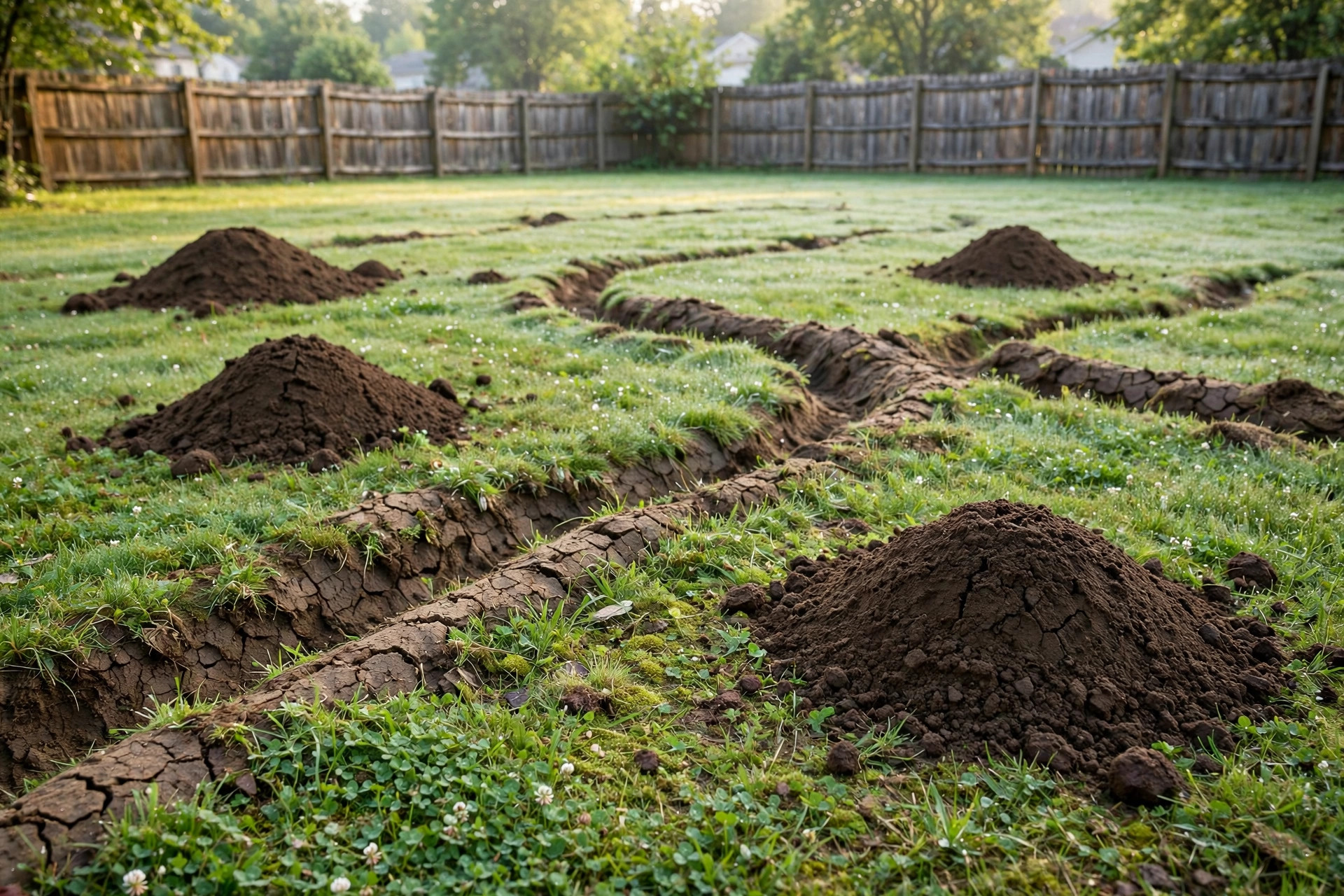

Few things upset a homeowner like a lawn full of tunnels. You wake up one morning and the yard looks like a map of small hills. The grass is torn. The soil is soft under your feet. If you want to know how to get rid of moles in yard soil for good, you are not alone. Moles are one of the most common lawn pests in America. They do not eat grass. They dig for food. Their tunnels can ruin the look of a fine lawn in a matter of days. The good news is that moles can be removed. It takes care, patience, and the right method. This guide explains each choice in plain words.
Why Moles Come to Your Yard
Moles live most of their lives underground. They are small animals with strong front paws. They dig tunnels to hunt for grubs, worms, and insects. A healthy lawn with rich soil is a fine place for them. If your yard has many worms or grubs, moles will find it.
Moles also like moist soil. Watered lawns are easy to dig. Shady spots and garden beds hold damp soil. That is why moles often show up after rain. A sprinkler that runs too long can invite them too.
Moles do not live in groups. One mole can dig over one hundred feet of tunnel in a single day. Two or three moles can damage a whole yard in a week. So act early. The longer they stay, the more tunnels they make.
How to Tell a Mole from Other Pests: How to Get Rid of Moles in Yard
Before you act, make sure the pest is a mole. Other animals cause damage that looks much the same.
Moles make raised ridges in the grass. The ridges follow a line across the lawn. They also make cone-shaped mounds of soil. The mounds are pushed up from below. There is no hole at the top of a mole mound.
Voles, by contrast, make holes at the surface. They leave no mound. They eat roots and bulbs. Gophers make larger mounds with a plugged hole on one side. Pocket gophers also eat plants. Moles eat no plants. They only disturb the roots by digging under them.
Check the damage in the morning. Mole activity is highest at dawn and dusk. If the ridges are fresh, the mole is still at work.
What to Look for in a Mole Control Method
Not every method fits every yard. Think about these points before you choose.
Effectiveness. Some methods move the mole to a neighbor’s yard. Some remove it for good. Traps are the most certain way to end the problem.
Safety. Pets and children play in the yard. Any poison or sharp trap must be used with care. Humane methods carry less risk.
Cost. Home remedies cost little. Professional traps cost more. A wildlife service costs the most but saves time.
Law. Some states protect moles or limit how they may be killed. Check local rules before you use a lethal trap or poison. Your city may have rules about trapping on your own land.
Seven Ways to Remove Moles from Your Yard
1. Scissor Traps and Harpoon Traps
Trapping is the most proven way to get rid of moles in yard soil. Two common traps are used. The scissor trap sits inside the tunnel. When the mole passes through, the jaws close. The harpoon trap sits above the tunnel. It drives spikes down when the mole pushes the soil up.
Set the trap on an active tunnel. Find a fresh ridge. Press it down with your foot. Check it the next morning. If the soil is pushed up again, the tunnel is active. That is where the trap goes.
Wear gloves when you handle traps. Moles avoid the smell of people. Check the trap each day. Reset it until you catch the mole. One mole at a time is the rule. Most yards have only one or two.
2. Live Catch Traps
If you want to know how to get rid of moles humanely, a live trap is the answer. These traps catch the mole in a box or tube. The mole is not hurt. You then carry it far away and set it free.
Release the mole at least a few miles from home. Pick a field or woods where it can dig. Do not release it near another home. That only moves the problem.
Live traps take more time. You must check them often. A trapped mole can die of stress in a day. Check the trap at least twice a day. Shade it from the sun.
3. Castor Oil Repellents
Castor oil is a common home remedy. It is sold as granules or liquid spray. You spread it over the lawn. The oil soaks into the soil. It coats the worms and grubs the mole eats. The food tastes bad. The mole moves on.
Castor oil mole repellent is safe for grass, pets, and people. You must apply it well. Water the lawn after you spread the granules. Reapply after heavy rain. Results can take one to two weeks.
This method works best as a follow-up. First remove the mole. Then use repellent to keep new moles out.
4. Grub Control
Moles eat grubs. Fewer grubs mean less food. A grub killer for lawns safe for dogs can cut the mole’s food supply. Apply it in late summer when grubs are young. The product sinks into the soil with rain or watering.
But note this. Moles also eat earthworms. Grub control alone may not drive them out. It works best with other steps. A yard with fewer grubs is still less likely to draw new moles.
5. Physical Barriers
Wire mesh can keep moles out of beds and small areas. Use hardware cloth with small holes. Bury it at least two feet deep around a garden bed. Turn the top edge outward at the bottom of the trench. This stops the mole from digging under.
Barriers work well for flower beds and vegetable gardens. They are too costly for a whole lawn. For large yards, use barriers on the parts you care about most.
6. Vibrating and Sonic Spikes
Sonic spikes are sold as a modern fix. You push them into the ground. They send out vibrations. The claim is that moles hate the sound and leave.
The truth is mixed. Some users report good results. Studies show the effect fades. Moles may get used to the buzz. They may simply dig around the spike. This method is cheap and safe, but it is not certain.
7. Professional Wildlife Removal
When nothing else works, call a professional. Wildlife control firms trap moles daily. They know the best traps and the best spots. Many charge per mole or per visit. They also repair the damage if you ask.
This is the easiest choice for large yards. It is also the safest for homes with pets. Ask if the firm uses humane methods if that matters to you.
What Does Not Work Well
Many old ideas do not work. Chewing gum, mothballs, and broken glass are folk tales. They do not drive moles away. They can poison the soil or hurt pets.
Flooding tunnels with a hose rarely works. Mole tunnels drain fast. The mole just digs deeper. Loud noise and windmill toys have no lasting effect.
Poison baits exist but carry real risk. Dogs and cats may find the bait. Dead moles can poison hawks and owls. Many experts say poison is the last resort. If you use it, follow the label with care.
Cost and Price of Mole Control
Prices vary by state and yard size. Here are rough figures in U.S. dollars.
A box of castor oil granules costs about fifteen to thirty dollars. One bag covers about five thousand square feet. You may need two bags for a large yard.
Traps cost ten to thirty dollars each. A good scissor trap lasts for years. You may want two traps for a big yard.
Professional mole removal costs about fifty to one hundred dollars per mole. Some firms charge a visit fee of one hundred to three hundred dollars. Full service with repair can cost more.
Lawn repair is a separate cost. Grass seed, soil, and fertilizer for damaged spots run twenty to sixty dollars. A lawn roller for leveling uneven ground costs about thirty to eighty dollars at a home store. The maker Toro lists many such tools for home lawns.
Spending a little on a trap now can save a lot on lawn repair later.
How to Repair Mole Damage
After the mole is gone, fix the yard. Flatten the tunnels with your foot or a roller. This closes the air gaps under the grass. The roots will touch the soil again.
Rake loose soil into low spots. Add topsoil where the mounds were. Spread grass seed over bare patches. Keep the seed damp until it sprouts.
Overseeding lawn in fall step by step is the best way to thicken a damaged lawn. Fall seed grows strong roots. By spring, the lawn looks whole again.
For deep ridges, cut a flap of sod with a spade. Lift it, press the soil flat, and lay the sod back. Water it well. The grass will root again in a week or two.
Care and Upkeep to Keep Moles Away
The best cure is prevention. A few habits make your yard less inviting to moles.
Water less often but more deeply. This makes the top soil firm. Moles like soft, wet soil. A firm lawn is harder to dig.
Do not overfeed the lawn. Too much fertilizer grows many grubs and worms. Feed on a set plan. Mower makers like Deere advise a steady care plan for a strong lawn.
Mow at the right height. Taller grass hides less of the mole’s work, which sounds odd, but it keeps the soil cooler and drier. Follow the seed maker’s height guide.
Clean up thick thatch. Thatch holds dampness and bugs. Dethatch once a year if the layer is thick.
Check the yard each spring. Fresh ridges in spring mean a mole has moved in. Act at once. Early trapping is far easier than a late fight.
Safety Notes
Moles are not known to spread disease to people. Still, wear gloves. Wash your hands after handling soil or traps. Keep traps away from pets and children. Set them deep in the tunnel and mark the spot.
Do not touch a live mole with bare hands. It can bite. Use a bucket and a thick glove to move a live-trapped mole.
Read every product label. Repellents and grub killers have set rates. More is not better. Keep pets off the lawn until sprays dry.
Frequently Asked Questions
How long does it take to get rid of moles in yard soil?
With a trap, most moles are caught in one to three days. Repellents take one to three weeks. Full lawn repair takes one to two months.
Are moles active in winter?
Moles stay active all winter under the frost line. They dig deeper when the top soil is hard. Trapping in winter can still work where the ground is not frozen solid.
Will moles come back after removal?
They can. A yard with rich soil and grubs will draw new moles. Use repellent and grub control each year. Barriers around beds give lasting guard.
Do coffee grounds keep moles away?
There is no proof. Some gardeners swear by it. Science does not back the claim. Castor oil has a better record.
Is it legal to kill moles in my state?
Rules differ. Most states allow landowners to trap moles on their own land. A few states limit methods or seasons. Check with your state wildlife office before you set a lethal trap.
Can one mole destroy a whole lawn?
Yes. A single mole can dig over one hundred feet of tunnel in a day. In a week, one mole can scar a large yard. That is why early action matters so much.
A Final Word
Learning how to get rid of moles in yard soil is mostly about choice. Traps give the surest result. Repellents and grub control help keep moles out. Barriers guard the beds you love. Pick the method that fits your yard, your pets, and your budget. Act early, fix the damage, and keep the lawn firm and fed. A smooth lawn is within reach.
References
Toro. (n.d.). Lawn care equipment and tools. https://www.toro.com Deere. (n.d.). Lawn and garden care products. https://www.deere.com
Was this guide helpful?

About Robert Taylor
The My Garden US editorial team writes practical, in-depth home and garden guides for American homeowners — tested advice, no fluff.
You May Also Like

How to Plant Sod on Slope: A Guide for the Homeowner
May 8, 2026 0 views
Lawn Sweeper for Pine Needles Reviews: What Real Owners Say
April 17, 2026 0 views
River Rock Landscaping Ideas for the Front Yard
May 26, 2026 0 views