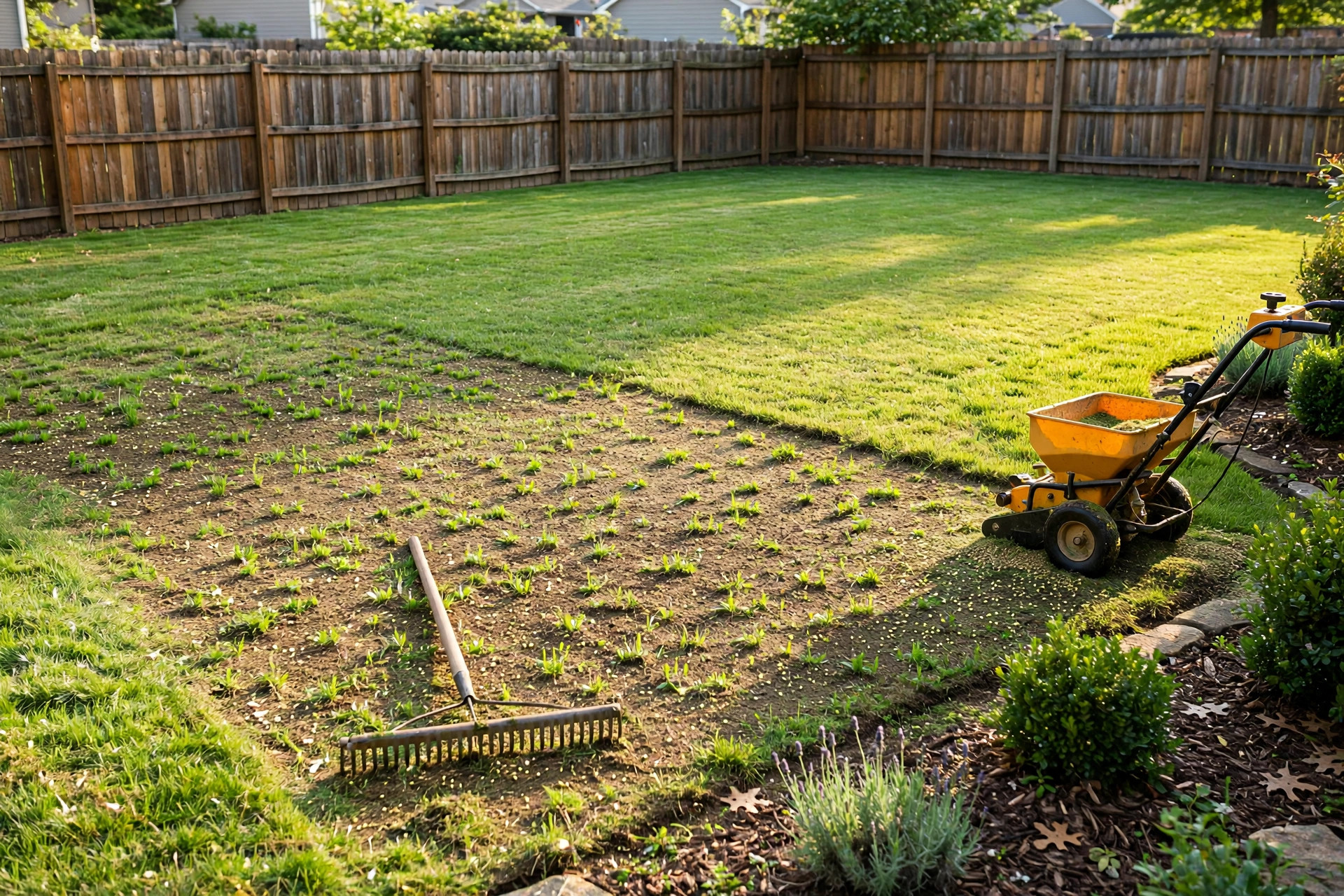

A thin lawn can be a sore sight. Brown patches show through. Weeds move in where the grass has thinned out. Learning how to overseed bermuda grass lawn fixes this problem without starting over. Overseeding means spreading new grass seed over an existing lawn. The new seed fills the bare spots and thickens the turf. The old grass stays in place. You get a fuller lawn in a few weeks.
Bermuda grass is a warm season turf. It grows best in heat. It turns brown in winter and wakes up in spring. Overseeding works well on it when the soil is warm. This guide walks through each step in plain terms. You will learn when to seed, how to prepare the ground, how to spread the seed, and how to care for it after.
Why Overseeding Matters
A healthy lawn is a thick lawn. Thick turf blocks weeds. It holds soil in place. It looks green and even from the curb. Over time, all lawns thin out. Foot traffic wears the grass down. Heat stress kills weak blades. Insects and disease take their toll.
Overseeding puts new life into old turf. The new seedlings grow between the old plants. They fill gaps that weeds would otherwise claim. For bermuda grass, overseeding also improves the look of the lawn. Common bermuda can look coarse. Seeding with an improved variety adds fine texture and rich color.
Some people use overseeding for winter color. In the South, many homeowners spread cool season seed over bermuda in the fall. The rye grass grows green while the bermuda sleeps. This article covers the main task: overseeding bermuda with more bermuda seed to thicken the summer lawn.
When to Overseed Bermuda Grass: How to Overseed Bermuda Grass Lawn
Timing is the key to success. Bermuda seed needs warm soil. Soil must hold a steady temperature of 65 degrees or higher. In most of the United States, that means late spring or early summer. Wait until all frost danger has passed. Wait until daytime highs sit in the 80s on a regular basis.
Seeding too early is a common error. Cold soil keeps the seed asleep. The seed sits in the ground and rots. Weeds then move in. Seeding too late is also a problem. Summer heat dries the young grass before it takes root. Aim for May through early July in most southern states. Farther north, where bermuda still grows, June is often the best month.
Watch your own lawn for a sign. When the old bermuda turns fully green and starts to grow fast, the soil is warm enough. That is nature telling you the time is right.
What You Will Need
Gather your tools before you start. A day of work goes faster with everything at hand. You do not need fancy equipment. Most of these items come from a local garden center or hardware store.
You will need bermuda grass seed, about one pound for every 1,000 square feet. For thin or bare lawns, use up to two pounds. You will need a broadcast spreader or a drop spreader. A lawn rake and a garden rake help with prep work. A dethatching rake or power dethatcher clears the thatch. If you do not own one, many homeowners save money by renting a dethatcher for the weekend.
You will also need a starter fertilizer with a light nitrogen mix. A lawn roller helps press seed into the soil. A hose and sprinkler give the seed the water it needs. If your watering setup is weak, look into affordable sprinkler installation before you begin. A string trimmer helps edge the lawn and cut down tall weeds along fences before you seed.
How to Prepare the Lawn
Good seed-to-soil contact makes or breaks the job. Seed that sits on top of old leaves will not grow. Seed that touches bare soil will. Prep work takes more time than the seeding itself. Do it right.
Start by mowing the lawn short. Cut the bermuda down to about one inch. Bag the clippings or rake them up. This opens the canopy so light and seed reach the soil.
Next, rake the lawn hard. A steel garden rake pulls up dead grass and loose debris. Pay close attention to bare spots. Loosen the top half inch of soil in those areas with the rake teeth. The loose soil gives roots an easy home.
Then dethatch if the layer of dead stems is thick. Thatch is the brown mat between the green blades and the soil. If it is more than half an inch deep, seed cannot reach the dirt. A power dethatcher tears it out fast. Rent one for a large yard. A manual dethatching rake works for small lawns. Guides from Toro explain how dethatching tools work on home lawns.
After dethatching, rake up the waste and haul it away. You should now see soil in many spots between the grass plants. That is what you want.
Finally, water the lawn lightly the day before seeding. Damp soil accepts seed better than dry dust. Do not soak it. Just take the edge off the dryness.
Step by Step: How to Overseed Bermuda Grass Lawn
With the ground ready, the seeding goes fast. Follow these steps in order.
First, pour the seed into the spreader. Set the spreader to a low setting. Bermuda seed is small and spreads farther than it looks. Too heavy a hand wastes seed and crowds the seedlings.
Second, walk the lawn in straight rows. Overlap each pass by half. This stops the striped look of missed rows. Cover the whole lawn once, then make a second pass at half rate in a cross pattern. The cross pattern evens out the coverage.
Third, press the seed into the soil. Roll the lawn with a water-filled roller. Or drag a leaf rake lightly upside down over the seed. The goal is contact between seed and dirt. Do not bury the seed deep. A light dusting of soil, no more than one eighth of an inch, is plenty.
Fourth, spread starter fertilizer. Follow the bag rate for new seed. Do not use heavy weed-and-feed products. They can hurt young grass. Plain starter fertilizer is the safe choice.
Fifth, water right away. Give the seeded area a gentle soaking. The soil should feel moist two inches down. A hard blast from a hose washes seed away. Use a soft spray or an oscillating sprinkler.
Watering and Aftercare
New seed is thirsty. The top inch of soil must stay damp until the seed sprouts. In warm weather, that means watering two or three times a day for short periods. Morning and late afternoon sessions work well. Skip the midday sun if you can. Water loss is high at noon.
Seedlings usually show in seven to fourteen days. When the young grass reaches two inches tall, cut back to once a day. Water deeper at that point. The goal shifts from wet seed to deep roots. A deep soak trains roots to grow down.
Hold off on mowing until the new grass stands three inches tall. Set the mower high for the first cut. Sharp blades matter. Dull blades tear young plants out of the ground. Mower makers like John Deere publish blade care tips that help here. Keep foot traffic off the seeded lawn for the first three weeks. Let the roots take hold.
Do not apply weed killer until the new grass has been mowed at least three times. Young bermuda is tender. Herbicides stress it. Hand pull any weeds that pop up early.
Common Mistakes to Avoid
Many overseeding jobs fail for simple reasons. Learn from the common errors.
The first error is poor timing. Seeding in cold soil wastes money. Wait for steady warmth.
The second error is skipping the prep work. Seed tossed on top of thatch dies. Rake and dethatch first.
The third error is using old seed. Bermuda seed stays good for a few years if stored cool and dry. Check the date on the bag. Seed older than three years may not sprout well.
The fourth error is watering too little or too much. Dry seed dies. Soggy seed rots. Keep the soil damp, not flooded.
The fifth error is mowing too soon. Cutting young grass short shocks it. Let it grow, then trim lightly.
The sixth error is the wrong seed rate. More seed is not better. Crowded seedlings fight for light and water. Follow the bag rate. One to two pounds per 1,000 square feet is the rule.
Cost and Price
Overseeding is one of the cheapest lawn projects. The main cost is the seed. A five pound bag of quality bermuda seed runs about twenty to forty dollars. That covers up to 5,000 square feet at the standard rate.
A spreader costs thirty to sixty dollars if you buy one. Many garden centers rent spreaders for the day. Starter fertilizer adds ten to twenty dollars. A dethatcher rental runs fifty to ninety dollars for a day, which is fair for a large yard.
Add it up and most homeowners spend between fifty and one hundred fifty dollars to overseed an average lawn. Compare that to sod, which can cost several hundred dollars for the same area. Overseeding gives good value for the money. Engine makers such as Briggs & Stratton note that regular small lawn care steps keep equipment and turf costs down over the years.
If you hire a lawn service, expect to pay two to four hundred dollars for a standard suburban lot. The service brings the seed and the tools. Doing it yourself saves more than half.
Safety Tips
Lawn work is physical. Take simple care. Wear gloves when raking and spreading fertilizer. Fertilizer dust irritates the skin and eyes. Wear a dust mask if the day is windy.
Lift bags of seed and fertilizer with your legs, not your back. Drink water on hot days. The best seeding weather is also the weather that brings heat exhaustion. Take breaks in the shade.
Keep children and pets off the lawn until the fertilizer has been watered in. Read the bag label for the exact wait time. Store leftover seed and fertilizer in a dry shed, out of reach of kids.
Watch for buried sprinkler heads and shallow utility lines when you rake hard. If you plan to dig at all, call the local utility marking service first.
Frequently Asked Questions
Can I overseed bermuda grass in the fall?
Fall seeding works only for winter overseeding with rye grass. Bermuda seed needs summer heat. If you want more bermuda, wait for spring.
How long does it take for bermuda seed to grow?
Under warm, moist soil, sprouts show in seven to fourteen days. The lawn fills in over six to eight weeks. Full thickness may take one full season.
Should I mix the seed with sand?
Sand helps spread small seed evenly. Many gardeners mix one part seed with three parts dry sand. It is a handy trick but not required.
Can I overseed over weeds?
It is better to kill the weeds first. Weeds steal water and light from the new seed. Pull them or treat them, then wait the label time before seeding.
Do I need to aerate before overseeding?
Aeration helps on hard, packed soil. If water pools on your lawn after rain, aerate first. On loose soil, good raking is enough.
What is the best bermuda seed for overseeding?
Look for improved hulled varieties at your garden center. Hulled seed sprouts faster than unhulled. Local extension offices often list varieties that do well in your county.
A Final Word
A thick bermuda lawn does not happen by luck. It comes from steady care and the right steps at the right time. Overseeding is a simple job with a big payoff. Mow short, rake hard, seed evenly, water often, and stay patient. In a month or two, the bare spots will be gone. The green will spread. Your yard will show the work.
References
Toro. (n.d.). Lawn care equipment and guides. https://www.toro.com Deere & Company. (n.d.). Lawn mowers and yard equipment. https://www.deere.com Briggs & Stratton. (n.d.). Small engines for outdoor power equipment. https://www.briggsandstratton.com
Was this guide helpful?

About James Carter
The My Garden US editorial team writes practical, in-depth home and garden guides for American homeowners — tested advice, no fluff.
You May Also Like
Best Walk Behind String Mower Reviews: What the Tests Show
June 26, 2026 0 views
Best Robotic Mower for Slopes Reviews: What to Know Before You Buy
July 20, 2026 0 views
Best Battery Powered Lawn Tools Combo: A Guide for Homeowners
August 25, 2026 0 views