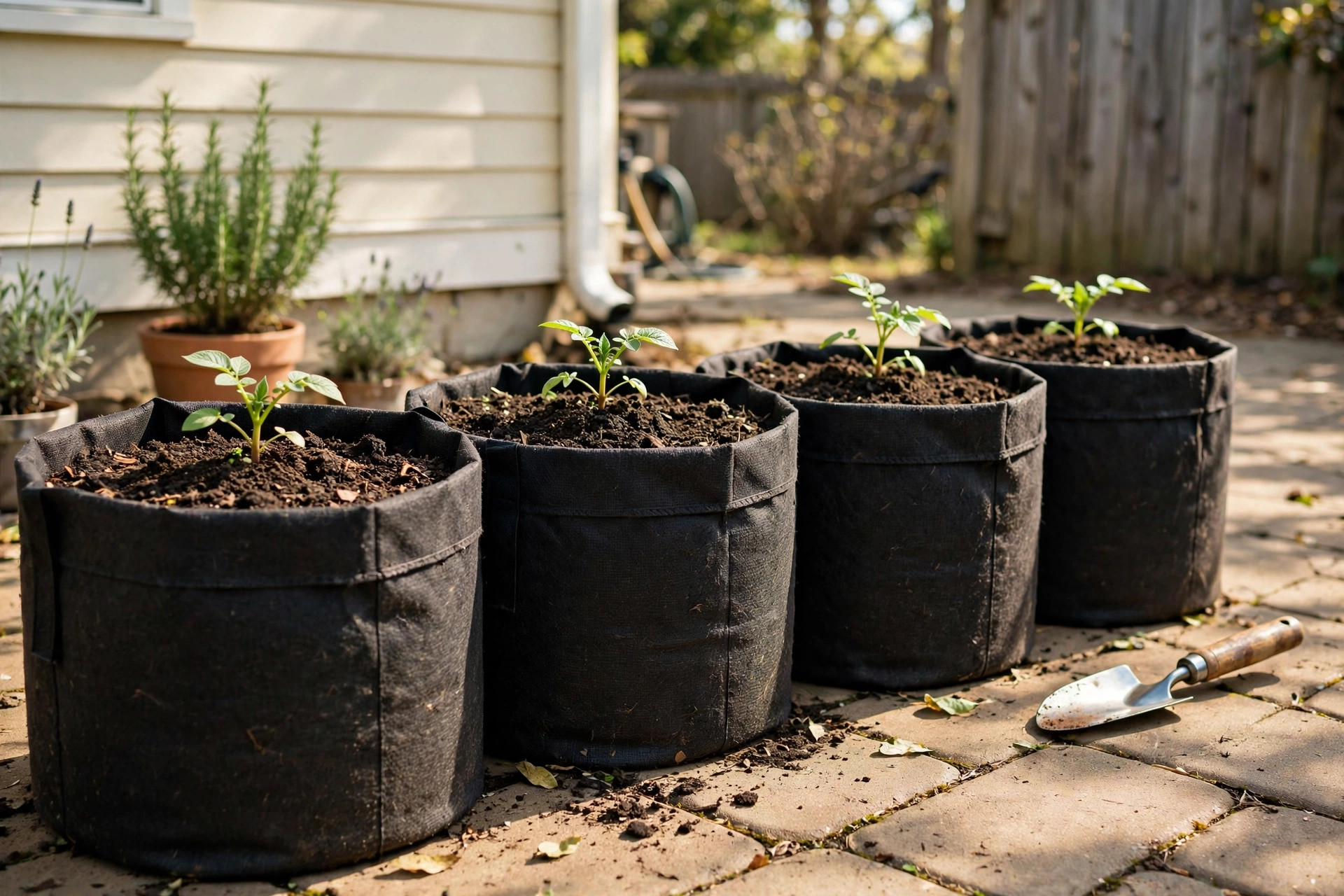
Gardeners across America are growing potatoes in fabric bags. The best grow bags for potatoes reviews agree on one point. This simple method works well. It needs little space. It needs no digging. It suits patios, decks, and small yards.
A grow bag is a soft fabric pot. It holds soil and seed potatoes. It lets air reach the roots. It lets extra water drain out. When the crop is ready, you tip the bag over. You pick up your potatoes. There is no digging with a fork.
This guide walks through the main points. It covers why grow bags matter for potatoes. It explains how to choose a bag. It lists types and sizes. It covers cost, care, and safety. It ends with answers to common questions.
Why Grow Bags Matter for Potatoes
Potatoes need loose soil and room to form tubers. In heavy clay, tubers come out small and rough. In a fabric bag, you control the soil from the start. Reviews from home gardeners point to this control as the main gain.
Air pruning is the next gain. In a plastic pot, roots hit the wall and circle around. In fabric, air reaches the roots through the cloth. Root tips dry at the edge and branch back inward. The result is a dense, fibrous root mass. Plants take up water and food better. Several season growers report stronger stems and fuller plants in fabric than in plastic pots of the same size.
Drainage matters too. Potatoes rot in wet soil. Fabric breathes on all sides. Water drains through the weave. Overwatering is less common in bags than in buckets. This matters in rainy spells. It also matters for new gardeners who tend to water too much.
Space is another gain. You can grow potatoes on a balcony. You can set bags on a driveway. You can move them to catch the sun. In a rented home, you can take your potato patch with you. No digging means no harm to the lawn or the landlord’s flower beds.
The best grow bags for potatoes reviews also praise harvest ease. With a side window or flap, you can reach in and pull out new potatoes early. You leave the rest to keep growing. At season end, you empty the bag into a wheelbarrow and gather the crop by hand. Many gardeners say this is the most pleasant harvest they have done.
How to Choose: What to Look for: Best Grow Bags for Potatoes Reviews
Not all bags are equal. Reviews point to five features that matter most.
Fabric weight and weave
Heavy nonwoven fabric lasts longer. It holds its shape when filled. Thin fabric sags and tears. Look for thick felt-like material. It should stand upright on its own when empty. The weave must be tight enough to hold soil, yet open enough for air and water to pass.
Size
Potatoes need depth. A 10-gallon bag suits most growers. A 7-gallon bag works for smaller crops. Bags under 5 gallons are too shallow for a good yield. Wide bags hold more plants than tall narrow ones. For a family crop, plan on four or five 10-gallon bags.
Handles
You will move the bags. Handles must be sewn deep into the seam. Thin stitched tabs tear off under weight. A filled 10-gallon bag is heavy. Strong handles let two people lift it with ease.
Access window or flap
Many potato bags have a side flap that opens with hook-and-loop or ties. You can check tubers and steal a few early. Flaps are useful, but they can leak soil if the fit is poor. Read buyer reviews on this point. A snug flap with a wide cover works best.
Drainage and bottom
The base must drain well. Some bags add a reinforced bottom. A flat base sits steady on pavement. Check that the bottom seam is double stitched. A burst seam spills soil across the deck.
Garden planning helps here too. If you plan your planting calendar, read our guide on starting seeds indoors to get the season right. Soil mix matters as well, and our raised bed soil recipe adapts well to bags. For feeding your soil, a home compost bin for kitchen scraps gives free compost all year.
Types and Options
Grow bags come in several forms. Each suits a different grower.
Standard nonwoven fabric bags. These are the most common. They are soft, light, and cheap. They come in sizes from 1 to 100 gallons. For potatoes, the 7 to 15 gallon range is the standard pick. They fold flat for winter storage.
Felt or needle-punched bags. A thicker grade of fabric. They hold shape better and last more seasons. They cost more than the standard kind. Serious gardeners favor them.
Bags with viewing windows. A mesh or clear strip lets you watch tuber growth. In practice, soil covers the window. Some growers like the novelty. Reviews are mixed on how useful the window really is.
Bags with harvest flaps. A flap on the side opens for easy digging. This is the most popular type for potatoes. You can open the flap, pull out mature tubers, and close it again. The plant keeps growing.
Decorated or colored bags. Some brands sell bags in green, brown, or printed patterns. Color has no effect on the crop. Dark bags warm faster in spring. Light bags stay cooler in hot sun. Pick what suits your space.
Reusable woven poly bags. A tougher woven plastic. They last many years. They breathe less than felt. Some gardeners use them for potatoes with good results, though airflow is lower.
Burlap sacks. An old method that still works. Burlap breathes well and is cheap. It rots in one season. Fine for a trial year before you buy proper bags.
Cost and Price
Prices are modest. A single 10-gallon potato grow bag costs about the same as a bag of good potting soil. Sets of five or ten bring the unit price down. Felt bags cost more than standard nonwoven. Flap designs add a little to the price.
Most bags last two to four seasons. Thick felt bags can last five or more with care. Cheap thin bags may fail in the second season. Over a few years, the cost per harvest is small. Compare that with building a raised bed from lumber, and bags look like good value.
Do not forget soil and seed potatoes. Good potting mix is the largest cost in the first year. Seed potatoes are cheap per pound. You can reuse the soil for other crops after the potato harvest, with fresh compost mixed in.
Trusted gardening shops carry wide ranges. Burpee offers seed potatoes and growing supplies. Gardener’s Supply stocks fabric pots and soil mixes. Fiskars makes hand tools that suit bag gardening. Big home stores such as Home Depot and Lowe’s sell bags in the garden aisle each spring.
Care and Upkeep
Grow bags need little care, but a few habits extend their life.
Soil mix. Use a loose mix. Equal parts potting soil, compost, and perlite or coarse sand works well. Garden soil alone is too heavy. It packs down in the bag and chokes the tubers. Fill the bag one third full at planting. Add more mix as the plant grows. This “hilling” gives tubers room to form along the buried stem.
Watering. Bags dry faster than beds. Check soil with your finger. Water when the top two inches feel dry. In hot weather, daily watering may be needed. Mulch the surface with straw to slow drying.
Feeding. Mix compost into the soil at planting. Side-dress with compost or a balanced garden fertilizer mid-season. Potatoes are not heavy feeders, but bag soil has a small nutrient reserve.
Sun. Give the bags six to eight hours of sun. Morning sun with afternoon shade suits hot regions. Rotate the bags now and then so all sides get light.
Winter storage. Empty the bags at season end. Shake out loose soil. Let the fabric dry in the sun. Fold and store indoors. This stops mold and extends fabric life. The Spruce has solid guides on storing fabric pots. Bob Vila covers seasonal container care. Family Handyman offers practical storage tips. Consumer Reports tests garden products for lasting value.
Reuse. You can reuse the same soil for two or three seasons. Add fresh compost each year. Do not grow potatoes in the same soil more than two years in a row. Rotate to beans or greens to break disease cycles.
Safety
Grow bags are safe and simple. A few points deserve care.
Soil weight is the main risk. A wet 10-gallon bag is very heavy. Lift with your legs. Ask for help when moving full bags. Set bags in their final spot before filling them.
Keep bags off bare wood decks if drainage leaves stains. A tray or a sheet of landscape fabric under the bag protects the surface.
Wash hands after handling soil and compost. Wear gloves when you handle seed potatoes treated with fungicide. Keep small children from eating raw potatoes or green tubers, which contain solanine.
Check that the bag fabric is free of sharp staples or wire. Cheap bags sometimes hide metal clips in the seams. A quick check at unpacking is enough.
Frequently Asked Questions
What size grow bag is best for potatoes?
A 10-gallon bag is the most common pick. It holds two to three seed potatoes. A 7-gallon bag holds one or two. Anything smaller gives a thin crop. For a large family, use 15-gallon bags with three to four seed pieces.
How many potatoes can I grow in one bag?
From a 10-gallon bag, expect three to five pounds of potatoes in a good season. Results vary with variety, soil, and weather. Early varieties give quick small crops. Main crop varieties give larger yields later.
Do grow bags really grow better potatoes than buckets?
Many gardeners say yes. The air pruning and drainage of fabric reduce rot and root circling. Buckets work, but they need drilled holes and careful watering. Bags are more forgiving for new growers.
Can I reuse the soil in grow bags?
Yes. Dump the soil into a bin. Pick out roots and old tubers. Mix in fresh compost. Use it for another crop. Avoid planting potatoes in the same soil two years running. This lowers disease risk.
Do I need a bag with a harvest flap?
It is nice but not required. Flaps let you steal early potatoes without tipping the bag. Plain bags work just as well if you do not mind tipping them at harvest. Read reviews on flap quality before you buy, since loose flaps leak soil.
When should I plant potatoes in grow bags?
Plant when the soil is workable and frost has passed, or two to four weeks before the last frost in mild zones. In warm regions, plant in late winter for a spring crop. A fall crop is possible in the South with heat-tolerant varieties.
A Short Final Word
The best grow bags for potatoes reviews point to a plain truth. This method works. It costs little. It fits small spaces. It gives a clean, easy harvest. Pick a sturdy 10-gallon bag with strong handles. Fill it with loose, rich soil. Water with care. You will lift your first potatoes by midsummer and wonder why you ever dug in hard ground.
References
Bob Vila. (n.d.). Home improvement advice. https://www.bobvila.com Burpee. (n.d.). Seeds, plants, and gardening supplies. https://www.burpee.com Consumer Reports. (n.d.). Product reviews and ratings. https://www.consumerreports.org Family Handyman. (n.d.). DIY home repair and maintenance. https://www.familyhandyman.com Fiskars. (n.d.). Garden and cutting tools. https://www.fiskars.com Gardener’s Supply Company. (n.d.). Gardening tools and supplies. https://www.gardeners.com Lowe’s. (n.d.). Home improvement products. https://www.lowes.com The Home Depot. (n.d.). Home improvement products. https://www.homedepot.com The Spruce. (n.d.). Home and garden advice. https://www.thespruce.com
Was this guide helpful?

About David Wilson
The My Garden US editorial team writes practical, in-depth home and garden guides for American homeowners — tested advice, no fluff.