
Anyone who heats a home with wood knows that dry wood is the heart of the matter. Wet wood smokes. Wet wood burns poorly. It leaves heavy deposits in the chimney and gives little heat for the work it costs. The difference between dry wood and damp wood often comes down to storage. A good shed keeps rain off the pile, lets air move through it, and keeps the bottom rows off the wet ground. This outdoor firewood storage sheds reviews and buying guide walks through the types of sheds sold today, what each one does well, what to look for before you buy, what you can expect to pay, and how to keep both the wood and the shed in good shape for years.
Why a Storage Shed Matters
Fresh-cut wood holds a great deal of water. Most kinds need six months to a full year of drying before they burn clean. This drying time is called seasoning. Wood that is still green can hold half its weight in water. When you burn it, much of the fire’s energy goes into boiling that water away instead of heating your rooms.
A shed does three things. First, it keeps rain and snow off the wood. Second, it raises the wood off the ground so damp soil does not wick water up into the bottom rows. Third, it holds the stack in place so wind can pass through the sides and carry damp air away. Wood stacked against the side of a house can dry, but it sits in a damp pocket and invites insects close to the walls. Wood left uncovered in the yard gets rained on all winter. A shed is the plain answer between those two poor choices.
The Environmental Protection Agency has long advised that only dry, seasoned wood should be burned in home stoves and fireplaces, since damp wood makes more smoke and more pollution for the neighborhood. A shed is one of the cheapest tools a homeowner can buy toward that end.
What to Look for When You Buy: Outdoor Firewood Storage Sheds Reviews and Buying Guide
Size and Capacity
Firewood is sold by the cord. A full cord is a stack four feet high, four feet deep, and eight feet long. Many sheds are sized for half a cord or a full cord. Measure how much wood you burn in a season and match the shed to it. A shed that is too small leaves wood out in the rain. A shed that is too large wastes money and yard space.
Depth matters more than it first seems. A shed two feet deep holds one row of standard sixteen-inch logs. A shed four feet deep holds two rows with air between them. Deeper sheds hold more wood but dry it more slowly in the middle. For most homes, two to three feet of depth is a good middle course.
Airflow
This is the single most important point in this buying guide. Air must move through the stack. The best sheds have open or slatted sides. Some have mesh panels. Solid walls on all four sides turn a shed into a damp box. If you are drawn to a closed design, look for louvered vents or wide gaps between the boards. Wood dries from the sides, not from the top. A solid roof with open sides dries wood faster than a closed box with a vent.
Roof and Weather Cover
The roof must shed water well past the edges of the stack. A roof that only just covers the wood lets driving rain soak the end rows. Look for an overhang of several inches on every side. A slanted roof is better than a flat one because water runs off instead of pooling. Metal roofs last long and shed snow well. Asphalt shingles look more like a real outbuilding but add weight and cost.
Floor and Ground Clearance
Wood should never sit on bare earth. Good sheds raise the stack at least four inches off the ground on slats, pallets, or a steel frame. This keeps ground moisture away and lets air pass under the pile. Pressure-treated lumber rails or galvanized steel frames do this work well. Avoid thin wooden floors that sit flat on the soil. They rot from below in a season or two.
Strength and Build
A full cord of oak can weigh close to two tons. A shed must hold that weight without bowing or racking. Look for thick posts at the corners, real brackets rather than bent tabs, and hardware that resists rust. Powder-coated steel and galvanized fasteners hold up outdoors. Thin aluminum tubes and plastic connectors may look neat in the picture but can fail under a heavy load of green wood.
Types of Outdoor Firewood Storage Sheds
Metal Log Racks with Covers
These are the simplest option. A steel tube frame holds the stack off the ground, and a fitted cover or canvas top keeps rain off. They cost the least and go up in an hour. They dry wood very well because the sides are fully open. The weak points are the cover, which may need replacement every few years, and the light frame, which can lean under a full load of heavy hardwood. For a single season of wood in a mild climate, they do honest work.
Open Lean-To Sheds
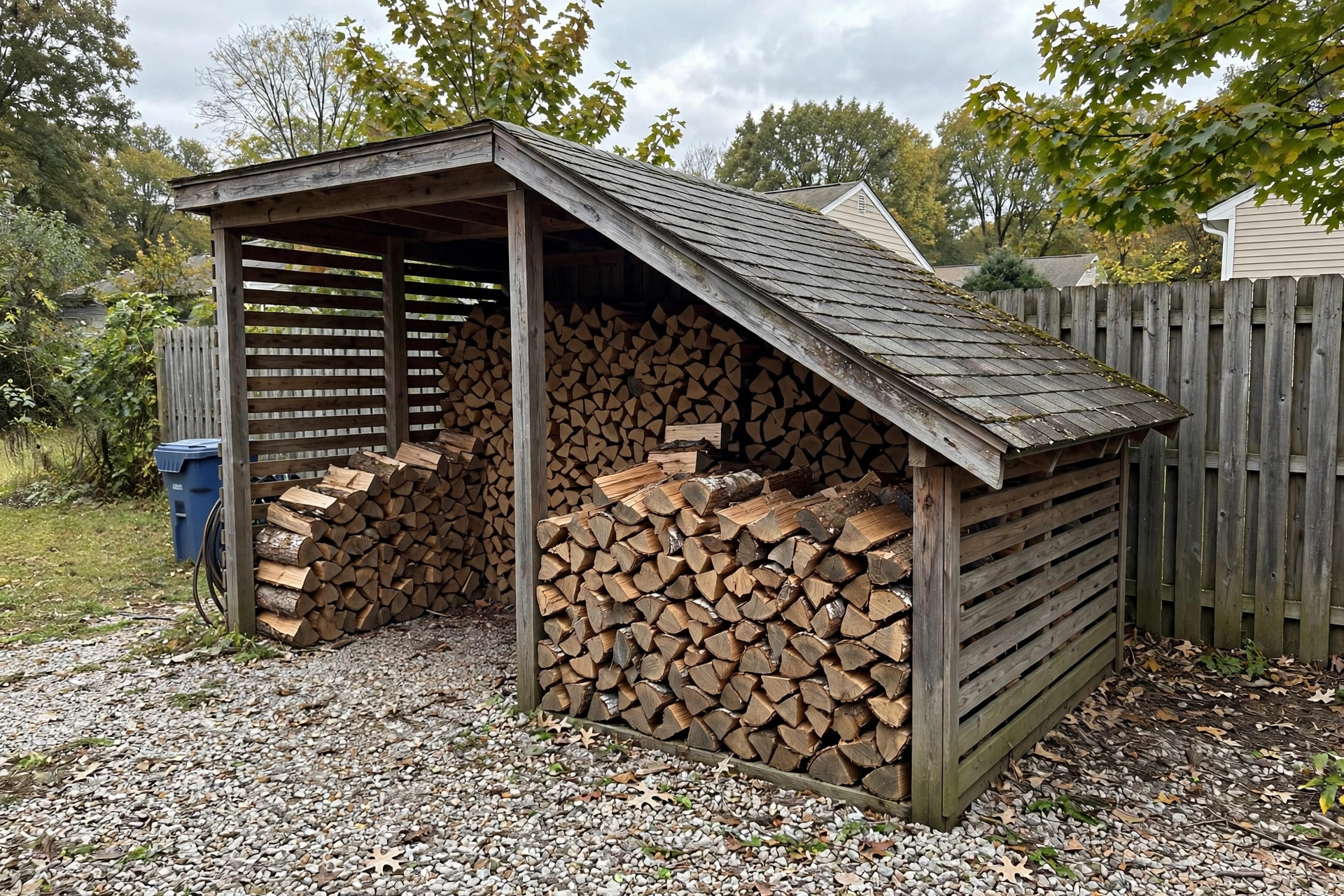
The lean-to is the classic woodshed. Three or four posts carry a slanted roof. The back may be boarded, and the sides stay open. A lean-to can be built from lumber in a weekend, or bought as a kit. It sheds water, keeps wood off the ground, and dries the stack fast. Kits from large retailers are common, and both Home Depot and Lowe’s carry several styles in store and online. Reviews of these kits often praise their plain, sturdy build. The common complaint is that assembly takes longer than the box promises.
Closed Wooden Sheds
These look like small barns or garden sheds with doors. They keep the wood out of sight, which matters in suburbs with strict rules about yard clutter. Inside, the wood stays dry and ready. The risk is poor airflow. Many owners leave the doors open in dry weather to let the stack breathe, then close them before a storm. If you choose a closed shed, pick one with gable vents or slatted sections. Plan to check the wood now and then for a musty smell, which is the first sign that air is not moving.
Heavy-Duty Farm and Ranch Shelters
Larger shelters with steel frames and tin roofs hold two to four cords. They suit homes that heat with wood all winter or burn wood in an outdoor furnace. Farm suppliers such as Tractor Supply carry heavy racks and shelters built for this scale. They cost more up front but last many years. Their size demands a level spot and sometimes a simple gravel pad under the frame.
Decorative and Compact Options
For homes that burn wood only now and then, small decorative racks hold a few days of logs near the patio or the back door. They are tidy and cheap. They are not seasoning sheds. Fresh wood will not dry properly in them. Home decor sellers like Wayfair carry many of these small designs. Buy one for the wood you are about to burn, not for the wood you need to dry.
How the Buying Guide Weighs Reviews
Online reviews help, but they need reading with care. A five-star review written a week after assembly tells you the box was complete and the holes lined up. It tells you nothing about how the shed stands after three winters. Give the most weight to reviews that mention a full year of use. Look for repeated notes about the same part. If ten buyers say the cover tore or the anchors pulled out of soft soil, believe them.
Also watch for who wrote the review. A buyer in a dry western state and a buyer in a rainy coastal town are testing the shed under different terms. Pay special attention to reviewers in a climate like yours.
Helpful review reading comes from home improvement sources with long testing histories. This Old House and Family Handyman both publish guides on woodsheds and firewood storage built from field experience. The Spruce rounds up firewood racks and sheds with practical notes on assembly and materials. These sources are worth more than a single product page.
Cost and Price
Prices vary with size and material. As a rough map of the market:
– Small metal log racks with covers: 40 to 120 dollars. Good for a quarter to half a cord. – Medium open lean-to kits: 150 to 450 dollars. Good for one to two cords. – Large wooden or steel sheds: 400 to 1,200 dollars. Good for two to four cords. – Custom-built lumber sheds: 300 to 800 dollars in materials, plus a weekend of work.
The shed is only part of the cost. A gravel or concrete block pad under the shed may add 50 to 150 dollars. Delivery fees for heavy kits can be high. When you compare two sheds, compare the cost per cord of dry storage, not just the sticker price. A cheap shed that rots in two years costs more than a dear one that lasts ten.
Building your own from pressure-treated lumber is often the best value if you have basic tools. Plans are free in many places, and you can size the shed exactly to your woodpile. The trade is your time.
Care and Upkeep
A shed lasts as long as its weakest part. Check the roof each fall before the wet season. Tighten bolts that have worked loose. Re-stain or re-seal wooden sheds every two to three years. Clear leaves and debris from under and around the shed so air can move and insects have fewer places to hide.
Rotate your wood. Burn the oldest, driest wood first and stack fresh wood at the back or in a separate bay. Keep the ground around the shed clear of weeds. In snowy country, shovel around the shed so meltwater does not pool against the posts.
Covers on rack-style sheds deserve attention. Take them down in high wind if the maker advises it. Wash off sap and bird droppings now and then. A cover that is cared for lasts twice as long as one left to flap in the weather.
Safety
Stack wood with care. Keep stacks no higher than four feet unless the shed is built for more. A toppling stack of hardwood is dangerous. Keep the shed a safe distance from the house. Fire codes in many towns require woodpiles to stand a set distance from buildings. Thirty feet is a common rule, but check your local code.
Do not store gasoline, paint, or chemicals in the woodshed. Sparks from splitting and stacking are rare, but a woodshed is no place for fuel cans. Keep a clear path to the shed in winter. Ice and a heavy armload of logs are a poor mix.
Inside the house, safe burning starts with dry wood. Stove makers such as Napoleon and fireplace makers such as Heatilator both stress proper fuel and regular chimney care in their owner materials. Have the chimney swept once a year. Burn only the dry wood your shed has given you.
If you are new to heating with wood, it helps to see the whole picture. An indoor firewood holder for the southern states keeps a few days of dry logs near the stove, while the outdoor shed does the long work of seasoning. And if your hearth shares space with the television, a fireplace TV stand keeps the room tidy and the electronics clear of heat.
FAQ
How long does firewood take to dry in a shed?
Most split hardwood needs six to twelve months under cover with good airflow. Dense woods like oak may need a full year or more. Softwoods like pine dry faster, often in three to six months. A moisture meter is the sure test. Wood is ready when it reads below twenty percent moisture.
Should the sides of the shed be open or closed?
Open is better for drying. Air moving through the stack carries moisture away. Closed sheds look tidier and keep blowing snow out, but they dry wood more slowly. Many owners split the difference. They use a roof and a boarded back with open sides.
Can I store firewood directly on the ground inside the shed?
No. Even inside a shed, wood on bare earth draws damp up into the bottom rows and rots there. Raise every stack on slats, pallets, or a steel rack. Four inches of clearance is the minimum. Six is better.
How much wood will a typical shed hold?
A common backyard shed holds one to two cords. That is a stack four feet high, eight feet long, and two to four feet deep. Check the maker’s stated capacity in cords before you buy. Measure your own woodpile against it.
Do I need a permit for a firewood shed?
Small open sheds often need no permit, but rules vary by town. Closed sheds above a certain size may count as outbuildings and need approval. Homeowner associations may have their own rules about visible woodpiles. A quick call to the town office settles the question before you build or buy.
Is a metal shed or a wooden shed better?
Both work. Metal sheds cost less, go up fast, and resist rot and insects. Wooden sheds look better in most yards, hold heat a little longer in sun, and can be repaired board by board. Choose by your climate, your budget, and how the shed will look from the kitchen window.
A Short Final Word
A firewood shed is a simple thing, and that is its virtue. It asks little and gives much. Dry wood lights faster, burns hotter, smokes less, and leaves the chimney cleaner. Whether you buy a modest steel rack, a lean-to kit, or build your own from lumber, the rules stay the same. Keep the rain off. Keep the wood off the ground. Let the air move. Follow those three rules and the shed will pay for itself in better fires within a single winter.
For readers comparing hearth options more broadly, a look at gel fuel fireplaces shows the other end of the market, where convenience replaces the woodpile entirely. But for those who love a real wood fire, a good shed is where the season’s comfort begins.
References
Family Handyman. (n.d.). DIY home repair and maintenance. https://www.familyhandyman.com Heatilator. (n.d.). Fireplaces and fireplace products. https://www.heatilator.com Lowe’s. (n.d.). Home improvement products. https://www.lowes.com Napoleon. (n.d.). Fireplaces, grills, and heating products. https://www.napoleon.com The Home Depot. (n.d.). Home improvement products. https://www.homedepot.com The Spruce. (n.d.). Home and garden advice. https://www.thespruce.com This Old House. (n.d.). Home renovation guidance. https://www.thisoldhouse.com Tractor Supply Co. (n.d.). Farm and ranch supplies. https://www.tractorsupply.com U.S. Environmental Protection Agency. (n.d.). Protecting human health and the environment. https://www.epa.gov Wayfair. (n.d.). Furniture and home goods. https://www.wayfair.com
Was this guide helpful?

About Michael Thompson
The My Garden US editorial team writes practical, in-depth home and garden guides for American homeowners — tested advice, no fluff.
You May Also Like
The Best Gas Log Sets for Midwest Homes: A Simple Buying Guide
June 23, 2026 0 views
Buy Ethanol Wall Fireplaces Online in Arizona: A Plain Guide
August 30, 2026 0 views
Where to Buy Fire Pit Tables in Arizona: A Buyer’s Guide
May 25, 2026 0 views