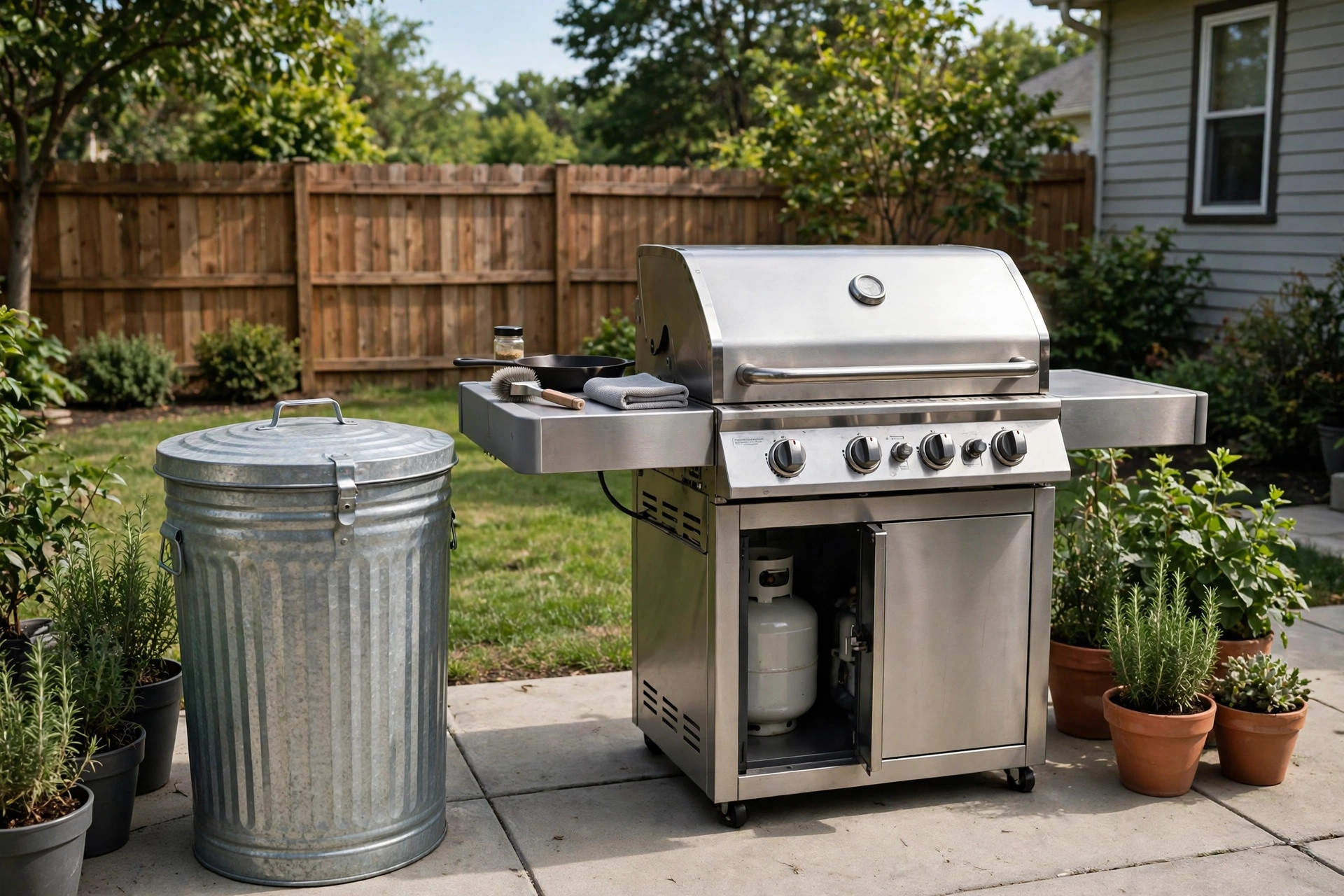

A grill area needs order as much as it needs heat and smoke. Every cook makes waste. Rib bones pile up. Corn husks fall. Paper towels soak up grease. Without a plan, the mess lands on the deck. The best outdoor trash can for grill area use solves this problem in a simple way. It stands close to the grill, keeps scraps out of sight and smell, and stands up to heat, weather, and hungry animals.
Most grill owners spend hours on their cooker and almost no time on the rest of the station. They buy a fine gas grill, they learn how to season cast iron grill grates, and they forget the can that holds the mess. Then a gust of wind tips a flimsy bag, and grease blows across the patio. A good trash can is a small purchase that keeps the whole station tidy. This guide explains how to pick one, what types work best, what they cost, and how to keep the can clean.
Why It Matters
A grill area is a work zone. Food goes in raw and comes out hot. Waste goes out just as fast. The best outdoor trash can for grill area cooking keeps that flow clean and smooth.
Sanitation comes first. Food scraps rot fast in warm weather. Within a day, a full bag of scraps starts to smell. Flies and wasps come. A lidded can traps the smell and blocks the insects. A can with no lid does the opposite.
Safety comes next. A grill area holds open flame and hot coals. A metal can with a tight lid can contain a small fire until it burns out. A plastic can or a loose bag cannot. Placement matters as much as the can itself. Even the best can must sit a few feet from the firebox, never against it.
Then there is the matter of animals. Raccoons, dogs, and rats all smell grease. A locking lid stops them.
Convenience is the last reason. A can near the grill means fewer trips to the curb. You finish a plate, you drop the scrap, and you are back at the food. Guests know where the trash goes.
What to Look for and How to Choose: Best Outdoor Trash Can for Grill Area
Start with size. A small family grill area needs about 20 to 30 gallons. That holds one cookout with room to spare. A large party needs 40 gallons or more. A can that is too small fills up fast, and guests start stacking trash on the lid. Measure your patio corner before you shop. Most cans stand about two and a half to three feet tall.
Material is the next choice. Galvanized steel is the classic pick for a grill area. It does not burn. It holds up in rain. It dents rather than cracks. Stainless steel looks better and resists rust longer, but it costs more. Heavy duty plastic resists rust too, and it is light enough to move for cleaning. But plastic must stay well away from heat.
The lid matters more than most people think. A step-on lid lets you toss scraps while your hands are full of tongs and a plate. That is the best design for a grill area. A swing lid works with one hand too, but wind can swing it open. A flat lift-off lid is the cheapest, but it blows off in a storm. Look for a lid that seals snugly and stays put when the wind rises.
Think about the bag too. Some cans take standard 30-gallon bags. Others need special sizes. Check before you buy. A can that fits a common bag size is easy to live with.
Types and Options
The best outdoor trash can for grill area setups comes in a few main types. Each has a strength.
Galvanized Steel Trash Can
This is the old favorite. It is made of steel dipped in zinc, which fights rust. It has a tight lid and a metal handle. It stands up to heat and wind. It costs less than most other types. The weak point is rust. The zinc coat wears at the seams over time. In dry climates, a galvanized can can last a decade.
Stainless Steel Kitchen Can with Step Lid
These cans look fine on a patio. They have a pedal that opens the lid, and the lid closes slow and quiet. They resist rust better than galvanized steel. The weak point is the price. A stainless step can costs more than a plain steel can. The pedal can also break after years of heavy use. For a neat look on a deck, though, they are hard to beat.
Heavy Duty Resin Can
Resin cans are thick, tough, and made to look like wood or stone. They suit patios where looks matter. They never rust. They hold up in sun and rain. The weak point is heat. Resin melts near a hot grill, so keep this can at least six feet from the firebox.
Double Bay Trash and Recycle Station
Some cooks set up two cans. One takes food scraps. The other takes bottles and cans. A matched pair looks tidy and makes cleanup fast. This is a good pick for large parties, where recycling cuts the trash pile in half.
Locking Animal Proof Can
If raccoons or bears visit your yard, buy a can with a built-in lock. These cans have a latch or a gravity lock that opens when you tip the can but stays shut when an animal pushes it. They cost more than plain cans, but they save you the chore of picking up scattered garbage. Outdoor cooking pros at traeger.com often remind cooks that grease smells carry far, so a locked can protects the whole station.
Simple Barrel or Drum
A clean steel drum with a lid is the cheapest large option. It holds 55 gallons. It is all steel, so it handles heat. The weak point is looks. A plain drum is ugly on a nice deck. It also has no pedal or wheels. But for a back corner of a large yard, it is cheap and tough.
Cost and Price
Trash cans for a grill area cost far less than the grill itself. A simple galvanized steel can costs about 30 to 60 dollars. A stainless step can costs about 80 to 150 dollars. A heavy duty resin can costs about 60 to 120 dollars. A locking animal proof can costs about 70 to 130 dollars. A matched double station costs about 100 to 200 dollars.
Bags add to the cost over time. A box of 30-gallon bags costs a few dollars, and a busy grill season uses many boxes. Cheap bags rip, and you end up using two. Good bags last one cookout. Liners made for outdoor use are thicker and worth the small extra cost.
Do not buy the cheapest can on the shelf without checking the build. A thin can dents in the first month. A lid that does not seal lets in rain, which makes the trash heavy and smelly. Over five years of cookouts, the sturdier can is the cheaper choice. Reviews on sites like consumerreports.org often rank durability above price for outdoor gear, and the same logic holds for trash cans.
If you are setting up a whole grill station, the can is a small part of the budget. Guides like best gas grill under 500 for beginners cover the cooker itself, and the can adds only a fraction to that sum. For the money, few upgrades pay back as well as a can that keeps the station clean.
Care and Upkeep
A grill area trash can works hard. Clean it well and it will last for years. Neglect it and it will stink within a week.
Rinse the can after each cookout. Dump the bag, spray the inside with a hose, and let it dry with the lid off. Sun dries it fast and kills some of the smell. For a deep clean, scrub with dish soap and hot water once a month during the season. A cup of baking soda left in the bottom overnight absorbs old odors.
Keep the can dry between cookouts. A lid that seals keeps rain out. Rain water in a trash can makes a foul soup. If your lid leaks, tip the can upside down when empty.
Watch for rust. Check the seams and the bottom twice a year. If rust spots appear, sand them off and paint over the spot with outdoor metal paint. That stops the spread. Store the can in a shed or garage over the winter if you live where snow falls. Freeze and thaw cycles crack plastic and push rust along.
Keep the wheels and pedals working. Spray a little oil on the wheel axles once a year. Wipe grit off the pedal so it moves free.
At the end of the season, wash the can well and store it upside down. A can stored right side up collects leaves and rain all winter. In spring, it starts clean and fresh.
Safety
Heat is the main danger in a grill area. Keep the can at least three feet from the firebox, and more is better. Hot coals, flying sparks, and grease drips can all reach a can that stands too close. Steel cans handle heat better than plastic, but no can should stand against a hot grill. Many grill makers, including the teams behind napoleon.com and biggreenegg.com, tell users to keep all burnable items clear of the cooker. Your trash can counts.
Never put hot ashes or coals in the can. Ashes stay hot for a full day or more. A hot coal in a trash bag starts a fire in minutes. Let coals cool in the grill for at least 48 hours before you move them. When in doubt, soak them in water. This one rule prevents most grill area fires.
Grease is the second danger. Paper towels soaked in grease go in the can after every cookout. Grease can catch fire from a spark. Do not let greasy paper pile up in an open can for days. Tie the bag shut and move it to the curb can.
Sharp items need care too. Skewer sticks, broken plates, and opened cans go in the trash. Wrap sharp items in old newspaper before they go in the bag. This protects you and the waste crew.
Animals are a safety issue as well as a mess issue. A locking lid keeps wildlife out of the food waste and keeps the yard safer for everyone. In bear country, some towns require locking cans by law. Check your local rules. Guidance from homedepot.com often covers local waste rules by region, which is a good place to start.
Finally, keep the can where it does not trip anyone. Cooks carry hot pans and sharp tongs. A can in the walkway is a hazard. Set it to the side, against a wall or fence, where it is easy to reach but out of the path.
Frequently Asked Questions
How far should the trash can stand from the grill?
At least three feet, and six feet is better for plastic cans. Heat, sparks, and grease drips travel farther than you think. Steel cans handle heat better, but give them room anyway.
What size trash can is best for a grill area?
For a family of four, 20 to 30 gallons is right. For parties of ten or more, 40 to 55 gallons works better. When in doubt, go larger. A can that overflows is worse than a can that stands half empty.
Is metal or plastic better for a grill area?
Metal is better near heat. Steel does not melt, and it can contain a small fire. Plastic and resin are lighter and never rust, but they must sit farther from the grill. If your grill area is tight, pick metal.
How do I keep raccoons out of my grill trash?
Use a can with a locking lid. Tie the bag shut before it goes in the can. Store the can in a shed or garage at night if animals keep coming back. In bad areas, a bungee cord over the lid adds a second lock.
Can I put a trash bag in a metal can without a liner?
You can, but the bag slips and the can gets dirty. Liners or bags made for the can size stay put and make cleanup easy. Some owners skip bags and rinse the can after each cookout. That works for steel cans, which hose out well.
What should I do with the grease from the grill?
Let the grill drip pan cool, then pour the grease into an old can or jar with a lid. Throw it in the trash, never down the drain. Grease clogs pipes fast. Wipe greasy tools with paper towels and put the towels in the trash bag. Tie the bag shut the same day so the smell does not build. Grilling guides on thespruceeats.com often cover grease handling as part of safe cooking, and their advice matches what waste crews ask for.
A Short Final Word
The best outdoor trash can for grill area cooking is not a glamorous purchase. It is a quiet one. It stands at the edge of the party, takes the mess, and asks for little. Pick a can with a tight lid, thick walls, and a size that fits your cookouts. Keep it a safe distance from the heat. Clean it when the night is done. It will serve you for years. Cooks who keep learning about their station, from best charcoal grill for backyard bbq choices to deep dives on broilkingbbq.com and amazingribs.com, find that the small details matter most.
References
AmazingRibs.com. (n.d.). Barbecue and grilling science. https://www.amazingribs.com Big Green Egg. (n.d.). Kamado grills and outdoor cooking. https://www.biggreenegg.com Broil King. (n.d.). Gas and charcoal grills. https://www.broilkingbbq.com Consumer Reports. (n.d.). Product reviews and ratings. https://www.consumerreports.org Napoleon. (n.d.). Fireplaces, grills, and heating products. https://www.napoleon.com The Home Depot. (n.d.). Home improvement products. https://www.homedepot.com The Spruce Eats. (n.d.). Recipes and cooking guides. https://www.thespruceeats.com Traeger. (n.d.). Wood pellet grills. https://www.traeger.com
Was this guide helpful?

About Emily Rodriguez
The My Garden US editorial team writes practical, in-depth home and garden guides for American homeowners — tested advice, no fluff.
You May Also Like
Best Outdoor Paper Towel Holder for Grill: What to Buy and Why
September 13, 2026 0 views
How to Clean a Pellet Grill After Use: A Simple Step-by-Step Guide
March 23, 2026 0 views
Gas Grill Flare Up Causes and Fixes: A Complete Guide
March 28, 2026 0 views