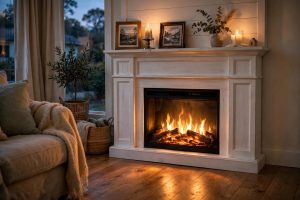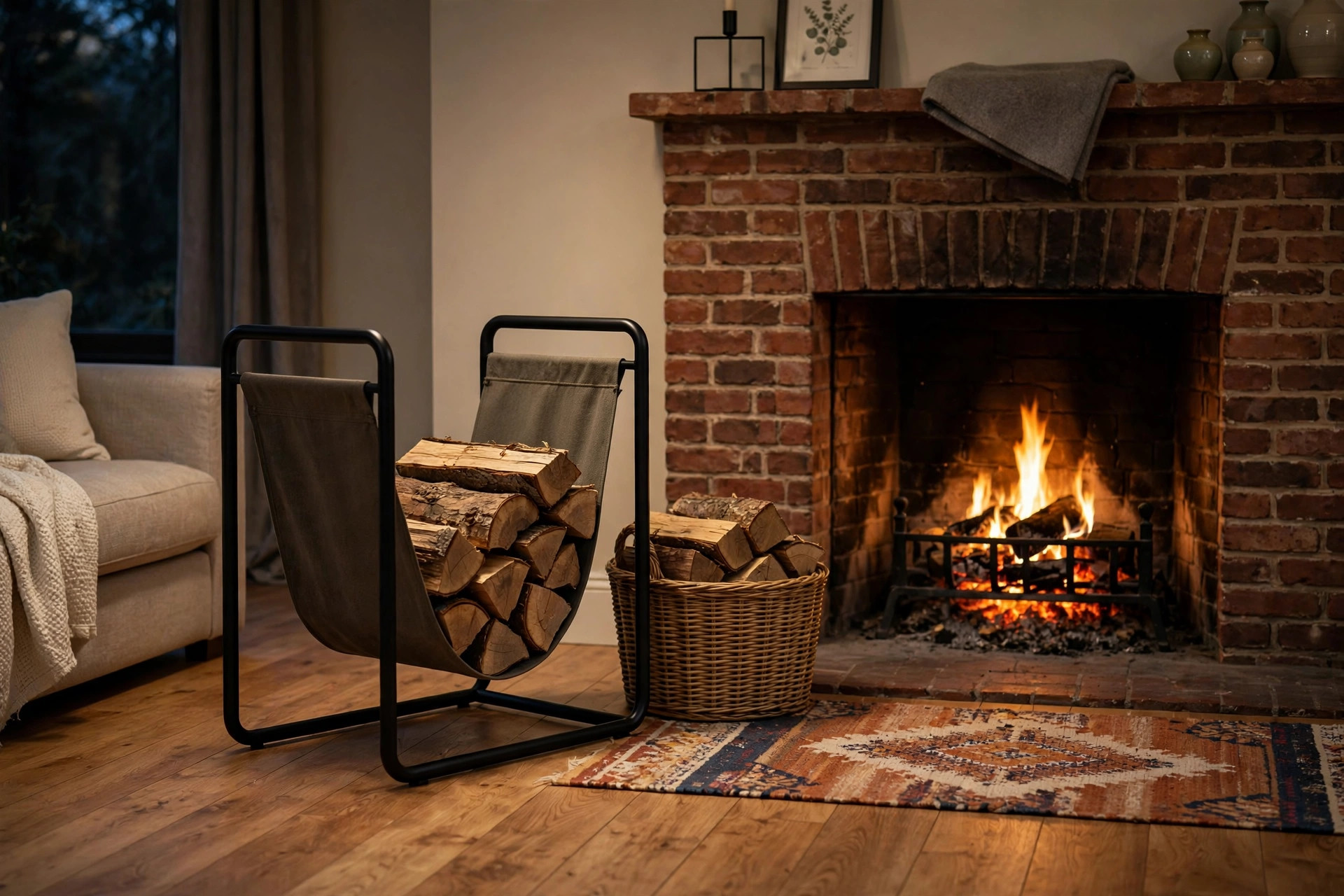

Southern winters are mild, but they are real. A cold front can drop the temperature into the thirties for a few days. Many families in Texas, Florida, Georgia, Louisiana, Alabama, Mississippi, South Carolina, and North Carolina light a fire a few dozen times each winter. That is enough to need wood close at hand, but not enough to justify a big woodshed. This is where smart indoor firewood holders for southern states earn their place. They hold a small supply of logs, keep them dry, and sit beside the fireplace without turning the room into a storage shed. The word smart here does not mean a computer chip. It means a holder designed with care: good airflow, strong materials, wheels or handles, and shapes that fit warm, humid homes.
Why It Matters in Southern Homes
The southern climate changes how wood behaves. Humidity is high for most of the year. Logs left outside soak up moisture from the air and the ground. Wet wood burns poorly. It smokes, gives little heat, and leaves heavy soot in the chimney. The EPA’s guidance on cleaner wood burning explains that dry, seasoned wood is the single most important factor for a clean fire. When you bring in only what you need and store it well, each fire burns brighter.
A good holder also protects the home itself. Damp bark and wood chips stain floors and rugs. Insects that ride in on logs spread to the house if the pile sits too long. A raised, tidy holder limits these problems. And in states where cold snaps arrive without warning, having two or three days of wood inside means you do not have to walk out to a wet woodpile at night.
What to Look for When You Choose One: Smart Indoor Firewood Holders for Southern States
Size and Capacity
Most southern homes burn fires for pleasure more than for heat. A holder that fits one or two armloads of wood is enough for a typical weekend. Measure the space beside your fireplace before you shop. Many buyers pick a holder that is too large and then trip over it all winter. A width of 18 to 30 inches suits most rooms. Think about height as well. A low, wide basket slides under a mantel shelf. A tall, narrow rack fits beside a stove in a tight corner.
Airflow and Wood Dryness
Wood must breathe. Holders with open sides let air move around the logs. This is important in humid states where trapped moisture is the main enemy. Avoid fully closed boxes for long storage. Some newer holders include a small built-in moisture meter or a simple gauge that tells you when the wood is too damp. These small features are what many shoppers mean when they search for budget friendly indoor firewood holders for sale: they want honest design at a fair price, not just a pretty basket.
Materials That Resist Rust and Moisture
The South is hard on metal. A plain steel rack will rust in a humid room within a season. Look for powder-coated steel, stainless steel, or wrought iron with a sealed finish. Wood and leather combinations look handsome but need care: keep them away from direct rain through an open hearth door and wipe them down after a damp winter. Canvas slings are common on modern racks. They are light and strong, but they can hold moisture against the wood if the room is very humid. Wash them in spring and let them dry fully. Leather slings look rich and age well, though they cost more and need occasional conditioning to stay supple in dry indoor heat.
When you shop, read the weight rating as well as the size. A rack rated for 150 pounds will hold a full load of oak without bending, while a light decorative model may bow under real use. Reviews from buyers in your own state are the most useful guide, since they describe how the holder performs in the same heat and humidity you live with.
Types and Options
The classic log basket is a woven or iron basket with two handles. It carries wood from the porch to the fire and then serves as the holder. It is simple and cheap, but it stores only a small amount and spills bark through its gaps.
The steel log rack is the most popular choice today. Two upright frames hold the logs off the floor, often with a canvas or leather sling between them. Many models have wheels, so you can roll the rack out to load it and tuck it back against the wall. Wheels matter in homes where the fireplace is on a porch or in a sunroom.
The modern design holder treats firewood as decoration. Powder-coated panels, geometric frames, and even glass-fronted cabinets display the wood like books on a shelf. If your fireplace is the center of your living room, a holder that looks good may matter as much as one that works well. Shoppers with a large space sometimes look at luxury indoor firewood holders with free shipping when they want a piece that matches fine furniture.
A newer group of holders adds true smart features. Some have a small hygrometer built into the frame so you can read the humidity around your wood at a glance. Others have a removable tray that catches bark and ash for easy cleaning. A few pair a compact rack with a matching covered outdoor store, so you move wood from outside to inside in one system. These designs were made for mild-climate homes where the holder sits in the living space all year.
Cost and Price
Prices are modest compared with most fireplace equipment. A simple basket or small rack costs 25 to 60 dollars. Mid-range racks with wheels, canvas slings, or powder-coated finishes run 60 to 150 dollars. Large design pieces and smart holders with gauges or matching sets can cost 150 to 400 dollars. Delivery from a big home store adds little, and many national retailers ship heavy items free to southern zip codes. Check the product weight before you order online. A 40-pound iron rack is hard to return if it does not fit.
Prices also rise and fall with the season. Buying in late summer, before the first cold front, usually gives you the widest choice. By December the most popular sizes sell out in many parts of the South. If you want a specific finish, plan ahead.
Care and Upkeep
A holder needs little care, but regular habits keep it working. Empty it fully at the end of each burning season and brush out the bark and dust. Check the finish for chips where rust could start. Touch up powder-coated metal with a small amount of matching paint. Wash canvas slings in warm water and let them dry in the sun. Leather straps benefit from a light coat of conditioner once a year. If the rack has wheels, clear the axles of bark and grit so they roll freely next season.
Never store wood in the holder for months without use. In humid states, logs left inside all summer can draw insects and mold. Bring in only what you will burn within a week or two. Keep the main supply outside, stacked off the ground and covered on top, and use the indoor holder as a staging area. Home improvement sites such as Home Depot and Lowe’s sell outdoor covers and raised racks that protect the main pile.
Safety Around the Fireplace
Firewood storage near a fireplace is safe when you follow a few rules. Keep the holder at least three feet from the firebox opening. Sparks can jump farther than you expect. Never place the holder in front of the screen or doors. Use a spark guard every time you burn, especially with pine or other resinous wood common in the South.
Burn only seasoned, dry wood. Green wood creates heavy creosote in the chimney, and creosote is the main cause of chimney fires. The EPA notes that proper wood selection and regular chimney checks cut this risk sharply. Have the chimney swept once a year, even if you burn only a dozen fires. A small amount of build-up adds up fast in a flue that is rarely cleaned.
Keep a working smoke detector and carbon monoxide detector near the room with the fireplace. Test them each fall. A fire extinguisher within reach is a wise addition. Guides on This Old House and Family Handyman walk through the basics of fireplace safety in plain language.
Frequently Asked Questions
How much wood should an indoor holder hold for a southern winter? For most homes, enough for two or three evenings is right. That is roughly one-eighth to one-quarter of a face cord. In states like Texas and Florida, where fires are occasional, a single basket load per cold snap is plenty. Families in the cooler parts of Tennessee or the Carolinas may want a larger rack. If you are comparing models, our notes on the best fireplace log holders for texas homes show sizes that suit warm-climate use.
Do I need a special holder for humid climates? Not a special brand, but a smart design. Choose open frames over closed boxes, powder-coated or stainless metal over bare steel, and raised feet so air flows under the wood. A built-in humidity gauge is a helpful extra. Articles on The Spruce often point out that airflow matters more than the container itself.
Can I leave firewood in the holder all summer? It is better not to. Summer humidity can bring mold and insects to stored wood. Empty the holder in spring, clean it, and bring wood inside only during burning season. Store the main supply outside under a cover.
Is a holder with wheels worth the extra cost? Yes, in most cases. You can load the rack on the porch, roll it to the fireplace, and roll it away for cleaning. The cost difference is usually small, around 20 to 40 dollars, and the convenience lasts for years.
What is the difference between a rack and a basket? A basket is small and portable. You carry wood in it and it becomes the holder. A rack is larger and stays in place, holding more logs off the floor. Many southern homes use both: a rack by the fireplace and a basket for trips to the woodpile. For a comparison of stove and fireplace equipment, brands like Napoleon and Heatilator publish useful product guides.
How do I know if my wood is dry enough to burn? Look for cracks at the ends of the logs, a hollow sound when two pieces are knocked together, and bark that comes off easily. Wood that is truly dry should have less than 20 percent moisture. A simple pin-type moisture meter costs under 30 dollars and takes the guesswork out. Testing groups such as Consumer Reports review many fireplace tools and accessories.
A Short Final Word
A smart indoor firewood holder is a small purchase that pays back every cold evening. In southern states, where humidity is the real challenge and fires are occasional, the right holder keeps wood dry, rooms clean, and logs within easy reach. Choose an open, rust-resistant design that fits your space. Keep the supply small and fresh. Follow the safety rules, and your fireplace will serve you well for many winters to come.
References
Consumer Reports. (n.d.). Product reviews and ratings. https://www.consumerreports.org Family Handyman. (n.d.). DIY home repair and maintenance. https://www.familyhandyman.com Heatilator. (n.d.). Fireplaces and fireplace products. https://www.heatilator.com Lowe’s. (n.d.). Home improvement products. https://www.lowes.com Napoleon. (n.d.). Fireplaces, grills, and heating products. https://www.napoleon.com The Home Depot. (n.d.). Home improvement products. https://www.homedepot.com The Spruce. (n.d.). Home and garden advice. https://www.thespruce.com This Old House. (n.d.). Home renovation guidance. https://www.thisoldhouse.com U.S. Environmental Protection Agency. (n.d.). Protecting human health and the environment. https://www.epa.gov
Was this guide helpful?

About Jennifer Lee
The My Garden US editorial team writes practical, in-depth home and garden guides for American homeowners — tested advice, no fluff.
You May Also Like

Buy Infrared Outdoor Heaters Online in Florida: What to Know Before You Order
March 19, 2026 0 views
Top Rated Stone Fireplace Surrounds for Small Apartments
August 28, 2026 0 views
High Efficiency Gas Log Sets for Sale: What to Know Before You Buy
July 5, 2026 0 views