Many Florida homeowners want a deck that looks good at night and stays safe to walk on. Deck cap lights for Florida homes in the USA solve both needs at once. These small lights sit on top of deck posts. They throw soft light down over the deck boards. They mark edges, steps, and railings after dark. They need no big fixtures and little care. And they hold up well in the Florida heat and rain when you pick the right kind.
Florida weather is hard on outdoor gear. The sun is strong. The rain is heavy. Salt air rides in from the coast. A cheap light may fail in one summer. This guide explains how deck cap lights work, what types to buy, what they cost, and how to keep them running for years in a Florida home.
Why Deck Cap Lights Matter in Florida
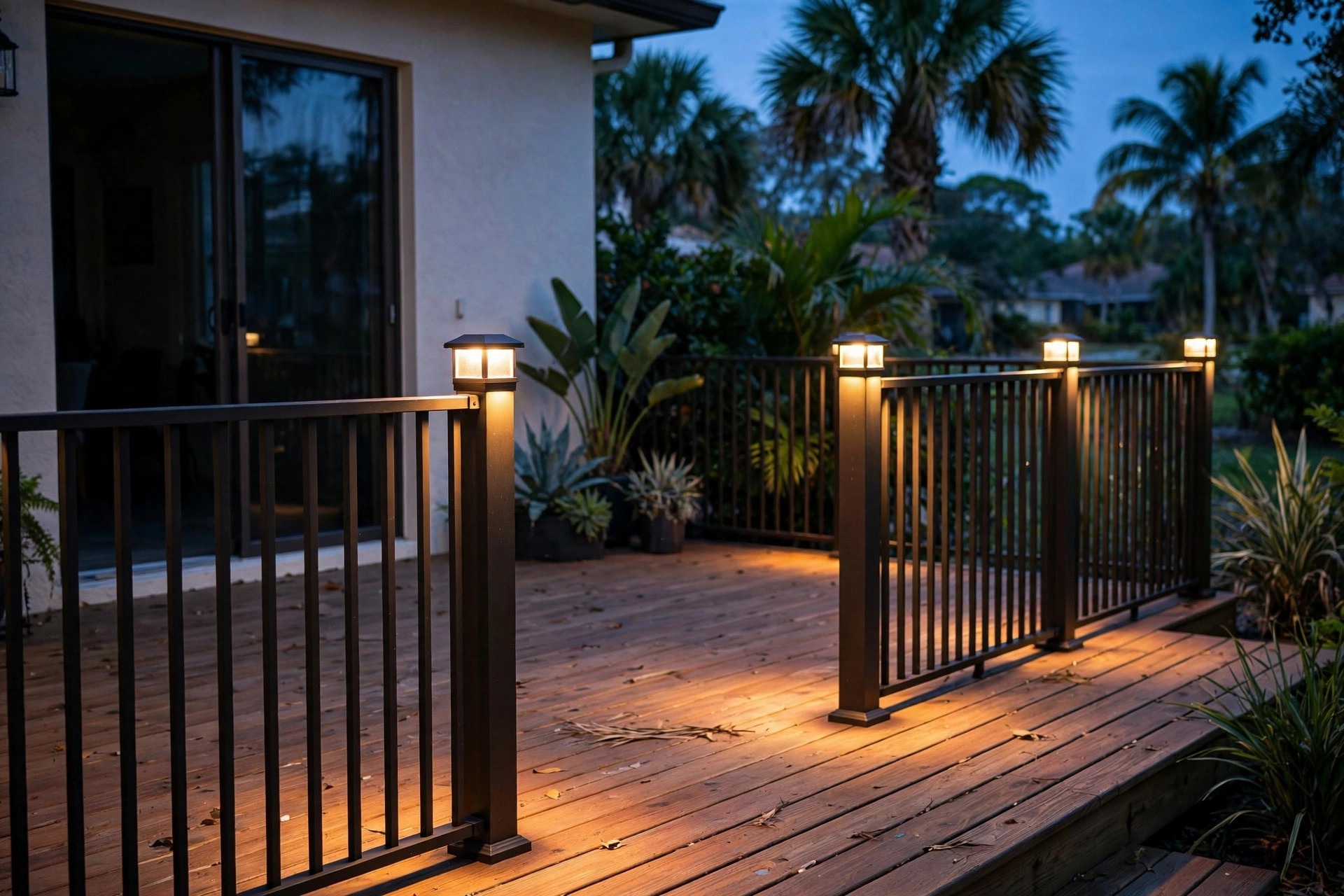
A deck in Florida gets used long after sunset. Evenings are warm most of the year. Families eat outside. Friends gather. Children play. Without light, posts and steps turn into trip hazards. Deck cap lights put a small pool of light right where people step. Each post becomes a low marker. The deck edge stays visible. The path from the door to the steps stays clear.
Safety is the first reason to add them. A dark step between two deck levels can catch anyone off guard. Low light at each post shows the drop before a foot finds it. Older family members and guests who do not know the deck gain the most. The light is low and soft. It does not blind.
Security is the second reason. A deck that glows each night tells a watcher the home is cared for. Motion is easier to see. Dark corners shrink.
Looks come third. A row of lit post caps gives a deck a finished look. It adds evening charm that guests notice and value.
Energy use is small. Most deck cap lights are LED. A set of twenty may draw less power than one old porch bulb. Solar models draw nothing from the house at all. The U.S. Department of Energy notes that LED lighting uses far less energy than older lamps and lasts much longer, which is one reason low-voltage and solar deck lights have become standard for American porches and patios.
How Deck Cap Lights Work: Deck Cap Lights Florida Homes Usa
A deck cap light is a cap for the top of a square or rectangular deck post. Under the cap sits a light source. The cap spreads the light downward and outward across the post and the deck boards around it. The post itself blocks light from the other side, so each light marks one point in a neat ring.
Power comes three ways. Solar cap lights carry a small panel on top. The panel charges a battery by day. A sensor switches the light on at dusk and off at dawn. Low-voltage cap lights wire to a transformer plugged into an outdoor outlet. The transformer drops house current to a safe 12 volts. Wiring runs under the deck or along the posts. Hardwired 120-volt models exist but are rare for caps and need an electrician.
Light color is measured in kelvin. Warm white, around 2700 to 3000 kelvin, suits decks best. It feels like candlelight. It flatters wood. Cool white above 4000 kelvin looks harsh outdoors and draws more insects at night. Most Florida buyers pick 2700K warm white, the same warm tone found on patio string lights fixtures — caps and strings pair well for a matched evening look.
Brightness stays low on purpose. Deck cap lights are markers, not floodlights. Ten to fifty lumens per cap is the normal range. A soft wash that reaches three to five feet from each post is the goal.
Types of Deck Cap Lights
Solar Deck Cap Lights
Solar caps are the simplest choice. They need no wiring. Each cap works on its own. You set them on the posts and walk away. In Florida, sun is no problem most of the year. A panel needs direct sun for about six hours to charge fully.
The weak point is the battery. Rechargeable cells lose power in extreme heat and after a few seasons. Many solar caps dim or fail after two to three years in Florida because the heat ages the battery fast. Replacing the battery is usually simple and cheap. Check whether the model lets you swap the cell. Sealed units must be thrown away when the battery dies.
Solar light output also varies with the weather. After a bright day, caps glow all night. After a cloudy week in hurricane season, they may fade by midnight. If your deck sees shade from trees or a roof overhang, solar is a poor fit.
Low-Voltage LED Deck Cap Lights
Low-voltage caps wire together to a transformer. This is the most reliable type for Florida. The lights burn steady every night. No charging. No fading. No dead batteries. LED lamps last 25,000 to 50,000 hours. The Energy Star program certifies efficient lighting products, and many low-voltage LED deck fixtures carry ratings that help buyers compare quality.
Wiring takes effort. You run thin cable under the deck or along the back of the railing. Connectors snap the caps into the cable. A 12-volt system is safe to handle and needs no electrician in most Florida counties. A plug-in transformer with a timer or light sensor automates the on-off cycle.
The risk is water. Connections must be rated for wet locations. In Florida downpours, a loose wire nut under a deck can corrode in weeks. Use sealed connectors. Keep the transformer under cover.
Hardwired Cap Lights
A few cap lights tie into the 120-volt house wiring. These need a licensed electrician and permits in most Florida cities. For an existing deck, low-voltage or solar is simpler and cheaper.
What to Look for When You Choose
Post size comes first. American deck posts are usually 4×4 or 6×6 inches, which measure about 3.5 and 5.5 inches across. The cap must fit snugly over your posts. Measure one post before you shop. Some caps adjust to fit both sizes with inner rings. Others are fixed. A loose cap will blow off in a Florida storm.
Water rating matters more in Florida than almost anywhere else. Look for an IP rating on the box. IP44 means safe from splashes. IP65 means safe from rain jets and dust. For open decks that take full storms, IP65 is the better pick. The Home Depot and Lowe’s product pages list IP ratings in the specifications tab, which helps you compare models before you buy.
Heat tolerance is the next check. Solar caps sit in direct sun. Cheap plastic housings turn brittle and crack after a Florida summer. Look for UV-rated materials or metal housings. Aluminum and copper caps cost more but age better than plastic in Gulf Coast heat.
Light quality should be warm. Choose 2700K to 3000K. Look for a lumen rating between 10 and 50 per cap. For layout ideas, The Spruce offers outdoor lighting guides, and Philips publishes consumer advice on LED color choice.
Finish should match the deck. Bronze, black, and copper tones suit most Florida decks. White caps fit coastal-style railings. The cap is visible by day, so the finish matters as much as the light.
Cost and Price
Prices in the USA vary by type and finish. A four-pack of basic solar plastic cap lights runs from about twenty to forty dollars. Metal solar caps cost forty to eighty dollars for a four-pack.
Low-voltage LED cap light kits cost more up front. A ten-light kit with transformer and cable runs from about one hundred twenty to two hundred fifty dollars. Individual low-voltage caps in copper or bronze sell for fifteen to thirty dollars each. The transformer is a one-time cost.
Running cost is tiny. A twenty-light low-voltage LED set draws about twenty watts total. At Florida power rates, running them six hours a night costs roughly a dollar a month. Solar costs nothing to run.
Avoid the cheapest plastic solar caps sold in bulk packs. In Florida heat they crack and fade fast, and replacing a whole deck set twice costs more than buying good caps once.
Installation Basics
Solar caps need no tools. Lift off the old flat post caps if you have them. Set the solar cap on each post. Let them charge one full sunny day before you judge the brightness.
Low-voltage installation takes an afternoon. Mount the transformer near an outdoor outlet, sheltered from direct rain. Run the low-voltage cable along the underside of the deck or behind the railing. Snap each cap lead to the cable with the sealed connectors. Set caps on posts. Plug in the transformer. Test at dusk.
Florida installers warn about two things. First, do not bury low-voltage cable in mulch or soil where it can sit in water. Second, leave slack in the wire. Decks shift and settle. Tight wire pulls connectors loose over time.
Check local rules before any hardwired work. Most Florida cities allow low-voltage landscape lighting without a permit, but rules differ by county. A quick call to the building department settles it. Lamps Plus and Lumens both sell low-voltage deck lighting kits with clear install guides aimed at do-it-yourself buyers.
Care and Upkeep in Florida Weather
Deck cap lights need little care, but Florida weather punishes neglect. Solar panels collect dust, pollen, and salt film. A dirty panel charges poorly. Wipe each panel with a damp cloth every month or two. In spring pollen season, wipe weekly.
After big storms, walk the deck. Check that caps sit tight on posts. Clear leaves from around caps so light reaches the boards.
Batteries in solar caps last two to four years in Florida. When a cap dims early or dies by midnight, swap the battery first. Most use AA or AAA Ni-MH cells. If new batteries do not help, the panel itself may be dead and the cap needs replacement.
Low-voltage systems need a yearly check. Look at the transformer for rust or insect nests. Check each connection for green corrosion on the metal. Replace any cracked caps before water gets inside. A dark cap usually means a bad connection, not a dead lamp, since LED lamps rarely burn out.
Safety
Low-voltage 12-volt systems are safe to touch and safe in rain. Keep the transformer plug in a weatherproof outlet box with the cord pointing down so water drips off. Do not let extension cords feed a transformer across a walkway where people trip.
Solar caps are safe by nature. The voltage is too low to harm. The one risk is cheap lithium cells in sealed caps that swell in heat. If a cap swells, cracks, or smells odd, remove it and recycle it. Do not throw swollen batteries in the trash.
Any hardwired 120-volt deck lighting needs a ground-fault circuit interrupter, called a GFCI, and a licensed electrician. Florida code requires GFCI protection for outdoor circuits. Do not wire line voltage to a deck yourself.
Keep light levels modest. Very bright caps at eye height can blind a driver on a nearby road. Warm low light is safer and kinder to neighbors.
Related Outdoor Lighting Ideas
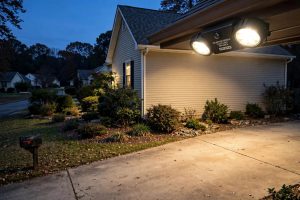
Deck cap lights work best as part of a full deck plan. Many Florida homeowners pair caps with landscape spot lights aimed at trees or the house wall behind the deck. Others add solar path lights along the walk from the driveway to the deck stairs so guests find their way in the dark. Keep the color temperatures matched so the whole deck feels like one design.
Frequently Asked Questions
How many deck cap lights does a Florida deck need?
Count your posts. Most decks need one cap per railing post. A 16-by-20-foot deck with railings on three sides often has 16 to 24 posts. Steps get extra attention. Add a cap on the posts at the top and bottom of each stair run. Do not skip corners. Corners are where people misjudge edges at night.
Will solar deck cap lights work in shaded Florida yards?
Poorly. The panel needs several hours of direct sun each day. Under heavy oak canopy or a solid roof, solar caps will not charge enough to last the night. In a shaded yard, choose low-voltage wired caps instead. They burn steady no matter the shade.
Do deck cap lights attract insects?
Less than most outdoor lights. Caps shine downward in a soft warm glow, which draws fewer bugs than a bright cool-white porch light. Warm 2700K lamps attract fewer insects than cool white. To cut bugs further, keep caps dim and avoid placing bright lights near seating.
Can I install deck cap lights on a composite deck?
Yes. Caps fit the post sleeves used on composite railings. Measure the sleeve size, since composite posts often come in 4-inch and 6-inch sleeve sizes. Do not screw into composite boards without the right drill bit. Composite can crack with the wrong fastener. Most caps just sit on top, so no screws are needed.
How long do deck cap lights last in Florida?
Solar caps last two to four years before the battery or plastic gives out in the heat. Good low-voltage LED caps last eight to fifteen years, with the transformer replaced once in that span. Metal housings outlast plastic.
A Short Final Word
Deck cap lights are a small change with a big effect. They make a Florida deck safer to walk on and nicer to sit on after dark. Solar is simple and cheap but needs sun and new batteries. Low-voltage is steady and long-lived but takes an afternoon of wiring. Either way, choose warm light, a good water rating, and a cap that fits your posts.
References
ENERGY STAR. (n.d.). Energy efficient products. https://www.energystar.gov Lamps Plus. (n.d.). Lighting and home decor. https://www.lampsplus.com Lowe’s. (n.d.). Home improvement products. https://www.lowes.com Lumens. (n.d.). Lighting and ceiling fans. https://www.lumens.com Philips. (n.d.). Lighting products. https://www.philips.com The Home Depot. (n.d.). Home improvement products. https://www.homedepot.com The Spruce. (n.d.). Home and garden advice. https://www.thespruce.com U.S. Department of Energy. (n.d.). Energy efficiency and renewable energy. https://www.energy.gov
Was this guide helpful?

About Robert Taylor
The My Garden US editorial team writes practical, in-depth home and garden guides for American homeowners — tested advice, no fluff.