
Introduction
Shoppers read kitchen track lighting reviews to avoid a costly mistake. A review tells you what a box cannot tell you. It shows how the light looks in a real kitchen. It tells you if the heads stay where you aim them. It tells you if the color of the light feels warm or cold.
This buying guide is written for USA homeowners and renters. It explains track lighting in plain terms. It shows how to read reviews with a clear eye. It lists the main types of systems. It gives price ranges you can expect in American stores. It covers care and safety. It answers common questions at the end.
A kitchen is a work space. Good light makes cooking safer and faster. Poor light causes eye strain. It makes reading a recipe hard. It leaves shadows where knives are used. Track lighting can fix these problems. This guide shows you how.
Why Kitchen Track Lighting Matters: Kitchen Track Lighting Reviews Buying Guide Usa
Kitchens need more light than most rooms. You chop food. You read small print on recipes. You check if meat is cooked through. You wash glassware. Each task needs clear light. A single ceiling fixture often fails at this job. It throws shadows across the counters. It leaves the stove area dark.
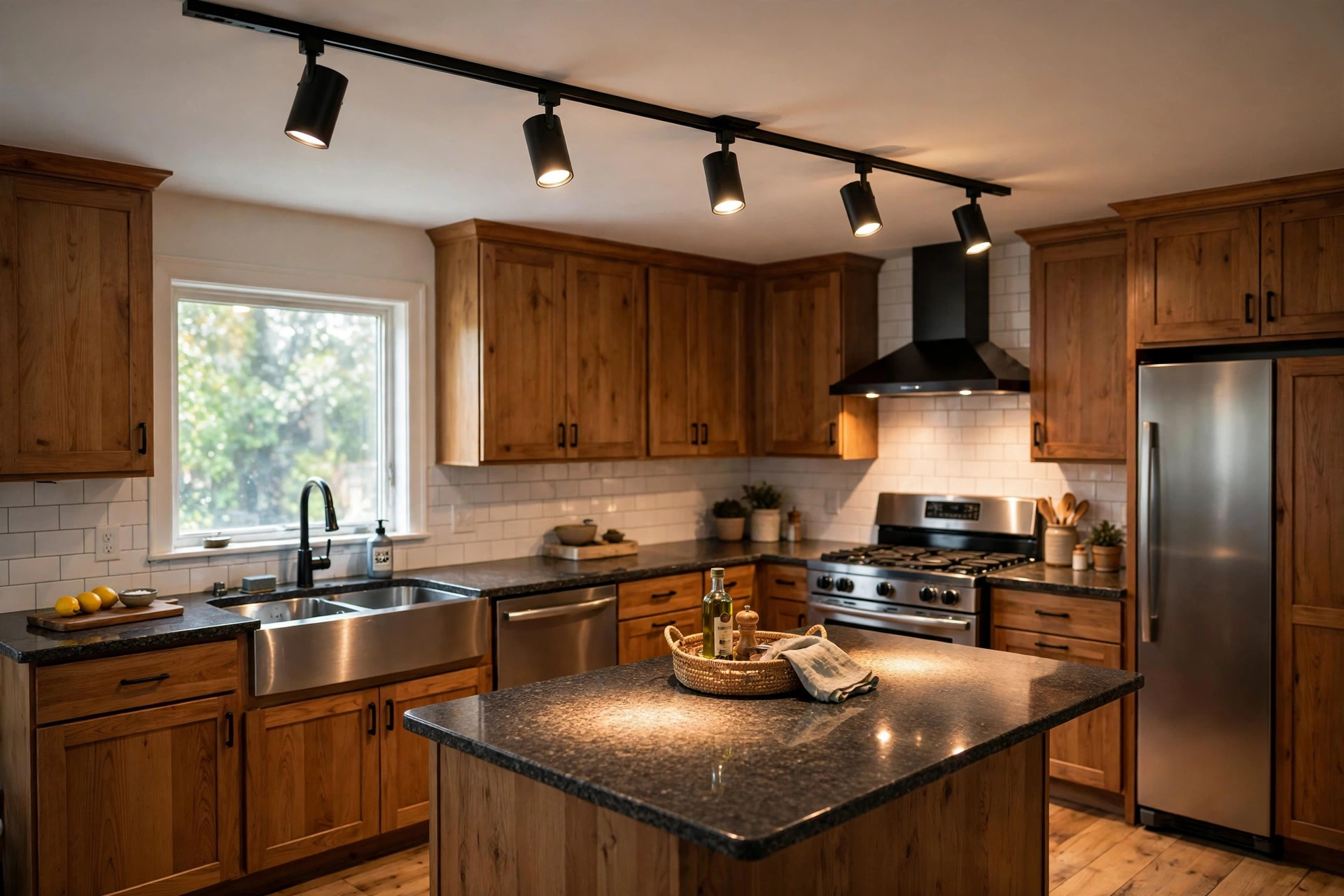
Track lighting takes a different path. A track is a long slim bar. It mounts on the ceiling or hangs from it. Light heads snap onto the bar. Each head turns. Each head tilts. You aim each one where you need it. One head can light the sink. Another can light the island. A third can wash the wall of cabinets.
Homeowners like this control. Reviews often praise it first. One fixture can serve many zones. The track stays close to the ceiling. The room feels open. There are no hanging cords to dodge.
Track systems also adapt. You can add heads later. You can move heads when you rearrange the room. You can swap old heads for LED heads. This flexibility is rare at this price level. It is one reason kitchen track lighting reviews stay positive year after year.
For readers who want to compare full systems, our kitchen track lighting buying guide covers the basics in more depth. If you prefer hanging lights over the island, our kitchen island pendants buying guide helps you weigh the two looks.
What to Look For When You Choose Track Lighting
Track Styles and Sizes
Tracks come in three main styles. H-style is the oldest. J-style and L-style are newer. The letters describe the shape of the connector inside the track. The key rule is simple. Heads must match the track type. A J-style head will not fit an H-style track. Reviews often mention this problem. Buyers mix brands, and the parts do not fit. Check the type before you order.
Tracks come in straight bars and curved shapes. Lengths range from two feet to eight feet. You can join bars to make longer runs. Most kitchens do well with a four foot or six foot track. Longer runs need more heads. Plan one head for every two to three feet of track.
Light Heads and Bulbs
Heads come in many shapes. Some are small spots. Some are wider floods. Some are sleek cylinders. Some are open gimbals that turn in every direction. Spot heads throw a tight beam. They suit counters and wall art. Flood heads spread light wide. They suit general glow.
Bulbs matter as much as heads. LED bulbs win in most reviews. They use less power. They last for years. They stay cool. Old halogen bulbs run hot. They waste power. When you read reviews, look for LED-ready systems. Check the max wattage per head. Do not exceed it.
The U.S. Department of Energy publishes plain guides on LED savings for homes. The numbers help you see the long-term value of the switch.
Brightness, Color, and Dimming
Brightness is measured in lumens. A kitchen counter needs about 300 to 500 lumens per head. A full kitchen needs about 5,000 to 10,000 lumens in total. Reviews with photos help you judge this. Look for pictures taken at night. Daytime photos hide weak lights.
Color is measured in kelvin. Warm white is 2700K to 3000K. It feels like old incandescent light. It suits dining areas. Neutral white is 3500K to 4100K. It suits work counters. Daylight is 5000K and up. It looks blue. It can make food look odd. Most kitchens do best at 3000K to 4000K.
Dimming lets you change the mood. You cook at full brightness. You dim the lights for a late snack. Not all LED heads dim well. Reviews often flag flicker as a common flaw. Look for heads marked dimmable. Pair them with an LED-rated dimmer switch. The lighting guides at Lumens explain dimmer pairing in plain terms.
Types of Track Lighting for Kitchens
Line voltage tracks run on normal house current. They are 120 volts. They are the most common type in USA homes. They are easy to install. They accept many head styles.
Low voltage tracks run at 12 or 24 volts. A transformer lowers the power. The heads are smaller. The look is sleek. The install is more complex. The transformer adds cost.
Monorail tracks bend by hand. You can shape curves and waves. They look modern. They hang from cables. They suit high ceilings.
Fixed rail tracks are stiffer. They hold their shape well. They mount close to the ceiling. They suit standard eight foot ceilings.
Cable systems use thin wires instead of a bar. They look light and airy. They work best in modern kitchens. They are harder to aim with care.
Plug-in tracks need no wiring. They plug into a wall outlet. Renters like them. Reviews note the visible cord. That cord is the trade-off for easy install.
Each type has fans. Line voltage wins on price and choice. Monorail wins on style. Renters pick plug-in kits. Match the type to your ceiling height, your wiring, and your taste.
Cost and Price
Prices vary widely. A basic two-head kit costs about 40 to 80 dollars. A four-head LED kit costs about 100 to 200 dollars. Designer monorail systems cost 300 to 800 dollars or more. Extra heads cost 15 to 60 dollars each.
Installation adds to the cost. A simple swap of an old fixture is a do-it-yourself job. It costs nothing but your time. A new track with new wiring may need an electrician. Expect 150 to 300 dollars for a basic install. Complex runs cost more.
Running costs are low with LED. A 10-watt LED head costs about one dollar a year to run. Compare that to a 50-watt halogen head. The halogen costs five times more to run. It also burns out much faster. The energy efficiency guidance at ENERGY STAR shows how LED choices cut home power bills.
Reviews often praise mid-range kits. The cheapest kits get poor marks for flimsy tracks. The priciest kits get praise for looks but not for value. The sweet spot sits near 120 to 180 dollars for a four-head LED set.
Shop the seasonal sales. Both Home Depot and Lowe’s run lighting sales in spring and fall. The buying guides from Lamps Plus help you compare models side by side before a sale starts.
Care and Upkeep
Track lighting needs little care. Dust the track twice a year. Use a dry cloth. Dust blocks the contacts and causes flicker. Clean the heads with a soft damp cloth. Let them cool first.
Tighten the heads once a year. Heat and vibration loosen them over time. A loose head flickers or droops. Turn off the power first. Twist each head until it sits firm. Do not force it.
Replace bulbs in sets when you can. Old and new bulbs differ in color. A mixed set looks patchy. LED heads last 15,000 to 25,000 hours. Most owners never replace them.
Check the dimmer if flicker starts. Old dimmers clash with LED heads. Swap to an LED-rated dimmer. The fix is cheap. It takes ten minutes.
If a head dies, test it on another spot of the track. This tells you if the head or the track is at fault. Reviews praise systems with twist-lock heads. They are easy to test and swap.
Pair track lights with under cabinet strips for shadow-free counters. The strips fill the gaps under wall cabinets. The track covers the open zones. Together they give even light across the whole work area.
Safety
Turn off the breaker before you touch any wiring. Test with a voltage tester. Do not trust the wall switch alone. Someone else may flip it on while you work.
Keep heads clear of curtains and paper. Halogen heads run hot. They can scorch fabric. LED heads stay cool. They are the safer pick in tight kitchens.
Do not exceed the max wattage. The track and the heads carry ratings on a label. Overloading heats the wire. Heat breaks the insulation down. Follow the label exactly.
Check that your track is rated for damp use if it hangs over the sink. Steam rises from hot water. Standard tracks suit dry zones. Damp-rated tracks cost a bit more. They are worth it near water.
Mount the track to a ceiling joist or a rated box. A loaded track is heavy. Drywall alone may fail under the weight. Use toggle bolts where no joist exists. Reviews of falling tracks almost always trace back to weak mounts.
The kitchen lighting safety tips at The Spruce give step-by-step wiring advice for beginners. When in doubt, hire a licensed electrician. A short visit costs less than a fire.
Frequently Asked Questions
How many track heads does a kitchen need?
Plan one head for each work zone. A small kitchen needs three to four heads. A large kitchen needs five to eight. Aim the heads at the counters, the sink, and the stove. Overlap the beams a little. Gaps create dark spots.
Are LED track lights better than halogen?
Yes, for most kitchens. LED heads use about one fifth of the power. They last ten times longer. They stay cool to the touch. Halogen gives warm light at a low upfront cost. But the bulbs burn out fast and run hot. Most recent reviews favor LED.
Can I install track lighting myself?
You can swap an old fixture for a track on the same ceiling box. That is a basic job. It needs a screwdriver and a voltage tester. New wiring or a new circuit calls for an electrician. Local codes vary across the USA. Check your city rules first.
What color light is best for a kitchen?
Most cooks pick 3000K to 4000K. This range is warm enough to feel homey. It is cool enough to show true food colors. Avoid 5000K daylight in dining zones. It looks harsh. It makes skin tones look pale.
Do track lights work with dimmers?
They do if the heads are marked dimmable. You also need an LED-rated dimmer switch. Old dimmers cause flicker and buzz. Test one head before you buy a full set. Reviews often name which dimmers work best with each brand.
A Final Word
Good track lighting changes how a kitchen feels. Tasks get easier. The room looks larger. Guests gather at the island. Read the reviews. Compare the types. Pick LED heads with the right color. Aim them with care. You will enjoy the result for years.
Lab tests add one more layer of trust. The lighting tests at Consumer Reports measure brightness and bulb life in a lab. Philips, one of the largest lighting makers, publishes full specs for its LED heads. Together, lab tests and maker specs help you buy with confidence.
References
Consumer Reports. (n.d.). Product reviews and ratings. https://www.consumerreports.org ENERGY STAR. (n.d.). Energy efficient products. https://www.energystar.gov Lamps Plus. (n.d.). Lighting and home decor. https://www.lampsplus.com Lowe’s. (n.d.). Home improvement products. https://www.lowes.com Lumens. (n.d.). Lighting and ceiling fans. https://www.lumens.com Philips. (n.d.). Lighting products. https://www.philips.com The Home Depot. (n.d.). Home improvement products. https://www.homedepot.com The Spruce. (n.d.). Home and garden advice. https://www.thespruce.com U.S. Department of Energy. (n.d.). Energy efficiency and renewable energy. https://www.energy.gov
Was this guide helpful?

About Robert Taylor
The My Garden US editorial team writes practical, in-depth home and garden guides for American homeowners — tested advice, no fluff.
You May Also Like
Garage Shop Lights Reviews Buying Guide USA
June 1, 2026 0 views
Where to Buy LED Recessed Lights in the USA: A Simple Guide
June 3, 2026 0 views
Deck Cap Lights for Sale USA: A Plain Guide to Bright, Safe Decks
March 17, 2026 0 views