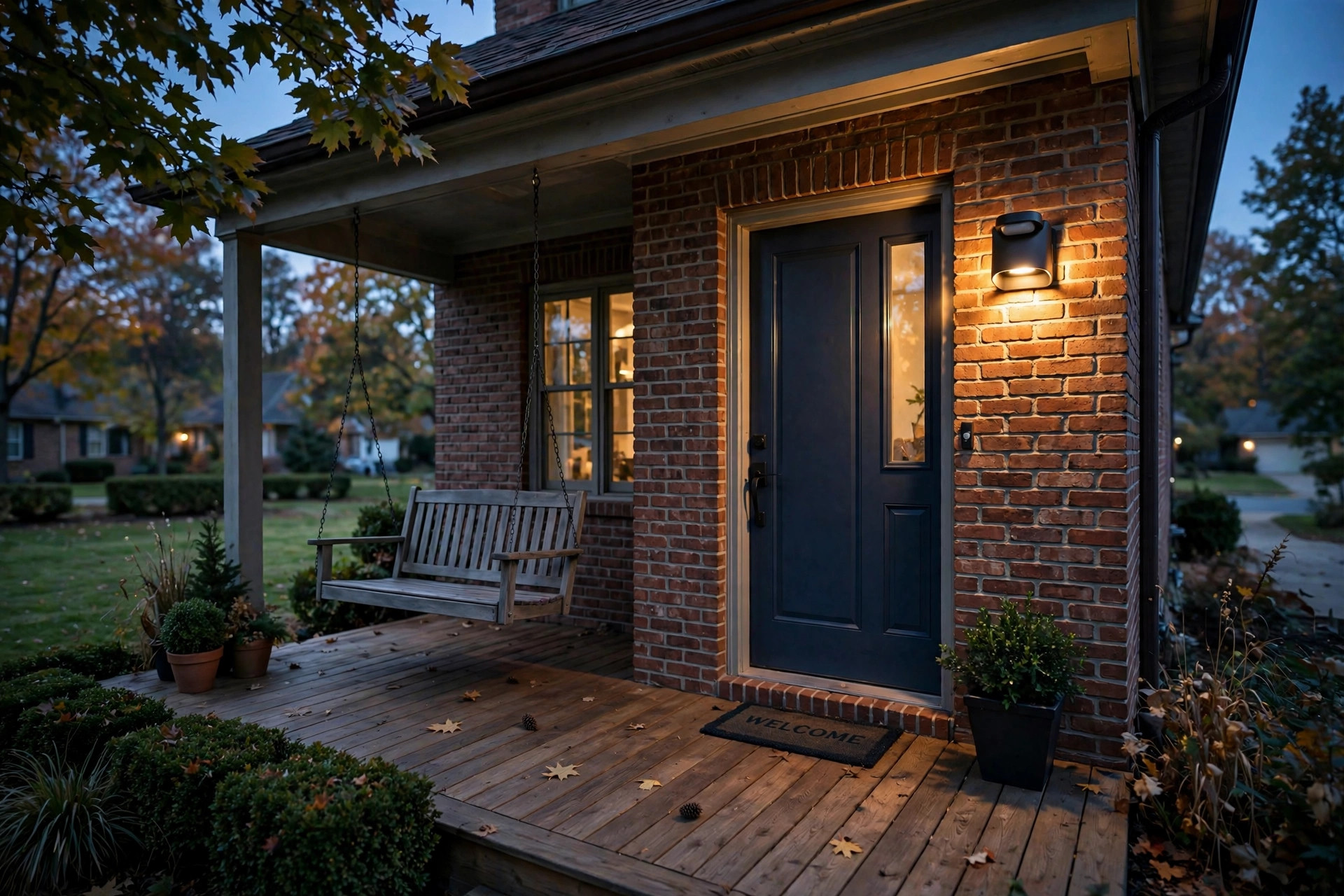
A dark porch is an invitation to trouble. It invites stumbles on the steps, fumbles with keys, and worse. A good sensor light changes that. It wakes the moment you arrive, and it sleeps when you are gone. If you are shopping for sensor porch lights usa online deals, this guide will walk you through the choice in plain terms, so you can buy well and spend less.
The sensor porch light is one of the most practical fixtures in the American home. It does two jobs at once. It keeps the entrance safe and lit. And it saves power, because it only burns when it is needed. Prices vary a great deal. A fair fixture can cost twenty dollars. A fine one can cost two hundred. Knowing the difference is what turns a good deal into real savings.
Why Sensor Porch Lights Matter
Most falls at home happen on porches and steps in poor light. A sensor light solves the problem without a thought from you. You come up the walk with your hands full of groceries. The light senses your motion and clicks on. You find the lock. You step inside. A minute later, the light clicks off by itself.
There is a security side as well. A dark house looks empty, even when it is not. A porch that floods with light at the first footstep makes a house look watched. Many owners of outdoor wall lanterns report the same finding. Light is the simplest alarm there is. It costs nothing to arm, and it never sleeps.
Then there is the energy side. An ordinary porch bulb burns for hours each night, whether anyone is there or not. A motion sensor model burns only when the yard is in use. Over a year, that difference shows up on the bill. The U.S. Department of Energy has long urged homeowners to cut wasted outdoor lighting, and sensor controls are one of the easiest ways to do it.
What to Look For When You Buy: Sensor Porch Lights Usa Online Deals
Shopping online means you cannot hold the fixture in your hands. So you must read the numbers. These are the ones that matter.
Sensor Type and Range
Most porch sensors use passive infrared, which reads body heat against the cool yard. Look for a detection range of thirty to seventy feet. Look for a field of view near 180 degrees or more. A narrow sensor will miss a guest who walks in from the side. A wide one will catch the mail carrier and the dog alike.
Some fixtures add a dusk-to-dawn photocell. This keeps the sensor alert only after dark, so wind-blown curtains in daylight do not trigger it. It is a small feature worth having.
Brightness and Bulb Type
Brightness is measured in lumens. For a porch, 800 to 1,600 lumens is the common range. That is plenty to light a doorway and the steps below it. Almost every new fixture uses LED now. LED runs cool, lasts years, and sips power. A model with an integrated LED board will never need a bulb change, though you should know the fixture is finished when the diodes fail.
Weather Rating
Porch lights live outside. Look for a wet rating, the kind marked for direct rain and snow. A damp rating is fine only under a deep overhang. The label should say plainly what it can stand.
Power Source
Most sensor porch lights are hardwired to the house current. That is the reliable choice. A smaller group runs on batteries or a small solar cell. Battery and solar models are easier to mount, but they are dimmer and they fade in cold or cloudy weeks. Hardwired is the standard for a main entry.
Types of Sensor Porch Lights
There is no single right fixture. The porch decides.
Wall-mounted lanterns. The classic choice. A lantern-style housing with a motion eye hidden in the base or the lantern head. These suit most American porches, from colonial to craftsman.
Floodlights with sensors. Two or three broad heads on an adjustable arm. These throw more light across a wide yard or driveway. They are the choice when the porch is large or the entry sits far from the street.
Compact carriage lights. Small, tidy fixtures that fit beside narrow door frames. They give enough light for the lock and the step, and they suit apartments and small cottages.
Solar sensor lights. Wire-free and simple to hang. Their strength is speed of installation. Their weakness is winter. In the northern states, short days and snow can starve them. They remain a fine pick for mild climates and rental homes where wiring is not allowed.
For the paths leading up to the porch, many homeowners pair their main fixture with solar path lights along the walkway. The pair makes a safe, well-lit approach.
Price and Cost in the USA
Prices for sensor porch lights in the USA run wide. Here is what the online market typically shows.
Budget models, twenty to forty dollars, cover the basics. A motion eye, an LED board, a wet rating. Build quality is modest, and the sensor range may be short. For a back door or a garage side entry, these can serve.
Mid-range models, forty to one hundred dollars, are the sweet spot for most buyers. You get longer sensor range, better housings, warm-to-neutral color choices, and brands with real warranties. Most front porches belong in this band.
Premium models, one hundred to two hundred fifty dollars and more, bring heavy cast housings, wide fields of view, adjustable zones, and fixtures that match fine architecture. If the house is large and the fixture is on show, the extra money buys looks as much as light.
Installation cost is the other half of the picture. A simple swap of an old fixture for a new one is a short job for an electrician. A fresh install, with new wiring run to the porch, costs more. Many homeowners treat a fixture swap as a do-it-yourself weekend task, and the Home Depot and Lowe’s guides both cover the basic steps. If the wiring looks old or the junction box is bare, call a licensed electrician. Power is not the place to guess.
How to Get the Best Deals Online
Good sensor porch lights usa online deals are not found by luck. They are found by method.
Compare across several stores. The big home-improvement sites often run the same brands at different prices. Check Lowe’s against Home Depot, then check a lighting specialist such as Lamps Plus or Lumens. A ten-minute round of checks can save twenty dollars or more.
Watch for seasonal sales. Outdoor lighting moves with the seasons. Late winter and early spring clearances are strong, as stores make room for the new season’s stock. Holiday weekends bring site-wide coupons that stack with existing markdowns.
Look for certified efficiency. Fixtures that carry the ENERGY STAR mark meet set standards for efficiency. The ENERGY STAR program lists qualified models, and some utilities offer rebates for them. A rebate of ten or fifteen dollars turns a fair price into a fine one.
Read the reviews with care. A four-star average across several hundred reviews is a good sign. Read the low reviews for patterns. Repeated notes about false triggers or early failure are warnings. Repeated praise for easy install and bright light is a green flag. Consumer Reports testing can help too when it covers the category.
Check the warranty and return policy. Online deals are only deals if the fixture works. A two-year or longer warranty is standard on decent models. A generous return window matters, because you cannot test a sensor until it hangs on your porch.
Consider smart models. Some newer fixtures connect to home systems. Ring makes motion-linked outdoor lighting that ties into its cameras and doorbells. If you already run such a system, a linked fixture can add real value. If you do not, a plain sensor model is simpler and cheaper.
Mind the total cost. A cheaper fixture that needs a professional install and a bulb every year may cost more over five years than a pricier LED model with a long warranty. Do the simple math before you click buy.
Care and Upkeep
A sensor porch light asks little, but it asks for it on schedule.
Wipe the sensor eye and the lens with a soft cloth twice a year. Dust and spider webs dull the motion eye and dim the lens. A dirty sensor triggers late or not at all. A dirty lens wastes half the light it makes.
In autumn, clear leaves away from the fixture’s view. A leaf that waves in the wind will trip a sensitive eye all night. Adjust the aim so the sensor watches the walk and the steps, not the street. Street traffic is the most common cause of needless triggering.
Check the seals each spring. A cracked gasket lets rain into the housing. If you see moisture inside the lens, tighten or replace the gasket before the electronics suffer.
For integrated LED models, there is no bulb to change. When the light finally dims past use, after many years of service, you replace the whole fixture. For bulb models, keep a spare. An LED bulb swap takes a minute and restores full brightness.
Safety
A porch light is a small electrical device, and it deserves respect.
Turn off the breaker before you touch the wiring. Test with a non-contact tester before your fingers go near a wire. The circuit is dead only when the tester says so.
Keep the fixture clear of awnings, drapes, and dry plant material. LED runs cooler than the old incandescent bulbs, but heat still gathers in a sealed housing. Give it air.
If the house wiring predates the 1980s, have an electrician look before you hang a new fixture. Old cloth-insulated wire and bare ground wires are common in vintage homes, and a sensor fixture needs a sound ground to work right.
For homes where young children play near the entry, mount the fixture high enough that small hands cannot reach it. The housing can be warm to the touch after a long trigger.
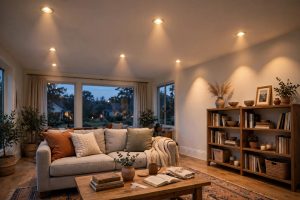
Inside the home, the lighting plan should match. Many buyers who upgrade the porch also review their recessed lights for a consistent look from street to hallway.
Frequently Asked Questions
How far can a sensor porch light detect motion? Most models detect motion between thirty and seventy feet. The field of view is usually 180 to 270 degrees. Mount the fixture six to ten feet above the ground for the best range. Mounted too high, it will miss movement close to the door. Mounted too low, its view narrows.
Do sensor porch lights work in cold weather? Yes, with a note. Passive infrared sensors read the contrast between warm bodies and cold air. In deep cold, that contrast is strong, so detection works. Battery and solar models suffer more, because cold drains batteries and short days starve solar cells. Hardwired LED models are the steady choice for cold states.
Can I adjust how long the light stays on? Most fixtures allow it. A small dial or a switch inside the housing sets the timer, often from one minute to ten or twenty. Set it short for a busy street-side porch to save power. Set it longer for a back entry where you want light while you unload the car.
Will the sensor trigger for animals? Small animals can trigger sensitive models. Most fixtures let you tune the sensitivity down. Aim the sensor above the level where pets and wildlife pass, and angle it away from low shrubs. Philips and other makers note in their guides that a careful aim solves most false triggers.
Are motion sensor porch lights worth the cost? For most homes, yes. They cut wasted burn time, they add a layer of security, and they remove the daily chore of flipping a switch. The energy saved over the fixture’s life often pays the price difference over a plain model. The ENERGY STAR site offers plain guidance on efficient outdoor lighting if you want the numbers.
Where are the best places to buy sensor porch lights online in the USA? Start with the large home-improvement stores, then check lighting specialists and maker-direct stores. Compare the final price with shipping and tax. Watch for rebates from your local utility. Reading buying advice from sources like The Spruce can sharpen your eye for quality before you buy.
A Final Word
A sensor porch light is a small purchase that pays daily. It meets you at the door. It watches while you sleep. It spends power only when there is someone to see by it. Take the time to compare the models, read the reviews, and check for rebates. The best sensor porch lights usa online deals go to the patient buyer who knows the numbers. Buy once, hang it straight, and let the light do its quiet work for years.
References
Consumer Reports. (n.d.). Product reviews and ratings. https://www.consumerreports.org ENERGY STAR. (n.d.). Energy efficient products. https://www.energystar.gov Lamps Plus. (n.d.). Lighting and home decor. https://www.lampsplus.com Lowe’s. (n.d.). Home improvement products. https://www.lowes.com Lumens. (n.d.). Lighting and ceiling fans. https://www.lumens.com Philips. (n.d.). Lighting products. https://www.philips.com Ring. (n.d.). Smart home security devices. https://www.ring.com The Home Depot. (n.d.). Home improvement products. https://www.homedepot.com The Spruce. (n.d.). Home and garden advice. https://www.thespruce.com U.S. Department of Energy. (n.d.). Energy efficiency and renewable energy. https://www.energy.gov
Was this guide helpful?

About David Wilson
The My Garden US editorial team writes practical, in-depth home and garden guides for American homeowners — tested advice, no fluff.