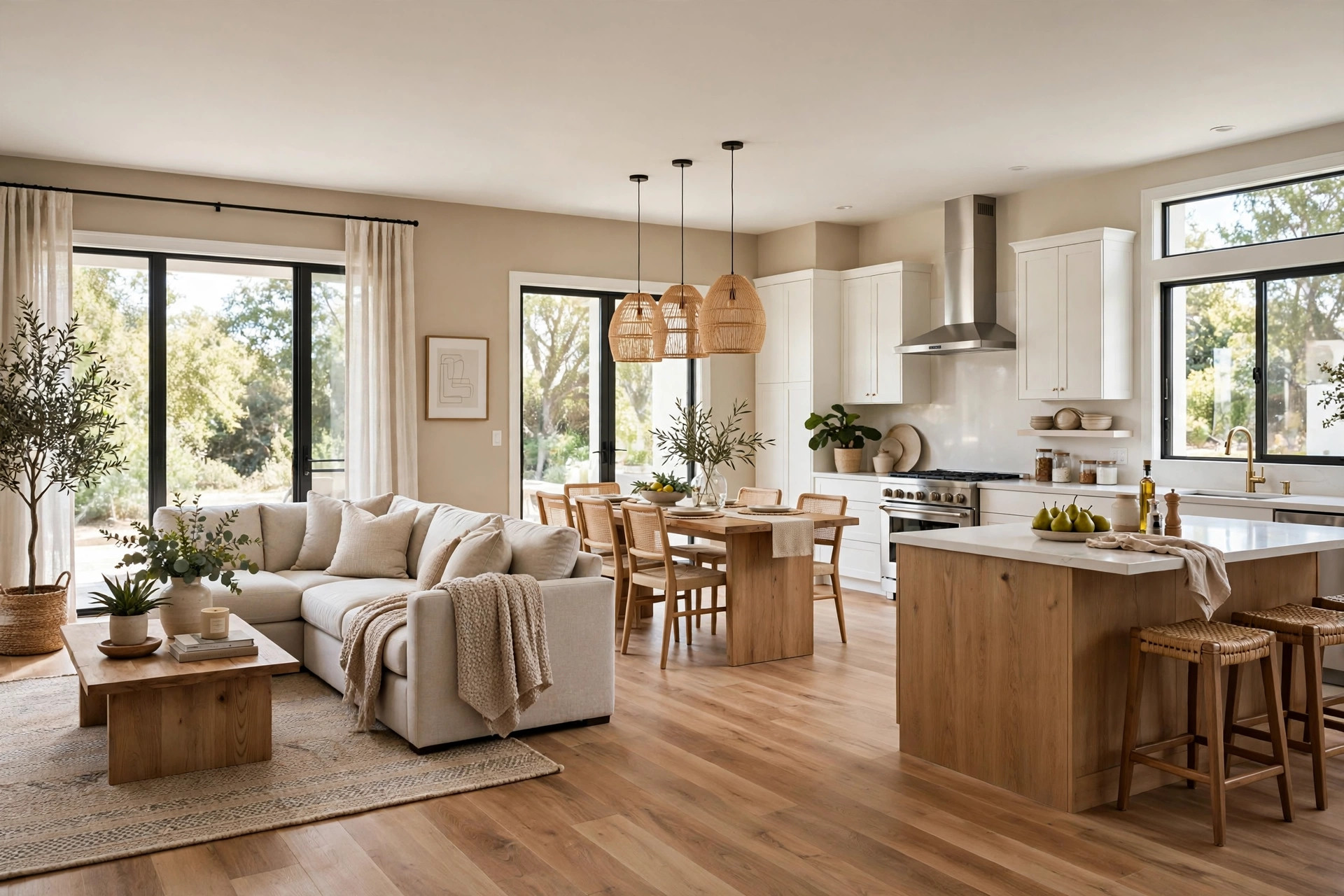

Open floor plans changed how Americans decorate their homes. The kitchen, the dining area, and the living room now share one big space with no walls between them. That makes the choice of wall color harder. One color must work in every zone. That is why so many homeowners turn to greige paint colors for open floor plans. Greige is a mix of gray and beige. It is soft. It is calm. It works with wood floors, white trim, stone, and almost every furniture style. This guide explains why greige works, how to choose the right shade, what it costs, and how to keep it looking fresh for years.
Why Greige Paint Colors Matter in Open Floor Plans
In a traditional home, each room can have its own color. The kitchen can be blue. The living room can be tan. A hallway can be gray. The doors between the rooms break up the colors, so nothing clashes.
Open floor plans removed those doors. Now every color choice is visible from every angle. If the kitchen wall is blue and the living room wall is tan, the two colors fight each other in the same line of sight. The result looks busy and unsettled.
Greige paint colors for open floor plans solve this problem. One shade of greige can cover the whole main level. The kitchen, the dining area, and the living room all share the same warm neutral background. The eye moves through the space without stopping. The home feels larger and calmer.
Greige also bridges warm and cool materials. Many open plans mix warm wood floors with cool gray stone or white cabinets. A pure gray can feel cold. A pure beige can feel dated. Greige sits in the middle.
There is one more reason greige fits open plans. These homes often have tall ceilings and big windows. Light colors keep the space bright. But pure white can look stark on long, open walls. Greige adds just enough depth to make the walls feel finished without making the room dark.
The Problem One Color Must Solve
An open floor plan asks one paint color to do three jobs at once. It must look good under bright kitchen lights, under soft lamps in the living area, and in natural daylight near big windows.
How to Choose the Right Greige: Greige Paint Colors for Open Floor Plans
Greige is not one color. It is a whole family of colors that sit between gray and beige. Some lean gray. Some lean beige. Some lean taupe. Choosing the right one takes care and a bit of patience.
Start by looking at your fixed finishes. These are the things you will not change: the floor, the cabinets, the countertops, the fireplace stone, and the stair railings. If your floors are warm oak or honey-toned wood, choose a greige that leans a little warmer. If your floors are gray-washed wood or your cabinets are white with cool gray counters, a greige that leans cooler may fit better.
Next, look at your light. North-facing rooms get cool, blue-tinted light all day. In those rooms, a warm greige keeps the space from feeling cold. South-facing rooms get warm, golden light. In those rooms, a cooler greige can balance the warmth. West-facing rooms change through the day, so a middle-of-the-road greige is often the safest pick.
Every greige has an undertone: green, blue, purple, pink, or yellow. On your wall, the undertone can jump out. A greige with a green undertone can look almost sage near white trim. A greige with a pink undertone can look blush in warm evening light. There is no bad undertone. There is only an undertone that does or does not match your room. That is why interior paint brands like Sherwin-Williams and Benjamin Moore show large sample cards and fan decks. They help you see the undertone before you buy gallons.
Test Samples on Your Own Walls
Never choose a greige from a small card alone. Buy sample pots or peel-and-stick samples of two or three shades. Paint big test squares, at least two feet wide, on the walls. Look at them at different times: morning, midday, and night with lamps on. Look at them from the kitchen looking toward the living room, and from the living room looking toward the kitchen. The shade that looks good from every angle is your winner.
Paint the samples on more than one wall if you can. The same shade can look different on a wall near a window and on a wall in a shaded corner. Live with the samples for a few days. A color you love at first sight can wear on you. A color that grows on you is usually the better pick.
Types and Options to Compare
Greige paint colors for open floor plans fall into a few broad groups. Knowing the groups helps you narrow the field.
Warm greiges lean toward beige and tan. They feel cozy and inviting. They work well in rooms with lots of gray stone or cool tile because they warm the whole space up. They suit traditional and farmhouse styles.
Cool greiges lean toward gray. They feel crisp and modern. They work well with warm wood floors and honey-toned furniture because they keep the space from feeling too yellow. They suit modern and transitional styles.
Middle greiges sit right in the center. They are the most forgiving choice for open plans. They do not push warm or cool very hard. They accept whatever light and finishes the room gives them. If you feel unsure, start with a middle greige.
Dark greiges add drama. They work best as an accent, such as a fireplace wall or kitchen island, while a lighter greige covers the rest. If you like one darker feature wall, accent wall painting ideas for living rooms show how to place it so the open space still flows.
Light greiges stay close to off-white. They suit small open plans or rooms with little natural light.
Finish matters too. Most open-plan walls do best in an eggshell or satin finish. Eggshell hides small wall flaws and cleans up with a damp cloth. Satin is a bit shinier and stands up to scrubbing, which suits the kitchen side of an open plan. Flat paint shows almost no shine, but it marks easily, so it is a poor pick for high-traffic open areas. Semigloss belongs on trim, doors, and cabinets, not on large open walls.
Cost and Price Planning
The cost of painting an open floor plan depends on three things: the size of the space, the paint you choose, and whether you hire a painter or do it yourself.
Open plans have a lot of wall area. A main level with a living room, dining area, kitchen, hallway, and entry can easily need six to ten gallons of paint for two coats. Premium interior paint from national brands like Behr or Home Depot’s paint department typically runs in the middle price range per gallon. Higher-end lines cost more per gallon but often cover better, which can mean fewer coats.
If you do the work yourself, your costs are paint, primer, rollers, brushes, tape, drop cloths, and ladders. For a typical open-plan main level, a DIY job often runs a few hundred dollars in materials. If your walls need repair first, add the cost of spackle, sandpaper, and extra primer.
Hiring a professional costs more. Painters usually charge by the room or by the square foot. An open floor plan may be priced as one large job. That can work in your favor, since one color means fewer cut-in lines. Get at least three written estimates. Ask each painter how many coats are included and whether the price covers wall repair and primer.
Do not skip primer on bare drywall or patched spots. Primer seals the surface so the greige goes on even. On previously painted walls in good shape, a quality paint with primer built in is often enough. If you are covering a dark color with a light greige, one coat of primer saves you from a third coat of paint.
For current prices and product lines, check major retailers such as Lowe’s. Their websites list paint by finish and size, and their stores carry sample cards and color-matching tools.
Care and Upkeep
Greige walls in open floor plans take more wear than walls in closed rooms. The kitchen side gets splashes and steam. The entry side gets scuffs from shoes and bags. The dining side gets chair bumps. Good upkeep keeps the paint looking new.
Wash marks with a soft sponge and mild dish soap in warm water. Work gently. Hard scrubbing can polish the finish and leave a shiny spot. Eggshell and satin finishes handle light washing well. Keep a labeled jar of the exact color and finish in a closet for touch-ups. Write the color name, the sheen, and the date on the lid.
Repainting an open plan is a bigger job than repainting one bedroom, so most homeowners wait seven to ten years between full repaints. Touch-ups stretch that time. One warning: touch-up paint from a new can of the same color can look slightly different after a few years. Paint formulas change, and the old paint on the wall fades a little from light. If a touch-up shows, you may need to repaint the whole wall from corner to corner for a perfect match.
Keep the room ventilated. Cooking steam and moisture can dull paint over time. Use your range hood every time you cook. In humid climates, a dehumidifier protects both the paint and the drywall behind it.
If you want practical maintenance advice written for homeowners, sites like This Old House and Bob Vila publish painting guides that cover cleaning, touch-ups, and repaint timing in detail.
Safety
Painting is safe when you follow basic rules. Most modern interior paints are low-odor and low-VOC, which means they release fewer chemical fumes than older paints. Still, ventilate the room while you work. Open windows or run fans. This matters more in an open floor plan, because fumes can drift from the kitchen area into living and sleeping spaces.
Wear gloves when handling paint and primer. Wear safety glasses when rolling ceilings or sanding. A dust mask is a must when sanding old paint. If your home was built before 1978, the old paint may contain lead. Do not sand or scrape lead paint yourself. Have it tested first, and hire a certified lead-safe contractor if it tests positive.
Keep paint away from heat sources and open flames. Store paint cans upright, sealed tight, and out of reach of children and pets. Dispose of leftover paint the right way. Many towns run paint take-back programs. Never pour paint down a drain or into the yard.
For general home safety guidance during painting projects, The Spruce and HGTV both keep homeowner safety articles on their sites.
Frequently Asked Questions
What is greige paint?
Greige is a color that mixes gray and beige. The name comes from the two words put together. It is a warm neutral. It looks softer than plain gray and fresher than plain beige. Painters use it when they want a neutral that works with both warm and cool finishes.
Will greige paint colors for open floor plans make my home look dated in a few years?
Neutrals age better than strong colors. Gray had a long run and is now cooling off. Beige alone can look tired. Greige sits between them, which gives it a longer shelf life. Choose a shade you like in your own light, not just a trendy name, and it will serve you for many years.
Should the whole open floor plan be one shade of greige?
One shade is the simplest and safest plan. It makes the space feel connected. If you want variety, use the same greige at different strengths: full strength on most walls, and a lighter version of the same color on the ceiling or in a small nook. That keeps the flow while adding a little interest.
Can I use greige in a dark open floor plan with few windows?
Yes, but choose a light greige. Dark rooms need all the help they can get. A light greige reflects more light than a mid-tone shade. Pair it with white trim and light-colored furniture to keep the room bright. A dark greige in a dark room can feel heavy.
What trim color goes with greige walls?
Crisp white trim is the classic partner. It frames greige walls cleanly and suits both warm and cool greiges. Off-white or cream trim works too, especially with warm greiges. For a softer look, some homeowners paint the trim a lighter shade of the same greige. Avoid trim colors with strong yellow undertones, which can make the greige look muddy.
How does greige compare to sage green for open plans?
Sage green is a soft green-gray with more color than greige. It works well in open plans that get plenty of light. Greige is more neutral and more forgiving when you change furniture or decor. If you are weighing the two, sage green paint for living room usa looks at the greener option in detail. And if you want something moodier for private rooms off the open plan, best dark paint colors for bedrooms usa covers that side of the choice.
A Short Final Word
Greige paint colors for open floor plans earn their place the quiet way. They do not shout. They do not steal attention from your furniture, your art, or your view. They simply hold the whole space together. Pick a shade that suits your light and your fixed finishes. Test it big and live with it for a few days. Then paint with confidence. A well-chosen greige will keep your open floor plan calm and connected for years.
References
Behr. (n.d.). Paints, primers, and stains. https://www.behr.com Benjamin Moore. (n.d.). Paints and stains. https://www.benjaminmoore.com Bob Vila. (n.d.). Home improvement advice. https://www.bobvila.com HGTV. (n.d.). Home and garden ideas. https://www.hgtv.com Lowe’s. (n.d.). Home improvement products. https://www.lowes.com Sherwin-Williams. (n.d.). Paints and coatings. https://www.sherwin-williams.com The Home Depot. (n.d.). Home improvement products. https://www.homedepot.com The Spruce. (n.d.). Home and garden advice. https://www.thespruce.com This Old House. (n.d.). Home renovation guidance. https://www.thisoldhouse.com
Was this guide helpful?

About Sarah Mitchell
The My Garden US editorial team writes practical, in-depth home and garden guides for American homeowners — tested advice, no fluff.
You May Also Like
Best Exterior Wood Stain for Decks USA: A Plain Guide to Protecting Your Deck
June 21, 2026 0 views
Floral Wallpaper for Bedroom for Sale USA: A Buyer’s Guide
September 10, 2026 0 views
Basement Floor Epoxy Kit for Sale USA: A Plain Buyer’s Guide
August 9, 2026 0 views