
A Calm Color for the Heart of the Home
Sage green paint for living room walls has become one of the most loved color choices in American homes. The color sits between gray and green. It is soft. It is calm. It brings the feel of nature indoors without being loud or bright.
Homeowners in the USA choose sage green because it works with almost any style. It fits farmhouse homes. It fits modern homes. It fits classic homes with wood trim. The color feels fresh in daylight and warm under lamps at night.
This guide covers everything you need to know about sage green paint for living room use. You will learn which shades to buy, how much paint costs in the USA, which brands do the best job, and how to keep your walls looking new for years.
Why Sage Green Works So Well in the Living Room: Sage Green Paint for Living Room Usa
The living room is where families gather. It is where guests sit. The color on the walls sets the mood for the whole room. Sage green sets a calm and welcoming mood.
Psychologists have long studied how color affects feeling. Green tones remind people of plants, fields, and quiet outdoor places. Sage is a muted form of green. It does not shout. It rests the eyes. Many people say it lowers stress after a long day.
Sage green also hides small marks better than white paint. Living rooms see a lot of use. Children play there. Pets rest on the furniture. A mid-tone color like sage keeps the room looking clean between cleanings.
Another benefit is flexibility. Sage green pairs with wood, metal, and fabric. You can change your curtains, rugs, or pillows many times. The walls will still match. This makes sage green a smart long term choice for people who like to redecorate.
Popular Sage Green Paint Colors in the USA
Paint makers in the United States sell many versions of sage green. Each one has a slightly different tone. Some lean toward gray. Some lean toward green. Some have a warm yellow base. Here are the shades that American painters and designers reach for most often.
Light and Airy Sage Shades
Light sage shades work well in small living rooms. They open up the space. They bounce light around the room. A light sage with gray undertones looks clean and modern.
Many shoppers at The Home Depot pick up sample cans of light sage first. Samples cost only a few dollars. They let you test the color on your own wall before you buy gallons.
Medium Classic Sage Shades
Medium sage is the most popular range. It has enough color to give the room character. It is not so dark that the room feels small. This range covers colors like the ones sold by Www.sherwin-williams.com and Www.behr.com as their signature greens.
If you can only buy one shade, choose a medium sage. It works in rooms with both large and small windows. It looks good in morning light and evening light.
Deep and Moody Sage Shades
Deep sage shades add drama. They work in large living rooms with high ceilings. They also work well on one Accent wall painting ideas for living rooms while the other walls stay light. Deep sage behind a sofa or fireplace can become the focal point of the room.
Dark colors need more coats to cover evenly. Plan to buy extra paint if you choose a deep shade. Two full coats are the minimum. Three coats may be needed over white primer.
How to Choose the Right Shade
Choosing paint is a personal step. The same color looks different in every home. Light, floor color, and furniture all change how paint appears. Follow these steps to make a safe choice.
Test Samples on Your Own Wall
Never choose a color from a screen or a paper swatch alone. Buy two or three sample cans. Paint a large square of each on your living room wall. Look at the squares in morning light, afternoon light, and under lamps at night.
Leave the samples up for at least two full days. Colors shift as the light changes. A shade that looks perfect at noon may look too gray at night. Www.thespruce.com suggests living with samples for several days before deciding.
Match the Shade to Your Light
North facing rooms get cool, blue light. A sage with warm undertones balances this cool light. South facing rooms get warm, golden light. A sage with gray undertones keeps the room from looking too yellow.
If your living room has few windows, choose a lighter sage. Dark paint in a dark room can feel like a cave. If your room has large windows and bright sun, you can go deeper without fear.
Pick the Right Paint Finish
Finish matters as much as color. Flat finish hides wall flaws but marks easily. Eggshell is the most common choice for living rooms. It has a soft glow and wipes clean with a damp cloth.
Satin finish is tougher. It works well if you have children or pets. Semi gloss is too shiny for most living room walls. Save it for trim and doors.
Consumer testers at Consumer Reports regularly compare how finishes hold up to scrubbing. Eggshell and satin from major brands pass these tests well.
Cost of Sage Green Paint in the USA
Paint prices in the USA vary by brand and quality. Here is what you can expect to pay.
Price Per Gallon
Budget paints at stores like Lowe’s start near 30 dollars per gallon. Mid range paints from national brands cost 45 to 60 dollars per gallon. Premium paints from Benjamin Moore and Sherwin-Williams can cost 65 to 85 dollars per gallon.
Higher priced paint usually covers better. It may need fewer coats. It also resists fading and stains longer. For a living room you plan to keep for ten years, premium paint often saves money over time.
How Much Paint You Need
One gallon covers about 350 to 400 square feet with one coat. Most living rooms need two coats. A 12 by 15 foot room with 8 foot ceilings has about 430 square feet of wall space after you subtract doors and windows.
For that room, buy three gallons for two coats. Always buy a little extra. Touch ups later will match better if the paint comes from the same batch.
Professional Painting Costs
Hiring a painter adds labor cost. In the USA, professional interior painting costs 2 to 6 dollars per square foot of wall. A standard living room may cost 800 to 2000 dollars for labor and paint together. Prices are higher in big cities and lower in small towns.
Many homeowners paint the living room themselves. It is one of the easiest DIY projects. Guides at This Old House and Www.bobvila.com walk through each step.
What Colors Pair with Sage Green
Sage green is easy to decorate around. It sits in the middle of the color range. It works with both warm and cool tones. Here are pairings that always look good.
Warm Neutrals
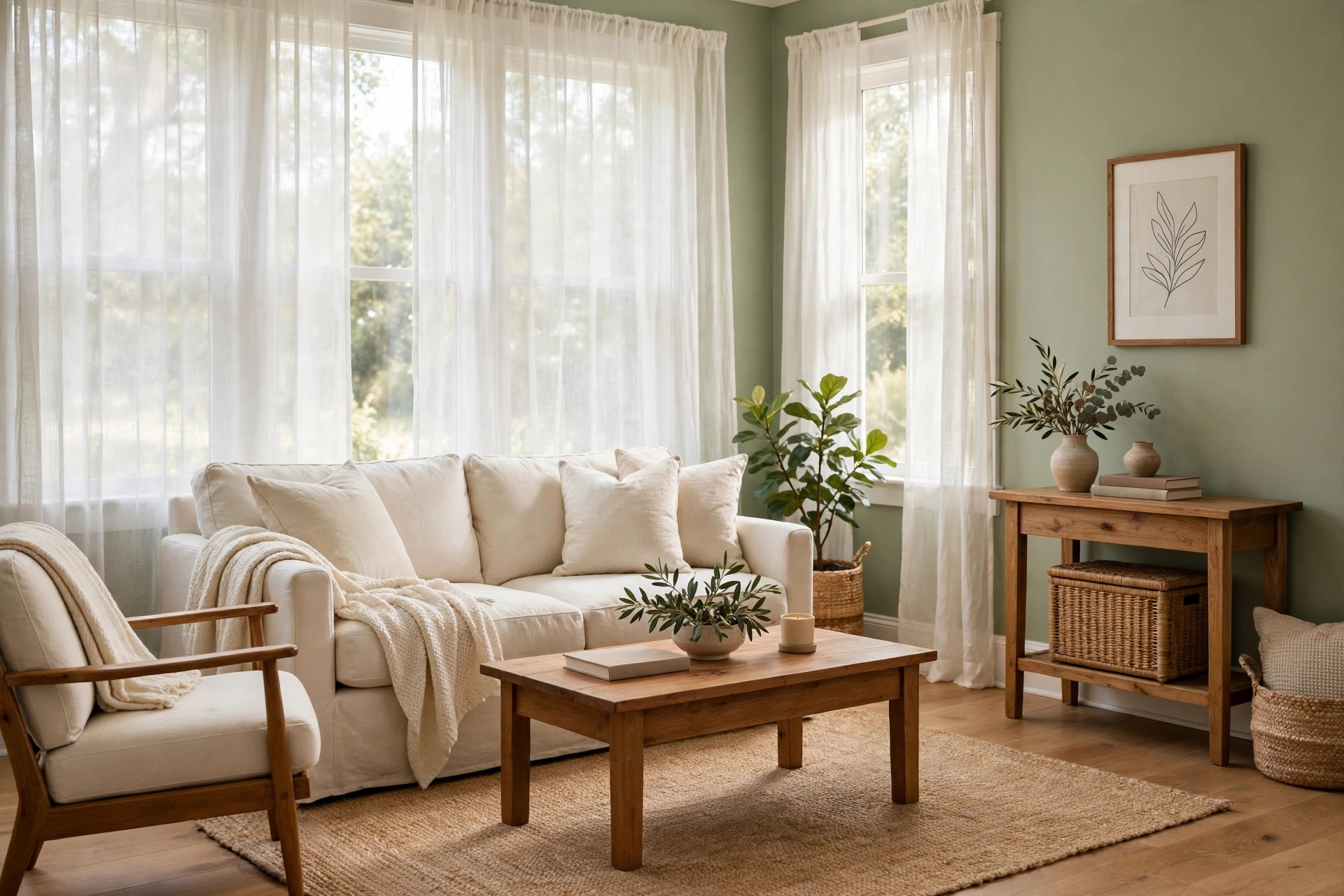
Cream, beige, and warm white trim make sage green look soft and classic. Natural wood furniture in oak or walnut adds warmth. These pairings suit farmhouse and traditional styles.
Dark Accents
Navy blue pillows, black lamp bases, or dark wood shelves give sage walls a modern edge. The contrast makes both colors look richer. This pairing is popular in current American design magazines.
Natural Textures
Rattan, jute, linen, and cotton all pair well with sage green. These materials bring an outdoor feel indoors. They match the plant like quality of the color. A jute rug under a coffee table is a simple way to complete the look.
Metal Finishes
Brass and gold fixtures warm up sage green walls. Brushed nickel keeps the look cool and modern. Avoid mixing too many metal finishes in one room. One or two is enough.
Design ideas at Www.hgtv.com show many living rooms that mix sage green with these pairings. Browse photos to find the style you like best.
Painting Tips for a Smooth Finish
Good preparation makes the difference between a clean job and a messy one. Take time with these steps.
First, clean the walls. Wash them with mild soap and water. Let them dry fully. Paint sticks better to clean surfaces.
Second, fix holes and cracks. Fill small holes with spackle. Sand the patches smooth. Caulk gaps along trim and baseboards.
Third, use painter tape. Tape the edges of trim, windows, and ceilings. Press the tape down firmly so paint does not bleed under it.
Fourth, prime if needed. If your walls are dark, stained, or patched in many spots, use a primer first. Primer helps the sage color look even. Some premium paints include primer in the can. Check the label.
Fifth, cut in the edges. Paint the borders near the ceiling and trim with a brush first. Then roll the large areas. Work in small sections. Keep a wet edge so roller marks do not show.
Sixth, let the first coat dry fully before the second. Read the drying time on the can. Rushing this step causes streaks and peeling.
Care and Upkeep of Painted Walls
Sage green walls are easy to care for. A little regular cleaning keeps them fresh for many years.
Dust the walls every few months with a dry microfiber cloth. Dust builds up slowly and dulls the color over time. Pay attention to areas near vents and above radiators.
Wipe marks and scuffs with a damp sponge and mild soap. Do not scrub hard. Hard scrubbing can polish the finish and leave shiny spots. Eggshell and satin finishes handle gentle wiping well.
Keep a small jar of leftover paint for touch ups. Store it in a cool, dry place. Shake it well before use. Touch up chips as soon as you see them. Small fixes keep the wall looking new.
Repaint the living room every 7 to 10 years. High traffic rooms may need fresh paint sooner. When you repaint, wash the walls first. Light sanding helps the new coat grip the old one.
If you ever want a change without full repainting, consider Peel and stick wallpaper for bedrooms reviews on one wall. It adds pattern without permanent commitment. It also removes cleanly when you are ready for something new.
Safety Tips for Indoor Painting
Painting is safe when you follow basic rules. Keep these in mind.
Ventilate the room. Open windows and run a fan while you paint. Good airflow moves fumes out of the house. This is more important in winter when windows stay closed.
Choose low VOC paint when possible. VOC stands for volatile organic compounds. These chemicals cause the strong paint smell. Low VOC paints have less odor and are safer for children, pets, and people with breathing problems. Most major brands now sell low VOC lines.
Keep paint and supplies away from children and pets. Store cans with lids closed tight. Clean brushes and rollers before they dry out.
Use a sturdy ladder for high walls. Do not stand on furniture. Keep the floor clear of cords and drop cloths bunched underfoot.
Pregnant women should check with a doctor before painting. Modern latex paints are much safer than old oil based paints. Still, extra care is wise.
Frequently Asked Questions
Is sage green paint good for small living rooms?
Yes. Light and medium sage shades make small rooms feel open. The color is soft, so it does not close in the walls. Pair it with white trim and light furniture for the most open feel. Avoid very dark sage in tiny rooms.
What is the most popular sage green paint color in the USA?
Popularity shifts each year. Designers often name shades from Sherwin-Williams, Behr, and Benjamin Moore as top sellers. Visit the color displays at your local store to see current best sellers. Trends change, so choose a shade you love, not just a trendy name.
Does sage green go with gray furniture?
Yes, it does. Sage green has gray in it. This makes it a natural partner for gray sofas and chairs. Add warm wood or brass accents so the room does not feel too cool. A cream rug can bridge the two colors.
Can I paint over dark walls with sage green?
Yes, but use primer first. Dark red or brown walls will show through light sage. One coat of quality primer blocks the old color. Then apply two coats of sage paint. The result will be even and true to the sample.
Where can I buy sage green paint in the USA?
You can buy it at any major home store. Home Depot and Lowe’s carry many brands and shades. Paint specialty stores sell premium lines. You can also order samples and gallons online from brand websites. For a full lime based paint look, some shoppers also ask Where to buy limewash paint in the usa.
How long does living room paint last?
Quality interior paint lasts 7 to 10 years in a living room. Sunlight, moisture, and heavy use shorten its life. Walls near large south facing windows may fade sooner. Touch up paint and gentle cleaning extend the life of the job.
A Short Final Word
Sage green paint for living room walls is a choice that rewards you every day. It is calm without being dull. It is colorful without being loud. It welcomes many styles of furniture and decor.
Take your time choosing the shade. Test samples on your wall. Pick a good finish. Prepare the surface well. The effort you put in before the first brush stroke shows in the final result.
A freshly painted sage green living room feels like a deep breath. It turns an ordinary room into a place where people want to stay a little longer.
Related guides on this site include best exterior house painting cost estimator usa, interior house painters near me reviews, and kitchen cabinet refinishing service cost usa.
References
Accent wall painting ideas for living rooms. (n.d.). Home and garden information. https://accent-wall-painting-ideas-for-living-rooms/ Behr. (n.d.). Paints, primers, and stains. https://www.behr.com Benjamin Moore. (n.d.). Paints and stains. https://www.benjaminmoore.com Bob Vila. (n.d.). Home improvement advice. https://www.bobvila.com Consumer Reports. (n.d.). Product reviews and ratings. https://www.consumerreports.org HGTV. (n.d.). Home and garden ideas. https://www.hgtv.com Lowe’s. (n.d.). Home improvement products. https://www.lowes.com Sherwin-Williams. (n.d.). Paints and coatings. https://www.sherwin-williams.com The Home Depot. (n.d.). Home improvement products. https://www.homedepot.com The Spruce. (n.d.). Home and garden advice. https://www.thespruce.com This Old House. (n.d.). Home renovation guidance. https://www.thisoldhouse.com Www. (n.d.). Home and garden information. https://www
Was this guide helpful?

About Lisa Anderson
The My Garden US editorial team writes practical, in-depth home and garden guides for American homeowners — tested advice, no fluff.
You May Also Like

Best Degreaser Before Painting Cabinets: A USA Buyer’s Guide
May 2, 2026 0 views
Painting Contractor License Check Near Me: How to Verify Before You Hire
April 23, 2026 0 views
Exterior Wood Siding Painting Cost USA: A Complete Guide
October 4, 2026 4 views