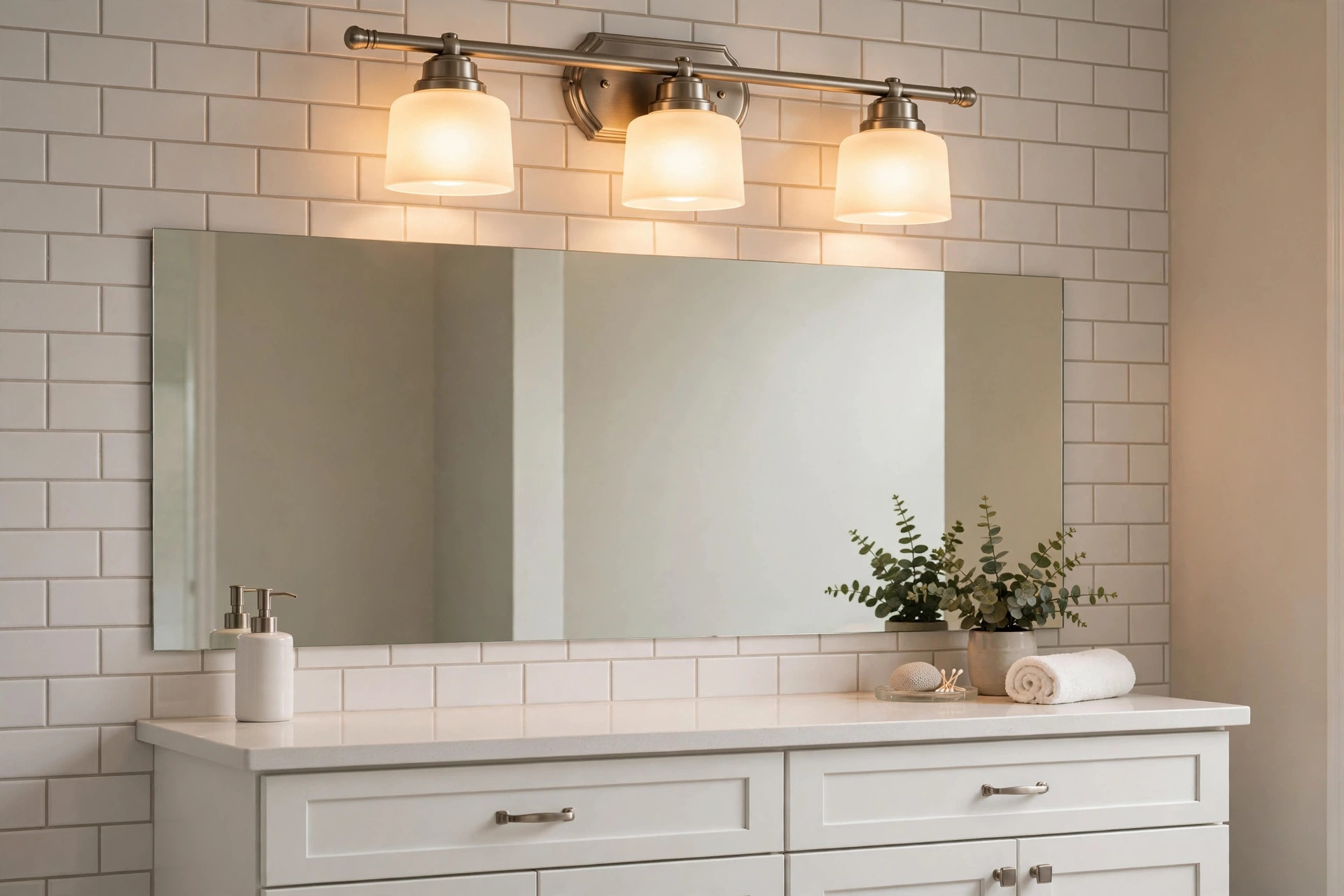

Good light makes a bathroom feel clean and calm. Bad light makes the same room feel cold and small. In California, where building rules are strict about energy use, the choice of light matters even more. This guide to bathroom vanity light bars california homes usa walks through the basics in plain terms: what these bars are, why they matter, how to choose one, what they cost, and how to keep them working for years.
A vanity light bar is a long fixture with several bulbs in a row. It mounts over the bathroom mirror, or sometimes on each side of it. Its job is simple. It lights the face with soft, even light. No harsh shadows. No glare. When the light is right, shaving and makeup go better, and the room looks its best.
Why It Matters
The bathroom is one of the few rooms where light does real work. A single ceiling light throws shadows under the chin and eyes. That is why so many people look tired in bathroom mirrors even when they are not. A vanity light bar spreads light across the face from several points at once. The result is kinder and more even.
California adds its own reason to choose well. The state has an energy code called Title 24. It sets strict rules for how much energy lights may use in new and remodeled homes. Fixtures must be high efficiency in many cases. A homeowner who picks the wrong bar may pass inspection trouble or waste money on power. The right bar meets the rules and still gives warm, useful light.
There is also the matter of resale. California buyers look at bathrooms closely. A dated or dim bath can drag down a whole showing. A clean, well-lit vanity area costs little and lifts the feel of the room. Remodeling experts at This Old House often note that small bathroom updates pay off well when a home goes on the market.
Comfort matters too. Mornings run on routine. Clear light helps the routine go faster and with fewer mistakes. Evenings call for softer light that does not jar the eyes. Many modern light bars let the owner dim the output. That one feature covers both needs.
How to Choose the Right Bar: Bathroom Vanity Light Bars California Homes Usa
Size and Length
Measure the mirror first. A good rule is to pick a bar that is about two thirds as wide as the mirror, or slightly less. A bar that runs past the mirror edges looks heavy. A bar that is too short leaves dark corners.
Standard widths run from 18 inches to 48 inches. Small half baths often take a two-light bar near 18 to 24 inches. Full baths with one sink suit a 24 to 36 inch bar. Double sinks may need one wide bar or two separate bars, one over each basin. Count the bulbs too. More bulbs spread light more evenly, but each bulb adds to the energy use.
Brightness
Brightness is measured in lumens. For a bathroom vanity, 500 to 800 lumens per sink is a common target. A dim bar forces the eyes to work. An overly bright bar glares off the mirror.
LED bars give high light for low wattage. A 15-watt LED bar can match an old 60-watt bulb line. That matters in California, where the energy rules push owners toward LED anyway. Guides from HGTV remind buyers to check the lumen rating on the box rather than guessing from the size of the fixture.
Color of Light
Light color is measured in Kelvin. Lower numbers look warm and yellow. Higher numbers look cool and blue. For bathrooms, 2700K to 3000K is warm and flattering. It looks like morning light. Many owners prefer it for daily use.
Color accuracy matters as well. It is measured by the CRI, the color rendering index. A CRI of 90 or more shows skin tones and colors true. Cheap lights with low CRI can make skin look green or gray. That is a poor trade for a room where the mirror is the main tool.
Style and Finish
The bar should match the other metal in the room. Common finishes are brushed nickel, chrome, matte black, and oil-rubbed bronze. Brushed nickel hides water spots well. Chrome shines but shows spots. Matte black suits modern rooms.
The shape of the shades shapes the light. Frosted glass or white shades soften and spread light. Clear glass shows the bulb and can glare. Opal shades give a classic look that fits most homes. Buyers who want ideas for pairing fixtures can browse Moen and Delta Faucet, which show full bathroom sets with matched finishes.
Mounting Position
The classic spot is above the mirror, six to ten inches over the top edge. Center the bar on the mirror. Side mounting, one bar on each side of the mirror at eye level, gives the most even face light and is favored by designers. It needs wall space on both sides, which small baths may lack.
Check the junction box before buying. Most bars mount to a standard box. If the old light used a small box, a wide bar may need a brace or a new box. An electrician can handle this in a short visit.
Types and Options
LED integrated bars. The LEDs are built in. There is no bulb to change. They use little power and last for years. Most new bars sold in California are this type, because they meet Title 24 with ease. The trade is that when the LED fails, the whole bar is replaced.
Bulb-based bars. These take standard bulbs, often LED bulbs with a medium base. The bulbs can be swapped for a new color or brightness later. They cost less up front. They also let the owner keep a favorite fixture and just change the bulbs to meet energy rules.
Dimmable bars. A dimmer switch or a built-in dimming control lets the owner set the mood. Full brightness for morning tasks. Low light for a late-night visit. Make sure the dimmer matches the LED driver, or the light may buzz or flicker.
Smart bars. Some bars link to home systems or phone apps. They can change color temperature through the day. They cost more and add wiring or setup steps. For most homes, a simple dimmable LED bar does the job.
Damp-rated bars. Bathrooms are wet places. A bar near a shower or tub should carry a damp or wet rating. The rating is printed on the fixture. A dry-rated bar in a wet spot is a code problem and a safety risk.
Retailers like Home Depot and Lowe’s carry wide ranges of all these types, with filters for size, finish, and rating that make side-by-side comparison easy.
Cost and Price
Prices run wide. A basic two-light LED bar can cost 40 to 80 dollars. A mid-range three or four-light bar in a name-brand finish runs 80 to 180 dollars. Designer bars with smart controls can reach 250 dollars or more.
Labor adds to the bill when an electrician is needed. A simple swap of one bar for another often takes under an hour and costs 100 to 200 dollars in most California markets. Work that moves the box, adds a dimmer, or runs new wire costs more. Always get the price in writing before work starts.
Energy cost is small. An LED bar that runs an hour a day may add only a few dollars a year to the power bill. The savings come against old incandescent bars, which can cost ten times as much to run. Over the life of the fixture, the LED pays for itself.
Owners planning a wider remodel should budget the light with the rest. A new bathroom sink vanities buying guide usa helps pair the bar with the right vanity size, since the two are measured together. Matching the scale of both keeps the room in balance.
Care and Upkeep
LED vanity bars ask little. Dust the shades once a month with a dry cloth. Wipe glass shades with a damp cloth and mild soap when spots show. Never spray cleaner straight at the fixture. Spray the cloth instead, then wipe.
Check the mounting screws once a year. Bathrooms shake a little from doors and fans. A loose bar can sag or pull from the box. Tighten gently. Do not over-tighten, which can crack the backplate.
If a bulb-based bar flickers, check the bulb first. A loose bulb is the most common cause. If an LED bar flickers, the dimmer may be the fault. Not all dimmers work with all LEDs. The maker lists approved dimmers on its site or in the box.
Keep the area dry. Wipe splashes from the fixture. Long dampness can spot chrome and pit cheap finishes. A good bath fan cuts this risk. A quiet fan that the family actually leaves on does more for the light bar than any polish.
Safety
Turn off the breaker before any work on the fixture, not just the wall switch. Switches can be wired wrong. The breaker is the safe path. Test with a non-contact tester before touching wires.
Respect the damp rating. Use a damp-rated bar anywhere steam reaches, and a wet-rated one inside the shower zone. The package states the rating. If it is missing, do not install the bar near water.
Do not exceed the wattage marked on the fixture. With LED bars this is rarely an issue, but bulb-based bars have a firm limit per socket. Over-wattage bulbs can melt shades and scorch wire.
California homes with old wiring need care. Aluminum wire or cloth-wrapped wire should be handled by a licensed electrician. The small cost of a service call is cheap against the risk. Safety guides from Bob Vila stress the same point: when in doubt, call a pro.
Ground the fixture. The green or bare wire must connect to the ground wire in the box. A missing ground is a shock risk, especially in a wet room.
Frequently Asked Questions
Q: What size vanity light bar fits a 30-inch mirror? A: A bar 18 to 24 inches wide suits a 30-inch mirror. It covers most of the width without running past the edges. Center it over the mirror and mount it six to ten inches above the top edge.
Q: Are LED vanity light bars required in California? A: California Title 24 does not name brands, but it sets high-efficiency rules that most new and remodeled bathrooms meet with LED fixtures or LED bulbs. Check the current code or ask the local building office before a remodel. An inspector can confirm what the job needs.
Q: Can I put a vanity light bar on each side of the mirror instead of above it? A: Yes. Side mounting at eye level gives the most even light on the face and is loved by designers. It needs clear wall space on both sides of the mirror. Each bar should be 18 to 24 inches tall for a standard mirror.
Q: Why does my new LED bar flicker with the old dimmer? A: Old dimmers were built for incandescent bulbs. Many do not work with LED drivers. The fix is a dimmer rated for LED use, ideally one the bar maker lists as approved. A short swap by an electrician ends the flicker.
Q: How long does an LED vanity light bar last? A: Most are rated for 25,000 to 50,000 hours. At one hour a day, that is decades. Heat and poor wiring shorten life. Keep the fixture clean and dry and it will usually outlast the paint job around it.
Q: Should the light bar match the faucet finish? A: It looks best when it does. Matching the bar to the faucet and other hardware gives the room a finished feel. Makers like Kohler and American Standard sell matched lines that make this easy. If a full match is not possible, stay in the same tone family, warm with warm or cool with cool.
A Short Final Word
A bathroom vanity light bar is a small purchase with a big daily effect. Measure the mirror. Pick a warm color and a high CRI. Meet the California energy rules with LED. Match the finish to the room. Owners who also plan to update the mirror may like the ideas in a led bathroom mirrors buying guide usa, since built-in mirror lighting and a bar can work as a team. And when the vanity area is done, fresh storage keeps the counter clear; a bathroom linen cabinets buying guide usa covers that next step. Do these few things, and the bathroom will serve well every morning for years.
References
American Standard. (n.d.). Bathroom and kitchen products. https://www.americanstandard.com Bob Vila. (n.d.). Home improvement advice. https://www.bobvila.com Delta Faucet. (n.d.). Kitchen and bathroom faucets. https://www.deltafaucet.com HGTV. (n.d.). Home and garden ideas. https://www.hgtv.com Kohler. (n.d.). Bathroom and kitchen fixtures. https://www.kohler.com Lowe’s. (n.d.). Home improvement products. https://www.lowes.com Moen. (n.d.). Faucets and plumbing fixtures. https://www.moen.com The Home Depot. (n.d.). Home improvement products. https://www.homedepot.com This Old House. (n.d.). Home renovation guidance. https://www.thisoldhouse.com
Was this guide helpful?

About Sarah Mitchell
The My Garden US editorial team writes practical, in-depth home and garden guides for American homeowners — tested advice, no fluff.
You May Also Like
Rain Shower Heads for Texas Homes: A Full Buyer’s Guide
February 11, 2026 0 views
Bathroom Sink Vanities California Homes USA: A Complete Buyer’s Guide
May 2, 2026 0 views
Bathroom Linen Cabinets California Homes USA: A Full Guide
July 5, 2026 0 views