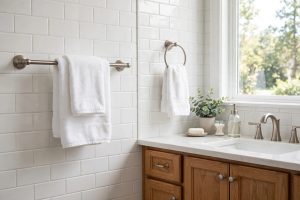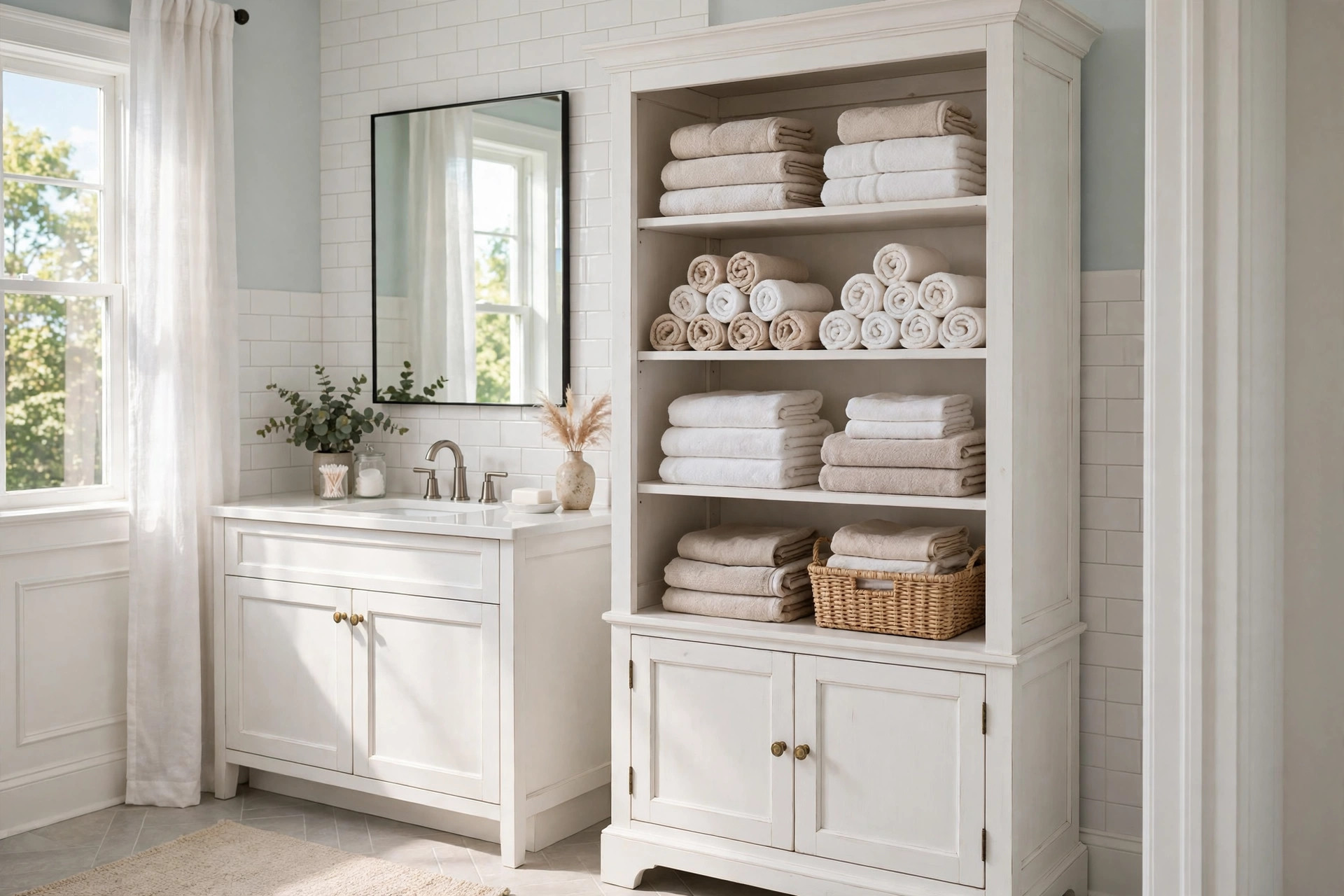

A bathroom linen cabinet is one of the most useful pieces of storage a bath can hold. It keeps towels, washcloths, and spare goods in one place, and it frees the counter and the floor from clutter. This bathroom linen cabinets buying guide usa gives American shoppers a plain, step-by-step look at sizes, materials, styles, and costs. Read it once, and you will know what to look for before you spend a dollar.
Why a Linen Cabinet Matters
Most baths have too little storage. Towels pile up on the counter. Extra toilet paper rolls sit on the tank lid. Soap and cleaners crowd the space under the sink. A linen cabinet solves this with tall, narrow shelving that fits where a wide dresser never could. It takes the mess off the floor and puts each item within reach.
A good cabinet also protects your linens. Towels stored in a closed cabinet stay free of dust and splashes. Bath goods keep their shape longer. In a small bath, a well-placed cabinet can make the whole room feel calm and orderly. That is why builders and remodelers treat the linen cabinet as a basic part of a finished bath, not a luxury add-on.
What to Look for When You Shop: Bathroom Linen Cabinets Buying Guide Usa
Measure First
Start with a tape measure. Note the width, depth, and height of the spot where the cabinet will stand. Most freestanding linen cabinets are 15 to 25 inches wide and 12 to 16 inches deep. Heights run from 55 to 72 inches. Leave at least two inches of clearance above the top for air flow. If the door swings open, make sure it does not hit the toilet or the vanity.
Frame and Build Quality
Open and close the doors in the store or read the build details online. Solid wood frames hold up best. Look for doors that swing true and stay shut. Shelves should be fixed with solid pegs or screws, not thin clips that bend. The back panel should be thick enough that the unit does not sway. A cabinet that feels solid in the shop will serve you well at home.
Shelf Depth and Layout
Deep shelves hold folded bath towels. Shallow shelves suit washcloths and small goods. Many cabinets mix fixed and adjustable shelves so you can set the spacing to your needs. Count how many shelves you get and check their weight rating. A cabinet with five or six shelves gives more useful space than one with only three, even if the heights are close.
Finish and Style
White and off-white finishes match most baths. Wood tones add warmth. Gray and navy finishes suit modern rooms. Pick a finish that resists moisture. Painted finishes should be sealed with a smooth top coat. Raw wood needs a sealer or it will swell in a damp bath. Match the finish to your vanity or trim for a clean look, or match your towel hardware for contrast.
Types of Bathroom Linen Cabinets
Freestanding Cabinets
The freestanding model is the most common. It stands on its own legs against the wall. You can move it from one bath to another. Most come assembled or need only simple assembly. If you rent your home, a freestanding unit is the wise choice, since you can take it with you when you move.
Recessed Cabinets
A recessed cabinet sits inside the wall between the studs. It saves floor space and gives a built-in look. It needs a wall with enough depth and no pipes or wires in the way. Install it during a remodel if you can. A recessed unit costs more to install, but it frees the room and looks sharp.
Corner Cabinets
A corner cabinet fits the dead corner of a small bath. It turns wasted space into storage. Corner models are often shorter than tall cabinets, so check the height before you buy. They pair well with a mirrored medicine cabinet above the sink for a full storage plan.
Over-the-Toilet Cabinets
These units stand over the tank and use the space above the toilet. They are narrow and tall, with shelves or doors. They cost less than full linen cabinets and suit renters. Make sure the unit is stable and does not rock. Check local rules if your bath has grab bars or other needs, since clearances matter.
Materials Compared
Solid Wood
Solid wood costs the most and lasts the longest. It holds screws well and takes refinishing if the finish wears. Oak, maple, and birch are common. Keep the bath vented so the wood does not soak up steam day after day. With care, a solid wood cabinet can serve for decades.
Engineered Wood
Engineered wood, such as MDF or particle board with a veneer face, costs less and looks fine. It resists warping better than solid wood. The weak point is the edge. If the edge banding chips, water can get in and the board will swell. Buy a unit with sealed edges and good reviews for damp rooms.
Metal
Metal cabinets are rare in baths but do exist. They resist water well and clean with a wipe. They can look cold in a soft room, though. If you like the industrial style, a metal unit will hold up fine. Check that the finish is rust-proof.
Installation and Assembly Tips
Most freestanding linen cabinets arrive in a flat box with a guide. Read the guide fully before you touch a part. Lay out every piece on a soft cloth so the finish does not scratch. Count the screws and pegs against the parts list. If a piece is missing, call the maker before you start. Starting with missing parts leads to a weak build.
Work on the floor near the spot where the cabinet will stand. Tighten screws in the order the guide shows. Do not force a dowel that will not fit. A forced joint splits the board and weakens the whole unit. When the frame is up, stand it and check that it sits flat. Rock it gently. If it rocks, adjust the feet or shim one side. A stable cabinet lasts longer and feels safe.
Anchor the unit before you load the shelves. Find a stud with a stud finder. Drive the anchor screw through the back panel into the stud. On drywall with no stud behind, use a proper hollow-wall anchor. Do not hang heavy items on the doors. The hinges are not made for extra load. Once anchored, load the heaviest items low and light goods high. This keeps the center of gravity down and the cabinet steady.
Tools You May Need
Keep a Phillips screwdriver, a flat screwdriver, and a small level handy. A stud finder helps with anchoring. A rubber mallet seats dowels without marks. None of these cost much, and they make the job go fast. If the guide calls for an Allen key, it usually ships in the box.
Cost and Price Ranges
Linen cabinet prices in the USA run from about 60 dollars for a basic over-the-toilet shelf unit to 600 dollars or more for a tall solid wood piece. Most good freestanding cabinets fall in the 120 to 350 dollar range. Recessed models cost more to buy and need a contractor to install, so plan for several hundred dollars extra.
Shipping adds cost for large units. Some stores offer free store pickup, which saves money. Watch for holiday sales in January, July, and November, when bath goods often drop in price. Compare the same unit across Home Depot, Lowe’s, and maker sites before you buy.
Matching Your Cabinet to the Bath
Small Baths
In a small bath, pick a narrow cabinet no wider than 18 inches. Place it in the corner or beside the vanity. A light finish will keep the room feeling open. Pair it with a brushed towel holder on the wall so towels stay handy without taking shelf space.
Large Baths
In a large bath, you can use two cabinets or one wide unit. Place one near the shower for clean towels and one near the door for spare goods. Match both finishes to the vanity for a planned look. Kohler and American Standard offer bath suites that make matching simple.
Master Suites
A master bath gets heavy daily use. Choose a cabinet with at least five shelves and a finish that hides water spots. Solid wood or high-grade engineered wood will stand up to years of steam. Moen and Delta Faucet publish finish guides that can help you match the cabinet to your faucets.
Care and Upkeep
Wipe the cabinet with a damp cloth once a week. Dry it after so water does not sit on the finish. Do not use harsh cleaners or steel pads, which scratch paint and veneer. Once a year, tighten the hinges and shelf pins. If a door sags, most hinges adjust with a screwdriver.
Keep the bath vented. Run the fan during and after showers so steam does not settle on the wood. Do not stack damp towels inside a closed cabinet. Let them dry first, or the shelves will hold mildew. A small vent or gap in the back panel helps air move through.
Safety Notes
Anchor tall cabinets to the wall. A tall, narrow unit can tip if a child climbs it or if the floor shifts. Most cabinets ship with a wall anchor kit. Use it. This is one of the most important steps in this bathroom linen cabinets buying guide usa, and it takes only a few minutes.
Keep cleaners and medicines out of low shelves if small children use the bath. Store them high or in a locked shower niche insert style bin on an upper shelf. Check that the finish is low in volatile compounds if the maker lists it. Good ventilation keeps the air safe as well.
Frequently Asked Questions
How tall should a bathroom linen cabinet be?
Most run 60 to 72 inches tall. Pick a height that fits under your ceiling with room to spare. Taller units hold more, but the top shelves are hard to reach. A 66-inch unit suits most adults.
Do I need to anchor the cabinet?
Yes. Anchor any cabinet taller than it is wide to a wall stud. The anchor kit that ships in the box is fine for most walls. On tile walls, use the right bit and anchors so you do not crack the tile.
Can a linen cabinet go next to the shower?
It can, but keep it a few feet from direct spray. Splashes will ruin a wood finish over time. A vent fan nearby helps. In a wet spot, choose a unit rated for damp rooms or a metal model.
What width fits a small bath?
Choose 15 to 18 inches wide. Measure the wall and allow room for the door to open. A corner unit can fit where a straight cabinet will not.
Is assembly hard?
Most freestanding units need 30 to 60 minutes with basic tools. Read the guide first and lay out the parts. If a store offers assembly for a small fee, it can be worth it for a large unit.
Wood or engineered wood for a damp bath?
Solid wood lasts longer if the bath is well vented. Engineered wood costs less and resists warp. Either works. The key is sealed edges, a good finish, and a fan that runs after each shower.
A Short Final Word
The right linen cabinet brings order to the bath with one simple piece. Measure your space, pick a solid build, and anchor it to the wall. Sites like The Spruce, This Old House, HGTV, and Bob Vila all publish bath storage guides worth a read before you buy. Take your time, compare two or three models, and choose the one that fits your room and your budget. Your towels will thank you.
References
American Standard. (n.d.). Bathroom and kitchen products. https://www.americanstandard.com Bob Vila. (n.d.). Home improvement advice. https://www.bobvila.com Delta Faucet. (n.d.). Kitchen and bathroom faucets. https://www.deltafaucet.com HGTV. (n.d.). Home and garden ideas. https://www.hgtv.com Kohler. (n.d.). Bathroom and kitchen fixtures. https://www.kohler.com Lowe’s. (n.d.). Home improvement products. https://www.lowes.com Moen. (n.d.). Faucets and plumbing fixtures. https://www.moen.com The Home Depot. (n.d.). Home improvement products. https://www.homedepot.com The Spruce. (n.d.). Home and garden advice. https://www.thespruce.com This Old House. (n.d.). Home renovation guidance. https://www.thisoldhouse.com
Was this guide helpful?

About Robert Taylor
The My Garden US editorial team writes practical, in-depth home and garden guides for American homeowners — tested advice, no fluff.
You May Also Like

Double Sink Vanities for California Homes: A Practical USA Guide
January 27, 2026 0 views
Bathroom Vanity Light Bars Reviews Buying Guide USA
February 13, 2026 0 views
Bathroom Linen Cabinets: Reviews and Buying Guide for USA Homes
August 7, 2026 0 views