Growing your own pistachios sounds like a fantasy reserved for California orchards, but home gardeners in warm regions can absolutely do it - with the right varieties, both sexes planted, and patience. Learning how to grow pistachio starts with understanding one fact: these trees are dioecious, meaning male and female flowers grow on separate trees, and a lone female will never set a single nut without a male nearby.
Table of Contents
Table of Contents

Photo: Wikimedia Commons
Pistachios suit zones 7 through 11 and demand long, hot summers, sharp drainage, and full sun. They tolerate drought and even salty soil where other fruit trees fail. This is a long game - do not expect real crops for seven to ten years - so plant with the future in mind. Check your USDA zone planting dates and be honest about your summer heat before committing.
Choosing Varieties
When it comes to how to grow pistachio, getting the details right makes all the difference.

Many homeowners find that how to grow pistachio is easier than they expected once they know the basics.
You need at least two trees: a fruiting female and a pollen-producing male, and they must bloom at the same time. Kerman is the standard female - large, high-quality nuts, widely available as grafted trees. Peters is the classic male pollinizer matched to Kerman's bloom time. Newer pairings include Golden Hills (female) with Randy (male), and Lost Hills (female), which crop a bit earlier.
Buy grafted stock of known sex from a reputable nursery - seedling pistachios are a gamble on sex (roughly half will be male) and take even longer to bear. Gardenia.net has profiles of pistachio cultivars for warm regions. The standard ratio is one male for every eight to ten females; for a home planting of one or two females, a single male suffices. Plan the male-to-female ratio when you buy, because adding a male years later means waiting all over again.
Gardeners with room for more warm-climate fruits might also try jujube, which shares pistachio's love of heat and drought. If you also grow figs, you will appreciate a similarly tough tree - though nothing else in the home orchard demands the two-sex planning that pistachio does.
When and How to Plant
Many homeowners find that how to grow pistachio is easier than they expected once they know the basics.
The key to how to grow pistachio is choosing the right approach for your space and budget.
Plant in spring after the last frost, spacing trees about 20 feet apart - pistachios grow into broad, spreading trees 20 to 30 feet tall and wide. Choose the hottest, sunniest spot available with excellent drainage; a south-facing slope is ideal. Wind matters too, since pistachios are wind-pollinated - plant the male upwind of the females so spring breezes carry pollen across the planting. Clemson Cooperative Extension covers wind-pollinated tree planting basics.
Dig a hole twice as wide as the root ball but no deeper, set the tree at the same depth it grew in the container, and water deeply. Pistachios develop deep roots quickly, so transplant only young container trees - bare-root or large specimens establish poorly. Mulch three inches deep in a wide ring, keeping mulch away from the trunk. Stake only in windy sites, removing the stake after the first season. UF IFAS Gardening Solutions offers warm-climate tree planting guidance that applies well here.
Planting Cheat Sheet
- Plant in spring, 20 feet apart, in the hottest sunny spot.
- Buy grafted trees: 1 male per 8–10 females, matched bloom times.
- Plant the male upwind for wind pollination.
- Sharp drainage is essential; mulch and water in well.
Soil and Sun
The key to how to grow pistachio is choosing the right approach for your space and budget.
With a little planning, how to grow pistachio can fit even a busy schedule.
Full sun - as much as you can give - and well-drained sandy or gravelly soil. Pistachios demand sharp drainage and tolerate drought, alkaline soil, and even salty soil where other fruit trees fail. Heavy clay that stays wet is the one dealbreaker; amend heavily with grit or plant on a mound.
A pH from neutral to moderately alkaline suits them; they are among the most salt-tolerant fruit trees grown. Do not enrich the planting hole with rich organic matter - lean, mineral soil grows tougher trees. The USDA PLANTS Database details pistachio's soil tolerances. This is a tree that evolved in harsh, dry hillsides, and it resents coddling the way a desert plant should.
Watering and Feeding
With a little planning, how to grow pistachio can fit even a busy schedule.
Before you start, it helps to understand how how to grow pistachio works in real homes.
Water young trees regularly the first two seasons so roots establish deeply - then taper off decisively. Mature pistachios need little water and are genuinely drought tolerant; overwatering in summer is a common home-gardener mistake that produces weak growth and disease. Deep, infrequent soakings beat frequent sprinkles at every stage.
Do not overwater in summer - this warning bears repeating, because everything else in the garden wants water then and the pistachio does not. Once established, many home trees thrive on rainfall alone in Mediterranean climates, needing supplemental water only in extended drought. Feed lightly if at all; a balanced fertilizer in spring for young trees, nothing for mature ones in decent soil. Pale, weak growth in a young tree may want feeding, but mature trees in average ground need nothing.
Care Through the Season
Before you start, it helps to understand how how to grow pistachio works in real homes.
A good plan for how to grow pistachio saves time, money, and frustration.
Prune to an open-center shape when young: select three to five well-spaced scaffold branches and remove the rest, then leave the tree mostly alone. Mature pistachios need only light pruning to remove dead wood and crossing branches. Prune in winter when the tree is dormant.
Pistachios have few pests in home plantings - one of their virtues. Occasionally scale or navel orangeworm appears in some regions; good sanitation (removing unharvested nuts, which harbor pests) prevents most problems. Clean up every fallen nut at season's end - the few minutes of tidying denies overwintering pests their shelter and keeps the following year's crop cleaner with no spraying at all. Be patient, since they are slow to establish: the first few years show modest growth while the deep root system develops, then the canopy takes off.
Because the trees are wind-pollinated, avoid planting where buildings or dense evergreens block spring breezes between the male and females. And remember the timeline: seven to ten years to real crops. This is a tree you plant for the future - for the garden you will have in a decade, not the one you have now.
The Pollination Plan
Pollination is where home pistachio plantings succeed or fail. Confirm with the nursery that your male's bloom overlaps your female's - Kerman and Peters are the proven pair, and newer combinations like Golden Hills and Randy are bred to match. One male serves up to ten females, and for most home plantings that means exactly one male tree. Mark which tree is which at planting time with a durable tag; years later, when both are large and leafless in winter, you will be glad you did.
Harvest
A good plan for how to grow pistachio saves time, money, and frustration.
For most people, how to grow pistachio comes down to a few smart choices.
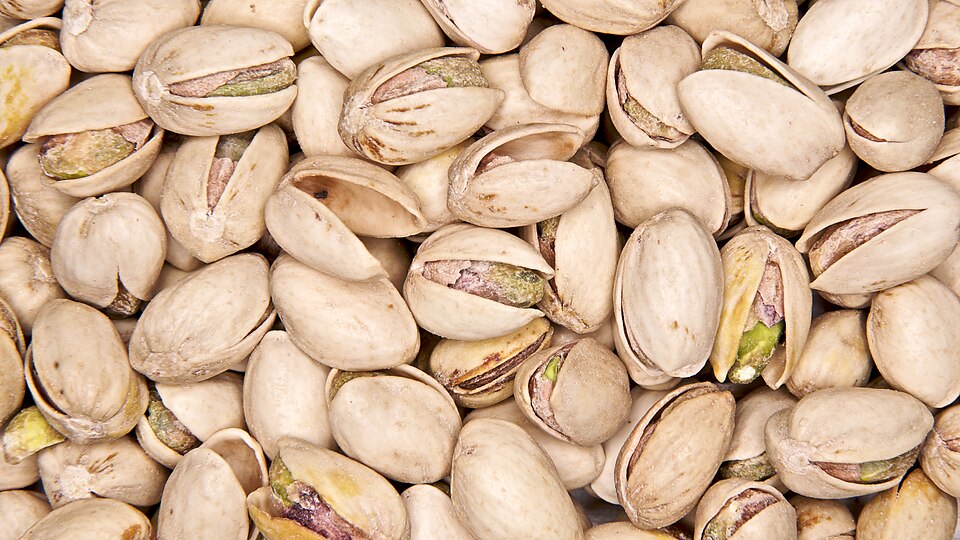
Do not expect real crops for seven to ten years - pistachios test patience like few other fruit trees. When bearing begins, harvest when the hulls split open naturally, revealing the shell inside. This splitting is the ripeness signal; unripe nuts hold their hulls tight.
Shake branches or pick by hand, gathering promptly - nuts left on the tree invite pests and staining. A tarp spread under the tree makes gathering easy: shake the branches and collect what falls. Remove the hulls quickly after harvest (they stain fingers and concrete alike, so wear gloves and work over a washable surface), then dry the in-shell nuts in a warm, airy spot for several days before storing. Properly dried pistachios keep for months in a cool, dry place, or longer refrigerated. Crack and eat fresh, or roast lightly with salt - homegrown pistachios, eaten within days of harvest, have a sweetness and richness that store-bought nuts cannot match. The Old Farmer's Almanac has nut-harvesting and storage guidance.
Troubleshooting
For most people, how to grow pistachio comes down to a few smart choices.
If you are new to how to grow pistachio, start with the simplest option and build from there.
Female tree never sets nuts. No male nearby, or the male's bloom does not overlap. Confirm you have a male tree and that the varieties are matched - a lone female, or two females, will never crop.
Young tree grows slowly. Normal for the first few years while roots establish. Ensure good drainage and full sun; do not overwater or overfeed to force growth.
Leaves yellow in summer. Usually overwatering - the most common home pistachio mistake. Cut back water sharply; established trees want dry summers.
Nuts are empty (blanks). Poor pollination or extreme heat during bloom. Ensure the male is upwind and blooming simultaneously; in very hot regions, afternoon shade during bloom week can help, though site selection matters more.
Hull does not split. Nuts picked too early, or the variety needs more heat to finish. Wait for natural splitting; in marginal climates, choose early varieties like Lost Hills.
Gophers or ground squirrels damage roots. Young pistachio roots are vulnerable. Plant in wire baskets in problem areas, and keep the surrounding ground clear of cover where rodents hide.
For gardeners in zones 7 through 11 with long, hot summers and sharp drainage, learning how to grow pistachio is a long-term project with a delicious payoff - a tough, beautiful, drought-proof tree that eventually produces one of the world's favorite nuts. It is a legacy planting in the best sense: the tree you plant today feeds the household you will be a decade from now. Plant both sexes, water the young trees, then wait. The decade passes faster than you think.
References
If you are new to how to grow pistachio, start with the simplest option and build from there.
When it comes to how to grow pistachio, getting the details right makes all the difference.
UF IFAS Gardening Solutions. (n.d.). Pistachio growing in warm climates. University of Florida. https://gardeningsolutions.ifas.ufl.edu/
USDA National Agricultural Library. (n.d.). Fruit and tree nut resources. U.S. Department of Agriculture. https://www.nal.usda.gov/
Missouri Botanical Garden. (n.d.). Pistacia vera. https://www.missouribotanicalgarden.org/
Old Farmer's Almanac. (n.d.). Growing nut trees. Yankee Publishing. https://www.almanac.com/
When it comes to how to grow pistachio, getting the details right makes all the difference.
Was this guide helpful?

About My Garden US
The My Garden US editorial team writes practical, in-depth home and garden guides for American homeowners — tested advice, no fluff.
You May Also Like

Sunflower Seed Packs for Florida Homes: A Complete Growing Guide
February 14, 2026 22 views
How to Grow Plantain: The Weed That's a Garden Herb
November 15, 2026 0 views
How to Grow Calendula: Easy USA Flower Guide
October 9, 2026 44 views