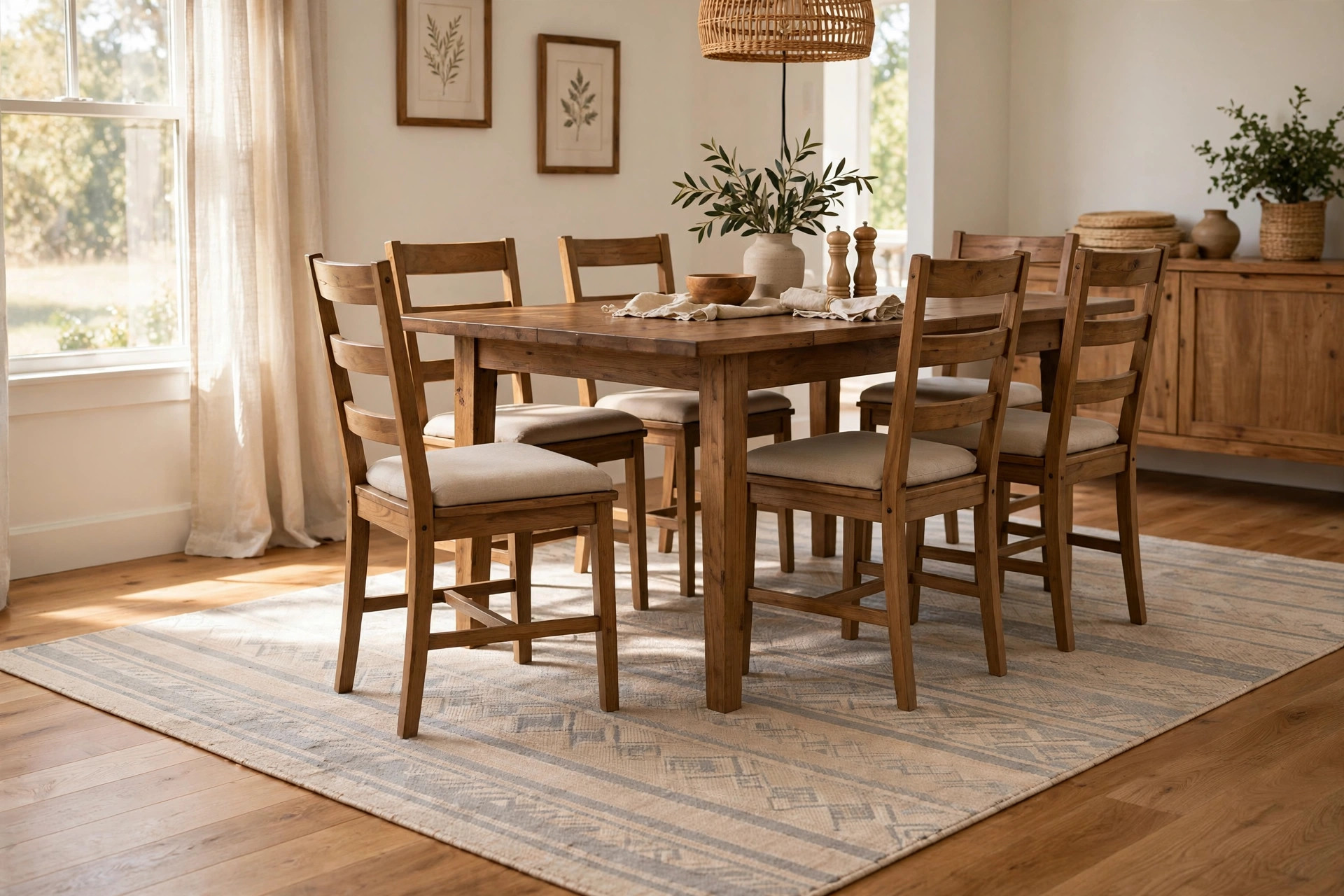

The best rug for under dining table placement can change a dining room in a single afternoon. A bare floor feels cold and loud. A rug brings warmth, cuts noise, and gives the table a clear home in the room. This guide walks through size, material, pile, shape, cost, cleaning, and safety so you can pick with confidence.
Why the Right Rug Matters in a Dining Room
A dining table is the largest piece of furniture in most dining rooms. The floor under it takes more wear than any other spot in the house. Chairs slide back and forth several times a day. Feet push against the floor. Food drops. Shoes track grit across the surface.
A rug absorbs this daily wear. It protects wood floors from chair scratches. It guards tile and stone from the small chips that sliding chairs can cause. It also protects the rug budget, because a rug is far cheaper to replace than a refinished wood floor.
Sound is another reason. Hard floors bounce noise. Plates, voices, and chair legs echo off bare wood or tile. A rug softens the room. Meals feel calmer. Talk is easier to hear. In open-plan homes, where the dining area sits next to the kitchen and living room, a rug also marks the dining zone. The eye sees the border of the rug and reads that space as one room inside the larger room.
Comfort matters too. Feet rest better on a soft surface than on hard tile. In cold months a rug takes the chill off the floor underfoot. Guests notice this more than they notice almost any other detail.
Finally, a rug adds style. It is the largest piece of pattern or color in the room. It can tie wall color, curtains, and chair fabric together. The right choice makes the whole room look planned. The wrong choice, usually a rug that is far too small, makes the room look unfinished.
What to Look For When You Choose: Best Rug for under Dining Table Usa
Start with size. Measure the table, then add room for the chairs. When a person sits down and pulls out a chair, all four chair legs should stay on the rug. A common rule is to add at least 24 inches on each side of the table. For a standard table that seats six, this often means a rug of 8 by 10 feet or larger.
A rug that is too small is the most common mistake. Chair legs hang off the edge. When a guest sits back down, the back legs catch on the rug edge and the chair tips. The room looks cramped. Measure twice before you buy.
Next, think about material. A dining room rug faces spills, crumbs, and heavy traffic. Natural fibers like wool are strong and resist dirt, but they can be costly and they need care. Flatweave cotton rugs are light, washable in some cases, and low in price. Synthetic fibers such as polypropylene and nylon resist stains well and clean with plain water. Many American families choose a synthetic rug for the dining room even when they choose wool elsewhere in the house.
Pile height matters more than most shoppers expect. High, soft pile feels rich underfoot, but it traps crumbs and it can make chair legs sink and wobble. A low pile or a flatweave rug is the safer pick under a table. Chairs slide with ease. Crumbs sit on the surface where a quick sweep can reach them. The rug also fits better under low door swings.
Color and pattern deserve honest thought. Dark rugs hide stains but show crumbs and pet hair. Light rugs show stains but hide crumbs. A pattern with two or three tones is the most forgiving of all. It hides small spots between cleanings and it still looks bright. Many design guides, such as those at The Spruce, suggest medium tones with a quiet pattern for busy dining rooms.
Shape should follow the table. A long rectangle fits a long table. A round rug fits a round table. A square table suits a square rug. The rug should echo the table shape so the room looks balanced.
Finally, check the backing. A rug pad is not optional under a dining table. A pad keeps the rug from sliding when chairs move. It adds a layer of cushion. It also protects the floor under the rug from dye transfer and trapped grit.
Types and Options for the Dining Room
Low-Pile Synthetic Rugs
Polypropylene and nylon rugs are the workhorses of American dining rooms. They resist water-based stains. Most spills blot up with a damp cloth. They hold color well in rooms that get strong sun. Prices start low, so replacing one after years of hard use does not hurt.
Look for a tight, low weave. The surface should feel firm, not plush. Flatweave synthetics slide best under chair legs. Many are sold as indoor-outdoor rugs, which means they can even handle a covered patio dining set.
Wool Rugs
Wool is the classic choice. It is strong, springy, and naturally soil resistant. Lanolin in the fiber helps it shed light dirt. A wool rug can last for decades if it is cleaned with care.
Wool costs more up front. It can shed fibers for the first months. It needs gentle cleaning, never harsh chemicals. For families with young children or frequent spills, wool asks for more attention than a synthetic rug. If the budget allows and the household is gentle with spills, wool rewards the owner with long life and rich texture. Makers such as Shaw Floors and Mohawk Flooring offer wool and wool-blend lines worth a look.
Flatweave Cotton and Jute Rugs
Flatweave cotton rugs are thin, light, and simple to clean. Some can go through a home washing machine. They suit casual dining rooms and farmhouse styles. They do not last as long as wool, but they are cheap to replace.
Jute and other plant-fiber rugs bring natural texture. They suit rustic rooms. They are not the best pick where spills happen often, because plant fibers absorb liquid fast and stain. Keep jute rugs for adult-only dining rooms or for tables that see light use.
Stain-Resistant Treated Rugs
Many rug makers now sell rugs with factory stain treatments. These coatings help liquids bead on the surface instead of soaking in. A quick blot removes most spots. The treatment fades with time and with harsh cleaning, so re-treatment may be needed after a few years.
If you like the look of a light-colored rug but fear red sauce and coffee, a treated rug can bridge the gap. Read the care label first. Some treatments demand specific cleaners.
Washable Rugs
A newer class of rugs splits into a thin top layer and a pad. The top layer can be removed and run through a washing machine. This design suits homes with small children and pets. The rug always looks fresh because it can be washed on a schedule.
Washable rugs tend to be thin and light. They need a good pad to stay flat under chairs. They may wrinkle after many washes. For heavy daily dining use, wash them on a gentle cycle and keep a spare top layer if the maker sells one.
Cost and Price in the USA
Prices vary by size, material, and brand. A basic 8-by-10-foot polypropylene rug from a large retailer often costs between 100 and 300 dollars. A wool rug of the same size can run from 400 to well over 1,500 dollars. Hand-knotted pieces cost far more and are a poor fit for most dining rooms because of the spill risk.
A good rug pad for an 8-by-10 rug costs 40 to 120 dollars. Do not skip this. A pad extends rug life and keeps the rug safe under moving chairs.
Shopping at large home stores gives wide choice and easy returns. The Home Depot and Lowe’s both carry large rug assortments in stores and online. Online sellers such as Wayfair and IKEA offer many dining-room-friendly options with customer reviews that describe real cleaning results.
Plan for the full cost: rug, pad, and perhaps a small bottle of spot cleaner. A mid-range synthetic rug with a pad often lands near 250 to 400 dollars in total. That is a modest price for a piece that guards the floor for years.
Care and Upkeep
A dining room rug needs a simple routine. Shake out or vacuum crumbs after meals or at least a few times a week. Use a vacuum with a beater bar turned off or a suction-only head for flatweaves. A powerful beater bar can chew a thin rug edge. Our guide to the best vacuum for hardwood floors reviews usa covers machines that treat rugs gently.
Blot spills at once. Never rub. Rubbing pushes the stain deeper into the fibers. Press a clean white cloth on the spot and lift. Work from the outside of the stain toward the center so it does not spread. Plain water handles most food spills. A drop of mild dish soap in water handles grease.
Once or twice a year, give the rug a deep clean. Rent a carpet cleaner or hire a service for wool rugs. Move the table off the rug for this job. Check the floor under the rug while the table is moved. Clean grit from the pad and check the floor finish for wear.
Rotate the rug every six months. The end of the table near the kitchen door gets more traffic than the far end. Rotation evens out the wear and keeps the color even.
Store a spare spot cleaner in the dining room itself, not in a far closet. Speed is what saves a rug from a stain. The faster the blot, the better the result.
Safety Under the Table
A rug under a dining table must lie flat and stay put. A loose rug is a trip hazard, and a trip near a table full of hot food is dangerous. A quality pad solves most of this. The pad should be cut about one inch smaller than the rug on each side so no pad edge shows.
Watch the rug edge where it meets the bare floor. A thick edge can catch a shoe. If the rug edge curls, press it flat with books for a day or switch to a thinner rug. Tape products made for rugs can hold corners down, but test them on the floor finish first.
Chairs should not rock. If chair legs sink into a thick rug and the chair wobbles, the rug is too plush for dining use. Switch to a low-pile rug. Every chair should slide back and stay steady.
Keep walkways clear. If the rug fills the whole room and leaves no bare border, guests may step from rug to floor at the room edge without noticing. A visible border of floor around the rug helps feet read the change in surface.
Frequently Asked Questions
What size rug goes under a 6-person dining table? A table for six is often about 72 inches long and 36 to 40 inches wide. Add 24 inches on each side for chair room. This points to a rug near 8 by 10 feet. Measure your own table and chairs to be sure.
Should the rug go under the table only or under the chairs too? Under the chairs too. All four legs of every chair should rest on the rug, even when the chair is pulled out. This is the single most important sizing rule for a dining room rug.
Is wool or synthetic better under a dining table? Synthetic wins for easy care. It resists stains and cleans with water. Wool wins for long life and feel. Pick synthetic if spills are common. Pick wool if the table sees gentle use and you want a rug that lasts for decades.
Can I use a round rug under a rectangular table? It is not the best match. A round rug under a long table leaves the table ends hanging over bare floor. Match the rug shape to the table shape for the most balanced look.
How do I keep chairs from catching on the rug edge? Size the rug large enough that chairs stay on it when pulled out. Use a low-pile rug so legs slide with ease. A rug pad keeps the surface firm and flat.
What flooring under the rug works best in a dining room? Hardwood, tile, and luxury vinyl all work well under a rug with a pad. Tile makers such as Daltile offer dining-friendly tile that pairs nicely with a soft rug. If pets share the dining room, read our guide to pet-friendly flooring options for usa homes and our notes on scratch-resistant flooring for large dogs usa before you decide on the floor under the rug. Flooring retailers such as LL Flooring carry many of these options in one place.
A Short Final Word
The best rug for under dining table use is the one that fits the table, survives the meals, and stays flat under the chairs. Measure first. Choose a low pile. Add a pad. Treat spills fast. For more room-by-room advice, the project guides at This Old House are a solid next stop. With these steps, the rug will serve the room for years and the dining room will feel warm, quiet, and complete.
References
Daltile. (n.d.). Ceramic and porcelain tile. https://www.daltile.com IKEA. (n.d.). Home furnishings. https://www.ikea.com LL Flooring. (n.d.). Hardwood, vinyl, and tile flooring. https://www.llflooring.com Lowe’s. (n.d.). Home improvement products. https://www.lowes.com Mohawk Flooring. (n.d.). Flooring products. https://www.mohawkflooring.com Shaw Floors. (n.d.). Flooring products. https://www.shawfloors.com The Home Depot. (n.d.). Home improvement products. https://www.homedepot.com The Spruce. (n.d.). Home and garden advice. https://www.thespruce.com This Old House. (n.d.). Home renovation guidance. https://www.thisoldhouse.com Wayfair. (n.d.). Furniture and home goods. https://www.wayfair.com
Was this guide helpful?

About Lisa Anderson
The My Garden US editorial team writes practical, in-depth home and garden guides for American homeowners — tested advice, no fluff.
You May Also Like
Epoxy Grout vs Cement Grout: A Practical Comparison for USA Homes
June 9, 2026 0 views
Black Grout Bathroom Floor Ideas USA: A Plain Guide
September 21, 2026 0 views
Best Tile for Shower Ceiling Reviews USA: A Plain Guide to What Works Overhead
August 25, 2026 0 views