
Scratch resistant flooring for large dogs USA homes is one of the most common searches made by American pet owners. A large dog can weigh 80 pounds or more. Its nails are long and hard. When it runs across a room, each nail drags across the floor with force. Soft floors show scratches within weeks. The damage grows year after year. Choosing the right floor protects the home and saves money in the long run.
Many owners learn this the hard way. They install a floor that looks fine in the showroom. Then the dog arrives home. Within a month, the surface is full of marks. The owner must live with the damage or pay to replace the floor. This guide explains how to avoid that mistake. It covers the best floor types, what to look for when buying, fair prices, simple care, and safety for the dog.
Why Scratch Resistance Matters in a Dog Home
A large dog does not mean to damage floors. It is simply heavy. When a dog of 90 pounds stands on its front paws and turns fast, its claws press into the surface. Over time, this leaves lines and gouges. Wet claws make it worse. A dog that comes in from rain or snow carries grit under its nails. That grit acts like sandpaper.
Damage is not only about looks. Deep scratches break the surface seal of a floor. Once the seal is broken, water can get in. Water causes wood to swell and grout to stain. It also lets dirt settle into the grooves. The floor then looks dirty even after cleaning. Owners clean harder, which wears the surface more.
A scratch resistant floor breaks this cycle. Its surface is hard enough to stand up to claws. It stays smooth for years. Cleaning stays easy. The home keeps its value. When it is time to sell, floors in good shape make a strong first mark on buyers. Families with dogs know this well.
What to Look for When You Choose: Scratch Resistant Flooring for Large Dogs Usa
Hardness and Wear Rating
Every floor has a wear layer or a hardness rating. For wood and vinyl, look at the thickness of the wear layer in mils. A wear layer of 20 mil or more handles dogs better than a thin one. For laminate, look for an AC rating of 4 or 5. These ratings show how well the floor stands up to heavy foot traffic.
Tile and stone are rated by the PEI scale. PEI 4 or 5 is best for homes with large dogs. Harder floors resist scratches, but they can be cold and hard for the dog too. There is a balance to find.
Surface Texture and Finish
A smooth, glossy floor shows every mark. A floor with a light texture hides small marks much better. Matte and satin finishes are better than high gloss in dog homes. Some floors come with a beveled edge on each plank. The bevel breaks up the surface and makes small scratches less easy to see.
Slip Resistance
Scratch resistant flooring for large dogs USA owners must also think about slip. A floor that is hard and smooth can be slick. Large dogs, especially older ones, can slip on smooth floors. A slip can hurt a dog’s hips or knees. Look for floors rated as slip resistant. A slightly textured surface gives paws more grip.
Water Resistance
Dogs bring water inside. They spill from water bowls. They come in wet from the yard. A floor that stands up to water will last longer in a dog home. Waterproof or water resistant floors keep spills on the surface. Spills can be wiped up with no harm. Floors that are not water resistant can warp or stain.
Types of Scratch Resistant Flooring for Large Dogs
Luxury Vinyl Plank
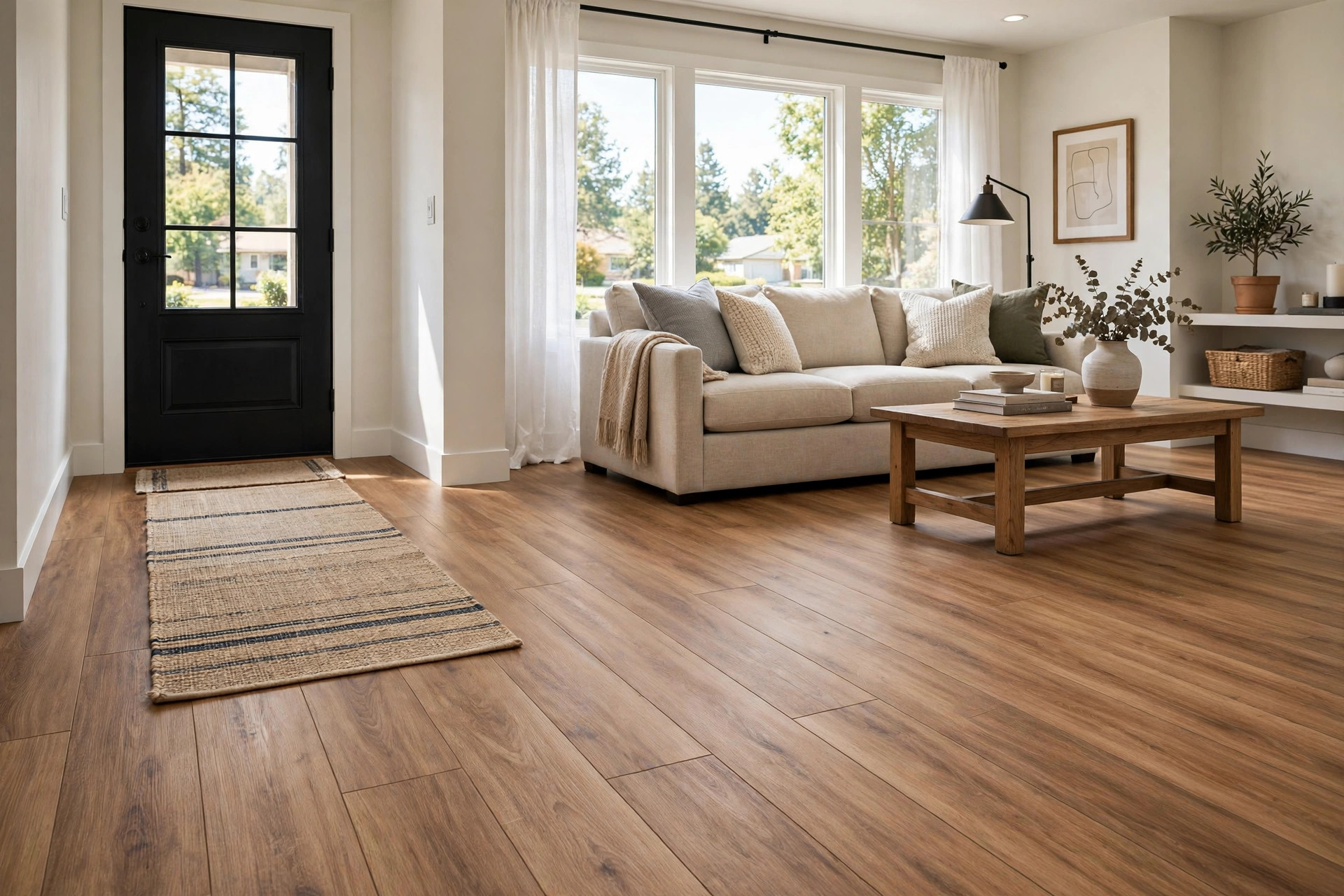
Luxury vinyl plank is the most common pick for homes with large dogs. It is made of layers. The top wear layer can be thick. Many brands offer wear layers of 20 mil to 40 mil. This is enough to stand up to big claws. It also resists water fully. Spills and accidents sit on the surface and wipe up clean.
Vinyl plank costs less than real wood. It comes in many colors and wood looks. It is softer underfoot than tile, which is kinder to dog joints. Product details can be compared on Home Depot or Lowe’s before a store visit.
Tile
Tile is one of the hardest floors sold. Porcelain tile, in particular, stands up to claws very well. It also handles water with ease. It is a strong choice for entryways, kitchens, and mudrooms where dogs come in from outside.
The weak point of tile is the grout. Grout can stain and wear. Use a dark grout or a sealed grout line. Tile is also hard and cold. Some dogs do not like to lie on it. Rugs or dog beds on top of the tile help. For design ideas, Daltile shows how tile can look warm and natural in a home.
Laminate
Laminate is a budget pick that has improved a great deal over the years. The top layer is a hard, printed sheet. It stands up to scratches better than many people expect. Laminate with an AC4 or AC5 rating is made for heavy use. It is often cheaper than vinyl plank.
The main risk with laminate is water. Standard laminate can swell if water sits on it. Some new lines are water resistant. Check the label before buying. Many flooring makers, such as Mohawk and Shaw Floors, publish full rating details on their sites.
Engineered Hardwood
Some owners want the look of real wood. Engineered hardwood is a better pick than solid wood in dog homes. Its core is layered plywood, which moves less than solid wood. The top layer is real wood. Choose a hard species, such as hickory or white oak. Hickory is one of the hardest domestic woods and hides wear well.
A factory finish with aluminum oxide is the hardest finish sold. Even so, no wood is fully scratch proof. Owners must accept that some marks will appear over the years. Specialty retailers such as LL Flooring carry many engineered wood lines with pet focused ratings.
Cork
Cork is a natural material that some owners overlook. It is soft and warm. Small dents from claws often spring back over time. It needs a strong sealant to resist water. It is not the best pick for wet entryways, but it works well in living rooms and bedrooms.
Cost and Price in the USA
Prices vary by region and by brand. The numbers below are typical for materials only, per square foot, in the United States in recent years.
– Luxury vinyl plank: 2 to 7 dollars per square foot. Premium lines with thick wear layers cost more. – Porcelain tile: 3 to 10 dollars per square foot for the tile itself. Handmade or large format tile costs more. – Laminate: 1 to 4 dollars per square foot. AC4 and AC5 lines sit at the higher end. – Engineered hardwood: 4 to 12 dollars per square foot. Hickory and wide planks cost more. – Cork: 3 to 8 dollars per square foot, plus the cost of sealant.
Labor adds more. Professional fitting often costs 3 to 8 dollars per square foot, depending on the area and the floor type. Tile fitting is usually the most costly because the work is slow. Removing old flooring adds cost too. Get three written quotes before you sign. Ask each fitter about their work with pet homes.
For owners who do the work themselves, vinyl plank and laminate are the friendliest picks. Both often use a click lock system. No glue and no nails are needed. Guides on This Old House and The Spruce walk through the steps in plain detail.
Care and Upkeep
Daily and Weekly Cleaning
Sweep or vacuum often. Grit and sand are the enemies of any floor. A soft broom or a vacuum with a hard floor setting works best. Do not use a vacuum with a beater bar on hard floors, as the bar can mark the surface.
Mop with a damp mop, not a wet one. Too much water hurts even waterproof floors at the seams. Use a cleaner made for the floor type. Harsh cleaners, such as bleach or ammonia, can dull the finish.
Nail Care for the Dog
The floor can only do so much. Keep the dog’s nails trimmed. Long nails cause more marks and more noise. Trim nails every two to four weeks. A vet or a groomer can show a new owner how to do it safely. Some owners use a nail grinder, which leaves a smooth nail tip.
Wipe the dog’s paws after walks. This keeps grit and salt off the floor. A paw wipe by the door takes only a minute. It protects the floor and the dog’s paws.
Mats and Rugs
Place mats at every door. Mats catch dirt before it reaches the floor. Use washable runners in hallways where the dog runs. A runner protects the floor and gives the dog better footing. Choose rugs with a non slip backing. Loose rugs can slide and cause falls.
Dog beds also protect floors. A bed in the living room keeps the dog off the floor for long rests. Wash the bed cover often to keep dirt from building up under it.
Safety for Large Dogs
Joints and Traction
Large dogs are prone to joint problems. Slippery floors make these problems worse. A dog that slides on each turn puts stress on its knees and hips. Young large dogs, such as shepherds and retrievers, are at risk of knee injury on slick floors. Older dogs with arthritis need grip even more.
If the floor is smooth, add rugs in the main paths the dog uses. Hall runners, area rugs, and stair treads all help. Older dogs benefit most from added grip.
Non Toxic Materials
Dogs lick floors. Puppies chew on baseboards and floor edges. Choose flooring with low VOC emissions. VOCs are the fumes that some floors give off after fitting. Look for floors certified as low emission. Let the room air out for a day or two after fitting before the dog spends long hours in it.
Avoid floors with loose pieces the dog could chew off. Small click lock pieces are fine once locked in, but keep spare planks out of reach during fitting. Check that any sealant or finish used on the floor is fully cured before the dog walks on it.
Temperature
Tile and stone feel cold in winter. Some dogs do not mind. Others, especially short coated breeds, may avoid cold floors. A rug or a heated dog bed gives them a warm spot. In summer, the same cool floor is a welcome rest place for a hot dog. There is no single right answer. Watch where the dog chooses to lie and add comfort there.
Frequently Asked Questions
What is the most scratch resistant flooring for large dogs?
Porcelain tile is the hardest common floor and stands up to claws best. Thick wear layer luxury vinyl plank is a close second and is warmer and softer underfoot. Both are strong picks. The best choice depends on the rooms and the budget. Many owners use tile in entryways and kitchens and vinyl plank in living areas.
Is hardwood ever a good pick with large dogs?
It can be, with the right choices. Hickory engineered hardwood with a factory aluminum oxide finish stands up better than soft solid wood. Distressed or hand scraped finishes hide new marks well. Owners should still expect some wear over the years. Trimmed nails and rugs in high traffic paths help a great deal.
How thick should the wear layer be?
For vinyl plank, look for at least 20 mil. Many pet focused lines offer 28 mil to 40 mil. For laminate, choose AC4 or AC5. These numbers are printed on the product sheet or the box. A thicker wear layer usually means a longer warranty too. Ask the seller for the warranty terms in writing.
Will my dog’s floor be too slippery?
Some hard floors are slick. Texture helps. A matte or lightly textured surface gives better grip than high gloss. Test a sample at home before buying. Place the sample on your floor and watch the dog walk over it. Add rugs in key paths if needed. Older dogs benefit most from added grip.
Can I install the floor myself to save money?
Yes, for many floor types. Click lock vinyl plank and laminate are made for do it yourself fitting. Tile and glued down wood are harder and often need a pro. Be honest about your skill level. A bad fit costs more to fix than a pro fit would have cost. Watch a full guide before you start and buy 10 percent extra material for cuts and mistakes.
How do I clean up pet accidents on these floors?
Wipe up liquid right away. Use a pet enzyme cleaner to remove odor. Enzyme cleaners break down the smell so the dog does not mark the same spot again. Do not use steam mops on vinyl or laminate, as the heat and water can harm the floor. Tile handles steam better, but check the grout first.
A Final Word
Scratch resistant flooring for large dogs USA owners is about matching the floor to the dog and the home. Tile wins on pure hardness. Vinyl plank wins on comfort, price, and water resistance. Laminate wins on budget. Engineered hardwood wins on natural beauty, with some upkeep trade offs.
Take samples home before you buy. Live with them for a week. Let the dog walk on them. Spill water on them and see how they clean up. This simple test tells you more than any brochure. Keep nails trimmed, use mats at doors, and clean often. With the right floor and simple habits, the home can stay in fine shape for many years, even with the biggest dog.
Related Reading
– Exposed aggregate concrete cost near me – Tile leveling system reviews for diyers usa – Best flooring for three season porch usa
References
Daltile. (n.d.). Ceramic and porcelain tile. https://www.daltile.com LL Flooring. (n.d.). Hardwood, vinyl, and tile flooring. https://www.llflooring.com Lowe’s. (n.d.). Home improvement products. https://www.lowes.com Mohawk Flooring. (n.d.). Flooring products. https://www.mohawkflooring.com Shaw Floors. (n.d.). Flooring products. https://www.shawfloors.com The Home Depot. (n.d.). Home improvement products. https://www.homedepot.com The Spruce. (n.d.). Home and garden advice. https://www.thespruce.com This Old House. (n.d.). Home renovation guidance. https://www.thisoldhouse.com
Was this guide helpful?

About Michael Thompson
The My Garden US editorial team writes practical, in-depth home and garden guides for American homeowners — tested advice, no fluff.
You May Also Like
Is a Steam Mop for Hardwood Floors Safe? A Full USA Guide
February 2, 2026 0 views
Best Spacers for Large Format Tile USA: A Full Guide
October 2, 2026 0 views
The Best Caulk for Shower Corners: A Practical Guide for American Homes
July 15, 2026 0 views