
Every week, millions of American homes are cleaned the same way. A vacuum comes out of the closet and runs across the floors. For hardwood floors, the choice of vacuum matters more than most people think. The wrong machine can scratch the finish or push grit across the boards. This is why the search term best vacuum for hardwood floors reviews usa brings so many readers to the same question: which vacuum is safe for my floors, and which ones do real buyers actually recommend?
Hardwood floors are one of the most costly parts of a home. A careful buyer studies the hardwood floor installation cost near me before a project begins. A vacuum built for hard floors can last for years without harming a single plank. This guide explains which vacuums are safe for wood, which types work best, what they cost, and how to keep your floors safe while you clean.
Why the Right Vacuum Matters for Hardwood Floors
Hardwood floors are tough. They take daily foot traffic, shoes, and dog nails. But the finish on top of the wood is thin. It is a clear coat that protects the boards. Sand and grit are its worst enemies. A sharp grain of sand acts like sandpaper when it moves across a floor. If a vacuum brush roll is stiff or set too low, it can drag that grit along and scratch the finish.
Many old vacuums were built for wall-to-wall carpet. Their brush rolls spin hard to lift dirt from deep fibers. On a bare floor, that spinning brush becomes a problem. It can beat the surface and fling small stones. Some of these machines still work fine on wood if you can turn the brush off, but many buyers in the best vacuum for hardwood floors reviews usa search want a machine made for hard floors from the start.
There is also the question of value. Wood floors cost far more than carpet to put in. When the finish wears out, the owner must refinish the whole floor. The refinishing hardwood floors cost calculator shows how fast that job can add up. A vacuum that costs one hundred or two hundred dollars is a small price to pay when it helps a floor worth thousands of dollars last longer.
A third reason is dust itself. Fine dust settles into cracks and edges and dulls the shine of the wood. A good hard-floor vacuum picks up this dust in one pass. Over months, leftover dust acts like a soft abrasive, and the floor slowly loses its glow. A proper vacuum keeps the grain of the wood bright and the finish clear.
What to Look for When You Shop: Best Vacuum for Hardwood Floors Reviews Usa
Not every vacuum with a “hard floor” label is the same. Some are truly built for bare floors. Others are carpet machines with a soft head added on. Here are the features that matter most when you read the best vacuum for hardwood floors reviews usa buyers have written. Cleaning guides from The Spruce point to the same short list.
A Soft Brush Roll or No Brush Roll at All
The brush roll is the spinning bar at the bottom of the cleaner head. For hardwood, you want a soft one. Many hard-floor heads use soft felt or velvet strips that grab dust without scratching. Some machines let you turn the brush roll off with a switch. The safest heads for wood use only suction and a soft pad, so nothing hard touches the floor.
Gentle Wheels and Bumpers
Look at the wheels. Hard plastic wheels can scratch, so rubber wheels or soft coated wheels are better. The front of the cleaner head should have a rubber bumper. This stops the head from banging into baseboards and furniture legs and keeps the plastic edge from scraping the floor when you tilt the machine.
Strong Suction with Good Airflow
Hard floors do not need the deep beating that carpet needs. They need airflow, which lifts dust and hair in one pass. A sealed system matters too. If the machine leaks air, fine dust blows back into the room and settles on the floor again. Models with sealed HEPA filtration hold that fine dust inside the bin or bag.
Light Weight and Easy Steering
Wood floors often run through a whole house, and a heavy vacuum gets tiring to push. A light stick or canister model is easier on the body and easier on the floors, because you push it with less force. A swivel head helps you turn around chair legs and table bases without dragging the head sideways, and sideways drags are what scratch floors.
A Long Cord or Long Battery Life
For a large wood-floor home, range matters. A long cord lets you clean several rooms from one outlet. Battery models should run at least thirty minutes on a normal setting, since short run times force you to rush, and rushing leads to rough handling.
Types of Vacuums for Hard Floors
Buyers in the United States tend to pick from four main types. Reviews from stores like The Home Depot and Lowe’s show that no single type wins for every home.
Canister Vacuums
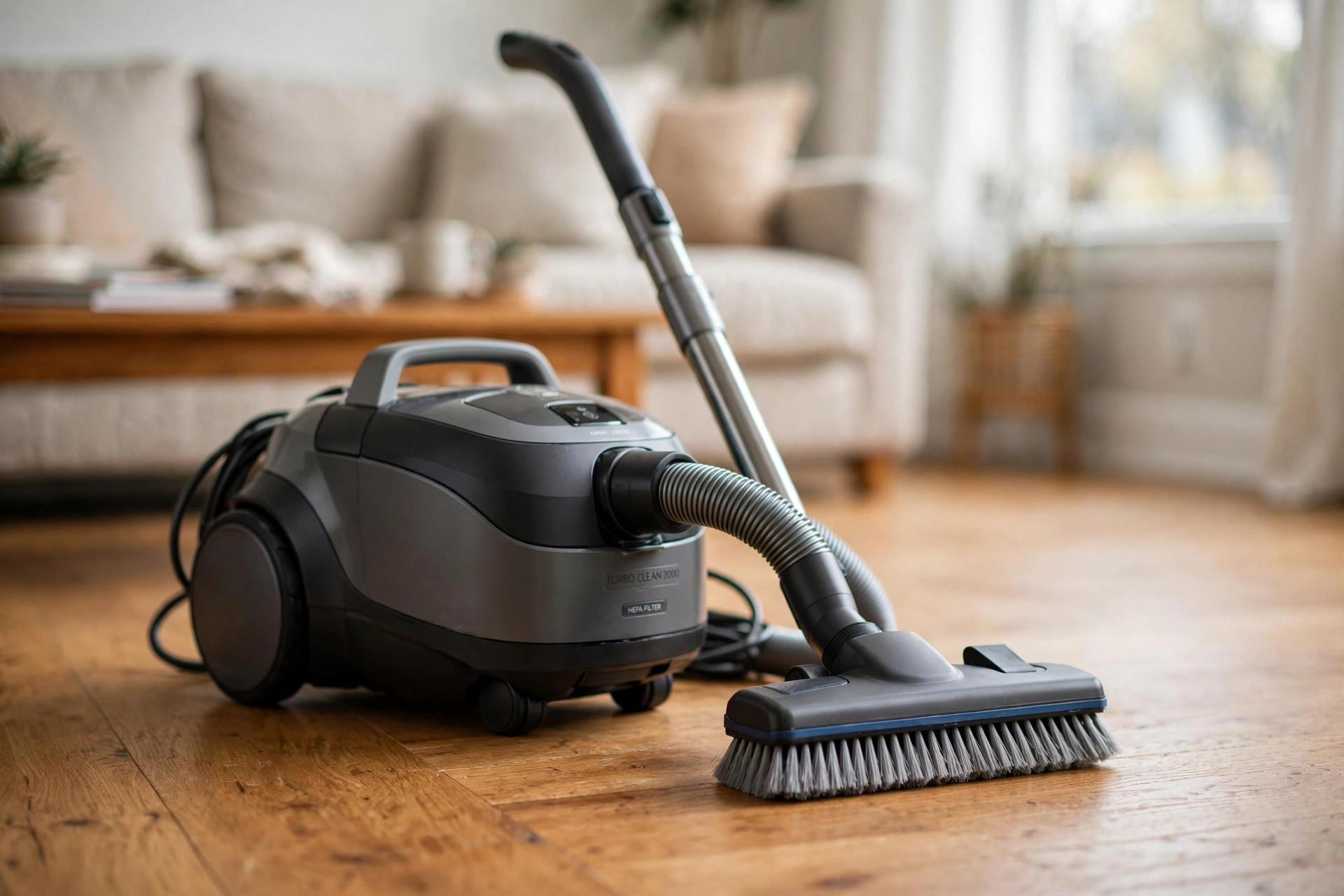
A canister vacuum has a body that follows you on wheels and a long hose with a separate cleaning head. This design is one of the gentlest for hardwood. The cleaning head is light. You guide it with your hand. The heavy motor stays low and follows behind. Canister models often come with a special hard-floor head with soft bristles. The main drawback is the body itself: you pull it behind you, and its wheels roll across the floor. Look for canister models with rubber wheels.
Upright Vacuums
An upright is the classic American vacuum. You push the whole machine in front of you. Many new uprights have a hard-floor mode that stops the brush roll. That makes them far safer for wood than the old models. Uprights are powerful and hold a lot of dirt. The drawback is weight and force: the full weight of the machine rests on the cleaning head. On wood, use a light touch and keep the brush off.
Stick Vacuums
Stick vacuums are slim, cordless machines that have become very popular in recent years. They are light and quiet, and many come with a soft roller head made for hard floors. The main limit is run time: most sticks run twenty to forty minutes per charge, and their small bins need emptying often. For apartments and small homes with mostly wood floors, a stick vacuum is often the top pick in the best vacuum for hardwood floors reviews usa readers share.
Robot Vacuums
Robot vacuums run on their own while you do other things. They are very gentle on floors because they are light and slow, and they keep dust from building up between deep cleanings. Their limits are small bins that fill fast and weak edge cleaning. Most owners still use a full-size vacuum once a week and let the robot handle the daily work in between.
Cost and Price Ranges
Vacuums for hardwood floors fall into clear price bands. Knowing the bands helps you set a budget before you shop.
Budget models run from about sixty to one hundred fifty dollars. These are simple stick vacuums and basic canisters that clean fine for small homes, though they have shorter cords, smaller bins, and fewer attachments.
Mid-range models run from about one hundred fifty to four hundred dollars. This is where most of the best-reviewed hard-floor vacuums sit. You get soft roller heads, sealed filtration, longer run times, and better build quality. A mid-range stick or canister is a sound choice for most wood-floor homes. High-end models run from four hundred to one thousand dollars or more, and you pay for longer battery life, laser dust detection, self-emptying bins, and the quietest motors.
Remember that price is not the whole story. A cheap vacuum that scratches your floors is the most costly choice of all. Makers such as Shaw Floors and Daltile publish care guides that warn against harsh cleaning tools. Their advice is simple: use soft tools and protect the finish. A mid-range vacuum with a soft head follows that advice, and it costs far less than one room of new flooring.
Replacement costs matter too. Before you buy, check the price of a new filter and a new soft head. A filter that costs thirty dollars and must be changed twice a year adds up fast. Washable filters save money over time.
Care and Upkeep of Your Vacuum and Your Floors
A vacuum only protects your floors if it is kept in good shape. A clogged machine loses suction, and a dirty brush drags grit. Follow these simple habits and both the machine and the floors will last longer. Maintenance writers at Family Handyman give the same advice: gentle, frequent cleaning beats harsh, rare cleaning.
Empty the bin or change the bag before it is full. A full bin cuts airflow, and when airflow drops you push harder and make more passes. More passes mean more wear on the finish. Empty after every use if the home has pets.
Clean or replace the filter on schedule. A dirty filter lets fine dust blow back out of the machine and onto the floor you just cleaned. Washable filters should be rinsed and dried fully before they go back in.
Check the brush head often. Pull hair and thread off the soft roller, since even a soft head can scratch if it is packed with grit. Wipe the wheels with a damp cloth so they roll clean, and look at the bumper for cracks that could expose a hard plastic edge.
Use the right attachments for the job. The soft floor head is for open floors. Use a dusting brush for baseboards and a crevice tool for corners. Dragging the main head into tight spots is how most scratches happen.
Clean spills right away with a damp cloth, never a soaking mop. Put felt pads under chair and table legs, and use a rug at each door to catch sand from shoes. Makers of luxury vinyl plank flooring reviews 2026 give the same advice for vinyl, and it holds for wood too.
Safety in the Home
Vacuum safety sounds simple, but a few rules keep people and floors safe. First, keep cords off the floor path when you can. A cord dragged across a wood floor can leave a mark if it is pulled tight. Coil the cord loosely when you finish, and never yank the plug out of the wall by the cord.
Second, watch the stairs. Carry a canister body in one hand and guide the hose with the other. For uprights and sticks, work from the top step down so you never pull the machine toward yourself on a step edge.
Third, unplug corded models before you clear a clog or change a head. A spinning brush can catch fingers. Battery models should be switched off first. Keep small children and pets in another room while you vacuum. A curious dog can knock a canister body across a wood floor, and its claws will do the rest.
Fourth, store the vacuum the right way. Do not lean a heavy upright against a wall where it can fall onto the floor. A falling machine can dent the boards. Keep the vacuum in a closet with the head facing away from the wall.
Writers at Bob Vila remind readers that most vacuum injuries come from rushing and from blocked vents. Let the motor cool if it smells hot.
Frequently Asked Questions
Can I use my old carpet vacuum on hardwood floors? You can, but only with care. If the machine has a brush roll on and off switch, turn the brush off for hard floors. If it does not, the spinning brush may scratch the finish over time.
Do I need a special vacuum if I have both wood floors and rugs? No. Look for a vacuum with two heads or one head with two modes. Use a soft roller on the wood and a standard brush on the rugs.
Are robot vacuums safe for hardwood floors? Yes. Robots are light and slow, which makes them gentle. Empty the bin often so a full bin does not drag dust across the floor. Most owners still deep clean with a full-size vacuum each week.
How often should I vacuum hardwood floors? Vacuum high-traffic areas a few times a week and the whole house once a week. Homes with dogs or cats need more passes.
Will a vacuum remove scratches from my floors? No. A vacuum prevents scratches by removing grit. It cannot fix damage that is already there. Light surface marks can be hidden with a polish made for your finish type. Deep scratches need a professional.
A Final Word
The search for the best vacuum for hardwood floors reviews usa buyers recommend comes down to a few plain truths. Soft heads beat stiff brushes. Light machines beat heavy ones. Frequent gentle cleaning beats rare harsh cleaning. You do not need the most costly model on the shelf. You need the right head, the right weight, and the habit of using it well.
Before you buy, read reviews on test sites like Wirecutter and check the care guides from your floor maker. Then pick the type that fits your rooms: a canister for a large house, a stick for a small one, an upright for mixed floors, a robot for daily upkeep. Empty the machine often and keep the brush head clean. Your hardwood floors will repay you with years of shine.
References
Bob Vila. (n.d.). Home improvement advice. https://www.bobvila.com Daltile. (n.d.). Ceramic and porcelain tile. https://www.daltile.com Family Handyman. (n.d.). DIY home repair and maintenance. https://www.familyhandyman.com Lowe’s. (n.d.). Home improvement products. https://www.lowes.com Shaw Floors. (n.d.). Flooring products. https://www.shawfloors.com The Home Depot. (n.d.). Home improvement products. https://www.homedepot.com The Spruce. (n.d.). Home and garden advice. https://www.thespruce.com Wirecutter. (n.d.). Product reviews from The New York Times. https://www.nytimes.com/wirecutter
Was this guide helpful?

About Robert Taylor
The My Garden US editorial team writes practical, in-depth home and garden guides for American homeowners — tested advice, no fluff.
You May Also Like
White Oak vs Red Oak Flooring Comparison
May 3, 2026 0 views
Encaustic Cement Tile for Sale USA: A Plain Guide for Homeowners
March 18, 2026 0 views
Best Outdoor Rugs for Patio Reviews USA: A Plain Guide for American Homes
June 13, 2026 0 views