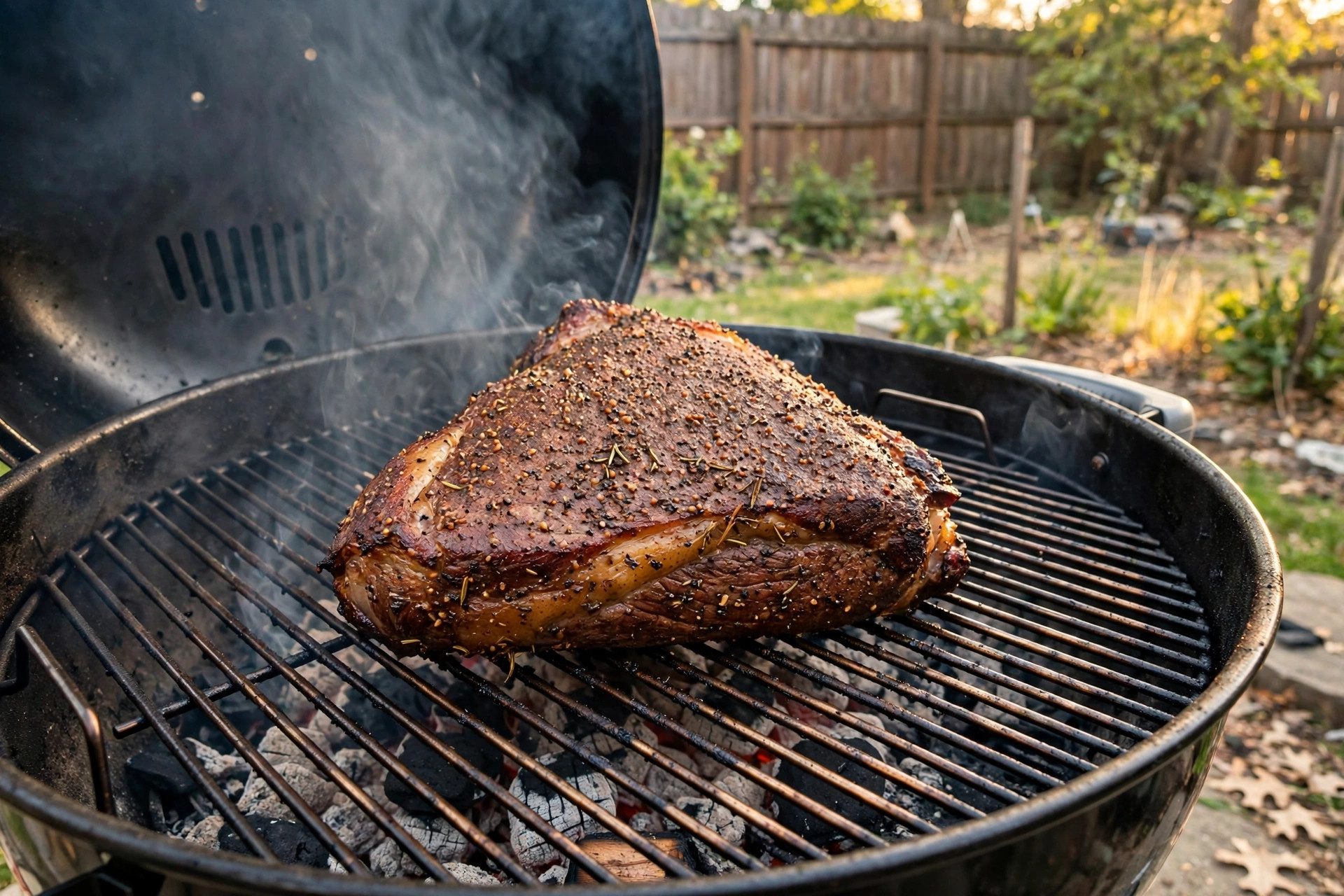

Many people wonder how to smoke tri tip on grill instead of cooking it over high heat. Tri tip is a lean, flavorful cut from the bottom sirloin. It takes smoke well, and it finishes fast. With a little patience and a steady low fire, you can turn this humble roast into a tender centerpiece with a dark crust and a pink center.
This guide walks through each step in plain terms. You will learn what tri tip is, what gear you need, how to season the meat, how to set up your grill for smoking, and how to finish with a hot sear. The method works on gas grills, charcoal grills, and pellet grills alike.
Why Smoke Tri Tip on a Grill
Tri tip has deep beef flavor but little fat. Cooked over direct high heat, it can turn tough. Slow smoke at low heat breaks down the fibers gently and adds wood flavor that you cannot get from a gas flame alone.
The cut is also small. A whole tri tip usually weighs two to three pounds. That means a full smoke takes only a few hours, not all day. It is one of the fastest ways to enjoy real smoked beef at home.
Another reason to learn how to smoke tri tip on grill is cost. Tri tip is often cheaper than brisket or ribeye. When smoked well, it tastes every bit as rich. Families on a budget can feed a crowd without buying an expensive cut.
What You Need Before You Start: How to Smoke Tri Tip on Grill
The Meat
Look for a tri tip roast between two and three pounds. Choose one with good marbling, which means small white flecks of fat through the red meat. Marbling keeps the meat moist during the smoke. Avoid roasts with large hunks of surface fat trimmed away already, since a thin fat cap helps flavor.
If your butcher sells the cut trimmed of all fat, that is fine. You can still get a great result. Just watch the temperature closely so it does not dry out.
The Grill
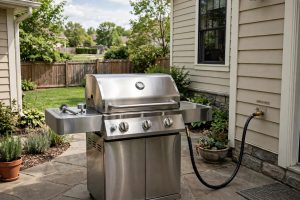
Almost any grill can smoke if you set it up right. A gas grill works if you can turn off one side and use a smoker box for gas grills. A charcoal kettle grill works with a two-zone fire and a few wood chunks. A pellet grill is the easiest of all, since it feeds wood pellets and holds temperature by itself. If you are still shopping, a beginner smoker under 300 dollars can handle tri tip and much more.
You will also need a good thermometer. A leave-in probe or a wireless thermometer for grilling is best. Guessing the temperature is the most common cause of overcooked tri tip.
The Wood
Mild woods suit tri tip. Oak is the classic choice in California, where tri tip is a local favorite. Hickory gives a stronger flavor. Fruit woods like cherry or apple add a light, sweet note. Soak chips for gas grills for about thirty minutes. Use dry chunks for charcoal grills, since chunks smolder longer.
The Seasoning
Tri tip needs a simple rub. Many cooks use only coarse salt, black pepper, and garlic powder. That trio lets the beef and smoke speak for themselves. Some add paprika for color or a touch of brown sugar for crust. Keep the rub simple for your first smoke. You can test fancier blends later.
How to Prepare the Tri Tip
Trim and Tie
Inspect the roast. Remove any thick silver skin, the shiny white membrane that does not render. Leave a thin layer of fat, about one quarter inch, on one side. If the roast is uneven, tie it with butcher twine so it cooks at the same rate from end to end.
Season Generously
Pat the meat dry with paper towels. Rub a light coat of oil over the surface to help the seasoning stick. Apply the salt, pepper, and garlic powder on all sides, including the ends. Use about one tablespoon of each for a two-pound roast. Season at least one hour before cooking. For deeper flavor, season the night before and rest the meat in the refrigerator uncovered.
Bring to Room Temperature
Set the seasoned roast on the counter about forty-five minutes before it goes on the grill. Cold meat takes longer to warm through, which can lead to an overcooked outside and a raw center. Room-temperature meat cooks more evenly.
How to Set Up the Grill for Smoking
Low and indirect heat is the heart of smoking. You want the grill to hold 225 to 250 degrees Fahrenheit, with the meat away from the flames.
On a gas grill, light only the burner on one side. Place the smoker box over the lit burner and the meat on the unlit side. Close the lid. Adjust the lit burner until the grill thermometer reads 225 degrees.
On a charcoal grill, bank the coals on one side and place a water pan on the other. Add two or three wood chunks on top of the coals. Set the meat over the water pan, away from the coals. Adjust the vents to hold 225 to 250 degrees.
On a pellet grill, set the controller to 225 degrees and let it come to temperature with the lid closed. This setup is the simplest way to smoke tri tip, much like smoking brisket on a pellet grill with steady heat and thin blue smoke.
Whatever grill you use, aim for thin, bluish smoke, not thick white smoke. Heavy white smoke can make the meat taste bitter. If the smoke looks thick, reduce the amount of wood or open the vents a little.
How to Smoke Tri Tip on Grill: Step by Step
Step 1: Place the Meat
Set the tri tip on the grate with the fat side up. The fat will baste the meat as it renders. Insert the thermometer probe into the thickest part of the roast, away from any fat pocket.
Step 2: Smoke Low and Slow
Close the lid and let the grill work. Do not open the lid more than necessary. Each peek lets out heat and smoke and adds time to the cook. Smoke the tri tip until the internal temperature reaches 110 to 115 degrees Fahrenheit. This usually takes about ninety minutes to two hours for a two-pound roast.
Step 3: The Reverse Sear
Tri tip shines with a reverse sear. When the roast hits 110 to 115 degrees, take it off the grill and tent it loosely with foil. Crank the grill to high heat, about 450 to 500 degrees. Sear the roast directly over the flames for two to three minutes per side until the outside is dark and crisp.
This method gives you a smoky, evenly cooked inside and a charred, flavorful outside. The final internal temperature should land near 130 to 135 degrees for medium rare, or 140 to 145 for medium.
Step 4: Rest the Meat
Resting is not optional. Move the tri tip to a cutting board and let it rest for fifteen to twenty minutes. The juices settle back into the meat during this time. Cut too soon and the juice runs onto the board instead of staying in each slice.
Step 5: Slice Against the Grain
Tri tip has two grains that run in different directions. Look at the roast and find the line where the grain changes. Cut the roast into two pieces along that line, then slice each piece thinly against the grain. Thin slices against the grain are what make tri tip tender to bite.
Cost and Price Guide
The cost of smoking tri tip is modest. The meat itself usually runs between eight and twelve dollars per pound, so a two-pound roast costs sixteen to twenty-four dollars. Wood chips or chunks cost a few dollars per bag and last many cooks. A basic smoker box for a gas grill costs around twenty to thirty dollars.
Compared to brisket, which can cost forty to sixty dollars and takes twelve hours, tri tip is a bargain in both money and time. A beginner smoker under 300 dollars pays for itself quickly if you smoke meat often.
Care and Upkeep of Your Grill
Good smoking starts with a clean grill. Grease buildup causes flare-ups that scorch the meat. After each cook, brush the grates while they are still warm. Empty the ash from a charcoal grill before each session, since old ash chokes airflow and makes temperature control hard.
Check the thermometer often. A probe that reads wrong will ruin more meat than any other mistake. Test it in boiling water once a season. It should read close to 212 degrees at sea level.
Store wood chips and chunks in a dry place. Damp wood smolders poorly and gives off bitter smoke. Cover the grill when not in use to keep rain off the burners and the firebox.
Safety Tips
Smoking meat involves fire, smoke, and hot metal. Keep a spray bottle of water near the grill to tame small flare-ups. Never leave a lit grill unattended for long. Place the grill at least ten feet from the house, deck railings, and anything flammable.
Use long-handled tools to keep your hands away from the heat. Wear heat-resistant gloves when handling the lid, the meat, or the wood chunks. Make sure the meat reaches a safe internal temperature. The United States Department of Agriculture lists 145 degrees as the safe minimum for whole cuts of beef, with a three-minute rest. Many people enjoy tri tip at lower temperatures, but the choice carries risk, so read the guidance at the Consumer Product Safety Commission and the U.S. Department of Energy pages on grill safety before you decide.
Keep children and pets away from the grill while it is hot. A grill stays hot long after the fire is out, so warn others before you walk away.
Frequently Asked Questions
How long does it take to smoke tri tip on a grill?
Plan for about two to two and a half hours total. The low smoke stage takes ninety minutes to two hours at 225 degrees, and the sear adds about ten minutes. Resting adds another fifteen to twenty minutes. A thicker roast takes longer, so trust the thermometer, not the clock.
What temperature should I smoke tri tip at?
Hold the grill at 225 to 250 degrees Fahrenheit during the smoke. Pull the meat at 110 to 115 degrees for the reverse sear. The final target is 130 to 135 degrees for medium rare or 140 to 145 for medium after searing and resting.
Can I smoke tri tip on a gas grill?
Yes. Turn off one side of the grill, cook the meat on the unlit side, and add smoke with a smoker box filled with chips. Keep the lid closed and the temperature low. Many backyard cooks learn how to smoke brisket on a pellet grill first, but a gas grill with a smoker box for gas grills handles tri tip just as well.
What wood is best for smoking tri tip?
Oak is the classic match, giving a medium smoke flavor that suits beef. Hickory is stronger and works for those who like bold smoke. Cherry and apple are mild and sweet. Avoid mesquite for long smokes, since it can turn bitter.
Should I wrap tri tip in foil while smoking?
Most cooks do not wrap tri tip. The roast is small and cooks fast, so it does not stall the way a brisket does. Wrapping softens the bark, which many people want crisp. If the outside darkens too fast, you can tent it loosely with foil for the last part of the smoke.
How do I know when the tri tip is done?
Use a thermometer in the thickest part of the roast. For medium rare, pull the meat from the sear at 130 to 135 degrees. Let carryover heat and resting bring it to its final temperature. Color and time are rough guides only. The thermometer is the truth.
A Final Word
Learning how to smoke tri tip on grill is one of the most rewarding skills a backyard cook can pick up. The steps are simple: season, smoke low, sear hot, rest, and slice against the grain. Each smoke teaches you something about your grill and your taste. Start with a simple salt and pepper rub, keep notes on time and temperature, and adjust from there. In a single afternoon, you can serve smoked beef that rivals anything from a restaurant, all from your own backyard.
For more background, see Traeger, Napoleon, and Big Green Egg. For more background, see Broil King, The Home Depot, and The Spruce Eats.
References
Big Green Egg. (n.d.). Kamado grills and outdoor cooking. https://www.biggreenegg.com Broil King. (n.d.). Gas and charcoal grills. https://www.broilkingbbq.com Napoleon. (n.d.). Fireplaces, grills, and heating products. https://www.napoleon.com The Home Depot. (n.d.). Home improvement products. https://www.homedepot.com The Spruce Eats. (n.d.). Recipes and cooking guides. https://www.thespruceeats.com Traeger. (n.d.). Wood pellet grills. https://www.traeger.com U.S. Consumer Product Safety Commission. (n.d.). Product safety information. https://www.cpsc.gov U.S. Department of Energy. (n.d.). Energy efficiency and renewable energy. https://www.energy.gov
Was this guide helpful?

About Jennifer Lee
The My Garden US editorial team writes practical, in-depth home and garden guides for American homeowners — tested advice, no fluff.
You May Also Like

Outdoor Kitchen Pergola Ideas for Shade
April 7, 2026 0 views
Best Outdoor Grill Tools Gift Set: A Plain Guide for Buyers
March 2, 2026 0 views
Best Outdoor Beverage Cooler for Patio: A Plain Guide
January 29, 2026 0 views