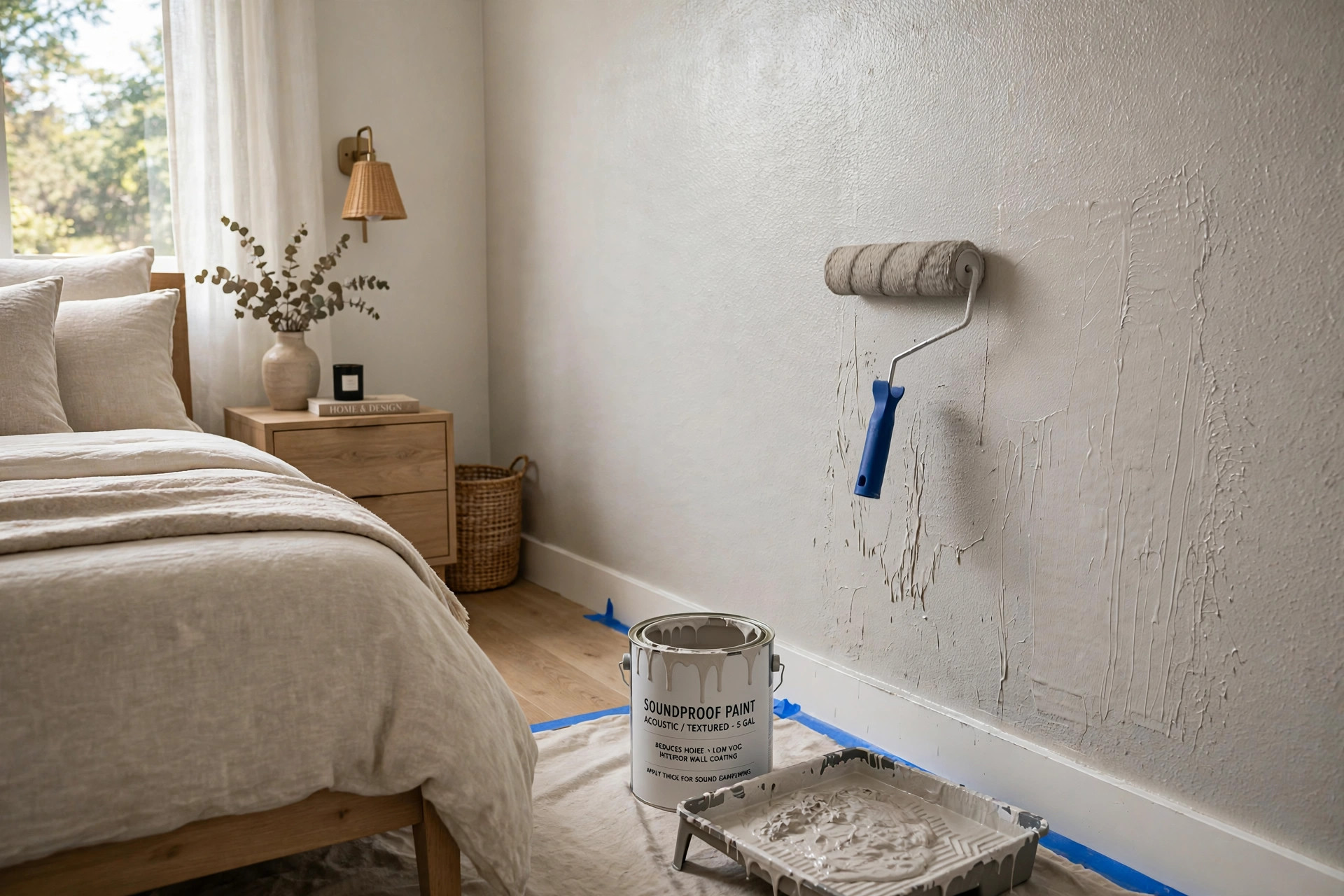

Soundproof paint does it work reviews are among the most searched questions by homeowners who want a quieter house without a large project. The idea behind the product is simple and appealing. You buy a special paint, roll it on the wall, and the noise fades. No tearing out drywall. No hiring a contractor. No large bill. But the real question remains: does it truly work?
This article gives an honest answer. It explains the science behind the product, reports what real buyers and reviewers say, and lays out the limits in plain terms. You will learn how soundproof paint is made, what it can and cannot do, what to check before you buy, and how much it costs. By the end, you will know whether it is the right choice for your home.
Why Noise Control Matters in the Home
A quiet home is worth more than comfort alone. Steady noise from traffic, neighbors, or barking dogs can raise stress, break sleep, and make it hard to work. Bedrooms and home offices suffer the most. Even a small drop in noise can make a room feel calmer and more private.
Many homeowners look for a fix that does not require building work. Adding a new layer of drywall or hanging heavy panels all take time and money. Some are not even allowed in a rental home. That is why paint that promises to block sound has caught so much attention. It looks like the easy answer. Before you spend money on it, though, it helps to know what paint can realistically do.
How Soundproof Paint Claims to Work: Soundproof Paint Does It Work Reviews
Sound travels through walls in waves. When a wave hits a wall, part of it bounces back and part of it passes through. Thick, heavy, and dense walls block more sound. Thin, light walls block less. Real soundproofing usually means adding mass, sealing air gaps, or breaking the path the wave follows. Paint makers claim their products add enough mass and damping to the wall surface to make a real difference.
What Is in the Can
Soundproof paint is not ordinary paint. It is a thick latex or acrylic coating mixed with heavy fillers, ceramic microspheres, or sound-absorbing fibers. Some brands use a four-layer system: two coats of a mass-loaded base, then a texture coat, then a top coat. The layer goes on much thicker than regular paint — often ten to twenty times as thick. That added mass is the whole point. A heavier wall surface resists the vibration that carries sound through it.
The makers usually quote a number called STC, or Sound Transmission Class. They claim their paint can raise a wall’s STC rating by a few points. A small lift in STC means a small drop in the sound that passes through. This is the heart of every soundproof paint does it work review you will read: the gain is real but modest.
What Reviews Actually Say
Thousands of reviews are posted by buyers who tested these paints in bedrooms, apartments, and home offices. The reports follow a clear pattern. Most reviewers say the paint softened echoes inside the room. Voices sound less sharp. The room feels warmer and quieter to sit in. That effect comes from the thick, textured surface, which absorbs reflections bouncing around the room.
But the reviews are much less positive about blocking sound from outside the room. Buyers who hoped to stop a neighbor’s music or street traffic were often disappointed. They reported a small change, or none at all. Some called it a waste of money for that purpose. Others were pleased when they used it along with real soundproofing steps, like sealing gaps around doors. For guidance on building steps that work, sites like This Old House explain how wall mass and sealing affect noise in plain terms.
What It Can Do
Soundproof paint can do three useful things. First, it damps echoes and reflections inside a room. A bare room with hard walls can sound hollow. A thick textured coat calms that down. Second, it can trim high-pitched sounds slightly, such as the edge of a television or a ringing phone. Third, when used with other fixes, it adds a small extra layer of mass. Some reviews on The Spruce note that acoustic paints work best as part of a room makeover, not as a lone fix.
What It Cannot Do
It cannot stop low sounds. Bass notes, truck engines, and deep voices carry powerful waves that pass through walls almost untouched by any coating. It cannot fix sound leaking through gaps. Sound slips under doors, through outlets, and around vents. A coat of paint does nothing there. And it cannot replace mass. A five-eighths-inch sheet of drywall weighs far more than any paint film, and it blocks far more sound. As the paint experts at Sherwin-Williams often note in their guides, a coating is only as good as the surface beneath it.
What to Look for When You Choose
If you still want to try it, choose with care. Start with the test data. Honest makers publish third-party lab results with real STC numbers. If a brand gives no numbers, treat its claims with doubt.
Next, look at the coverage rate. Soundproof paint covers far less area per gallon than regular paint — sometimes only 100 to 150 square feet. Thick application is required for any result. Two thin coats will do nothing. Check the drying time and recoat window too, since thick coats take longer to cure.
Also check the finish options. Some products come only in white or gray, and you must use their top coat for color. Others accept regular paint over the base layer. If you plan a textured wall finish, make sure the products are compatible before you start.
Finally, read buyer reviews that describe real tests. Look for reviewers who measured before and after with a simple sound meter app. Their reports are far more useful than reviews that only mention how the room felt. The buying guides at Bob Vila show how to judge paint claims against lab data rather than marketing words.
Types and Options
Several product types sit on the market under the soundproof label, and they are not the same.
Acoustic damping paint. This is the classic type. It goes on thick with a roller or texture sprayer and dries to a rough surface. It is best for cutting echo inside the room. Coverage is low and the cost per gallon is high.
Mass-loaded base coats. These are heavy primers meant to be buried under finish paint. They add more mass than damping paint and give the best blocking numbers of any paint-only product. They are also the thickest and the hardest to apply.
Ceramic-filled insulating paints. Some brands mix ceramic microspheres into the paint and claim both thermal and sound benefits. The sound benefit is small, but these products spread more like normal paint and are easier to use.
Combination systems. A few brands sell a kit: base coat, damping layer, and top coat. These kits cost the most but also show the best test results of the group. Guides at Behr and Benjamin Moore remind buyers that any specialty coating needs the right primer and surface prep, or it will fail early.
For rooms where looks matter as much as quiet, some homeowners pair the base coats with a decorative finish. A Venetian plaster wall finish can go over a cured damping layer in some systems, though you must check with the maker first. In wood-paneled rooms, the question of shiplap wall installation cost per square foot comes up often, since a second layer of paneling adds real mass that paint alone cannot match.
Cost and Price
Soundproof paint is far more costly than regular paint. A gallon of standard interior latex paint may cost twenty to forty dollars. A gallon of soundproof or acoustic paint often costs sixty to one hundred fifty dollars, and some kits cost more. The gap grows worse because coverage is poor. A bedroom that needs two gallons of normal paint may need four to six gallons of acoustic paint for the required thick coats.
A single 12-by-12-foot room with eight-foot walls has about 350 square feet of wall space. At a coverage rate of 100 square feet per gallon and a price of eighty dollars a gallon, the paint alone costs close to three hundred dollars — before primer, tools, or your time. A four-layer system can double that. Price listings at Home Depot and Lowe’s show how fast the total climbs once you add the extra gallons these products demand.
Compare that with the alternatives. A tube of acoustic caulk to seal gaps costs under ten dollars and often cuts more noise than a full room of paint. Weatherstripping a door costs about twenty dollars. A solid-core door costs a few hundred dollars but blocks far more sound. When reviewers say the paint was not worth the money, this is usually why: the same dollars buy bigger gains elsewhere.
Care and Upkeep
A soundproof paint film is softer and thicker than a normal paint film. That means it needs gentler care. Wait the full cure time before you hang pictures or press furniture against the wall. Thick coats can take two to four weeks to cure fully, even if they feel dry in a day.
Clean the walls with a soft cloth and mild soap. Do not scrub hard or use abrasive pads, or you will thin the coating and lose what little benefit it gives. Touch-ups are harder than with normal paint. A thin touch-up patch will not match the thick surrounding film, and it may stand out. Keep a record of the exact product and number of coats you used so future repairs match.
Heat and moisture matter too. Bathrooms and kitchens are poor places for these products. Steam and grease break down thick coatings faster. In damp rooms, the paint can trap moisture and peel. Project guides at HGTV stress that proper room choice and ventilation are as important as the product itself.
Safety
Read the safety sheet before you open the can. Most soundproof paints are latex-based and low in odor, but they are not free of chemicals. They may contain biocides to stop mold in the thick film. Work with the windows open and a fan running, just as you would with any paint.
Wear a mask when you spray. Texture sprayers throw fine mist into the air, and the heavy fillers in these paints are not good to breathe. Wear gloves and eye protection too. Keep children and pets out of the room until the paint is fully dry.
Old homes need extra care. If your house was built before 1978, the old paint under the surface may contain lead. Scraping or sanding it releases lead dust, which is dangerous. Do not sand old paint without a test. If lead is present, call a certified lead-safe contractor or follow the federal rules for safe work.
Also check fire ratings. Thick coatings can change how a wall behaves in a fire. In garages, furnace rooms, and rental units, the local code may limit what you can put on the walls. A quick call to the local building office can save trouble later.
Frequently Asked Questions
Does soundproof paint really block noise? It blocks a little, not a lot. Lab tests show gains of two to five STC points at best, which is a small change your ear may barely notice. It works better at softening echoes inside the room than at stopping noise from coming through the wall.
How many coats do I need? Most makers call for three to four thick coats, or a multi-layer system of base, damping, and top coats. One or two normal coats will give no sound benefit. Follow the maker’s stated film thickness, not just the number of coats.
Can I paint over it with regular paint? Often yes, but check the label. Some systems require their own top coat for the warranty to hold. A thin coat of regular paint over a cured damping layer usually does not hurt the sound result, but a thick extra layer can crack.
Is it worth the money? It depends on your goal. If you want a room to sound calmer and less echoey, and you accept the high cost, many reviewers are satisfied. If you want to block a noisy neighbor or traffic, the money is better spent on sealing gaps, a solid door, or a second layer of drywall.
Can renters use soundproof paint? It is usually a poor choice for renters. It is costly, hard to remove, and the thick texture may cost you your security deposit. Removable options like heavy curtains, rugs, and door seals are safer for a rental.
Does it work on ceilings and floors? Ceilings can get a small benefit, much like walls. Floors get almost none, because footfall noise travels through the structure of the building. Carpet with thick padding does far more for floor noise.
A Final Word
Soundproof paint is not a fraud, but it is not a miracle either. The honest soundproof paint does it work reviews all point to the same verdict: it softens a room and trims a little noise, but it cannot do the job of real soundproofing. Before you buy, fix the cheap leaks first — seal the gaps and weatherstrip the door. Spend with clear eyes, and you will not be disappointed.
References
Behr. (n.d.). Paints, primers, and stains. https://www.behr.com Benjamin Moore. (n.d.). Paints and stains. https://www.benjaminmoore.com Bob Vila. (n.d.). Home improvement advice. https://www.bobvila.com HGTV. (n.d.). Home and garden ideas. https://www.hgtv.com Lowe’s. (n.d.). Home improvement products. https://www.lowes.com Sherwin-Williams. (n.d.). Paints and coatings. https://www.sherwin-williams.com The Home Depot. (n.d.). Home improvement products. https://www.homedepot.com The Spruce. (n.d.). Home and garden advice. https://www.thespruce.com This Old House. (n.d.). Home renovation guidance. https://www.thisoldhouse.com
Was this guide helpful?

About Emily Rodriguez
The My Garden US editorial team writes practical, in-depth home and garden guides for American homeowners — tested advice, no fluff.
You May Also Like

Chair Rail Installation Cost Near Me: What Homeowners Pay in 2026
August 14, 2026 0 views
Wallpaper for Powder Room Ideas USA: A Practical Guide for Homeowners
March 10, 2026 0 views
Shoe Molding vs Quarter Round Guide USA
April 10, 2026 0 views