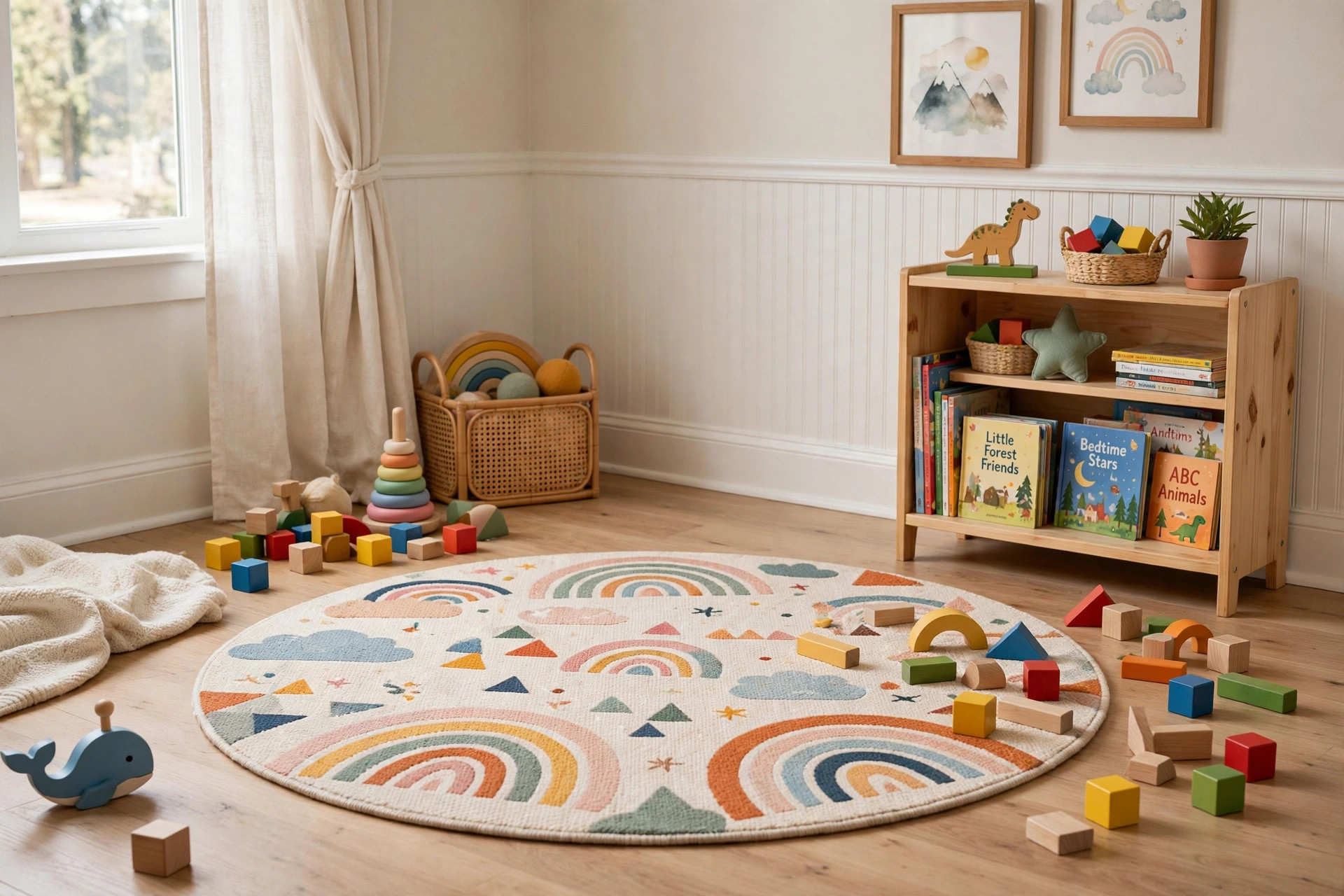

A kids room rug round for play area time does more than fill empty floor space. It gives children a soft spot to sit, build, and read. It marks a clear play zone in the room. Parents like it because it cuts noise and keeps little knees off hard floors. This guide covers sizes, materials, costs, cleaning, and safety in plain words.
Why a Round Rug Works Well in a Play Area
Children gather in a circle by nature. A round rug matches that habit. Kids sit around it with blocks, dolls, or books. No corners stick out, so no one bumps a sharp edge. The shape also fits well in small rooms. It slides under a crib, a chair, or a low table without wasted space.
A soft surface matters more than most parents expect. Hard wood and tile get cold and loud. A rug warms the room and muffles toy clatter. That makes the whole house calmer. For babies learning to crawl and toddle, a rug adds grip and cushions small falls. The American Academy of Pediatrics notes that safe play spaces help young children move with confidence as they grow.
A round rug also helps with room layout. It defines the play zone without walls. When clean-up time comes, children know what belongs on the rug and what goes back to the shelf. Many families pair the rug with soft lighting, like a best nursery lamp for breastfeeding at night, to keep the corner calm and cozy.
What to Look for When You Choose: Kids Room Rug Round for Play Area
Start with size. Measure the play area before you shop. A rug that is 4 to 5 feet across suits a small corner. Six feet works for two or three children playing together. Eight feet anchors a large room. Leave at least a foot of bare floor around the rug so the room looks balanced.
Next, think about pile height. Low pile rugs are best for play areas. Toys with wheels roll well on them. Blocks stack without tipping. High pile rugs feel soft but trap crumbs and make toys wobble. A flat or low weave cleans faster and lasts longer under daily play.
Check the backing. A non-slip backing keeps the rug in place on wood or tile floors. If the rug has no backing, buy a separate rug pad. This is a safety point, not a luxury. A sliding rug can send a running child into furniture. The Spruce offers practical advice on rug pads and how they protect both floors and feet.
Look at color and pattern. Busy patterns hide stains well, which is a real help in a kids room. Light solid colors show every spill. If you want a bright room, choose a pattern with the bright color plus darker threads. Road-map prints, animal shapes, and polka dots are popular for play areas and double as play prompts.
Types and Options on the Market
Cotton rugs are a common pick. They are soft, washable, and often low cost. Many cotton round rugs can go in the washing machine. That is a big plus for a play area. The downside is that cotton wears faster under heavy use and may fade in strong sun.
Wool rugs cost more but last for years. Wool resists stains and bounces back underfoot. It also handles heavy play without matting down. The catch is price and care. Wool needs gentle cleaning, and some children find it rough on bare skin.
Synthetic rugs, made from polyester or nylon, sit in the middle. They resist stains well and come in bright colors that do not fade. Many are machine washable. Retailers like IKEA and Wayfair carry wide ranges of affordable round rugs for kids rooms in these fibers.
Jute and natural fiber rugs look warm and earthy. They are firm underfoot, which some parents like for a natural style. But jute is rough for crawling babies and hard to clean when juice or paint spills. It suits an older child’s reading corner better than a toddler play zone.
Memory foam and padded play rugs are the softest choice. They cushion falls well for babies and toddlers. Many come in round shapes with bright prints. The trade-off is that they can be hard to clean deeply, and some off-gas when new. Air them out before use, a tip also stressed by the U.S. Environmental Protection Agency in its guidance on indoor air quality for homes.
Specialty play rugs with printed roads, farms, or hopscotch designs turn the floor into a toy itself. Children play directly on the print. These work best as a second rug or as the main play surface for one child. For a shared sibling room, pair the play rug with matching kids room curtains for privacy and style to keep the space calm.
Round braided rugs are another classic option. Makers braid fabric strips into a circle, which gives a homey, farmhouse look. Braided rugs hide dirt well and feel firm underfoot. They are not the softest choice for babies, but they work well for older children who use the area for reading or board games.
Layering is a trick many parents like. Place a large flat rug under a smaller round play rug. The base rug protects the floor and adds warmth. The round rug on top defines the play zone and can be washed or replaced on its own. This layered look also adds depth to the room. Keep both layers low pile so the stack does not become a trip hazard.
Consider the room theme when you pick a style. A space theme pairs well with a navy round rug with stars. A jungle theme suits a green rug with leaf prints. Neutral beige or gray rugs fit any theme and let the toys supply the color. Neutral rugs also move well to a new room or a new home, which saves money over time.
Cost and Price Ranges
Prices vary widely. A small cotton round rug often costs between 20 and 40 dollars. Mid-size synthetic rugs in the 5 to 6 foot range usually run 40 to 90 dollars. Larger wool or designer rugs can cost 150 to 400 dollars or more.
Machine-washable rugs cost a little extra but save money over time. A rug you can wash lasts longer and needs replacing less often. Budget shoppers find good value at large home stores. Higher-end children’s stores like Pottery Barn Kids charge more but offer tested materials and detailed care guides.
Watch for sales in late summer and January, when home stores clear stock. Also check return policies. A rug that looks right online may feel wrong in your room. Being able to return it free matters. Independent reviews from Consumer Reports can help you compare durability before you buy.
Do not forget the extras. A rug pad costs 15 to 30 dollars. A good enzyme cleaner for stains costs under 10 dollars. These small costs protect the main purchase.
Care and Upkeep
Daily care is simple. Shake out crumbs or run a handheld vacuum over the rug. This takes two minutes and stops dirt from grinding into the fibers. For cotton and synthetic rugs, a weekly full vacuum keeps them fresh.
Treat spills fast. Blot, never rub. Rubbing pushes the stain deeper. Use a mild soap and water for most spills. For juice, milk, or food stains, an enzyme cleaner works best. Test any cleaner on a hidden spot first.
Machine-washable rugs are the easiest to own. Wash on gentle with mild detergent and air dry or tumble dry low. Check the label. Some rugs say washable but lose shape in a home machine. Large rugs may need a laundromat machine.
Rotate the rug every few months. Sun and foot traffic wear one side faster. A quarter turn spreads the wear and keeps colors even. If the rug sits near a window, a curtain or blind protects it from fading. Home ideas sites like Apartment Therapy often suggest this simple rotation trick for all kids room textiles.
Once a year, give the rug a deep clean. A carpet cleaner rental or a professional service refreshes the pile. Let the rug dry fully before children play on it. Damp rugs can grow mold, which is bad for small lungs.
Safety First
Safety is the most important part of this purchase. Loose rugs cause falls. Use a rug pad or non-slip backing on hard floors. The U.S. Consumer Product Safety Commission warns that unsecured rugs are a common cause of home falls for both children and adults.
Check for small parts. Some rugs have glued-on pom-poms or beads. Babies and toddlers can pull these off and choke. Choose a flat, simple surface for children under three. Skip rugs with long fringes too, as little fingers and toes can tangle in them.
Look at materials. Choose rugs labeled low-VOC or free of harmful dyes. New rugs can carry a chemical smell. Unroll the rug in a garage or spare room for a day or two before placing it in the child’s room. This lets fumes fade. Parents expecting a baby can find more on safe nursery setup at What to Expect.
Keep the play area clear around the rug. Toys with small parts, cords, and heavy items do not belong on the soft play surface for babies. A tidy rug is a safe rug.
Frequently Asked Questions
What size round rug is best for a kids play area?
A 5-foot rug suits one or two small children in a corner. A 6 to 8-foot rug works for larger rooms or siblings who play together. Measure your space first and leave room around the edges.
Are round rugs better than square rugs for kids rooms?
For play areas, yes in most cases. Round rugs have no corners to trip on. They fit well in tight spaces and suit the way children sit in a circle. Square rugs work fine too, but round shapes are softer and safer for toddlers.
Can I put a round rug on carpet?
You can, but use a rug pad made for carpet-on-carpet. Without one, the top rug will bunch and wrinkle, which creates a trip risk. Low pile rugs sit flatter on existing carpet.
How do I clean a kids room rug that is not washable?
Vacuum weekly and spot-clean spills at once with mild soap and water. For deep cleaning, use a carpet cleaner or hire a professional once a year. Always dry the rug fully before use.
What rug material is safest for babies?
Flat-weave cotton is a safe, soft, and washable choice for babies. Avoid high pile, glued decorations, and rough natural fibers for crawling infants. Air out any new rug before the baby uses it.
How much should I spend on a play area rug?
Most families do well in the 40 to 90 dollar range for a good synthetic or cotton round rug. Spending more buys wool or designer quality that lasts longer. A washable rug in the mid range is the best value for most play areas. If you want a themed look, a kids bedroom rug for girls pink decor can pair well with a neutral round play rug.
A Short Final Word
A kids room rug round for play area use is one of the simplest upgrades a parent can make. It softens the room, quiets the noise, and gives children their own special spot. Choose the right size, pick a low pile that cleans easy, secure it against slips, and keep it clean. Do that, and the rug will serve your family well for years.
References
American Academy of Pediatrics. (n.d.). HealthyChildren.org. https://www.healthychildren.org Apartment Therapy. (n.d.). Home design ideas and inspiration. https://www.apartmenttherapy.com Consumer Reports. (n.d.). Product reviews and ratings. https://www.consumerreports.org IKEA. (n.d.). Home furnishings. https://www.ikea.com Pottery Barn Kids. (n.d.). Kids furniture and decor. https://www.potterybarnkids.com The Spruce. (n.d.). Home and garden advice. https://www.thespruce.com U.S. Consumer Product Safety Commission. (n.d.). Product safety information. https://www.cpsc.gov U.S. Environmental Protection Agency. (n.d.). Protecting human health and the environment. https://www.epa.gov Wayfair. (n.d.). Furniture and home goods. https://www.wayfair.com What to Expect. (n.d.). Pregnancy and parenting guidance. https://www.whattoexpect.com
Was this guide helpful?

About Sarah Mitchell
The My Garden US editorial team writes practical, in-depth home and garden guides for American homeowners — tested advice, no fluff.
You May Also Like
Nursery Hamper With Lid for Odor Control: What Parents Need to Know
June 16, 2026 0 views
A Nursery Wall Shelf for Books and Decor: A Complete Buying Guide
May 10, 2026 0 views
Toddler Pillow for First Bed Transition: How to Pick One That Is Safe
March 23, 2026 0 views