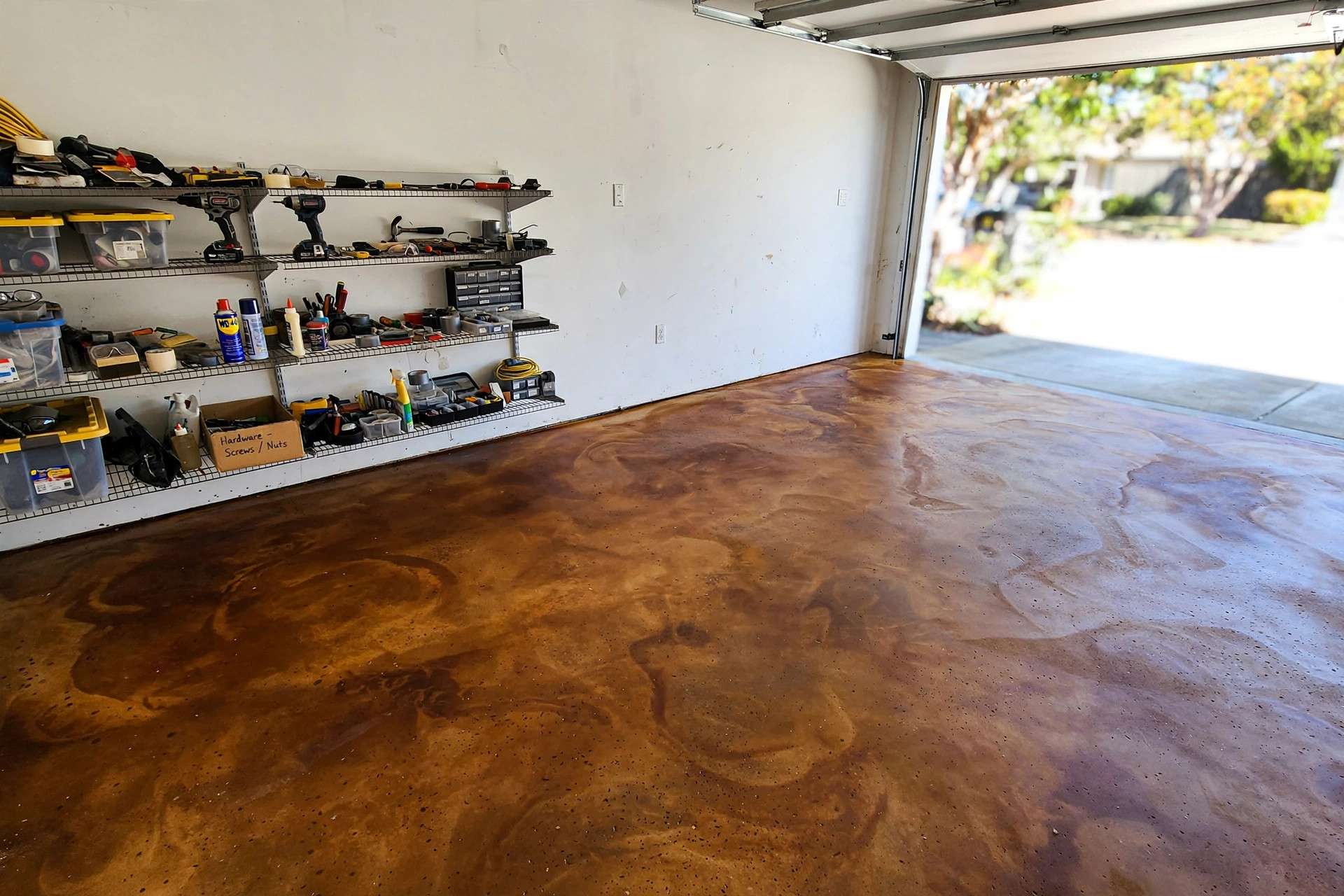

A gray concrete garage floor takes a hard beating. Cars drip oil. Boots track in mud and road salt. Tools drop and leave marks. Over time, bare concrete looks tired and worn. The best concrete floor stain for garage usa homeowners is the one that stands up to this daily abuse while making the space look better. A good stain does more than add color. It sinks into the concrete and becomes part of it. That means it will not peel or flake the way a cheap paint can.
This guide walks through the whole process. It explains the types of stain on the market. It covers what to look for when you shop. It gives honest cost figures. It shows how to apply stain safely and how to keep the floor looking good for years.
Why Stain a Garage Floor at All
Bare concrete is porous. It drinks up oil, grease, and chemicals like a sponge. Once stains soak in, they are hard to remove. A concrete stain changes this. It reacts with the surface and colors it from within. The color goes below the surface, not just on top. That makes it far tougher than paint.
There are three good reasons to stain a garage floor. The first is protection. A sealed, stained floor resists oil drips and tire marks. Spills wipe up instead of soaking in. The second is looks. A plain gray slab turns into a warm, rich surface that looks finished and cared for. The third is value. A clean, finished garage impresses buyers. It makes a home feel better maintained.
A stain also brightens the room. Many stains add depth and variation, like natural stone. This matters in a garage, where lighting is often weak. A lighter, warmer floor reflects more light and makes the space feel larger and safer to work in.
How to Choose the Right Concrete Floor Stain: Best Concrete Floor Stain for Garage Usa
Not every stain suits every garage. The condition of your floor matters a great deal. A new concrete slab behaves differently from a slab that is twenty years old. Start by looking at your floor closely. Check for cracks, old paint, and oil stains. Note any spots where water pools.
Test the Concrete First
Before you buy anything, test whether your concrete will take stain well. Sprinkle a little water on the floor. If it soaks in within a few minutes, the concrete is porous and ready. If it beads up and sits there, the surface is sealed or very dense. You may need to etch it with a mild acid wash first, or the stain will not bond.
A second test checks for old sealers. Tape a small piece of plastic to the floor and leave it overnight. If moisture builds up underneath, the slab has moisture issues. Stain may still work, but you will need a product made for damp concrete. You can find helpful guidance on surface preparation for concrete floors.
Think About Your Climate
Garages in northern states face road salt and freeze-thaw cycles. Garages in southern states face heat and humidity. Choose a stain rated for your conditions. Water-based stains often handle humidity well. Acid-based stains hold up well under salt and wear. Always read the label for temperature ranges. Most stains need the floor to be at least 50 degrees when applied.
Color and Finish Choices
Concrete stains come in earthy tones: browns, tans, grays, and terra-cottas. Acid stains give a marbled, varied look. No two floors come out exactly alike. Water-based stains give more even, solid color. Think about how the garage looks with the rest of the house. A warm brown stain pairs well with most home styles. Many shoppers browse color options for concrete stain to compare shades.
Durability Ratings
Look for stains rated for heavy traffic. Garage floors face hot tires, which can lift weak finishes. Hot tire pickup is the biggest enemy of garage floor coatings. Choose a product that names garage or industrial use on the label. A clear topcoat sealer on top of the stain adds a second layer of defense. Skimping here is false economy.
Types of Concrete Floor Stain
Two main types of stain dominate the market. Each has strengths and limits. Knowing the difference saves you from a bad buy.
Acid-Based Concrete Stain
Acid stain is the classic choice. It contains metallic salts and a mild acid. When applied, it reacts with minerals in the concrete. This chemical reaction creates color that is part of the slab itself. The result is a rich, marbled look with natural variation.
Acid stains work best on plain, unsealed concrete. They do not work well on concrete that has been painted, sealed, or patched with certain compounds. The color range is narrower: mostly browns, coppers, and tans. But the depth of color is hard to beat. The stain will not fade, peel, or chip because it is not a coating. It is a chemical change in the concrete.
The trade-off is handling. Acid stain has a strong smell and can irritate skin and lungs. You need gloves, goggles, and good ventilation. The process takes time. You apply the stain, let it react for several hours, then neutralize it with a baking soda solution. For more on chemical-based concrete products, see concrete and masonry supplies.
Water-Based Concrete Stain
Water-based stain is newer and simpler. It uses pigments that soak into the pores of the concrete. It does not react chemically. This means it works on more surfaces, including some that acid stain cannot touch.
Water-based stains offer a wider color range. You can find grays, greens, blues, and reds alongside the earth tones. The color is more even and predictable. Application is simpler too. Most products go on with a sprayer or roller, and cleanup needs only water.
The trade-off is durability. Because the color sits in the pores rather than reacting with the concrete, it can wear faster under heavy traffic. A good sealer on top is essential. For a garage that sees daily car traffic, plan on resealing every few years. You can compare stain and sealer products side by side when you shop.
Stain Versus Paint Versus Epoxy
Many shoppers confuse these three. Paint sits on top of the concrete as a film. It looks good at first but can peel under hot tires. Epoxy is a thick, tough coating. It is excellent for garages but costs more and takes more work to install. Stain falls in the middle. It costs less than epoxy, lasts longer than paint, and gives a natural look. If your goal is a rich, natural-looking floor at a fair price, stain is the sweet spot.
Cost and Price Guide
Concrete stain is one of the cheapest ways to improve a garage floor. A gallon of quality stain costs between 30 and 70 dollars. One gallon typically covers 200 to 400 square feet, depending on the porosity of the concrete. A standard two-car garage of about 400 square feet needs two gallons for two coats.
Here is a rough budget for a do-it-yourself job:
– Stain: 60 to 140 dollars for a two-car garage – Cleaner and degreaser: 20 to 40 dollars – Etching solution (if needed): 15 to 25 dollars – Sealer/topcoat: 50 to 100 dollars – Tools (sprayer, brushes, gloves): 30 to 60 dollars
Total DIY cost runs about 175 to 365 dollars. Hiring a professional costs more, often 3 to 7 dollars per square foot. For a 400-square-foot garage, that is 1,200 to 2,800 dollars. Professionals handle the prep work, which is the hardest part. The result is often more even.
Prices vary by brand and region. Checking flooring cost estimates and concrete product prices helps you set a realistic budget before you start.
How to Apply Concrete Floor Stain
Good results come from good prep. Rushing the preparation is the most common cause of failure. Set aside a full weekend for the job.
Step 1: Clear and Clean
Move everything out of the garage. Sweep the floor well. Then clean it with a concrete degreaser. Pay special attention to oil spots. Old oil can block stain from soaking in. For stubborn spots, use a poultice or a strong degreaser. Rinse thoroughly and let the floor dry for at least 24 hours.
Step 2: Repair and Etch
Fill cracks with concrete patch. Let the patch cure fully. If your water test showed poor absorption, etch the floor. Apply the etching solution as the label directs, scrub it in, and rinse well. The floor should feel slightly rough, like fine sandpaper.
Step 3: Apply the Stain
Wear gloves, goggles, and a respirator. Ventilate the garage by opening the doors. Apply the stain with a pump sprayer for even coverage. Work in small sections. Keep a wet edge so you do not get lap marks. Acid stain needs several hours to react. Water-based stain dries faster. Apply a second coat if the color looks thin after the first dries.
Step 4: Neutralize and Rinse (Acid Stain Only)
After the acid stain has reacted, neutralize it with a baking soda and water mix. Scrub and rinse thoroughly. Any leftover acid will interfere with the sealer. This step is not needed for water-based stain.
Step 5: Seal the Floor
Let the stain dry completely, usually 24 hours. Then apply a concrete sealer with a roller. Two thin coats beat one thick coat. The sealer locks in the color and protects against oil and tire marks. Let the sealer cure for 48 to 72 hours before driving on it. This waiting period is hard, but it matters. Early traffic can ruin the finish.
Care and Upkeep
A stained and sealed garage floor is easy to maintain. Sweep it regularly. Dust and grit act like sandpaper under tires and feet. Mop with a mild cleaner and water when it looks dirty. Avoid harsh chemicals and acidic cleaners. They can eat through the sealer.
Reseal every two to three years, or when water stops beading on the surface. A fresh coat of sealer takes only a few hours and keeps the stain looking new. Fix chips or worn spots promptly. Small touch-ups with matching stain keep problems from spreading.
For related concrete floor options, you may want to read about best basement flooring for concrete slab usa or polished concrete floors cost residential usa. If you are weighing other garage surfaces, see garage floor tiles interlocking reviews usa.
Safety Notes
Concrete stain products contain chemicals that demand respect. Always read the full label before you begin. Work with the garage door open. Wear chemical-resistant gloves, safety goggles, and a respirator rated for organic vapors.
Keep children and pets away until the floor is fully cured. Store leftover stain out of reach. Dispose of rags and empty containers according to local rules. Many communities have hazardous waste drop-off days. Never pour leftover stain down a drain. The EPA offers guidance on safe disposal of household chemicals.
Hot tire pickup deserves a final note. After staining and sealing, park carefully for the first few weeks. Place cardboard or mats under tires in extreme heat. A quality stain plus a good sealer resists this problem, but extra care in the first month pays off.
Frequently Asked Questions
How long does concrete floor stain last in a garage?
A properly applied stain can last 10 years or more. The stain itself does not fade because it is part of the concrete. What wears is the sealer on top. Resealing every two to three years keeps the floor looking fresh and protected.
Can I stain a garage floor that has oil stains?
Yes, but you must clean the oil out first. Stain will not soak into oil-soaked concrete. Use a heavy-duty degreaser. For deep stains, a poultice draws the oil out over several days. Test with water afterward. If water soaks in, the floor is ready.
Is concrete stain slippery?
Stain alone is not very slippery. The sealer on top can be slick when wet. Add a non-slip additive to the sealer to improve traction. This is cheap insurance in a garage where water and oil may be present.
What is the best color of concrete stain for a garage?
Medium browns and grays hide dirt best. Dark stains show dust and tire marks more. Light stains brighten a dark garage but need more cleaning. A warm brown is the most popular choice because it hides wear and suits most homes.
Can I apply stain over old paint?
No. Stain needs bare, porous concrete. Old paint blocks absorption. You must strip the paint first, usually by grinding or chemical stripping. If stripping sounds like too much work, consider epoxy or floor covering alternatives instead.
Does concrete stain work on new concrete?
New concrete must cure first. Wait at least 28 days after the slab is poured. Some pros wait 60 days. Staining too early traps moisture and leads to poor results. For guidance on new concrete, see tile and concrete surface advice.
A Short Final Word
Finding the best concrete floor stain for garage usa homes comes down to three things: the right type for your floor, careful preparation, and a quality sealer on top. Acid stain gives deep, permanent color with a natural marbled look. Water-based stain gives more color choices and easier application. Both beat bare concrete by a wide margin.
Take your time with the prep work. Clean deeply. Test absorption. Apply in good weather. Seal well and let it cure. Do these things, and your garage floor will look good for years. For more home improvement ideas, the home project guides and independent product reviews are worth a look, and paint and stain color tools can help you pick a shade with confidence.
References
Behr. (n.d.). Paints, primers, and stains. https://www.behr.com Consumer Reports. (n.d.). Product reviews and ratings. https://www.consumerreports.org Daltile. (n.d.). Ceramic and porcelain tile. https://www.daltile.com LL Flooring. (n.d.). Hardwood, vinyl, and tile flooring. https://www.llflooring.com Lowe’s. (n.d.). Home improvement products. https://www.lowes.com Quikrete. (n.d.). Concrete and masonry products. https://www.quikrete.com Shaw Floors. (n.d.). Flooring products. https://www.shawfloors.com Sherwin-Williams. (n.d.). Paints and coatings. https://www.sherwin-williams.com The Home Depot. (n.d.). Home improvement products. https://www.homedepot.com The Spruce. (n.d.). Home and garden advice. https://www.thespruce.com This Old House. (n.d.). Home renovation guidance. https://www.thisoldhouse.com U.S. Environmental Protection Agency. (n.d.). Protecting human health and the environment. https://www.epa.gov
Was this guide helpful?

About Michael Thompson
The My Garden US editorial team writes practical, in-depth home and garden guides for American homeowners — tested advice, no fluff.
You May Also Like

Flooring Financing Options for Homeowners in the USA
July 30, 2026 0 views
Concrete Look Tile for Modern Homes USA: A Plain Buyer’s Guide
October 5, 2026 0 views
Marble Bathroom Floor Tile Pros Cons USA: A Plain Guide for Homeowners
May 9, 2026 0 views