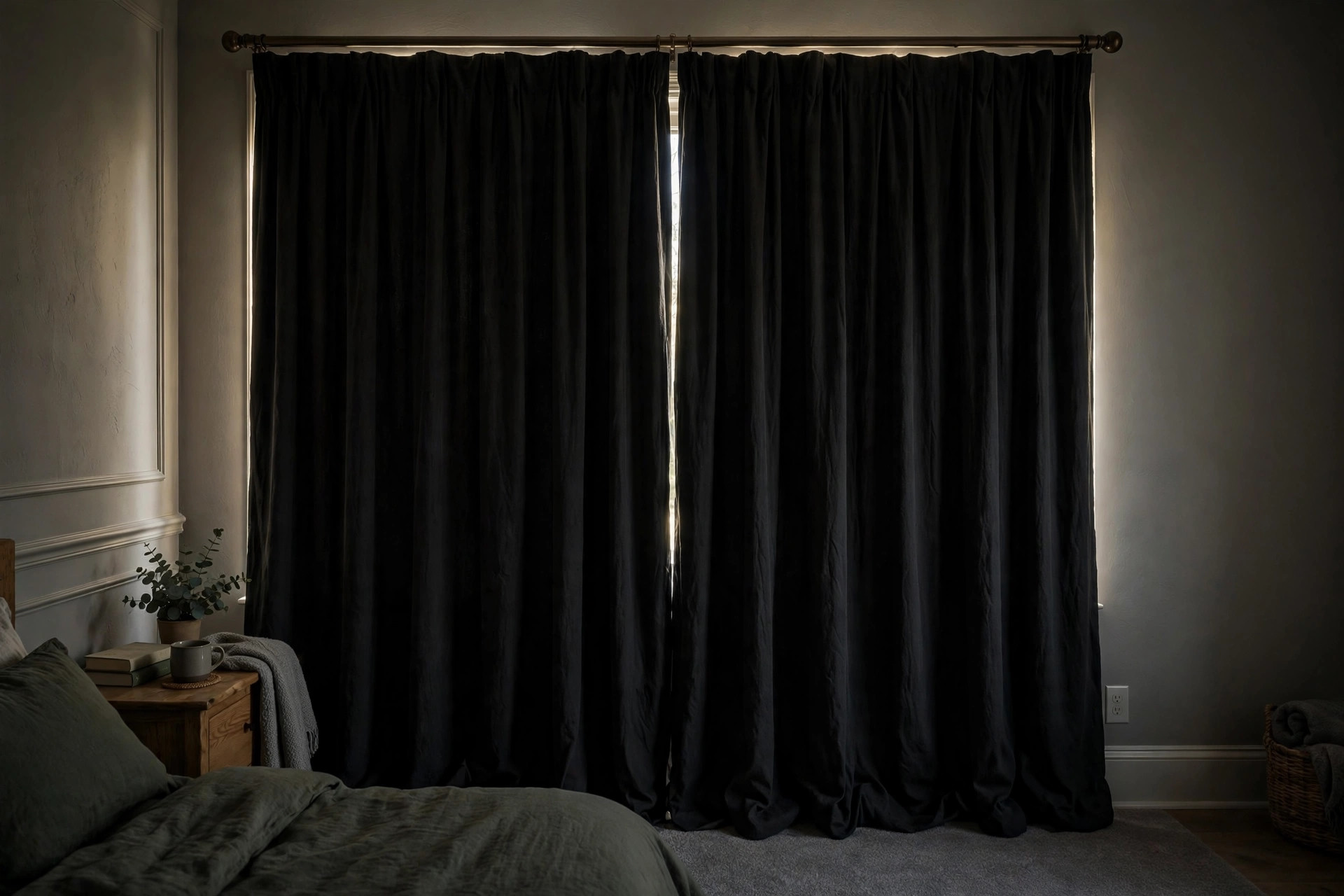

This blackout curtains for bedrooms reviews and buying guide is written for one simple purpose. It helps you pick bedroom curtains that truly block light, lower noise a little, and make rest easier. Many people buy curtains called “blackout” and feel let down. Light still leaks at the edges. The room stays grey at dawn. This guide explains what to check before you pay, how the main types differ, what fair prices look like, and how to keep the curtains working for years. It also gathers honest advice on safety, a short point on reviews, and answers to common questions. Read it once, and you can shop with a clear head.
Why Blackout Curtains Matter for Bedrooms
Sleep researchers have said for years that a dark room helps the body rest. Even small amounts of light can wake a light sleeper. Street lamps, car headlights, a porch light across the street, and early sun can all pull you out of deep sleep. Heavy curtains with a true blackout layer cut most of that light. Many readers also notice a small drop in noise. Thick fabric softens traffic hum and neighbor sounds, though it will not make a room silent. A third gain is heat control. A good pair of lined curtains keeps summer heat out during the day and holds warmth in on winter nights. For shift workers, parents of babies, and anyone with a window facing east, these gains add up. The room stays dark at six in the morning. The bed feels cooler on hot afternoons. You wake less, and you wake later. That is the plain value of top rated blackout curtains for bedrooms for sale and of any honest blackout product you buy with care.
What to Look for When You Buy: Blackout Curtains for Bedrooms Reviews and Buying Guide
Good bedroom curtains share the same traits. Check each one before you order.
True Blackout or Room Darkening
Not all dark curtains are blackout curtains. Many shops sell “room darkening” panels that block about eighty to ninety percent of light. True blackout panels block nearly all of it. Hold the fabric up to a bright lamp. If you can see the bulb through it, it is not a true blackout curtain. Labels help, but the hand test does not lie. In your notes, write down which panels passed the test. This one step will save you more grief than any review score.
Fabric and Weave
The blocking layer matters most. Cheap panels often use a thin foam coating on the back of ordinary cloth. It works at first, but it can crack and peel after a few years of sun and heat. Better panels use a tight weave of dark yarn, or two to three woven layers with a dense middle layer. Triple-weave polyester is common and holds up well. Velvet and thick cotton duck are also good, and they look rich. Navy blue velvet curtains are a favorite for bedrooms because the deep color and heavy drape pair well with quiet rooms. Whatever fabric you like, check the weight. A heavy panel in your hand is a better sign than a pretty picture on a box.
Size and Fit
Light leaks at the edges more than through the middle. Buy panels wider than the window, at least twice the window width if you want full gathers. Buy them longer than the frame so the bottom reaches the sill or the floor. Mount the rod wide and high, a few inches beyond each side of the trim and several inches above the frame. This simple trick covers the glass and cuts the leaks that ruin sleep. If your windows are odd sizes, shops that cut to order are worth a look, and sites such as Blinds.com list made-to-measure choices for unusual frames.
Header Style and Rods
Grommets, back tabs, rod pockets, and pinch pleats all hang differently. Grommets slide fast and look modern. Rod pockets are quiet but hard to open and close. Back tabs hide the rod and give a tailored look. Pinch pleats need hooks and rings but hang in neat folds. Make sure the rod you own is strong enough for the weight. A thin spring rod will bow under heavy triple-weave panels. Shops like Lowe’s carry stout rods and brackets that hold the load, and staff there can help you match the hardware to the panel weight.
How to Read Reviews Without Being Fooled
Reviews help, but only if you read them with care. Short five-star notes that say “love them” tell you little. Look for reviews that name the window size, the direction the window faces, and the time of day the room stays dark. A buyer who writes “my east window is dark at 7 a.m. in June” gives you a real test. Watch for patterns across many reviews rather than one angry or glowing note. If twenty people say the coating peels after a year, believe the pattern. Groups that run lab tests add another layer of proof. Consumer Reports publishes side-by-side tests of home goods, and their buying notes on window coverings explain which claims hold up. Pair their notes with everyday buyer reviews and you get a fair picture.
Types and Options
Blackout curtains come in a few main forms. Each suits a different room and budget.
Foam-backed panels. A foam layer coats the back of the fabric. They are cheap and common in big-box stores. The block is strong at first. The risk is peeling and cracking over time, mainly on south-facing windows that bake in the sun.
Triple-weave panels. Three layers are woven into one cloth, with the dark layer in the middle. There is no coating to peel. They drape well and last longer. Most reviewers rank them the best value for bedrooms.
Thermal-lined curtains. A thick lining adds heat control to the light block. These are the warmest choice for cold climates and the coolest choice for hot afternoons. They are heavy, so plan for a strong rod.
Velvet and heavy cotton. These block light by sheer weight and density. They look rich in a main bedroom. Velvet needs gentle washing care, and cotton can fade in strong sun.
Portable stick-on shades. These are not curtains, but they pair well with them. They cling to the glass and add a second layer of dark for renters or for travel. Use them with panels for near-total dark.
Layered looks. Many buyers hang a sheer or linen panel over the blackout pair. The sheer softens the room by day, and the blackout pair closes at night. Decorating guides at The Spruce show simple ways to layer two rods so the look stays clean.
Cost and Price
Expect honest ranges. A pair of standard-size foam-backed panels often runs from twenty to sixty dollars. Triple-weave pairs in standard sizes usually run from forty to one hundred twenty dollars. Velvet, thermal-lined, and extra-wide pairs can reach one hundred fifty to three hundred dollars or more. Custom-made panels cost the most, often several hundred dollars per window, but they fit odd frames perfectly. Price per window, not per panel, is the number to compare. Two shops may both sell a “pair,” while a third sells single panels, and the single can look cheaper until you count both sides of the window. Budget chains such as Target and IKEA keep prices low and styles simple. Mid-range catalogs like Wayfair carry hundreds of colors and sizes. Heavier, tailored options from shops such as Pottery Barn cost more but often last longer. Watch for sales near holidays, when home goods stores cut prices on window lines.
Care and Upkeep
Care is simple if you follow the label. Most polyester blackout panels can go in the washing machine on a gentle cycle with cold water. Hang them to dry or tumble on low heat. Keep hot irons off the coated back of foam-backed panels, because heat can crack the coating. Vacuum the folds now and then with a brush head to lift dust. Rotate the panels end to end once a year if one side takes more sun, so the fade stays even. Check the grommets and tabs once a season. A loose grommet can tear the fabric if you yank the panel. With steady care, a good triple-weave pair should serve a bedroom for five to eight years, and often longer.
Safety
Two safety points deserve your attention. First, cords. Any curtain or blind with a looped cord can catch a small child or a pet. The U.S. Consumer Product Safety Commission has long warned about corded window coverings and urges cordless choices where young children live. Blackout curtains themselves hang on a rod, so they carry no cord risk, but many people pair them with corded blinds behind them. Choose cordless blinds for that inner layer, or cut and anchor old cords at once. Second, fire. Keep heavy panels clear of baseboard heaters, radiators, and candles on the sill. Thick fabric near a heat source is a hazard. Mount the rod so the panels clear the heater by several inches, and never let a long panel rest on a warm radiator cover.
Buying Blackout Curtains Online
Most people now buy bedroom curtains on the web, and the web rewards a careful buyer. Start with exact window measurements, width and length, written down. Filter shop listings by true blackout, not room darkening. Read the fabric notes and the care notes. Scan twenty or more reviews for light-blocking proof, not star counts. Check the return window before you order, because color on a screen is never exact. Order one pair first if you are unsure, test it at dawn, and then order the rest. Decorating sites such as HGTV offer room photos that help you judge color and length against furniture you already own. A little patience at this stage beats sending back four wrong pairs.
Frequently Asked Questions
Do blackout curtains make a room fully dark? Nearly. A good pair blocks almost all light through the fabric. Small leaks may still show at the top, sides, and bottom. Wide rods, tall mounting, and long panels cut those leaks. For total dark, add a second layer such as a fitted shade behind the panels.
Will they help with noise? A little. Thick panels soften street noise and muffle echoes in the room. They will not block loud music, barking dogs, or a busy road the way double-pane glass does. Treat noise reduction as a bonus, not the main reason to buy.
Are they good for babies and shift workers? Yes. These two groups gain the most. Babies nap longer in dark rooms, and night-shift workers can sleep through morning sun. Many parents and nurses call blackout curtains the single best sleep purchase they made.
How do I measure for them? Measure the window frame, then add width and height. For width, plan panels that cover at least one and a half to two times the frame width. For length, decide whether the panels stop at the sill, below the sill, or at the floor, then add a few inches. Write both numbers down before you shop.
Can I wash them? Most polyester panels, yes, on gentle with cold water. Read the sewn-in label first. Skip high heat, and never iron the coated back of foam-backed panels. Velvet and cotton pairs may need dry cleaning, so check the label.
Do they save energy? They help. A lined pair slows heat loss on winter nights and blocks solar heat on summer days. The savings are modest per window, but across a house with several bedrooms the effect is real. Keep the panels closed during the hottest part of the day for the best gain.
A Short Final Word
A bedroom should be the darkest room in the house at night and the calmest room at dawn. Blackout curtains are the simplest way to get there. Choose true blackout over room darkening. Pick a fabric and weave that will last. Measure wide, hang high, and test the pair at first light. Read reviews for proof, not praise, and keep cords and heaters in mind for safety. Do this, and the curtains will pay you back every morning in quiet, dark, unbroken sleep. If you are weighing an outdoor project next, note that affordable outdoor patio curtains follow different rules, since sun and rain replace sleep as the main concern.
References
Blinds.com. (n.d.). Window blinds, shades, and shutters. https://www.blinds.com Consumer Reports. (n.d.). Product reviews and ratings. https://www.consumerreports.org HGTV. (n.d.). Home and garden ideas. https://www.hgtv.com IKEA. (n.d.). Home furnishings. https://www.ikea.com Lowe’s. (n.d.). Home improvement products. https://www.lowes.com Pottery Barn. (n.d.). Furniture and home decor. https://www.potterybarn.com Target. (n.d.). Retail store. https://www.target.com The Spruce. (n.d.). Home and garden advice. https://www.thespruce.com U.S. Consumer Product Safety Commission. (n.d.). Product safety information. https://www.cpsc.gov Wayfair. (n.d.). Furniture and home goods. https://www.wayfair.com
Was this guide helpful?

About David Wilson
The My Garden US editorial team writes practical, in-depth home and garden guides for American homeowners — tested advice, no fluff.
You May Also Like

How to Find the Best Custom Drapery Services Near Me
May 3, 2026 0 views
Custom Made Curtains Online Price Comparison USA: A Clear Guide for American Homes
March 8, 2026 0 views
Best Solar Shades for Sunrooms Buying Guide
April 20, 2026 0 views