
Introduction
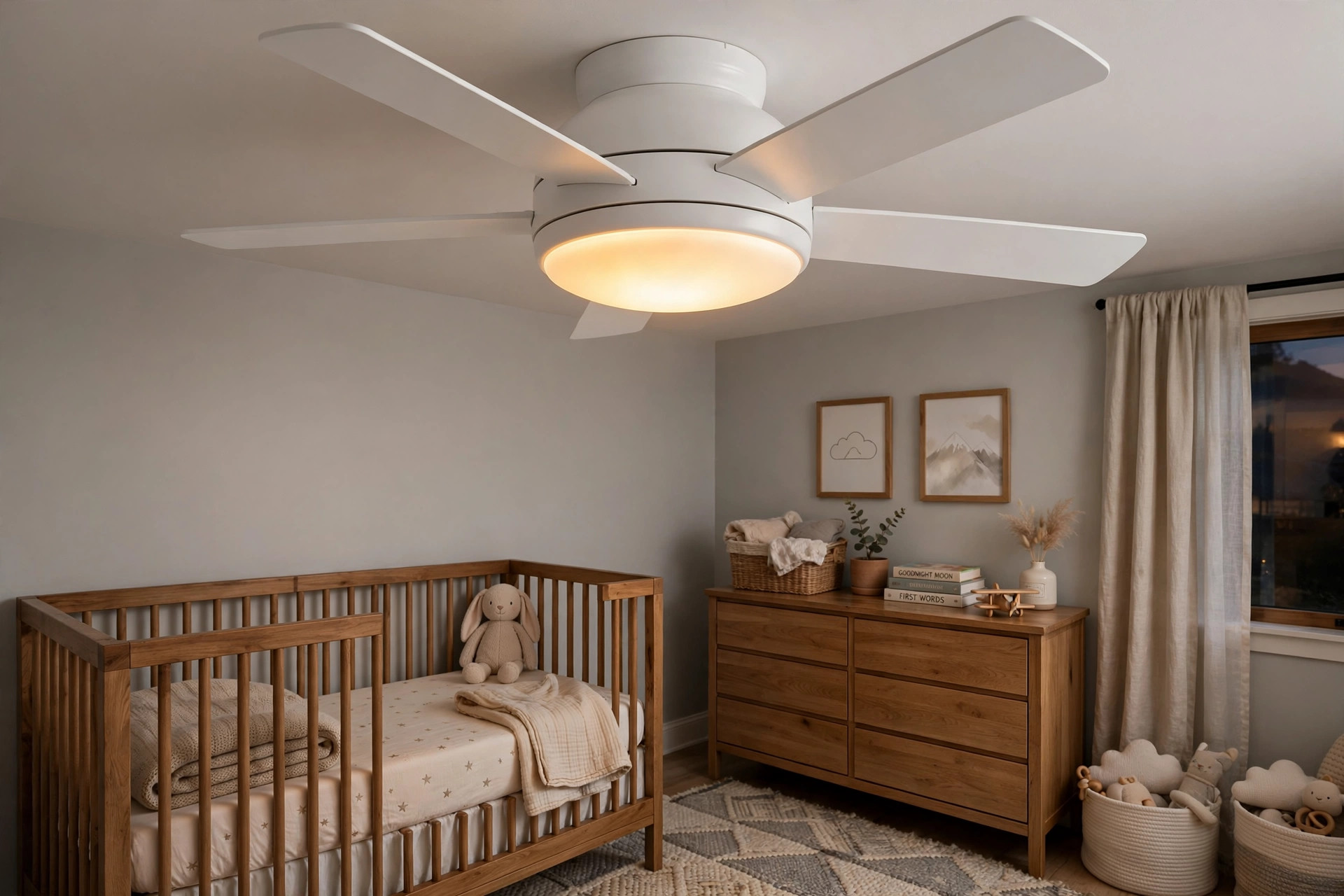
A nursery ceiling fan with light for air circulation is one of the most useful things you can put in a baby’s room. It moves the air on warm days. It gives soft light for night feeds. It can even mask noise from the rest of the house. Many parents pick one as soon as they set up the nursery.
The room where a baby sleeps should feel calm. It should not be too hot or too cold. A ceiling fan helps keep the air even. A built-in light means one less lamp to find space for. This guide will walk you through why it matters, how to choose one, and how to keep it safe.
Why It Matters: Nursery Ceiling Fan with Light for Air Circulation
Air Movement Keeps Babies Comfortable
Babies sleep best in rooms that are cool and steady. Stale air can make a small room feel hot even when the temperature is fine. A fan moves the air gently. It breaks up warm pockets near the ceiling. It keeps the whole room at one even temperature.
Room air movement has also been studied in relation to infant sleep. Guidance shared on HealthyChildren.org, run by the American Academy of Pediatrics, discusses safe sleep practices for newborns. A fan is not a cure for anything. But gentle air movement is part of a safe, comfortable sleep space.
One Fixture, Two Jobs
A nursery has little spare space. A fan with a light does two jobs at once. It cools the air in summer. It gives light for diaper changes at three in the morning. Many models dim low enough for night feeds without waking the baby fully.
It can also mask street noise. A fan hum is steady and soft. Many babies find it soothing. Parents often call it white noise. It can help a baby sleep through doors closing or dogs barking.
Energy Savings
Running a ceiling fan costs less than running an air conditioner. When a fan moves air, the room feels cooler. You can set the thermostat a few degrees higher. ENERGY STAR rates ceiling fans for efficiency, so you can check how much power a model uses before you buy.
How to Choose
Size and Room Fit
Measure the room first. Most nurseries are small. A fan with a blade span of 36 to 44 inches suits a room up to about 150 square feet. Larger rooms may need a 52-inch fan. A fan that is too large will feel strong and loud. A fan that is too small will not move enough air.
Check the ceiling height. The blades should hang at least seven feet above the floor. In rooms with eight-foot ceilings, a flush mount model sits close to the ceiling. Higher ceilings need a downrod to bring the blades to the right height. Fan buying guides at Home Depot explain how to match blade size to room size.
Quiet Motors Matter Most
A nursery fan must run quiet. Look for DC motors. They cost more but run softer than older AC motors. They also use less power. Check the sound rating if the maker gives one. Read reviews that mention nursery or bedroom use.
Speed settings matter too. A good fan has at least three speeds. Low speed should feel like a soft breath of air. High speed should still sound calm. Many parents leave the fan on low all night.
Light and Dimming
The light should dim. A bright light at full power is fine for daytime play. At night, you want a low warm glow. LED light kits are best. They last long and stay cool. Cool bulbs are safer than hot ones in a child’s room.
Check the color temperature. Warm light around 2700K feels soft and calm. Cool white light feels harsh at night. Some fans let you change the tone from warm to cool. That can be handy as the child grows.
For an even softer glow, a nursery lamp with soft warm light for night can pair well with the fan’s built-in light during late feeds.
Style and Finish
The fan should fit the room. White and soft wood tones suit most nurseries. Many makers now sell fans made for kids’ rooms. Some have fun blade shapes. Keep the style simple. Your child will outgrow themed decor fast.
Blades should be smooth and sealed. Avoid rough wood that can splinter. A fan with a closed light cover is best. Open bulbs can break. Nursery collections at Pottery Barn Kids show finishes that match common nursery furniture.
Remote Control and Smart Features
A remote is worth the extra cost. You can change speed or dim the light without walking to the crib. That matters when the baby just fell asleep. Some fans link to a wall switch. Others work with smart home apps.
Smart fans let you set schedules. The fan can slow down after midnight. The light can turn off at a set time. These features are nice but not needed. A simple remote model works fine.
Types and Options
Standard Downrod Fans
A downrod fan hangs from a short rod. It suits ceilings nine feet or higher. The rod puts the blades in the best spot for air flow. Most downrod fans come with a light kit. They are the most common type in stores.
Flush Mount Fans
Flush mount fans hug the ceiling. They are made for low ceilings. Most nurseries have standard eight-foot ceilings, so this type is common. Air flow is a bit less than a downrod model. But in a small room, it is more than enough. Step-by-step installation guides at Lowe’s show how to mount them safely.
Fans with LED Light Kits
Almost every new fan uses LEDs now. LED kits are built into the fan base. They give even light with no dark spots. They use little power. They can last for years without a bulb change. Some let you pick warm or cool tones. A quiet ceiling fan for nursery use almost always comes with an LED kit today.
Smart Ceiling Fans
Smart fans connect to your phone or voice helper. You can dim the light from bed. You can set the fan to turn on when the room gets warm. They cost more. They need a steady Wi-Fi signal. For most parents, a remote model is simpler and just as good.
Cost and Price
A nursery ceiling fan with light for air circulation costs between 60 and 250 dollars for most models. Basic flush mount fans start near 60 dollars. Quiet DC motor fans run 120 to 200 dollars. Smart models can reach 300 dollars or more.
Installation adds cost if you hire help. An electrician may charge 100 to 200 dollars to hang a fan. If a light fixture already hangs where you want the fan, the job is simple. Many handy parents do it themselves in an hour. Always turn off the power at the breaker first.
Long-term cost is low. A fan uses far less power than an air conditioner. LEDs add only a few dollars a year to the power bill. Tests and reviews at Consumer Reports can help you compare models before you spend.
Care and Upkeep
Cleaning the Blades
Dust builds up on fan blades. In a nursery, dust matters more. Wipe the blades once a month. Use a damp cloth. Dry them after. A pillowcase works well to trap dust as you slide it over each blade.
Check the light cover too. Dust on the cover dims the light. Most covers twist off by hand. Wash them with warm soapy water. Let them dry fully before you put them back.
Checking Screws and Balance
A fan can loosen over time. Once a year, turn off the power and check the screws. Tighten any that feel loose. If the fan wobbles, use a balancing kit. Most fans come with one in the box.
Listen for new sounds. A rattle or hum that was not there before means something moved. Fix it early. A steady fan is a safe fan.
Light Care
LED kits need little care. They rarely burn out. If one fails, check the maker’s guide for a swap part. Keep the manual in a drawer. You may need the model number years later.
Safety
Safety comes first in a nursery. Hang the fan high enough that no one can reach the blades. Blades should be at least seven feet off the floor. Never hang a fan low over a crib or a changing table.
Make sure the fan is rated for the room. Use an indoor-rated fan for a nursery. Outdoor fans are built for rain and cost more. They are not needed inside.
Keep cords out of reach. The Consumer Product Safety Commission shares nursery safety guidance that covers cords, small parts, and furniture placement. A remote control should live on a high shelf, not in the crib.
Check the weight rating of the ceiling box. Fans are heavy. A normal light box may not hold a fan. A fan-rated box is marked as such. If you are not sure, ask an electrician. This is the one part of the job you should not guess at.
Run the fan on low near a sleeping baby. Fast air on a newborn can feel cold. Keep the crib out of the direct path of the air stream. A gentle room-wide movement is what you want.
Frequently Asked Questions
Is a ceiling fan safe for a newborn’s room?
Yes, when it is hung high and run on low. Keep the blades at least seven feet above the floor. Keep the crib out of the direct air stream. Gentle air movement keeps the room even and comfortable. Parenting sites like What to Expect cover newborn sleep basics that pair well with these tips.
Should the fan blow down or up in a nursery?
In warm months, set it to blow down. That pushes cool air toward the room. In cold months, run it slow in reverse. That pulls warm air up and spreads it without a draft. Most fans have a small switch on the motor housing for this.
What size fan does a small nursery need?
A 36 to 44 inch fan fits most nurseries. Measure the room first. A fan that is too big will feel loud and strong. Retailers like IKEA and Wayfair list blade span on every product page, so you can compare sizes.
Can I use the fan light as a night light?
Yes. Pick a model that dims very low. Warm dim light lets you feed and change the baby without full wakefulness. If you need even less light, a dedicated nursery lamp with soft warm light for night adds a second low glow option.
Do I need an electrician to install a nursery ceiling fan?
If a wired light box already exists, many parents install it themselves. If there is no box, or the box is not fan-rated, hire an electrician. The job is quick for a pro. Design and safety guides at The Spruce walk through what to check before you start.
When should I replace a nursery ceiling fan?
Most fans last ten to fifteen years. Replace one that wobbles, hums loudly, or has cracked blades. Newer models run quieter and use less power. When you move your child to a toddler pillow for the first bed transition, it can be a good time to check the fan too.
A Final Word
A nursery ceiling fan with light for air circulation is a small change that makes a big difference. It keeps the air fresh. It gives soft light when you need it. It runs quiet in the background while your baby sleeps.
Pick a quiet model. Hang it high. Dim the light low at night. Clean it now and then. Pair it with the rest of the room, like a best nursery dresser changing pad combo for a complete setup. Your nursery will feel calm, cool, and ready for rest.
References
American Academy of Pediatrics. (n.d.). HealthyChildren.org. https://www.healthychildren.org Consumer Reports. (n.d.). Product reviews and ratings. https://www.consumerreports.org ENERGY STAR. (n.d.). Energy efficient products. https://www.energystar.gov IKEA. (n.d.). Home furnishings. https://www.ikea.com Lowe’s. (n.d.). Home improvement products. https://www.lowes.com Pottery Barn Kids. (n.d.). Kids furniture and decor. https://www.potterybarnkids.com The Home Depot. (n.d.). Home improvement products. https://www.homedepot.com The Spruce. (n.d.). Home and garden advice. https://www.thespruce.com U.S. Consumer Product Safety Commission. (n.d.). Product safety information. https://www.cpsc.gov Wayfair. (n.d.). Furniture and home goods. https://www.wayfair.com What to Expect. (n.d.). Pregnancy and parenting guidance. https://www.whattoexpect.com
Was this guide helpful?

About Jennifer Lee
The My Garden US editorial team writes practical, in-depth home and garden guides for American homeowners — tested advice, no fluff.
You May Also Like
Best Kids Table for Lego Building Play: A Parent’s Guide
September 10, 2026 0 views
A Kids Bedroom Lamp for Reading in Bed: A Parent’s Guide
February 17, 2026 0 views
Best Toddler Tower for Kitchen Helping Stool: A Parent’s Buying Guide
January 31, 2026 0 views