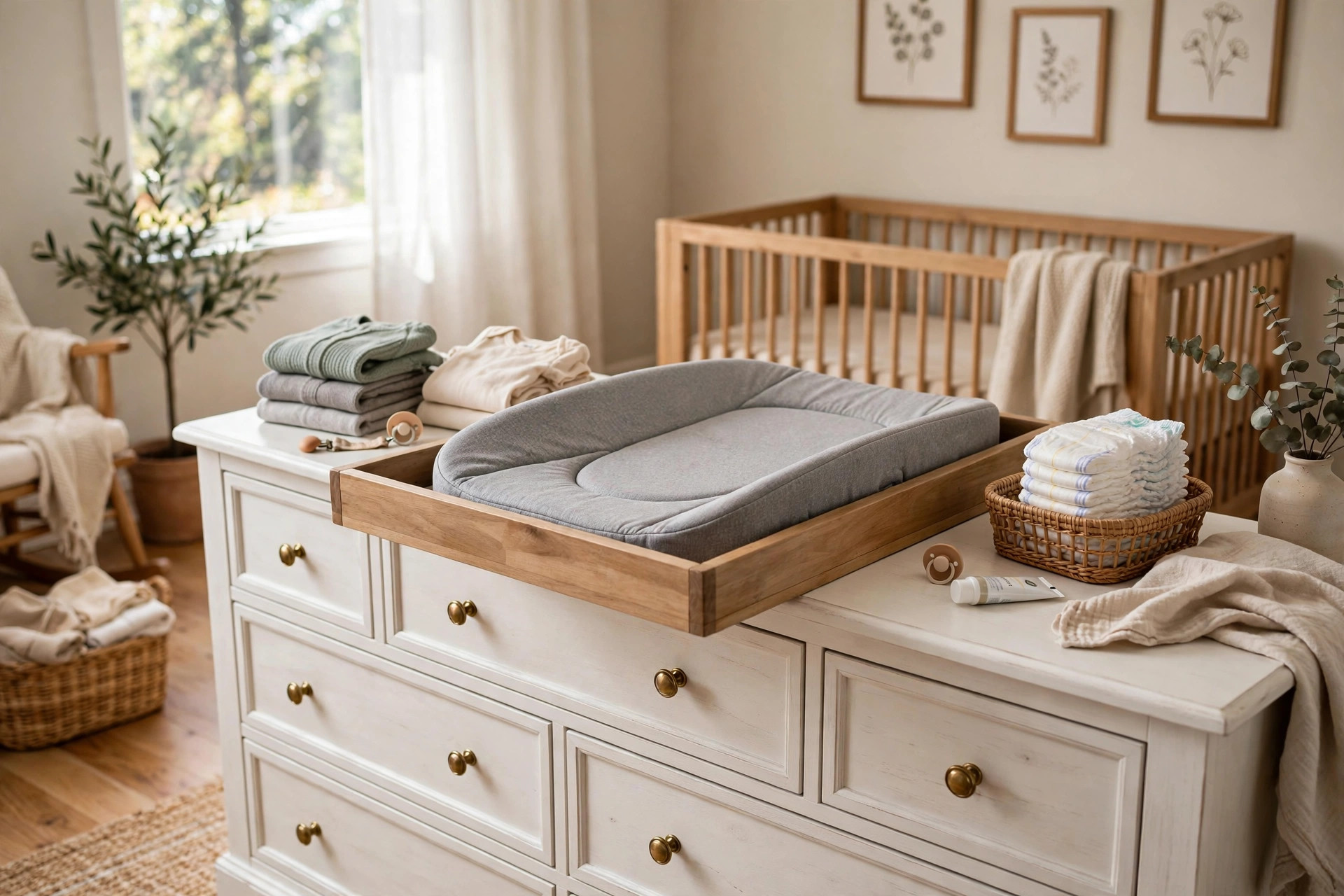
A nursery dresser with removable changing tray is one of the smartest buys a new parent can make. It holds diapers, wipes, clothes, and blankets in its drawers. It also gives you a raised, flat spot to change your baby. The changing tray lifts off when you no longer need it, and the dresser serves your child for many more years. This guide explains why this piece of furniture matters, what to look for, what it costs, and how to keep it safe and clean.
Why a Changing Dresser Matters
A new baby needs changing many times each day. In the first months, you may change ten or more diapers in a single day. You need a steady, waist-high surface. Bending over a bed or a couch strains your back. A changing table on its own takes up floor space and becomes useless once the child grows. A nursery dresser with removable changing tray solves both problems.
The dresser stores everything within arm’s reach. Diapers go in the top drawer. Wipes and creams sit in a small basket on the tray. Onesies and sleepers fill the lower drawers. You never have to leave your baby alone to fetch supplies. That matters, because safety experts warn that you must keep one hand on your baby during every change.
The removable tray is the key feature. While your baby is small, the tray sits on top of the dresser and holds a contoured changing pad. When your child outgrows diapers, you lift the tray off. The dresser becomes plain bedroom storage. It can last from the newborn years through the teen years. Many parents find it more useful than a nursery crib with changing table attached, because the dresser stands on its own and moves from room to room.
Space is another reason. Many nurseries are small, sometimes only ten or twelve feet wide. A separate changing table eats up precious floor space. A combined dresser and changing top uses the same footprint as a dresser alone. You keep the room open and easy to walk through.
What to Look For When You Choose: Nursery Dresser with Removable Changing Tray
Not every dresser with a tray is built the same. The wrong choice can wobble, scratch, or fail to hold the pad. Use the points below to judge each model before you buy.
Size and Fit
Measure your nursery first. Write down the width of the wall where the dresser will stand. Most nursery dressers are between 33 and 54 inches wide. Make sure the piece fits with room to open drawers fully. Check the height too. The changing surface should sit at a comfortable level for you. If you are tall, a low dresser forces you to bend. If you are short, a very tall dresser makes lifting the baby hard.
The tray itself must fit the dresser top exactly. A tray that overhangs the edges can tip. The best models come from the same maker as the dresser, so the fit is exact. If you buy the tray separately, check the width and depth against your dresser top before you order. Retailers such as IKEA and Wayfair list these measurements on each product page.
Drawer Space and Layout
Think about what you will store. Diapers take one drawer. Wipes, creams, and medicine take another. Clothes take at least two more. Three drawers are the minimum for a newborn. Six drawers give you room to grow. Deep drawers hold folded clothes and bulky blankets. Shallow top drawers are handy for small items like socks, hats, and nail clippers.
Drawer slides matter. Ball-bearing slides open smoothly and stay open when you pull them. Cheap wood-on-wood slides can stick, especially in humid rooms. Anti-tip hardware is a must. It fastens the dresser to the wall so it cannot fall forward when drawers are open. Every nursery dresser should include this kit in the box.
The Removable Tray
Look closely at how the tray attaches. The best trays lock to the dresser top with screws or sturdy clips. The lock should be strong enough that the tray cannot slide when you push it. The tray rim should be at least two inches high on three sides. This rim keeps the changing pad from sliding off.
The changing pad itself should be contoured, with raised sides that cradle the baby. A safety strap on the pad adds a layer of protection. Some trays include a pad in the price. Others sell it separately. Check before you buy, so you do not end up short one item at setup time. Shops like Target and Babylist often bundle the tray, pad, and dresser together.
Build Quality and Materials
Solid wood dressers last the longest. Hardwoods such as pine, poplar, and rubberwood stand up to years of use. Engineered wood, such as MDF with a veneer, costs less and can still last if the joints are strong. Avoid dressers with thin backs held on by small staples. Look for dovetail or dowel joints on the drawers.
The finish should be smooth and free of chips. Painted dressers should use paint made for children’s furniture. Stained dressers should have a clear, sealed coat. A rough spot can snag clothes or scratch little fingers. Makers like Pottery Barn Kids and Delta Children publish the materials and finishes they use, which makes comparison easier.
Types and Options
Nursery dressers with removable changing trays come in several styles. Each style suits a different home and budget.
Standard three-drawer dressers. These are the most common. They are compact and fit small nurseries. The changing tray sits across the full top. They work well from birth through the early school years.
Wide six-drawer dressers. These offer double the storage. They suit parents who want to keep all the baby’s clothes, diapers, and linens in one place. They need a wider wall. After the tray comes off, they serve as full bedroom dressers for older children.
Tall chests of drawers. Some chests reach 48 inches or higher. They hold a great deal in a narrow footprint. Check the changing height before you buy a tall chest. Some are too tall for comfortable changing.
Convertible nursery sets. Many brands sell a crib, dresser, and changing tray as a matching set. The pieces share one finish and one style. Buying the set often costs less than buying each piece alone. It also keeps the room looking tidy and planned.
Neutral versus themed designs. White, gray, and natural wood dressers match almost any nursery theme. They also suit a child’s later tastes. Bright colors and character themes look fun at first but may feel childish by age five. A neutral dresser lasts longer as the child grows.
When you decorate the room, small touches add warmth. A kids wall decal growth chart for measuring height on the wall beside the dresser turns the corner into a keepsake spot you will use for years.
Cost and Price
Prices for a nursery dresser with removable changing tray vary widely. Budget models in engineered wood start around 150 dollars. Mid-range solid wood dressers run from 250 to 450 dollars. High-end sets with matching cribs can reach 800 dollars or more.
The tray itself, if sold separately, costs between 40 and 120 dollars. Changing pads range from 20 to 60 dollars. Waterproof pad covers, which you will want at least two of, cost 10 to 25 dollars each.
To get the best value, watch for bundle deals. Many stores cut the price when you buy the dresser, tray, and pad together. Holiday sales in November and January often bring the deepest discounts. Buying secondhand can save money, but check used dressers with care. Look up the model on the CPSC recall list before you bring it home. Old dressers may miss current safety standards or lack anti-tip kits.
For older children, the same kind of value thinking applies. A kids loft bed with futon underneath teens is another piece that grows with the child and earns its price over many years.
Care and Upkeep
A nursery dresser takes daily use. Simple care keeps it looking and working well for years.
Wipe the dresser top and tray with a damp cloth once a week. Use mild soap and water. Avoid harsh cleaners, which can damage the finish. Dry the surface right away so moisture does not seep into seams.
Clean the changing pad after each use. Most pads have a waterproof surface that wipes clean. Wash pad covers in hot water to kill germs. Keep two or three covers in rotation so you always have a clean one ready.
Check the hardware every few months. Screws on the tray can loosen with daily use. Tighten them with a screwdriver. Make sure the anti-tip strap or bracket is still firmly attached to the wall. Test the drawer slides and add a drop of silicone lubricant if they start to stick.
When the diaper years end, remove the tray. Fill any screw holes with wood filler that matches the finish. Sand the spots smooth and touch up the paint or stain. The dresser will look new again and serve your child through school and beyond.
Safety
Safety comes first with any baby furniture. A nursery dresser with removable changing tray must meet the same care as a crib.
Always keep one hand on your baby during changes. Never walk away, even for a second. Babies can roll sooner than you expect. Keep diapers, wipes, and creams within reach so you never need to step away.
Use the safety strap on the changing pad every time. The strap is not a substitute for your hand, but it slows a sudden roll. The pad must sit flat inside the tray rim. If the pad slides or bunches, replace it.
Anchor the dresser to the wall with the anti-tip kit. A climbing toddler can pull a loaded dresser forward. Tip-over injuries send thousands of children to emergency rooms each year. The CPSC offers free guidance on anchoring furniture, and HealthyChildren.org publishes nursery safety checklists worth reading before the baby arrives.
Keep small items out of reach. Creams, lotions, and medicines belong in a high drawer or a locked box. Cords from monitors or lamps should run behind the dresser, well away from little hands.
Check the product for recalls before you buy and again once a year. The CPSC recall database lets you search by brand and model. Guides at The Spruce also track common nursery furniture recalls and explain what to do if your model is listed.
Frequently Asked Questions
When should I remove the changing tray?
Most parents remove the tray when the child stops wearing diapers, usually between age two and three. Some remove it earlier if the child climbs or tries to stand on the dresser. Watch your child’s behavior and remove the tray as soon as climbing starts.
Can I use any changing pad with the tray?
Use a pad that fits the tray’s inside measurements. A pad that is too small slides around. A pad that is too large bunches up and creates an uneven surface. Measure the tray before you shop, and check that the pad has raised sides and a safety strap.
Is a dresser with a tray as safe as a standalone changing table?
Yes, when it is set up correctly. The tray must lock firmly to the dresser. The dresser must be anchored to the wall. You must keep one hand on the baby at all times. A standalone changing table is not safer on its own. Safe habits matter more than the type of furniture.
How do I keep the dresser from tipping?
Install the anti-tip kit that comes in the box. It usually includes a strap or bracket that screws into a wall stud. If your walls are plaster or brick, use the right anchors for that wall type. Never place heavy items, such as a television, on top of the dresser.
What size dresser works best in a small nursery?
A three-drawer dresser between 33 and 40 inches wide fits most small nurseries. It gives enough storage for the newborn months without crowding the room. Choose a light finish, such as white or natural wood, to keep the small space feeling open.
Can the dresser be used after the baby years?
Yes. That is the main advantage of the removable tray. Once the tray comes off, the piece is a normal dresser. It can hold clothes and toys through childhood. With solid wood and good care, it can last into the teen years and beyond.
A Final Word
A nursery dresser with removable changing tray is a practical choice for new parents. It combines storage and a changing station in one footprint. It keeps supplies close at hand during every change. It meets strict safety rules when anchored and used with care. And when the diaper years pass, it stays useful as a plain dresser for years to come. Measure your space, check the build quality, lock the tray down, and anchor it to the wall. With those steps done, you will have a piece of furniture that serves your family long after the nursery days are over.
References
American Academy of Pediatrics. (n.d.). HealthyChildren.org. https://www.healthychildren.org Babylist. (n.d.). Baby registry and gear guides. https://www.babylist.com Delta Children’s Products. (n.d.). Children’s furniture. https://www.deltachildren.com IKEA. (n.d.). Home furnishings. https://www.ikea.com Pottery Barn Kids. (n.d.). Kids furniture and decor. https://www.potterybarnkids.com Target. (n.d.). Retail store. https://www.target.com The Spruce. (n.d.). Home and garden advice. https://www.thespruce.com U.S. Consumer Product Safety Commission. (n.d.). Product safety information. https://www.cpsc.gov Wayfair. (n.d.). Furniture and home goods. https://www.wayfair.com
Was this guide helpful?

About Robert Taylor
The My Garden US editorial team writes practical, in-depth home and garden guides for American homeowners — tested advice, no fluff.