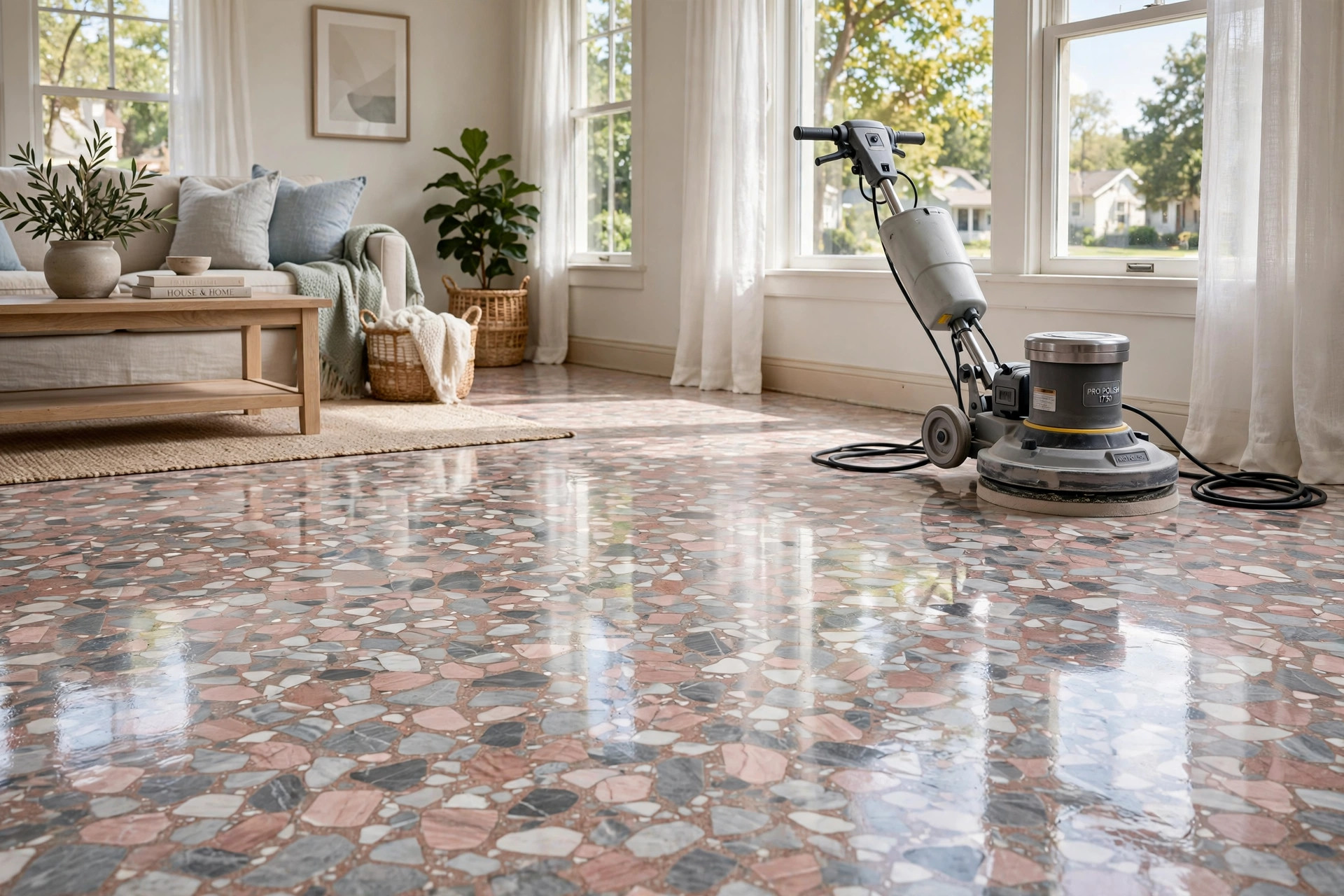

Terrazzo floors are coming back into fashion. Many homes built in the 1950s through the 1970s still have terrazzo under old carpet. If you type terrazzo floor restoration cost near me into a search engine, you want a simple answer: how much will it cost, and who can do the work near your home. This guide gives you both. It explains what restoration means, what drives the price, how to pick a local pro, and how to care for the floor after the work is done.
Why Old Terrazzo Deserves a Second Look
Terrazzo is a hard floor made of stone chips set in cement or resin. It was a favorite in mid-century schools, banks, airports, and homes. It lasts for decades. When owners grew tired of the look, they often covered it with carpet instead of tearing it out. That choice protected the terrazzo. In many homes it sits intact under old padding, waiting for a second life.
A restored terrazzo floor has real appeal. It is smooth, hard, and cool underfoot. It does not trap dust the way carpet does. It resists stains when sealed well. Each floor has a one-of-a-kind pattern of chips in pink, gray, white, and green. No two floors look the same. That charm is why so many owners now pull up old carpet and ask a pro about the terrazzo floor restoration cost near me.
There is a money angle too. New stone floors cost a lot. Restoring what you already own can cost far less per square foot. The floor already exists. The pro only needs to clean, repair, grind, and polish it. For many families that makes restoration the smart choice.
What Terrazzo Floor Restoration Really Means: Terrazzo Floor Restoration Cost near Me
Restoration is not one single job. It is a set of steps that bring a worn terrazzo floor back to life. Every job is a little different. A pro looks at the floor first, then picks the steps it needs.
Common Services in a Restoration Job
Most jobs include some or all of these steps. Cleaning comes first. The pro strips old wax and grime with special machines. Next comes repair. Cracks get filled with a color-matched filler. Chips and holes get patched. Loose pieces get set back in place.
Then comes grinding. Diamond pads cut the surface down to fresh material. This removes stains, scratches, and uneven spots. After grinding, the pro polishes the floor in finer and finer steps. The last step is sealing. A sealer fills tiny pores and guards against spills. A final polish can give the floor a soft satin glow or a deep mirror shine.
Some floors need extra work. Dark stains may need deep honing. Heavy cracks may need epoxy filling. A floor with a lost border pattern may need an artist touch. A good pro tells you which steps your floor needs before the work starts.
Types of Terrazzo and How They Affect Cost
Not all terrazzo is the same. The two main types are cement-based and epoxy-based. Cement-based terrazzo is the older kind. It is thick and very hard. It grinds and polishes well. Epoxy-based terrazzo is thinner and newer. It often has bright colors. It also restores well, but it can be sensitive to heat and harsh chemicals.
The chip size matters too. Fine-chip floors polish faster. Large-chip floors, with big marble pieces, take more time. Some floors have metal divider strips in patterns. Those strips add character, but they can slow the grinding. A floor with many colors or a bold pattern may need a more skilled hand.
The age of the floor plays a role. Floors from the 1950s were built to last. The cement is dense and even. Some floors from later decades were thinner or less even. A pro can read these signs and set a fair price. You can learn more about stone and tile options from guides at Daltile and Mohawk Flooring, two well-known names in hard-surface flooring.
Cost and Price: What Drives the Terrazzo Floor Restoration Cost Near Me
This is the question most owners ask first. There is no single national price. The terrazzo floor restoration cost near me depends on local labor rates, the size of the job, and the state of the floor. Still, some ranges hold true across the country.
For a basic clean and polish, owners often pay around two to four dollars per square foot. For full restoration with grinding, repairs, and sealing, the range is often four to eight dollars per square foot. Large jobs or badly damaged floors can reach ten dollars or more per square foot. These are broad ranges. Your local quote is what matters.
Several factors push the price up or down. Size is the biggest one. A small entry of two hundred square feet costs more per foot than a whole house of two thousand feet. Movers need to cover a small setup cost either way.
The state of the floor matters too. A floor that only needs polish costs much less than one with cracks, missing chips, and old wax layers. Deep stains take extra passes with the grinder. Each pass adds time and wear on diamond pads.
Room layout also counts. Open living rooms are fast to grind. Tight halls, closets, and many corners slow the work. Furniture that must be moved adds labor. Floors under old carpet need glue removal, which is its own step.
Local labor rates set the base. Prices in big coastal cities run higher than in small towns. That is why searching for the terrazzo floor restoration cost near me gives better answers than any national chart. A local pro knows local rates. Sites like The Spruce and This Old House publish helpful overviews of floor restoration costs, and big retailers such as Home Depot and Lowe’s show regional price ranges for floor care services.
Minimum charges are common. Many pros charge a minimum of five hundred to one thousand dollars per visit. For very small jobs, this floor applies. It pays to bundle rooms into one job when you can.
How to Choose a Local Restoration Pro
Finding the right pro is as important as knowing the price. Terrazzo work is a skill. A bad job can scratch the floor or leave it dull. A good job can last twenty years. Start with three local quotes. Ask friends, neighbors, and local tile shops for names. Read online reviews, but read them with care. Look for reviews that mention terrazzo by name, not just tile.
Ask each pro the same questions. How long have you worked with terrazzo? Can I see photos of past jobs? What steps will you do on my floor? What machines and pads do you use? How will you protect my walls and cabinets from dust? A serious pro answers these without rush.
Ask for a written scope of work. It should list each step: strip, repair, grind, polish, seal. It should state the grit levels for grinding and polishing. It should name the sealer brand. It should give a price, a start date, and a finish date. A verbal promise is not enough. Helpful guides on hiring floor pros appear at Bob Vila and Family Handyman, and product lines from Shaw Floors and LL Flooring often link to trained local installers.
Check insurance and references. A real business carries liability insurance. Ask for two recent references and call them. Ask if the crew was on time, if dust was kept down, and if the final price matched the quote.
Beware of very low bids. A bid far below the others may mean skipped steps. The pro may polish without grinding, or seal without repairing cracks. The floor will look fine for a month, then fail. The cheapest bid is rarely the best value.
DIY Versus Hiring Out
Some owners think about doing the work themselves. You can rent a floor buffer at many hardware stores. For a simple clean and wax, that can work. For real restoration, DIY is hard. Grinding terrazzo takes heavy machines with diamond tooling. These machines are not in most rental fleets. Used wrong, they leave deep swirl marks that cost more to fix than the rental saved.
Small repairs are more DIY-friendly. You can buy color-matched terrazzo filler at some stores. You can fill a small chip or hairline crack. But large repairs need skill. Matching the chip pattern takes a trained eye. A bad patch draws the eye for years.
Most owners find the middle path. They do the prep work: move furniture, pull up carpet, and scrape glue. Then they hire a pro for the grinding and polishing. This saves money and keeps quality high. If you are weighing a full best lvp flooring brands 2026 usa replacement against restoration, the math often favors restoration when the terrazzo is sound.
Care and Upkeep After Restoration
A restored floor is easy to live with if you treat it right. Sweep or dust-mop often. Grit is the enemy. Tiny sand grains act like sandpaper under shoes. Use mats at doors. They catch grit before it reaches the floor.
Mop with a neutral cleaner made for stone. Do not use vinegar, bleach, or harsh acids. These eat the sealer and dull the polish. Change mop water often. Dirty water leaves a film. Once or twice a year, strip the light wax layer if your pro used one, and reapply. Follow the sealer maker’s schedule for resealing, often every three to five years.
Protect the floor from heavy drag. Put felt pads under chair legs and table feet. Lift, do not drag, heavy items. If a spill happens, wipe it fast. Coffee, wine, and oil can stain if left to sit. With simple care, a restored terrazzo floor can look new for decades. For general stone and tile care ideas, see the home guides at The Spruce and the project how-tos at This Old House.
Safety
Terrazzo restoration is dusty work. Grinding makes fine stone dust. A pro should use water-fed machines or strong dust collection. Ask about the dust plan before work starts. Keep kids and pets out of the work area. Ventilate the home during and after the job.
Chemicals need care too. Strippers and sealers have fumes. A pro should vent the space and wear a respirator. If you DIY any step, read every label. Wear gloves, eye guards, and a dust mask. Never mix cleaners. Some mixes make toxic gas.
Old floors may hide surprises. Under carpet glue there may be old adhesives. Very old homes may have other hazards in the subfloor area. A careful pro spots these and stops work if something looks wrong. If you are choosing between a matte vs satin hardwood finish guide usa look for a nearby wood floor and a terrazzo restore, remember that stone dust is finer and needs stronger control.
Frequently Asked Questions
How much does terrazzo floor restoration cost per square foot?
Most full restorations run four to eight dollars per square foot. A light clean and polish may cost two to four dollars per square foot. Badly damaged floors or very small jobs can cost more per foot. Local rates vary, so get three written quotes near you.
How long does the job take?
A single room often takes one to two days. A whole house of one thousand to two thousand square feet can take three to five days. Extra repairs, glue removal, and deep stains add time. Ask your pro for a clear schedule in writing.
Can all terrazzo floors be restored?
Most can. Cement-based terrazzo restores very well. Epoxy terrazzo also restores well with the right method. A floor with deep structural cracks or missing large areas may need partial replacement instead. A pro’s first visit should answer this.
Will restoration remove old stains?
Grinding removes most surface stains. Deep oil or rust stains may lighten but not vanish fully. A pro can tell you what to expect after a test patch. Set your hopes on “much better,” not always “perfect.”
Is terrazzo restoration messy?
It can be dusty, but a good pro controls it. Water-fed grinding and vacuum systems keep dust down. The crew should tape off rooms, cover vents, and clean up each day. Ask about the dust plan before you sign.
Should I restore terrazzo or install a new floor?
If the terrazzo is sound, restore it. Restoration often costs less than new stone, and the look is unique. If the floor is badly broken or you dislike the pattern, a new floor makes sense. Decorative options like a hand painted tile backsplash for sale usa show how new finishes can also change a room’s feel, but terrazzo itself is hard to beat for value.
A Short Final Word
Typing terrazzo floor restoration cost near me is the right first step. The next step is simple: lift a corner of carpet, call three local pros, and get written quotes. Terrazzo is a floor that rewards care. With the right crew, an old dull surface can shine again for decades. Spend the time to pick the pro well, and the floor will pay you back every day.
References
Bob Vila. (n.d.). Home improvement advice. https://www.bobvila.com Daltile. (n.d.). Ceramic and porcelain tile. https://www.daltile.com Family Handyman. (n.d.). DIY home repair and maintenance. https://www.familyhandyman.com LL Flooring. (n.d.). Hardwood, vinyl, and tile flooring. https://www.llflooring.com Lowe’s. (n.d.). Home improvement products. https://www.lowes.com Mohawk Flooring. (n.d.). Flooring products. https://www.mohawkflooring.com Shaw Floors. (n.d.). Flooring products. https://www.shawfloors.com The Home Depot. (n.d.). Home improvement products. https://www.homedepot.com The Spruce. (n.d.). Home and garden advice. https://www.thespruce.com This Old House. (n.d.). Home renovation guidance. https://www.thisoldhouse.com
Was this guide helpful?

About Lisa Anderson
The My Garden US editorial team writes practical, in-depth home and garden guides for American homeowners — tested advice, no fluff.
You May Also Like
Best Concrete Floor Stain for Garage USA: A Plain Guide for Homeowners
February 6, 2026 0 views
Regrouting Shower Tile Cost Near Me: What Homeowners Should Know
April 28, 2026 0 views
Epoxy Grout vs Cement Grout: A Practical Comparison for USA Homes
June 9, 2026 0 views