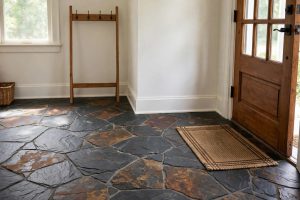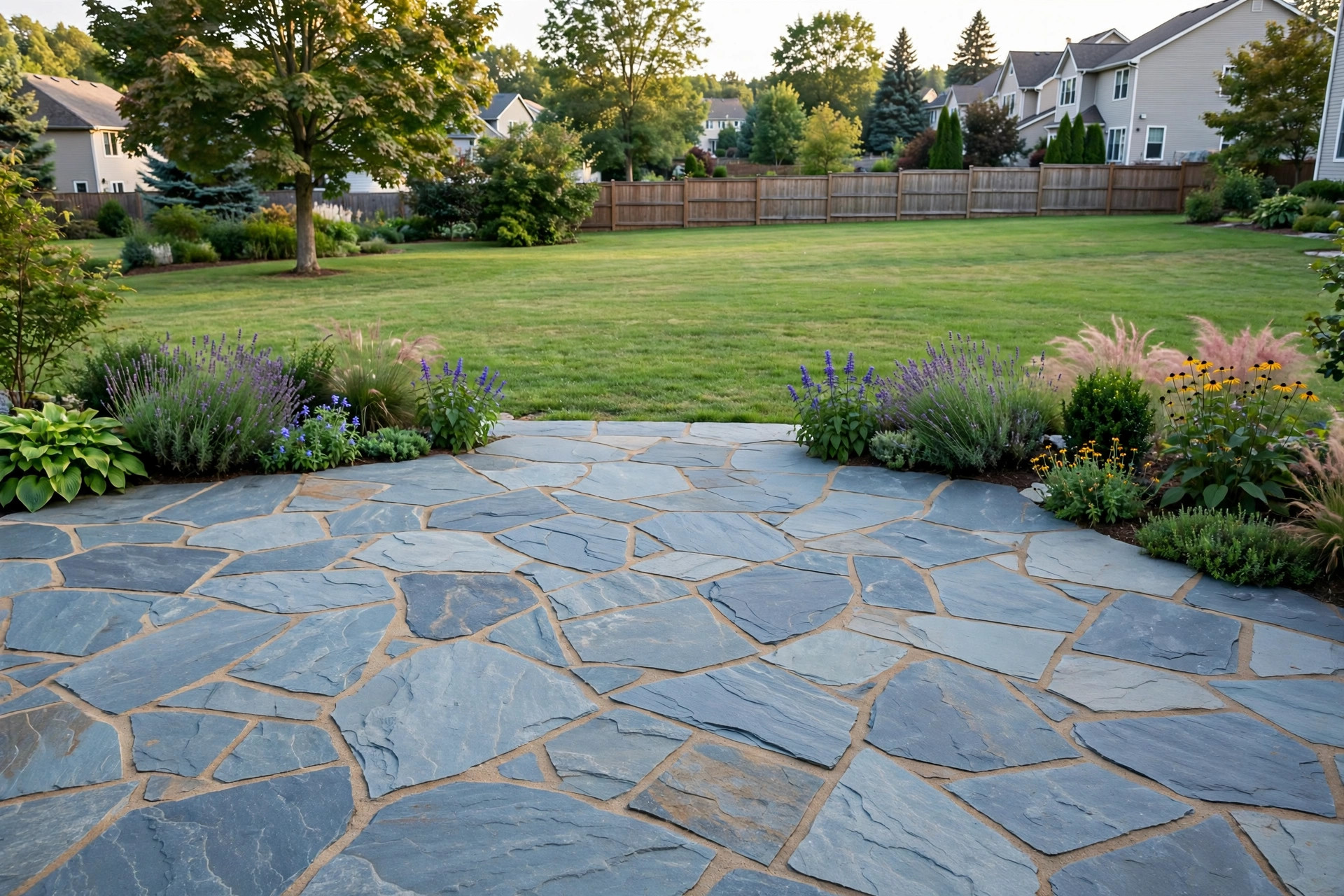

A new patio can change the way a family uses a backyard. Of all the materials on the market, bluestone remains one of the most respected. But before a homeowner signs a contract, one question comes first: what is the bluestone patio cost per square foot in the USA? The answer matters, because it sets the whole budget. This guide gives the figures, the reasons behind them, and the steps to plan a project with care.
Why Bluestone Patios Matter
Bluestone is a type of sandstone. It comes mainly from quarries in the northeastern United States, above all in Pennsylvania and New York. Its color ranges from blue and gray to touches of green and lilac. This natural variety gives each patio a character that poured concrete cannot copy.
Homeowners choose bluestone for several plain reasons. First, it looks timeless. A bluestone patio suits colonial homes, farmhouses, and modern houses alike. Second, it is strong. Dense bluestone stands up to heavy foot traffic, garden furniture, and the weight of a grill. Third, it stays cooler than dark pavers in the summer sun, which matters for bare feet in July and August.
There is also the question of home value. Real estate writers have long noted that a well-built patio adds to the appeal of a house at sale time. Bluestone, as a natural stone, tends to impress buyers more than plain concrete. Of course, no one should build a patio only for resale. The true gain is daily use: dinners outside, quiet mornings with coffee, and a safe place for children to play.
Still, bluestone is not the cheapest option. That is why the question of the bluestone patio cost per square foot in the USA is so common. A clear budget keeps the project honest and avoids an unpleasant surprise at the end.
How to Choose the Right Bluestone: Bluestone Patio Cost Per Square Foot Usa
Not all bluestone is the same. The stone sold in America comes in different grades, thicknesses, and finishes. A wise buyer learns these points before ordering.
Thickness and Grade
For patios, bluestone is sold as flagstone, cut slabs, or pavers. Flagstone is natural, with uneven edges and a rough face. Cut slabs have straight edges and a more regular look. Pavers are small, uniform pieces. For a patio that carries furniture, a thickness of one to two inches is standard. Thinner pieces may crack under heavy loads. Thicker pieces cost more but last longer.
Grade matters too. Select grade has few color swings and little surface change. Natural grade, also called rustic, shows more color play and texture. The rustic look often suits country gardens, while select grade suits formal terraces.
Color and Texture
Bluestone gets its name from the blue-gray tone, but full color runs a wider range. Some lots lean green. Others show lilac or brown tones. A smart buyer asks the supplier for a sample board, so the color of the delivered stone matches what was promised. Texture also varies. Natural cleft bluestone has a split face with a pleasant grip underfoot. Thermal bluestone has a flamed face that is smoother and more even. For stone and patio materials, a quick visit to the yard is worth more than a dozen photos.
Types and Options for a Bluestone Patio
A homeowner can lay bluestone in several patterns. The pattern changes the look, the labor time, and the final price.
Irregular flagstone is the classic choice. The pieces fit together like a puzzle, and the gaps are filled with sand, gravel, or low groundcover plants. This style feels natural and relaxed. It uses less cutting, which can lower labor cost.
Ashlar pattern uses rectangular stones of mixed sizes laid in straight courses. It looks more formal and orderly. It also wastes less stone than some patterns, since the pieces are cut to size at the quarry or on site.
A running bond pattern repeats stones of one size in offset rows, much like a brick wall laid flat. It is simple and clean. It works well for small patios and walkways that join the patio.
For the base, most installers use crushed stone and coarse sand. A concrete slab base is another option. It costs more, but it gives a firm, level bed for thin bluestone tiles. In cold regions, a concrete base can resist the push of frost. A knowledgeable installer can be found through stone patio guides and other trusted home sources.
Cost and Price
Now to the heart of the matter. The bluestone patio cost per square foot in the USA, including materials and labor, usually falls between fifteen and thirty-five dollars. That is a wide range. The reasons are worth a close look.
Stone alone costs roughly five to twelve dollars per square foot. The figure moves with the grade, the thickness, and the region. In the Northeast, near the quarries, stone is cheaper. In the South and the West, freight adds to the price. A select grade, sawn on all sides, sits at the high end. A rustic natural cleft stone sits lower.
Labor adds eight to eighteen dollars per square foot in most markets. This covers the crew, the base preparation, the cutting, and the laying. A simple rectangular patio on flat ground costs less per foot than a curved patio with steps and a seating wall. Digging, soil removal, and drainage work add to the labor line as well.
Extra work can move the total well past the base range. A concrete slab base adds three to six dollars per square foot. Polymeric sand for the joints costs more than plain mason sand. A sealer, if the owner wants one, adds material and labor. Delivery fees, permits, and the removal of an old patio are easy to forget when adding up figures.
A typical example helps. A patio of four hundred square feet, at a middle price of twenty-two dollars per square foot, comes to eight thousand eight hundred dollars. In a high-cost city, the same patio might reach twelve thousand dollars or more. In a rural area with easy quarry access, it might land near seven thousand.
Some homeowners ask about doing the work themselves. A dry-laid bluestone patio on a sand base is a fair task for a strong, patient do-it-yourselfer. The stone price stays the same, but labor drops to zero, apart from tool rental and sore muscles. A mortared patio on a concrete base is another story. It calls for skill in mixing, leveling, and drainage. Mistakes show for years. For that reason, many families save by preparing the site themselves and leave the laying to a crew.
To keep the budget firm, get three written quotes. Make sure each one lists the stone type, the thickness, the base method, and the square footage. Ask what is not included. A low quote that leaves out excavation is not a low quote. Shoppers who compare home improvement stores and local stone yards often find that prices swing by twenty percent or more for the same stone.
The related phrase “bluestone pavers price per square foot” brings a related figure. Bluestone pavers, the small uniform kind, cost more per square foot than flagstone, because the cutting work is done at the plant. “Bluestone patio installation cost” is the all-in number that most contractors quote, and it is the figure to use when setting a budget.
Care and Upkeep
Bluestone asks for little, but it asks for something. A few plain habits will keep a patio sound for decades.
Sweep the surface on a regular basis. Leaves and dirt hold moisture against the stone, and moisture feeds stains and moss. Wash the patio with a garden hose and a stiff brush when it looks dull. For most grime, plain water is enough. A mild soap made for stone can help with grease spots near the grill.
Many owners seal their bluestone. A penetrating sealer sinks into the stone and guards against stains and salt damage. It does not change the look much. A film-forming sealer adds a slight sheen and deeper color, but it can make the surface slick when wet. Reseal every two to four years, or as the maker directs.
In cold climates, use care with de-icing salts. Rock salt can pit and stain natural stone. Sand gives grip without the chemical harm. In the fall, clear fallen fruit and wet leaves before they mark the surface.
Weeds grow in the joints of dry-laid patios. Pull them by hand or use a weed tool. Polymeric sand in the joints slows weed growth, but it is not a cure. A reader who also keeps tile inside the house may find use in guides to cracked tile repair kits, since stone and tile both call for prompt repair when a piece fails.
Every few years, check for settled stones. A stone that rocks underfoot should be lifted, the base re-leveled, and the stone set back down. Left alone, a rocking stone will crack its neighbors.
Safety
A patio should be a safe place. Bluestone is generally a sound choice, but a few safety points deserve note.
Choose a finish with grip. Natural cleft bluestone offers good footing in rain. Honed or smooth finishes can turn slick. Near a pool or a hot tub, a textured face is the wiser pick.
Keep the surface level. A lip between two stones of more than a quarter inch is a trip hazard, especially for older guests. A good installer checks level with a straight edge as the work goes.
Mind the edges. A patio that drops off to a lawn or a lower bed should have a clear edge or a small step with a handhold nearby. At night, low-voltage lighting along the edge prevents missteps.
If children play on the patio, round off any sharp stone corners near play zones. Store grilling tools and sharp yard tools out of reach. For broader home and garden advice on outdoor safety, the usual rules apply: clear sight lines, steady footing, and good light.
Frequently Asked Questions
How much does a bluestone patio cost per square foot in the USA? For most of the country, the all-in bluestone patio cost per square foot in the USA runs from fifteen to thirty-five dollars. Stone alone runs five to twelve dollars per square foot, and labor adds eight to eighteen. Extra work such as a concrete base, steps, or walls pushes the figure higher.
What affects the price the most? Three things move the price most: the region, the stone grade, and the complexity of the job. Areas far from the northeastern quarries pay more for freight. Select grade, sawn stone costs more than rustic cleft stone. Curves, steps, walls, and drainage each add labor hours.
Is bluestone more costly than concrete pavers? Yes, in most cases. Concrete pavers often cost ten to twenty dollars per square foot installed, while bluestone runs fifteen to thirty-five. Bluestone earns its premium through natural beauty and a long life. Families on a tight budget may choose pavers for a large patio and bluestone for a smaller feature area.
How long does a bluestone patio last? With a sound base and plain care, a bluestone patio can last thirty to fifty years or more. The stone itself is very hard. Most failures come from the base, not the stone. A washed-out or settled base lets stones rock and crack, so good groundwork is the key to long life.
Can I lay a bluestone patio myself? A dry-laid patio on a compacted stone and sand base is within reach of a handy homeowner. It is heavy work but not complex. A mortared patio on concrete, or any patio with steps and walls, is better left to a skilled mason. Poor drainage or an uneven base will show within a season.
Does bluestone need to be sealed? It does not have to be, but sealing helps. A penetrating sealer guards against stains from food, grease, and road salt. It keeps the stone looking fresh and makes cleanup easier. Many masons seal new patios once the stone has dried and cured.
A Final Word
The bluestone patio cost per square foot in the USA is not a single number. It is a range shaped by stone, labor, region, and design. For most homeowners, fifteen to thirty-five dollars per square foot is the honest planning figure. Get samples, get written quotes, and check the base method before the first stone is set. Readers comparing stone and tile options may also browse natural stone suppliers and stone and tile flooring for a wider view of materials. Those thinking about indoor projects can look at travertine tile for bathroom floors or vertical subway tile shower ideas for related inspiration. A bluestone patio built with care will serve a family for decades, and that is the true measure of its worth.
Buying guides are also published by LL Flooring and Mohawk Flooring.
References
Daltile. (n.d.). Ceramic and porcelain tile. https://www.daltile.com LL Flooring. (n.d.). Hardwood, vinyl, and tile flooring. https://www.llflooring.com Lowe’s. (n.d.). Home improvement products. https://www.lowes.com Mohawk Flooring. (n.d.). Flooring products. https://www.mohawkflooring.com Shaw Floors. (n.d.). Flooring products. https://www.shawfloors.com The Home Depot. (n.d.). Home improvement products. https://www.homedepot.com The Spruce. (n.d.). Home and garden advice. https://www.thespruce.com This Old House. (n.d.). Home renovation guidance. https://www.thisoldhouse.com
Was this guide helpful?

About Lisa Anderson
The My Garden US editorial team writes practical, in-depth home and garden guides for American homeowners — tested advice, no fluff.
You May Also Like
Carpet to Hardwood Stair Conversion Cost: A Plain Guide for Homeowners
February 9, 2026 0 views
Recaulking Bathtub Cost Near Me: A Plain Guide to Prices and Choices
September 16, 2026 0 views
White Grout Maintenance Tips for Showers That Keep Tile Looking New
August 30, 2026 0 views