
Why the Best Flooring for Lake House Rentals Matters
A lake house is not an ordinary home. Guests arrive with wet swim suits, dripping towels, and coolers that leak. Children run in from the dock with sand between their toes. Dogs shake themselves dry in the entry hall. A rental house can see more foot traffic in one July than a family home sees in a year.
That is why the best flooring for lake house rentals usa owners install is not the same flooring a person would pick for a quiet city apartment. The floor in a rental must do three jobs at once. It must resist water and stains. It must look good in listing photos so guests book the house. And it must last, because replacing a floor between seasons costs money and lost bookings.
Get the choice right, and the floor becomes invisible. Guests notice the view, the dock, and the comfort. Get it wrong, and the owner hears about swollen boards, lifted tiles, and damp smells in every review.
What Makes a Floor Right for a Lake Rental: Best Flooring for Lake House Rentals Usa
Water is the first test. Every rental lake house deals with tracked-in lake water, wet dogs, spilled drinks, and damp towels left on the floor. A floor that absorbs water will swell, warp, or grow mildew. The best picks are rated waterproof or at least highly water resistant.
Durability is the second test. Guests are harder on a house than owners. Furniture moves. Bags drop. Sand acts like sandpaper. A hard-wearing surface keeps its finish through many seasons of renters.
Comfort and looks come next. A lake house should feel warm and natural. Wood tones and stone looks suit the setting far better than cold office gray. Comfort also matters underfoot. Tile can feel hard and chilly on a cool spring morning, while a softer surface feels kind to bare feet.
Cost and upkeep close the list. An owner wants a floor that is simple to clean between guests and does not demand yearly sealing or refinishing. Materials that swap out board by board, when one piece is damaged, save whole rooms from full replacement.
The Main Types Worth Considering
Luxury Vinyl Plank and Luxury Vinyl Tile
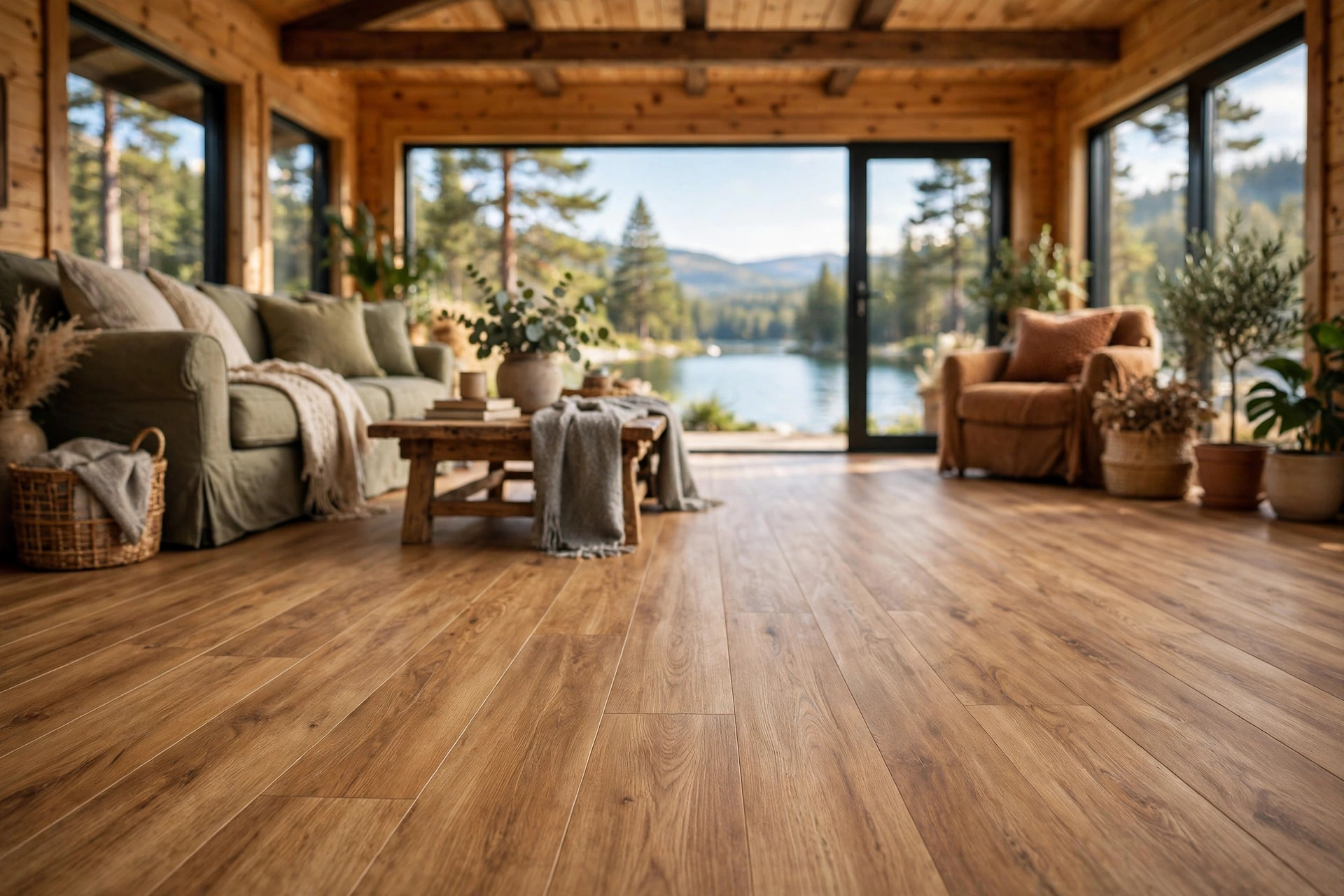
Luxury vinyl plank, often called LVP, is the most common answer among rental owners today. It is fully waterproof. It comes in wide planks that mimic oak, pine, and walnut. It is soft enough to stand on for long periods, and it shrugs off scratches better than real wood.
Quality ranges wide, so the wear layer matters. Look for a wear layer of 20 mil or more for a rental. Thicker is better where children and dogs are involved. The click-lock style also lets an owner replace a single damaged plank without tearing up the whole room.
Many flooring retailers carry broad lines of waterproof vinyl made for exactly this kind of use, and the Lowe’s site lists wear-layer ratings that make comparison easy.
Porcelain and Ceramic Tile
Tile is the old reliable for wet areas. Porcelain tile, fired harder than ceramic, resists water so well that it can sit in a shower. In a lake house entry, mudroom, bathroom, or kitchen, it is hard to beat.
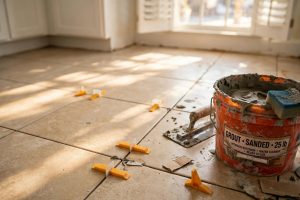
The trade is comfort. Tile is hard and cold. It can chip if something heavy drops on it. But for pure water resistance, nothing in the price range beats it. Large format tiles with narrow grout lines cut down on grout cleaning. Epoxy grout, for those deciding between epoxy grout vs cement grout, resists stains and moisture far better than plain cement grout, which suits a rental well.
The Daltile catalog shows how many wood-look porcelains now exist, and The Spruce runs plain guides on picking tile for wet homes.
Laminate Flooring
Laminate has grown far more water resistant than the old boards of years past. Modern waterproof laminate holds up to spills if water is wiped up in reasonable time. It is less costly than vinyl plank in many lines and looks like real wood from a few feet away.
The risk is standing water. If water sits for hours, edges can swell. For a rental where mopping happens between guests and owners check the house, laminate works. For a house where owners never visit and guests leave puddles, vinyl or tile is safer.
Engineered Hardwood
Real wood is warm, beautiful, and classic in a lake setting. Engineered hardwood uses a real wood face over a stable core, which handles humidity shifts better than solid wood. In bedrooms and dry living areas of a lake house, it looks superb.
Still, it is the weakest pick against water. Wet boots at the door, a spilled cooler, or a damp rug can leave marks. Owners who love wood sometimes use it in bedrooms and put vinyl or tile in the high-risk rooms. The Shaw Floors line includes engineered options with stronger finishes built for busy homes.
Bamboo Flooring
Bamboo is a grass, not a tree, and strand-woven bamboo is one of the hardest wood-style floors sold. It suits a lake house because it brings a natural tone and takes finish well. Some owners compare the best bamboo flooring brands usa 2026 when they want an eco-minded option.
Like hardwood, bamboo dislikes standing water. It fits dry rooms, hallways with good mats, and upper floors. It is less suited to a ground-floor entry where guests drip straight from the water.
Natural Stone and Concrete
Stone and sealed concrete are honest, hard-wearing picks. A sealed concrete slab with a warm stain can look sharp in a modern lake cabin and costs little to keep clean. Natural stone tile in an entry or bath handles water with ease.
The downsides are cold, hard surfaces and higher install cost for stone. Radiant heat under tile or concrete fixes the cold, but it adds cost. For most rental budgets, vinyl and porcelain cover the same needs for less money.
Best Picks by Room
The entry, mudroom, and laundry take the worst abuse. Porcelain tile or waterproof vinyl plank belongs here. A good doormat at every door, inside and out, cuts sand and grit at the source.
Kitchens do best with waterproof vinyl plank or porcelain tile. Spills happen at the sink, the cooler, and the ice maker. A floor that needs no worry makes turnover cleaning fast.
Bathrooms want porcelain tile on the floor, with waterproof grout. Vinyl works too, but tile handles the daily soak-and-dry cycle for decades.
Living rooms and bedrooms allow more choice. Vinyl plank gives wood looks with no worry. Engineered hardwood or bamboo suits owners who watch the house closely. Carpet is a poor pick almost everywhere in a lake rental. It holds sand, stains, and damp, and it ages fast under guest use.
Decks and screened porches are a separate matter. If the space is truly outdoors, use rated outdoor decking, not indoor flooring. A three-season porch that stays dry can take vinyl or tile, but check the product rating for temperature swings.
Cost and Price Ranges
Prices move with region and installer, but rough ranges help owners plan. Waterproof luxury vinyl plank often runs from a few dollars per square foot for basic lines to ten or more for thick premium planks, plus install. Porcelain tile runs a similar range for the tile itself, with grout, thinset, and labor adding more. Cost guides that break down penny tile floor cost per square foot usa show how small formats can push labor cost up.
Laminate is often the budget pick, with many lines under the price of vinyl. Engineered hardwood and bamboo sit in the middle to upper range. Natural stone costs the most to buy and to set.
Installation matters as much as material. A click-lock vinyl floor can go over a flat old floor with little prep, which trims labor. Tile needs a flat, sound base and careful grout work, which costs more. Always get at least two local quotes, and ask the installer about experience with rentals and moisture.
For product comparison, the Home Depot and LL Flooring sites list per-square-foot pricing that helps owners budget a whole house.
Installation Tips for Rental Owners
Start with the subfloor. A flat, dry, clean base is the secret to every lasting floor. Check for old water damage before covering it up. In ground-floor rooms near the lake, a moisture test of a concrete slab can save a failed floor later.
Leave expansion gaps where the product calls for them. Floating floors move with heat and cold. A floor that is jammed tight against the walls will buckle in the first hot summer.
Order extra. Buy ten to fifteen percent more than the room measures. Keep a box or two of spare planks or tiles in a dry closet. When a guest damages one board, the spare makes repair a one-hour job instead of a whole new order. Matching a discontinued line years later is nearly impossible.
Work in the off season. Install between bookings, not during them. A floor needs time for adhesive to cure or for the material to acclimate to the room. The This Old House site carries step guides that help owners judge what a good installer should be doing.
Care and Upkeep Between Guests
The best flooring for lake house rentals earns its keep at turnover. Vinyl plank needs a sweep and a damp mop with a mild cleaner. Tile needs the same, plus a look at the grout. Keep a labeled mop, bucket, and cleaner in the house so the cleaning crew uses the right products.
Avoid steam mops on vinyl and laminate unless the maker allows it. Heat and steam can lift edges. Avoid harsh bleach on grout daily; a mild cleaner keeps color without damage. Place felt pads under chair and table legs. Sand is the enemy, so good entry mats that guests actually use will add years to any floor.
Once a year, walk the whole house. Look for lifted edges, cracked grout, soft spots, and gaps at the walls. Catching a small failure early keeps water from reaching the subfloor, where the real cost lives.
Safety Points Owners Should Not Skip
Wet floors are slick floors. In entries, baths, and kitchens, pick products with a decent slip rating. Textured tile and embossed vinyl grip better than high-gloss surfaces. A few well-placed mats help, but mats must have non-slip backs and lie flat.
Transitions matter. Where two floors meet, a smooth ramp or strip stops trips. Raised edges catch toes in the dark. Good lighting in halls and entries helps guests see wet spots.
Fireplaces and heaters call for care too. No flooring should run hard against a heat source without the clearances the maker states. And in any lake house, check that the floor you pick suits the local building code for the room it goes in.
FAQ
What is the single best flooring for a lake house rental?
Waterproof luxury vinyl plank with a thick wear layer is the most common best answer. It handles water, scratches, and sand, looks like wood, and cleans fast between guests. Porcelain tile beats it in bathrooms and mudrooms where water is constant.
Can I use real hardwood in a lake rental?
You can in dry rooms, and engineered hardwood handles humidity better than solid wood. But near entries, kitchens, and baths, water risk is high. Many owners mix: wood looks in bedrooms, waterproof floors everywhere else.
Is laminate okay for a lake house?
Waterproof laminate works if spills are wiped up and standing water is rare. It costs less than vinyl plank. In a house you visit often, it is fine. In a house you rarely see, vinyl or tile is the safer bet.
How do I handle sand from the beach or shore?
Sand scratches every floor over time. The defense is mats at every door, a no-shoes rule in the listing, and a broom guests can use. Vinyl and tile take sand better than wood or laminate, and a hard finish hides fine scratches well.
Should different rooms get different floors?
Yes, and most lake rentals do this. Tile in baths and mudrooms, vinyl plank through the living areas and kitchen, and your pick of wood or vinyl in bedrooms. Matching tones across rooms keeps the house feeling whole in photos.
How long should rental flooring last?
A good vinyl or tile floor can serve ten to twenty years in a rental with fair care. Laminate and bamboo run shorter under heavy guest use. The wear layer, the installer, and your cleaning routine decide more than the brand name.
A Short Final Word
The best flooring for lake house rentals usa owners can buy is the one that survives the worst week of August without complaint. Waterproof vinyl plank and porcelain tile win most rooms on that test. Wood, bamboo, and laminate have their places, but only where water seldom goes. Spend on a thick wear layer, buy spare boxes, and keep the cleaning simple. A floor that looks good in year five books just as many guests as it did in year one, and that is the whole point of the choice.
References
Daltile. (n.d.). Ceramic and porcelain tile. https://www.daltile.com LL Flooring. (n.d.). Hardwood, vinyl, and tile flooring. https://www.llflooring.com Lowe’s. (n.d.). Home improvement products. https://www.lowes.com Mohawk Flooring. (n.d.). Flooring products. https://www.mohawkflooring.com Shaw Floors. (n.d.). Flooring products. https://www.shawfloors.com The Home Depot. (n.d.). Home improvement products. https://www.homedepot.com The Spruce. (n.d.). Home and garden advice. https://www.thespruce.com This Old House. (n.d.). Home renovation guidance. https://www.thisoldhouse.com
Was this guide helpful?

About Robert Taylor
The My Garden US editorial team writes practical, in-depth home and garden guides for American homeowners — tested advice, no fluff.
You May Also Like

Carpet Installation Cost Per Square Foot USA: A Plain Guide
June 14, 2026 0 views
Workshop Flooring Options for Home Garage
September 12, 2026 0 views
Hand Painted Tile Backsplash for Sale in the USA: A Simple Buying Guide
September 7, 2026 0 views