A small yard does not mean you must give up on summer fun. The best pool for small backyard ideas prove that a few hundred square feet are enough for a cool swim. You do not need a huge lot to enjoy clear blue water on a hot day. In the past, only large homes had pools. Today, makers build small pools that fit tight city lots and narrow side yards. This guide walks you through the best options. It covers what to look for, what each type costs, and how to keep the water clean and safe.
Why a Pool Still Makes Sense in a Small Yard
A pool is not only for long swims. In a small yard, a pool is a place to cool off, relax, and gather with family. On a hot afternoon, ten minutes in cool water can change the whole day. Children play in it for hours. Adults sit on the edge with their feet in the water.
Small pools have real perks. They cost less to build than big pools. They use less water. They need fewer chemicals. They heat up faster in the sun. They also leave room in the yard for a grill, a small deck, or a few plants. A well-planned tiny pool can feel like a private spa.
A small pool can also help a home stand out. Buyers like outdoor features. A neat, clean pool in a small yard shows that the space is used well. But the main reason to add one is simple. It makes summer at home more fun.
What to Look for When Space Is Tight: Best Pool for Small Backyard Ideas
Before you shop, measure your yard with care. Mark the pool spot with rope or chalk. Leave room to walk around the pool. Leave room for the fence that the law may require. A small pool that fits with no room to spare is a mistake. You need space for pumps, steps, and a cover.
Size and Shape
Round and square shapes waste the least space. A round pool of 10 to 12 feet across fits many small yards. A square plunge pool of 8 by 12 feet works well too. Long, thin pools fit narrow yards. Some makers sell pools as small as 7 feet across. Think about how many people will use the pool at once. Two or three adults need about 60 to 100 square feet of water.
Depth and Access
Most small pools are 3 to 5 feet deep. That is deep enough to sit and float, but not deep enough for diving. Never dive into a small pool. Diving in shallow water can cause grave injury. Steps or a ladder must be firm and easy to use. For small yards, built-in bench seats are a smart pick. They give a place to sit and they save space.
Materials and Build
Small pools come in many builds. Steel and resin above-ground pools are common and low cost. Fiberglass shells are smooth and last a long time. Concrete pools cost the most but can take any shape. Stock tank pools are made from metal farm tanks and lined for swimming. Each build has pros and cons. Pick one that suits your budget and your climate.
Pool Types That Fit Small Yards
This section covers the most loved small backyard pool types. Each one suits a different budget and yard.
Stock Tank Pools
Stock tank pools are a top pick for tight budgets. They start as round metal tanks, the kind used for farm animals. The tank is lined, fitted with a pump and filter, and filled with water. Most are 8 or 10 feet across and about 2 feet deep. They are perfect for cooling off and lounging. A stock tank pool can cost under one thousand dollars for the tank, plus the pump and chemicals. They are easy to drain and move. They rust over time, so a good liner and proper care matter.
Plunge Pools
Plunge pools are small, deep pools made for soaking and cooling down. Many are 8 by 12 feet and 4 to 5 feet deep. They often have built-in seats and jets. Plunge pools feel like a high-end spa. They suit small yards because they give deep water in a small footprint. Prices start around ten thousand dollars for a simple shell and rise with extras. If you want a tiny backyard pool that feels rich, a plunge pool is a strong choice.
Small Above-Ground Pools
Small above-ground pools are the classic choice. Round models of 10, 12, or 15 feet are easy to find at major home stores. They set up in a day or two on level ground. They cost from a few hundred to a few thousand dollars. Many families start here. For families, see our guide to the best above ground pool for families. The walls are steel or resin. A vinyl liner holds the water. They need a filter pump and regular cleaning, like any pool.
Spool Pools (Spa-Pool Hybrids)
A spool is part spa and part pool. It is small enough to heat like a hot tub but large enough to stretch out in. Many spools are 10 to 14 feet long. They often have swim jets that push a current against you. This lets you swim in place. Spools suit year-round use. They cost more than simple pools, often fifteen thousand dollars and up. If you also like hot water therapy, browse spa options or a trusted spa brand for ideas on small heated pools.
Small Fiberglass Shells
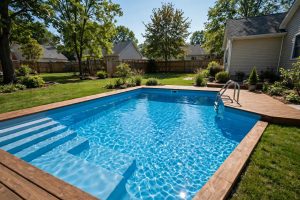
Fiberglass pools come as one-piece shells set into the ground. Small models of 10 by 16 feet fit many tight yards. The surface is smooth, so algae has a hard time taking hold. They need less care than concrete pools. Install time is short, often just days. The price starts around twenty thousand dollars with install. Check small pool kits to see what shapes are sold near you.
Cost and Price: What a Small Pool Really Costs
Costs vary a lot by type and by place. Here are fair ranges for 2026 in the United States.
– Stock tank pool: 500 to 2,000 dollars, pump and liner included. – Small above-ground pool: 500 to 5,000 dollars for the kit, plus 1,000 to 3,000 for install and base work. – Plunge pool: 10,000 to 35,000 dollars with install. – Spool: 15,000 to 40,000 dollars with install. – Small fiberglass pool: 20,000 to 50,000 dollars with install.
Do not forget the extra costs. A fence may be required by law and can cost 1,000 to 5,000 dollars. Electrical work for the pump can cost 500 to 2,000 dollars. Water, chemicals, and power add 50 to 150 dollars a month in swim season. Before you buy, read our above ground pool installation cost guide to plan your budget.
Permits add cost too. Most towns require a permit for a pool, even a small one. Fees are often 100 to 500 dollars. Call your town office early. Ask about setback rules. Many places require the pool to sit a set distance from the lot line.
Planning the Layout Around the Pool
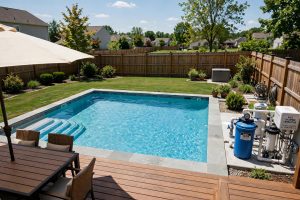
A small yard needs a smart plan. Put the pool where it gets sun. Sun keeps the water warm and cuts heating bills. Keep some shade nearby too. A small shade sail or umbrella gives a cool spot to rest.
Decking makes a small pool feel larger. A wood or composite deck around part of the pool gives room to sit. Stone pavers work well and cost less. Keep the deck simple. Too much deck will crowd the yard.
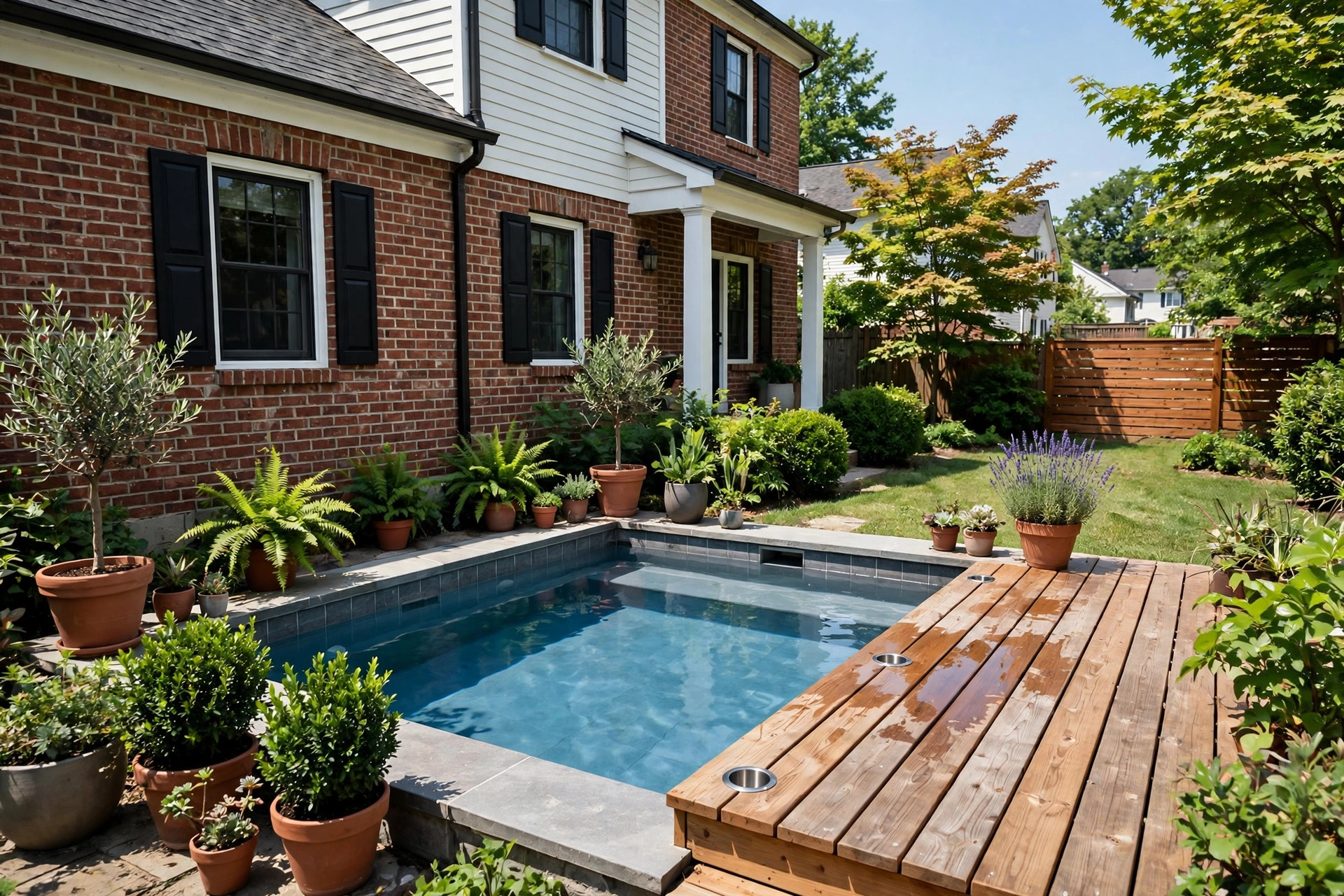
Plants soften the look. Use pots instead of garden beds. Pots can be moved when you need space. Pick plants that do not drop many leaves into the water. Tall grass in pots can hide a fence and add privacy.
Leave clear paths. You need to reach the pump, the skimmer, and the cover. A tight squeeze behind the pool will make care a chore. Plan at least two feet of clear space on all sides.
Care and Upkeep
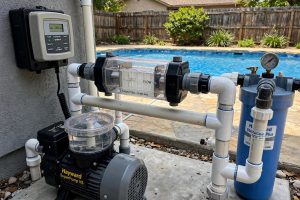
Small pools need care just like big pools. In some ways they need more care. A small pool has less water, so the chemistry can shift fast. Test the water two or three times a week in summer. Pick up water testing supplies or shop pool supplies near you. Learn the basics with guides from pool care educators.
Keep a simple routine:
1. Skim leaves and bugs off the surface each day. 2. Test chlorine and pH twice a week. 3. Brush the walls once a week to stop algae. 4. Empty the skimmer and pump baskets when full. 5. Run the filter at least 6 to 8 hours a day.
A cover helps a lot. It keeps out dirt and cuts water loss. It also keeps the water warm at night. For a small pool, a simple solar cover is cheap and light. Take it off fully when people swim.
Winter care matters too. In cold states, drain above-ground pools or winterize them with plugs and antifreeze. In mild states, keep the pump running on low and keep the cover on. Read seasonal pool advice for your climate zone.
Safety First
Safety is the most serious part of pool ownership. Drowning is fast and quiet. It can happen in minutes, even in a small pool. Take these steps without fail.
First, fence the pool. The fence should be at least 4 feet high with a self-closing, self-latching gate. Many states require this by law. Second, add alarms. Door alarms and pool alarms give early warning. Third, keep rescue gear close. A long pole and a ring buoy should hang by the pool. Fourth, teach children to swim, but never trust swimming skill alone. Watch children at all times near water.
The Consumer Product Safety Commission sets out clear pool safety guidelines that every pool owner should read. Follow them step by step. If you have a small child, consider the best hot tub for small backyard article as well, since hot tubs need covers and locks too. Never leave a small pool full and open when no one is watching.
FAQ
How small can a backyard pool be and still be worth it?
A pool of 8 to 10 feet across is still worth it. It cools you off and gives children a place to play. Depth matters more than width for soaking. A 4-foot-deep plunge pool of 8 by 10 feet serves two adults well.
What is the cheapest small backyard pool idea?
A stock tank pool is the cheapest real option. The tank costs a few hundred dollars. Add a pump, filter, and liner, and you can swim for under one thousand dollars. Small inflatable pools cost less but last only a season or two.
Do I need a permit for a small pool?
In most towns, yes. Any pool deeper than 2 feet often needs a permit. Above-ground pools count too. Call your town building office before you buy. They will tell you the rules for fences, setbacks, and wiring.
How much room do I need around a small pool?
Plan at least 2 to 3 feet of clear space on all sides. This gives room to walk, clean, and reach the pump. A fence needs space too. Measure twice before you order.
Can I heat a small pool?
Yes, and small pools heat fast. A solar cover alone can add several degrees. Electric heat pumps and small gas heaters work well on small pools. Spools and plunge pools are often heated like hot tubs.
How long does a small above-ground pool last?
A good steel or resin above-ground pool lasts 7 to 15 years. The liner may need to be swapped every 5 to 10 years. Fiberglass pools last 25 years or more. Care and winterizing add years of life.
Final Word
The best pool for small backyard ideas all share one trait. They fit the yard instead of fighting it. Measure first. Pick a type that suits your budget. Plan the deck, fence, and plants around it. Keep the water clean and the gate locked. Do these things and even the smallest yard can hold big summer fun. Start with one idea from this guide. By next summer, you could be floating in your own small pool.
References
Bullfrog Spas. (n.d.). Hot tubs and spas. https://www.bullfrogspas.com Hot Spring Spas. (n.d.). Hot tubs and spas. https://www.hotspring.com Leslie’s Pool Supplies. (n.d.). Pool supplies and equipment. https://www.lesliespool.com Lowe’s. (n.d.). Home improvement products. https://www.lowes.com Pool Warehouse. (n.d.). Pool equipment and supplies. https://www.poolwarehouse.com Swim University. (n.d.). Pool and hot tub care guides. https://www.swimuniversity.com The Home Depot. (n.d.). Home improvement products. https://www.homedepot.com The Spruce. (n.d.). Home and garden advice. https://www.thespruce.com U.S. Consumer Product Safety Commission. (n.d.). Product safety information. https://www.cpsc.gov
Was this guide helpful?

About David Wilson
The My Garden US editorial team writes practical, in-depth home and garden guides for American homeowners — tested advice, no fluff.