A salt water pool still needs chlorine. The salt cell makes it for you, right in the water. But minerals build up on the cell plates over time. When that happens, the cell cannot do its job. That is why every pool owner should know how to clean salt water pool cell parts the safe way. The job is not hard. It takes about one hour, start to finish. It costs very little. And it can add years to the life of a cell that is not cheap to replace. This guide walks you through the whole process in plain steps.
Why a Clean Cell Matters
The salt cell is a small tube with metal plates inside. Water flows through it. A mild electric charge turns dissolved salt into chlorine. The chlorine keeps the water clean and safe to swim in. Scale from calcium and minerals coats those plates after a few months of use. The coating acts like a blanket. It blocks the charge. Less chlorine is made. The pool starts to turn cloudy or green.
A dirty cell also wears out faster. The plates work harder to push the charge through the scale. That extra strain shortens the life of the cell. Most salt cells last three to five years with good care. Poor care can cut that life in half. Cleaning on a schedule saves real money.
There is another reason to keep the cell clean. A scaled cell gives false low-chlorine readings on some control panels. Owners add salt or chemicals they do not need. Good water balance starts with a clean cell. If you also want to learn how to balance pool water chemistry, that guide pairs well with this one.
How Often Should You Clean the Cell: How to Clean Salt Water Pool Cell
Most makers suggest checking the cell every three months. In areas with hard water, check it every two months. Hard water leaves more calcium. Warm climates see more build-up too, because the pool runs longer each year.
Do not wait for a problem to look. A quick look is easy. Turn the pump off. Open the cell housing. Pull the cell out. Hold it up to the light. The plates should look like clean metal with a fine pattern. White crust or flaky layers mean it is time to clean.
Many salt systems have a “check cell” or “inspect cell” light. Do not ignore it. The light means the system senses a change in how the cell performs. Also clean the cell when chlorine output drops for no clear reason, after a plaster start-up, or after a heavy calcium treatment. New plaster pools throw off extra dust that coats plates fast.
What You Will Need
Gather your tools before you start. You will need:
– A five-gallon plastic bucket, deep enough to hold the cell upright – White vinegar, about four gallons, or muriatic acid made for pools – A garden hose with a spray nozzle – Rubber gloves and safety goggles – A soft plastic brush or old toothbrush – The cell manual, for model-specific steps
Never use metal brushes or sharp tools on the plates. The plates have a thin coating that makes the chlorine. Scratching it ruins the cell. Soft plastic only.
If you choose muriatic acid, buy the pool-grade kind from a pool supply shop. Hardware store acid is often stronger and harder to control. Keep baking soda nearby in case of a spill. Sites like Leslie’s Pool Supplies carry the right acid and safety gear in one place.
Step-by-Step: How to Clean Salt Water Pool Cell
Step 1: Turn Everything Off
Go to the breaker or the pool timer. Turn the pump off. Then turn the salt system control box off. This is important. The cell carries an electric charge when powered. Working on a live cell can shock you and can fry the control board. Double-check that the pump is off before you touch any plumbing.
Step 2: Remove the Cell
The cell sits in the plumbing line after the filter and heater. Most cells screw into unions on each side. Place a towel under the fittings to catch drips. Unscrew the unions by hand. If they are tight, use a strap wrench, never channel locks on plastic. Slide the cell out. Note which way it faced. You will want it back in the same way.
Some models plug into a cable with a cap. Unscrew the cap gently. Do not yank the cord. Older systems wire the cell in with a small terminal box. Take a photo before you undo any wires. That photo is worth more than memory later.
Step 3: Rinse Off Loose Debris
Hold the cell over a clean area. Spray it with the garden hose. Wash out leaves, sand, and loose bits. Spray between the plates. Do this before any acid soak. Loose junk in acid just dirties the bath and wastes its strength.
Step 4: Soak the Plates
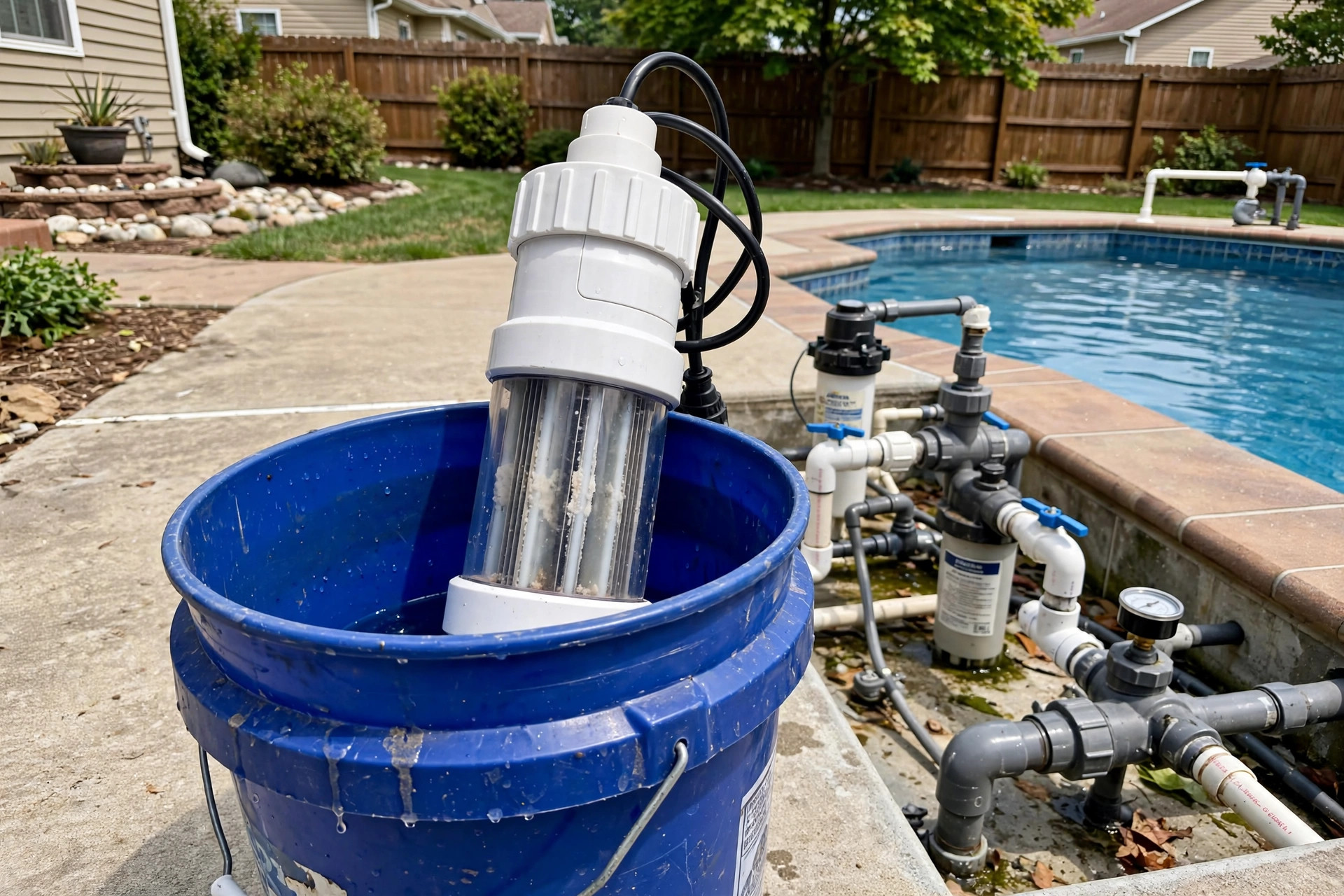
Stand the cell upright in the bucket. For vinegar, fill the bucket until the plates are covered. Vinegar is slow but safe. It needs four to eight hours, often overnight. For muriatic acid, mix one part acid to ten parts water. Always add acid to water, never water to acid. The bath should cover the plates. Acid works in about fifteen to thirty minutes.
Watch the bath. You will see fizzing. That fizz is the acid eating the scale. When the fizz stops, the scale is mostly gone. Do not leave the cell in acid longer than needed. Long soaks can eat the plate coating. Guides at Swim University give the same warning about over-soaking.
Step 5: Rinse Again
Pull the cell out with gloves on. Rinse it well with the hose. Wash every plate. The rinse removes acid and loose scale flakes. After the rinse, hold the cell up to the light. Plates should look clean and even. If thick scale is still there, do one more short soak. Do not scrape.
Step 6: Neutralize the Acid Bath
Pour the used bath slowly into the pool with the pump running, or neutralize it with baking soda first. A cup of baking soda per gallon of bath is a safe rule. The fizz will stop when it is neutral. Then it is safe to pour out. Never pour used acid down a storm drain or onto plants.
Step 7: Put the Cell Back
Slide the cell into the unions in the same direction it came out. Hand-tighten the unions. Do not over-tighten plastic threads. They crack. Reconnect the cable or wires. Match your photo. Turn the pump on first. Check for leaks around the unions. Then power up the salt system. Watch the control panel. It should show normal chlorine output within a few minutes.
Cleaning Other Pool Equipment at the Same Time
A cell cleaning day is a good day for other small jobs. The pump basket collects leaves that block flow to the cell. If you have never done it, see how to clean pool pump basket for the steps. Low flow from a clogged basket starves the cell of water and causes errors.
Salt Cell Types and Their Differences
Not all cells clean the same way. There are two main kinds.
Self-cleaning cells reverse their electric charge every few hours. This reversal shakes loose new scale before it hardens. It does not remove all scale. It just slows the build-up. You still need to soak these cells, only less often. Most modern systems are self-cleaning.
Standard cells do not reverse. They need manual soaking on the full schedule.
Cells also come in different sizes, rated by pool gallons. A cell rated for forty thousand gallons on a twenty thousand gallon pool runs at lower power. Lower power means less wear and less scale. Oversizing the cell is a smart move if you are buying a new one. Pool equipment makers like Pentair and Hayward publish sizing charts for their models.
Cost and Price of Cleaning vs. Replacing
Cleaning a salt cell is cheap. A gallon of white vinegar costs a few dollars. You need about four gallons. Pool-grade muriatic acid costs about ten to fifteen dollars a gallon. You need far less acid than vinegar because you dilute it. One gallon of acid makes eleven gallons of bath. A five-gallon bucket costs under ten dollars if you do not own one.
Replacing a cell is the expensive part. A new residential salt cell costs between four hundred and nine hundred dollars, depending on brand and size. Labor adds one to two hundred dollars if you hire it done. Against that, an hour of your time and ten dollars of supplies looks very good.
Do the math on the cell life. Clean it four times a year for five years. That is twenty cleanings. Total supply cost under two hundred dollars. One early replacement costs five hundred or more. Regular cleaning pays for itself many times over.
Care and Upkeep Between Cleanings
Small habits keep the cell cleaner for longer.
Keep the pH in range. High pH speeds up scale formation on the plates. Test the water twice a week in swim season. Keep pH between 7.2 and 7.6.
Keep calcium hardness in range. The right range is two hundred to four hundred parts per million for most plaster pools. Vinyl pools can run a bit lower. High calcium feeds scale. If your fill water is hard, consider a pre-filter on the hose when you top off the pool.
Run the pump long enough. The cell only makes chlorine while water flows. Eight to ten hours a day in summer is normal for most pools. Short run times force the cell to run at high output. High output builds scale faster.
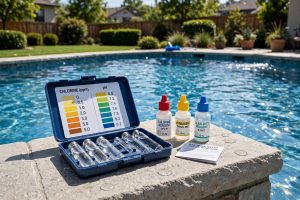
Watch the salt level. Too much salt stresses the cell. Too little drops chlorine output. Most systems want twenty-seven hundred to thirty-four hundred parts per million. Test strips are cheap. Use them monthly.
Safety Warnings
Pool chemicals deserve respect. Muriatic acid burns skin and eyes. It gives off fumes that harm lungs. Work outside in open air. Wear gloves and goggles every time. If acid touches your skin, rinse with lots of water right away.
Store acid in its original jug, upright, in a cool dry spot. Keep it away from chlorine products. Acid and chlorine mixed together make toxic gas. This is the most dangerous mistake in pool care. Never store them side by side on the same shelf if you can avoid it.
Electricity is the other risk. Salt systems run on household power and low-voltage cell power. Always kill the pump and the control box before opening the plumbing. If the breaker panel is confusing, have a pool tech mark the right breaker with a label. The U.S. Consumer Product Safety Commission publishes pool safety guidance worth reading before any pool project.
Keep kids and pets away while you work. An open bucket of acid looks like a bucket of water. It is not. Work when the pool area is quiet.
FAQ
How do I know when my salt cell needs cleaning? Look at the plates every three months. White crust or flaky layers mean it is time. Also watch for a “check cell” light on the control box, falling chlorine levels with normal settings, or a sudden need for more salt. These are the classic signs.
Can I clean a salt cell with just vinegar? Yes. Vinegar is the safest choice. Stand the cell in full-strength white vinegar for four to eight hours. It dissolves light to medium scale. For heavy crust, muriatic acid mixed one part acid to ten parts water works in under thirty minutes. Both methods work. Vinegar is just slower.
How long does a salt water pool cell last? Most cells last three to five years with regular cleaning and good water balance. A cell on a big pool running at high output may last three years. An oversized cell on a small pool can last five or more. Neglect and bad pH control cut life short.
Should I replace or clean a heavily scaled cell? Clean it first. A soak costs almost nothing. If the plates look pitted, dark, or worn thin after cleaning, the coating is gone. Then replacement is the right call. No amount of cleaning restores worn plates. The Pool Warehouse site shows photos of worn cells so you can compare.
Can a dirty salt cell damage my pool equipment? It can cause trouble down the line. A scaled cell makes less chlorine. Low chlorine lets algae grow. Algae stains surfaces and clogs filters. The cell itself also strains, which can trip the control board. None of this happens overnight. But months of neglect raise the repair bill.
Is it safe to swim right after cleaning the cell? Yes, once the cell is back in and the system runs normally. Rinse the cell well so no acid enters the pool. Wait until the pump has run a full cycle and the water tests normal before swimming, as you would after any pool work.
Final Word
Knowing how to clean salt water pool cell equipment is one of the best skills a pool owner can learn. It takes an hour. It costs a few dollars. It keeps the water clear and the equipment healthy. Put a reminder on your calendar every three months. Check the plates. Soak when they need it. Your cell will last longer, your chlorine will stay steady, and your summers will stay simple.
If you are new to salt pools in general, the buying guides at The Spruce and Jandy explain the systems in plain terms. For spa owners, Hot Spring and Bullfrog Spas carry the same salt-water ideas over to hot tubs.
Related guides on this site include best above ground pool for families.
References
Bullfrog Spas. (n.d.). Hot tubs and spas. https://www.bullfrogspas.com Hayward. (n.d.). Pool equipment and automation. https://www.hayward-pool.com Hot Spring Spas. (n.d.). Hot tubs and spas. https://www.hotspring.com Jandy. (n.d.). Pool equipment and automation. https://www.jandy.com Leslie’s Pool Supplies. (n.d.). Pool supplies and equipment. https://www.lesliespool.com Pentair. (n.d.). Pool and spa equipment. https://www.pentair.com Pool Warehouse. (n.d.). Pool equipment and supplies. https://www.poolwarehouse.com Swim University. (n.d.). Pool and hot tub care guides. https://www.swimuniversity.com The Spruce. (n.d.). Home and garden advice. https://www.thespruce.com U.S. Consumer Product Safety Commission. (n.d.). Product safety information. https://www.cpsc.gov
Was this guide helpful?

About Lisa Anderson
The My Garden US editorial team writes practical, in-depth home and garden guides for American homeowners — tested advice, no fluff.