
Why the Best Pool Net for Cleaning Leaves Matters
Leaves fall into every open pool. Wind carries them from trees, shrubs, and neighbor yards. A pool can fill with leaves in a single night during autumn. Once leaves sink, they stain the floor and feed algae. The best pool net for cleaning leaves lets you act fast. You skim the surface in minutes. The water stays clean. The filter lasts longer.
A leaf net is one of the cheapest tools a pool owner can buy. It costs far less than a pump repair. It costs far less than a drain and refill. A few minutes of skimming each day keeps the water safe and clear. In fall, a good net is as important as chlorine. You cannot run a clear pool while leaves rot on the bottom.
The best pool net for cleaning leaves does more than catch leaves. It catches twigs, seeds, and bugs too. It keeps the skimmer basket from filling too fast. It gives you a quick read on the pool each morning. While you skim, you see the water color. You see the floor. You spot problems early.
What to Look for in a Leaf Net: Best Pool Net for Cleaning Leaves
Not all nets are alike. A cheap net tears after one season. A good net lasts for years. Here is what to check before you buy.
Net Head Size and Shape
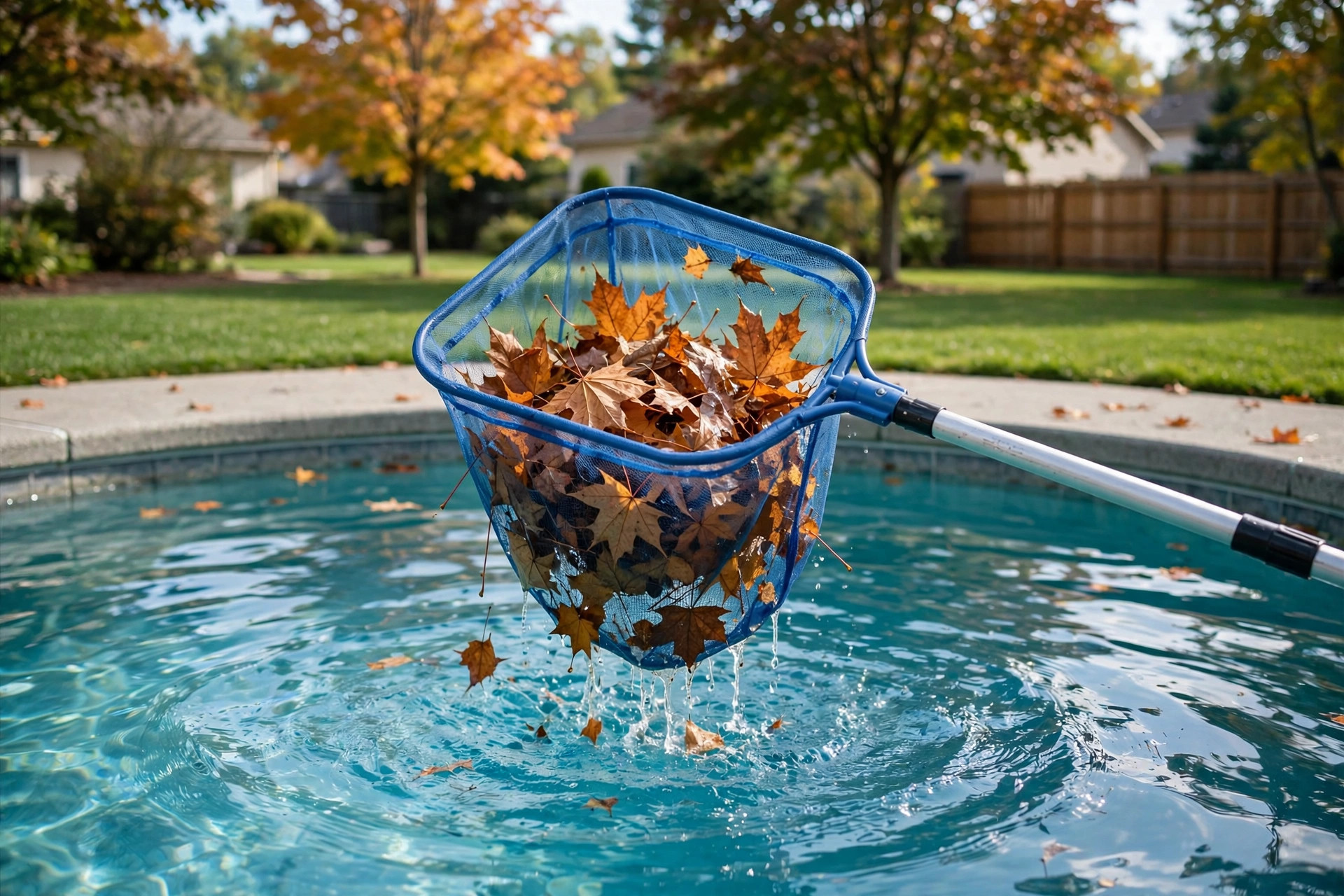
Leaf nets come in two main head shapes. The flat skim net looks like a small racket. It works best on the surface. It slides across the top of the water. The deep leaf rake has a bag-like net. It scoops leaves from the floor and walls. Many owners keep both types on hand.
Head size matters for speed. A wide head covers more water with each pass. For a large pool, a head about 18 inches wide saves time. For a small pool or a spa, a smaller head gives better control. Pick the size that fits your pool and your arms.
Mesh Type and Depth
The mesh decides what the net catches. Fine mesh holds small leaves and seeds. Coarse mesh lets water pass fast but may let small bits slip through. A deep bag holds more leaves per scoop. You empty it less often. A shallow bag is light and easy to handle.
Think about your trees. Big maple or oak leaves call for a strong, roomy bag. Small pine needles and seed pods call for fine mesh. If you have both, buy one of each. The cost is low.
Frame, Edge, and Handle Fit
The frame holds the net open. Metal frames last longer than plastic. They hold their shape under a full load. Look for a rolled or coated edge. A sharp edge can scratch a vinyl liner. A smooth edge glides along the wall without harm.
The handle is just as important as the net. Most nets fit a standard telescopic pole. The pole extends from 8 to 16 feet. This lets you reach the center of the pool from the deck. Check that the net head clamps tight to the pole. A loose head slips and slows your work. Stores like Home Depot and Lowe’s carry poles in many lengths.
Types of Pool Leaf Nets
You will find several styles on the shelf. Each has a clear job. Knowing the types helps you buy the right one.
Flat Surface Skimmer Nets
The flat skimmer net is the daily tool. It floats across the surface. It picks up leaves before they sink. Use it every morning. Five minutes of surface skimming cuts chemical use. Leaves that stay on the surface do not feed algae below.
Choose a flat net with a firm edge. It should glide without digging into the liner. Rinse it after each use. Hang it in the shade when done.
Deep Leaf Rakes
The leaf rake has a deep bag with a wide mouth. It reaches the floor and the corners. It picks up heavy loads of wet leaves. Wet leaves are heavy. A strong bag and frame matter here.
Use the leaf rake after storms. It pulls up what the surface net missed. Work in slow rows, as if mowing the pool floor. Lift the bag slowly so leaves stay inside. Dump the load into a bucket or onto the grass away from the pool.
Fine Mesh Detail Nets
Some nets use very fine mesh. They catch pollen, small seeds, and fine grit. They are handy in spring when trees shed seeds. They are slower for big leaves. Many owners add a fine mesh net as a second tool. Pair it with your pool skimmer for inground pools for the cleanest water.
How to Choose the Best Pool Net for Cleaning Leaves
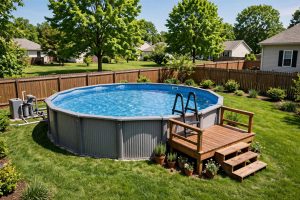
Start with your pool type. A large inground pool needs a wide head and a long pole. An above ground pool needs a shorter pole and a gentler edge. A spa or plunge pool needs a small net.
Next, think about your trees. Count what falls in. Broad leaves, pine needles, acorns, and flowers all need a net. If you face heavy loads, buy a deep rake first. If you face light daily dusting, buy a flat skimmer first.
Set a budget. Basic nets cost a few dollars. Pro-grade nets with metal frames cost more. Both work. The pro-grade net simply lasts longer under hard use. A family pool under big trees earns back the higher price in one season.
Read the packaging. Look for words like reinforced frame, heavy-duty mesh, and liner-safe edge. These tell you the maker thought about real use. Skip nets with thin plastic rims. They bend and crack.
You can compare options at pool supply stores such as Leslie’s Pool or Pool Warehouse. Big-box retailers like Walmart also stock several models.
Cost and Price Guide
Pool leaf nets are cheap compared with most pool gear. Prices run from about five dollars to about fifty dollars in the United States. A basic flat skimmer net sits at the low end. A pro-grade leaf rake with a metal frame sits at the high end.
A telescopic pole is often sold apart from the net. Expect to pay ten to thirty dollars for a pole. Buy the pole and the net together if you can. This ensures the fit is tight.
Think in terms of seasons. A cheap net may last one season under heavy leaves. A strong net may last five or more. The cost per season favors the strong net. For most owners, a mid-price net gives the best value.
How to Use a Leaf Net the Right Way
A net works best with a simple method. Follow these steps for the cleanest result.
First, start with the surface. Stand on the deck and extend the pole. Skim slowly in straight lines. Push floating leaves toward one corner. Work with the wind, not against it. Wind already pushes leaves to one side. Use that to your advantage.
Second, lift the net clear of the water before it gets too full. A full net spills leaves back into the pool. Empty it into a bucket or a pile away from the edge.
Third, move to the floor. Switch to the deep rake if you have one. Work the floor in slow rows. Let the bag settle for a moment. Then lift it straight up. A slow lift keeps the load inside the bag.
Fourth, finish with the walls and corners. Leaves hide in corners. Sweep the net along the wall in a slow arc. Pull the load up and out.
Do this after wind and storms. Also skim once a day during heavy leaf season. Five minutes a day beats an hour on the weekend. Guides from Swim University agree that daily skimming cuts down on chemicals and filter strain.
Care and Upkeep
A leaf net needs little care. Rinse it with clean water after each use. Chlorine and sun wear the mesh down. A quick rinse slows that wear.
Hang the net in the shade. Do not leave it lying on the deck in full sun. Sun breaks down plastic and mesh. A hook on a fence or a shed wall works well.
Check the frame each month. Look for cracks and bent edges. Check the mesh for tears. Small tears grow fast under a heavy load. Patch or replace the net before a tear spreads.
Store the net indoors for winter. Drain the pole if you remove it. A dry, cool shed keeps both the net and the pole in good shape for spring.
Safety Notes
Pool cleaning is safe work, but a few rules keep it that way. Never let children play with the net or the pole near the pool. A long pole can swing and hurt someone. Keep the work area clear.
Watch the edge of the pool. Wet decks are slick. Wear shoes with grip. Reach, do not lean. If a spot is too far to reach, walk around the pool instead of stretching.
Pool chemicals sit near the cleaning gear in many homes. Keep nets away from open chemical containers. Rinse the net before it touches treated water if you use strong shock products.
For wider pool safety, the U.S. Consumer Product Safety Commission at CPSC shares guidance on pool barriers and safe pool areas. A pool alarm for child safety topic is also worth a read for families.
When a Net Is Not Enough
Some leaf loads beat a hand net. After a big storm, the pool may hold hundreds of pounds of leaves. In that case, a net still helps for the first pass. But a machine can finish the job.
An automatic pool vacuum for leaves can pick up what the net leaves behind. A robotic cleaner works on the floor while you do other chores. A strong pool pump and clean filter move fine waste out of the water.
If the water turns green under the leaves, skimming alone will not fix it. You need to remove the leaves, then treat the water. See our guide on how to clean green pool water fast for the full steps.
Spa and hot tub owners face the same leaf problem on a small scale. A small flat net works well. For gear and care tips, browse the homepages of makers such as Hot Spring and Bullfrog Spas. Review sites like The Spruce also test and compare pool tools.
Frequently Asked Questions
How often should I skim leaves from my pool?
Skim every day during leaf season. In summer with few trees, every two or three days is enough. Daily skimming keeps leaves off the floor and cuts chemical use.
Which is better, a flat skimmer net or a deep leaf rake?
Buy both if you can. Use the flat skimmer net for daily surface work. Use the deep leaf rake for heavy loads on the floor. If you must buy one, match it to your main problem. Light daily leaves call for the flat net. Storm loads call for the rake.
Can a leaf net hurt a vinyl liner?
A good net will not hurt a liner. Look for a smooth, coated, or rolled edge. Avoid sharp metal edges. Move slowly along the wall. Most tears come from rushing, not from the tool.
How long does a pool leaf net last?
A basic net lasts one to two seasons. A heavy-duty net lasts three to five seasons with care. Rinse it, keep it out of the sun, and store it indoors in winter to make it last.
Do I need a special pole for my leaf net?
Most nets fit a standard telescopic pool pole. Check the clamp or twist lock before you buy. A tight fit keeps the head from slipping during use.
What size net head should I buy?
For a large pool, choose a head about 18 inches wide. For a small pool or spa, a 12-inch head gives better control. Match the head to your pool and your reach.
Final Word
The best pool net for cleaning leaves is the one that fits your pool, your trees, and your hands. A flat skimmer net handles the daily load. A deep leaf rake handles the heavy days. Keep both in good shape, and your pool stays clear with less work and fewer chemicals. A few minutes of skimming each day is the cheapest pool care you can buy.
References
Bullfrog Spas. (n.d.). Hot tubs and spas. https://www.bullfrogspas.com Hot Spring Spas. (n.d.). Hot tubs and spas. https://www.hotspring.com Leslie’s Pool Supplies. (n.d.). Pool supplies and equipment. https://www.lesliespool.com Lowe’s. (n.d.). Home improvement products. https://www.lowes.com Pool Warehouse. (n.d.). Pool equipment and supplies. https://www.poolwarehouse.com Swim University. (n.d.). Pool and hot tub care guides. https://www.swimuniversity.com The Home Depot. (n.d.). Home improvement products. https://www.homedepot.com The Spruce. (n.d.). Home and garden advice. https://www.thespruce.com U.S. Consumer Product Safety Commission. (n.d.). Product safety information. https://www.cpsc.gov Walmart. (n.d.). Everyday low prices. https://www.walmart.com
Was this guide helpful?

About Michael Thompson
The My Garden US editorial team writes practical, in-depth home and garden guides for American homeowners — tested advice, no fluff.
You May Also Like
How to Maintain Hot Tub Water Chemistry the Simple, Safe Way
April 24, 2026 0 views
Best Pool Vacuum for Pebble Finish: How to Choose the Right One
January 13, 2026 0 views
Salt Water Pool Filter Maintenance Tips: A Complete Guide for Clear Water
July 4, 2026 0 views