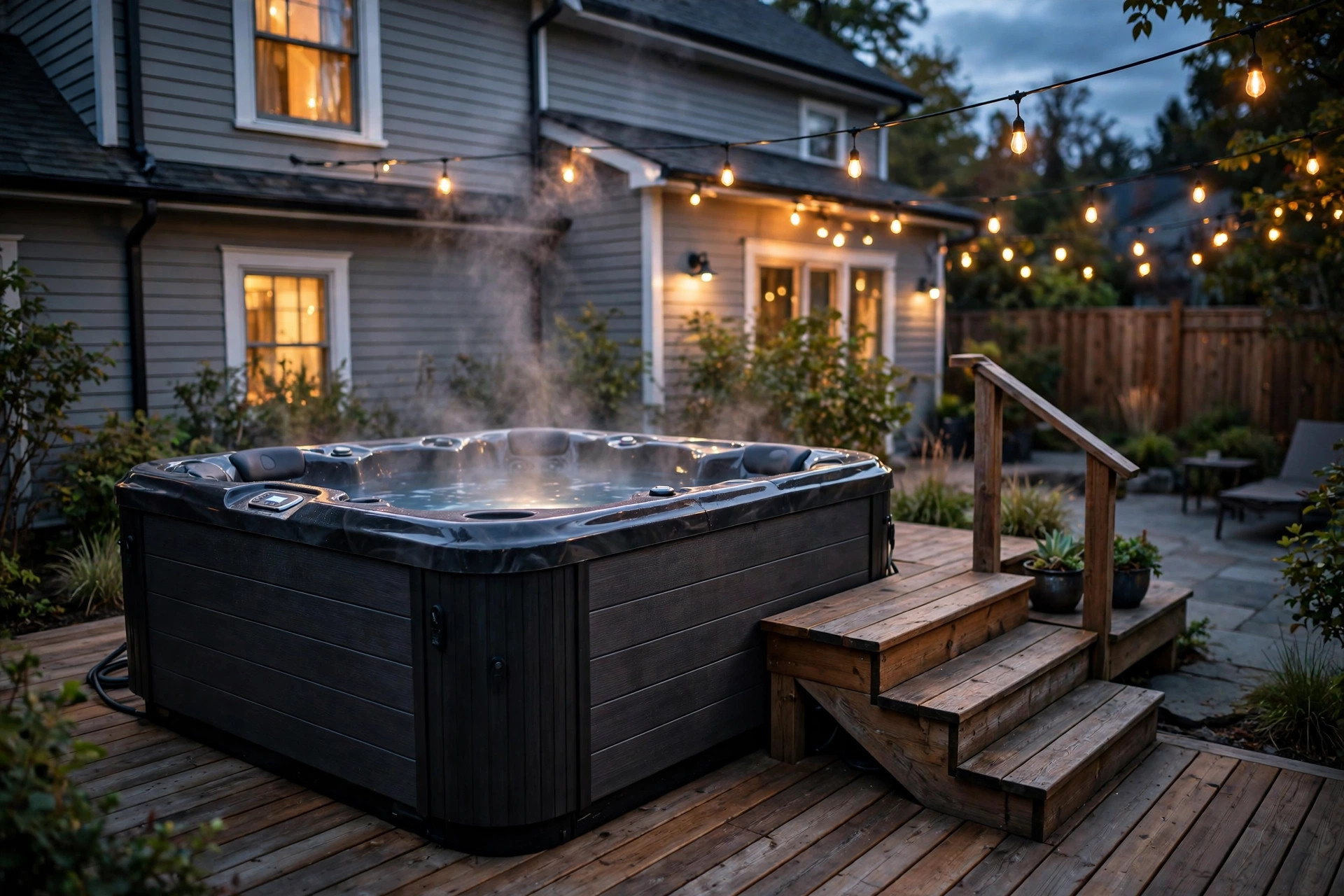

A small hot tub can be one of the finest purchases a couple ever makes. When you search for the best hot tub for two people, you want a tub that is warm, quiet, easy to keep clean, and kind to your power bill. A two-person model fits a small patio or deck. It uses less water than a large spa. It heats faster and costs less to run.
This guide walks you through every step. You will learn what matters, what to skip, what sizes to look at, and how much a good tub costs. By the end, you will know how to choose with care and how to keep your new spa in fine shape for many years.
Why a Two-Person Hot Tub Makes Sense
Large hot tubs seat six or eight. They need a large deck, a strong foundation, and a big power line. Many homes do not need that much. A couple only needs room for two. A compact spa gives you the full soak with none of the waste.
A smaller tub holds about 150 to 300 gallons of water. A large tub can hold 500 gallons or more. Less water means faster heat-up times. It also means lower chemical costs. You change less water, and you buy fewer supplies over the year.
Space is another reason. Many homes have small yards or narrow decks. A two-person tub can fit in a corner of a patio. It leaves room for chairs, plants, and a path to walk by. Some models are small enough to pass through a standard gate.
Noise matters too. Large tubs use big pumps. A small tub uses a smaller pump and a smaller heater. The result is a gentler hum. Your neighbors will hear less, and your evenings will be more peaceful.
Couples also enjoy the layout of a good two-person tub. Many models place the seats face to face. You can sit close and talk. Some have a lounger for one person and an upright seat for the other. The water hits your back and shoulders where it counts.
What to Look for When You Shop: Best Hot Tub for Two People
Start with size. Measure the space where the tub will sit. Leave at least two feet of clear space around the tub for the cover lifter and for service access. A common footprint for a two-person spa is about five to seven feet long and five feet wide. Check the height as well. You need room for the cover to open fully.
Next, look at the shell and the cabinet. A good shell is acrylic, thick and smooth. A good cabinet resists weather and rot. Synthetic wood panels last longer than plain wood in wet climates. Ask the dealer how the cabinet holds up after five years in rain and sun.
Jets matter more than numbers suggest. Some tubs boast fifty jets. Others have twelve. The count alone tells you little. What counts is jet placement. Jets should line your back, neck, shoulders, and feet. Sit in the tub if you can. Turn it on. Feel the water. A few well-placed jets beat many weak ones.
The heater and insulation decide your power bill. A well-insulated tub keeps heat with less work. Full-foam insulation fills the cabinet and holds heat in. A good cover seals the top. Ask for the monthly energy cost in your area. Ratings from groups like Consumer Reports can help you compare real energy use.
The pump is the heart of the tub. A two-speed pump runs low for filtering and high for jets. A circulation pump is even better. It moves water all day on very little power. This keeps the water clear and warm at all times.
Water care systems make life easy. Many tubs use ozone or mineral systems. These cut the amount of sanitizer you need. They do not replace sanitizer, but they reduce it. This means softer water and less odor.
Think about the control panel. It should be simple to read in the dark. Large buttons help. A good panel shows the water temperature at a glance. Timers for the filter cycle should be easy to set.
Types of Two-Person Hot Tubs
You have three main types to choose from. Each has its own cost and its own trade-offs.
Hard-Shell Acrylic Spas
These are the classic choice. The shell is molded acrylic over fiberglass. The cabinet sits on a wood or composite frame. Hard-shell spas last a long time. Many run for ten to fifteen years with fair care. They hold heat well and have strong jets. They cost the most, but they give the most comfort.
If you want a permanent tub on a deck, this is the type to buy. Many models plug into a 220-volt line. An electrician must wire the line. This adds to the cost, but the heater works harder and heats faster.
Plug-and-Play Models
Some small tubs plug into a standard 110-volt outlet. You need no electrician and no special wiring. This is a fine choice for renters and for tight budgets. The heater is weaker, so heat-up takes longer. In cold weather the tub may lose heat while you soak. For warm climates and mild use, plug-and-play works well.
Inflatable Spas
Inflatable tubs are the lowest cost way to soak. They blow up like a raft and fill with a hose. Many couples start here. An inflatable hot tub for couples can cost a tenth of a hard-shell spa. It is light and easy to move. It is also the least durable. The material can tear. Heat loss is high. But for a first tub or a trial run, it does the job.
Think about how you will use the tub before you choose. If you want daily soaks all year, buy a hard-shell spa. If you want weekend soaks in summer, a plug-and-play or inflatable model may be enough.
Cost and Price
A two-person hot tub costs less than a large one, but prices still vary. Inflatable models run from about 400 to 1,200 dollars. Plug-and-play tubs run from about 2,500 to 5,000 dollars. Hard-shell 220-volt spas run from about 5,000 to 10,000 dollars.
The tub is only part of the cost. Plan for delivery and setup. A large tub needs a crane in some cases. A small tub may arrive on a truck and roll into place. Plan for the electrical work. A 220-volt line can cost several hundred dollars. Plan for a solid base. The tub needs a level pad of concrete, pavers, or a strong deck.
Running costs matter most over time. A well-insulated two-person tub may add 20 to 50 dollars a month to the power bill. A poorly insulated tub can cost twice that. Chemicals cost about 20 to 40 dollars a month. Covers wear out every three to five years and cost a few hundred dollars to replace.
Ask the dealer for the total first-year cost. Add the tub, the wiring, the base, the cover lifter, the steps, and the first round of chemicals. This number tells you the truth. A cheap tub with high running costs is not cheap at all.
Setting Up Your Tub
Pick the spot with care. The tub must sit on a level, solid base. A full two-person tub can weigh over 2,000 pounds. That weight needs firm ground. A concrete pad is the best base. A reinforced deck works too. Ask a contractor if your deck can hold the load.
Think about privacy. A tub near the house is easy to reach in winter. A tub behind a fence or a screen gives you quiet. Think about the view. Face the seats toward the sunset or the garden.
Drainage matters. The tub needs a way to drain for cleaning. Slope the pad so water runs away from the house. Keep the equipment side clear so a tech can reach the pump and heater.
If your tub needs 220 volts, hire a licensed electrician. The code requires a disconnect box near the tub and proper grounding. Do not wire it yourself. Water and power are a poor mix.
Care and Upkeep
Clean water is safe water. Test the water two or three times a week. Use test strips or a liquid kit. Keep chlorine or bromine at the right level. Keep the pH between 7.2 and 7.8. When the balance is right, the water feels soft and clear.
Change the filter as the maker directs. Rinse it every month and replace it every year or two. A clean filter keeps the pump happy and the water clear. Guides at Swim University explain filter care in plain steps.
Drain and refill the tub every three or four months. Over time, dissolved solids build up. Fresh water is easier to balance. Clean the shell with a soft cloth while the tub is empty. Never use harsh cleaners.
Keep the cover in good shape. A waterlogged cover loses heat and costs you money. Clean it with mild soap. Treat the vinyl with a protectant. A hot tub cover lifter makes daily use much easier and protects the cover from dragging.
Stock a simple kit: test strips, sanitizer, pH adjusters, a filter cleaner, and a spare filter. Starter advice from Leslie’s Pool Supplies can help you build the right kit for your tub size.
In cold climates, never let the tub freeze. Keep it running through winter. If the power fails, drain it fast or keep the water moving. A frozen pipe can crack and ruin the tub. For more on cold-weather care, see our guide to the best hot tub for cold climates.
Safety First
A hot tub is a joy, but it needs respect. Keep the water at or below 104 degrees Fahrenheit. Soak for 15 to 20 minutes at a time. Step out and cool down, then soak again if you like.
Pregnant women, young children, and people with heart trouble should talk to a doctor first. Alcohol and hot water do not mix well. Drink water, not wine, while you soak.
Lock the cover when the tub is not in use. A locked cover keeps children and pets out. It also keeps heat in and dirt out. Safety guidance from the U.S. Consumer Product Safety Commission covers spa barriers and drain safety in clear terms.
Keep electrical devices away from the water. No radios on the edge. No phones plugged in nearby. Keep a phone close by, but not over the water.
Check the drain covers. Old or broken drain covers can trap hair. Replace them at once if they crack. This is a small part with a large job.
FAQ
How much space does a two-person hot tub need?
Most two-person tubs measure about five to seven feet long and five feet wide. Leave two feet of clear space on all sides for the cover and for service. Measure your patio or deck before you shop. A hot tub for a small backyard can fit where a large spa never could.
How much does it cost to run each month?
A well-insulated two-person tub adds about 20 to 50 dollars a month to the power bill in most areas. Add 20 to 40 dollars a month for chemicals. Your cost depends on local power rates, the weather, and how often you soak.
Can I put a hot tub on my deck?
Only if the deck is strong enough. A filled two-person tub can weigh more than 2,000 pounds. Ask a contractor or an engineer to check the deck. A concrete pad on the ground is the safest base.
How often should I change the water?
Drain and refill every three to four months with normal use. If you soak every day, change it more often. Test the water twice a week and the water will tell you when it is tired.
Is a two-person hot tub good for winter use?
Yes, if it is well insulated. Hard-shell spas with full-foam insulation hold heat through cold months. Inflatable models lose heat fast and cost more to run in winter. Keep the cover on when you are not soaking.
Do I need an electrician?
For a 220-volt tub, yes. Hire a licensed electrician to run the line and set the disconnect box. Plug-and-play 110-volt models need only a standard outlet on its own circuit.
A Short Final Word
The best hot tub for two people is the one that fits your space, your budget, and your habits. Measure first. Sit in the tub if you can. Ask about energy cost and total first-year cost. Choose strong insulation, a good cover, and well-placed jets over a high jet count.
Keep the water clean, lock the cover, and soak with care. Do this, and your small tub will give you warm, quiet evenings for many years. A little homework now buys you a decade of comfort later. That is the whole secret of a wise purchase.
For more background, see The Spruce, The Home Depot, and Pool Warehouse. See Hot Spring Spas for more detail.
References
Consumer Reports. (n.d.). Product reviews and ratings. https://www.consumerreports.org Hot Spring Spas. (n.d.). Hot tubs and spas. https://www.hotspring.com Leslie’s Pool Supplies. (n.d.). Pool supplies and equipment. https://www.lesliespool.com Pool Warehouse. (n.d.). Pool equipment and supplies. https://www.poolwarehouse.com Swim University. (n.d.). Pool and hot tub care guides. https://www.swimuniversity.com The Home Depot. (n.d.). Home improvement products. https://www.homedepot.com The Spruce. (n.d.). Home and garden advice. https://www.thespruce.com U.S. Consumer Product Safety Commission. (n.d.). Product safety information. https://www.cpsc.gov
Was this guide helpful?

About James Carter
The My Garden US editorial team writes practical, in-depth home and garden guides for American homeowners — tested advice, no fluff.
You May Also Like
The Best Hot Tub Chemicals Starter Kit: What to Buy and Why
May 16, 2026 0 views
Best Hot Tub Cover Lifter Reviews: A Plain Guide for Spa Owners
February 16, 2026 0 views
The Best Pool Cover for Winter Snow: A Complete Guide
October 1, 2026 0 views